30 Inventions That Betty White Is Older Than And It Helps Put Her Age Into Perspective

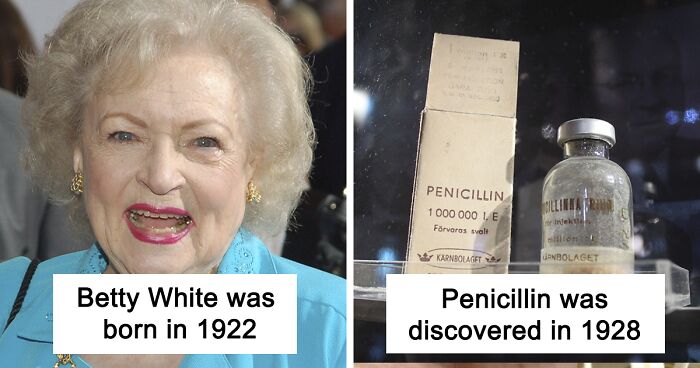
Betty White was not merely an entertainer with unusually good timing. She had the kind of lifespan that makes an ordinary history book look like a weekend itinerary. Born on January 17, 1922, White entered the world before sliced bread, parking meters, television remote controls, mobile phones, digital cameras, and the World Wide Web. She died on December 31, 2021, at age 99, just over two weeks before what would have been her 100th birthday.
That fact can be difficult to absorb because many of these inventions feel as though they have always existed. Sliced bread seems ancient. Credit cards feel inseparable from shopping. Remote controls are practically household furniture. Yet Betty White had already arrived before all of them.
The following famous inventions timeline uses the milestone most commonly associated with each item, such as its discovery, patent, successful demonstration, public installation, or commercial debut. Technological history is rarely tidy, so the dates are explained rather than squeezed into a suspiciously convenient one-number answer.
Why Betty White’s Age Is So Remarkable
Betty White’s life stretched across several distinct technological worlds. She was born during an era when radio was still developing into a mass medium and commercial television had not yet begun. She later became one of television’s earliest female pioneers, stayed famous through the cable era, and then found a new generation of fans through social media, streaming clips, memes, and internet campaigns.
In other words, she did not simply live through technological change. She repeatedly adapted to it. By the time younger viewers were sharing clips of The Golden Girls online, White had already been working in entertainment longer than many technology companies had existed.
Everyday Inventions Betty White Beat to the World
-
1. Commercially Sliced Bread 1928
Betty White was six years old before commercially sliced bread reached American consumers. Otto Rohwedder’s automatic bread-slicing machine was put into use in 1928, allowing bakeries to sell neatly sliced loaves. White therefore existed before something could officially be called “the greatest thing since sliced bread.” That expression suddenly has a much more impressive starting point.
-
2. Penicillin 1928
Alexander Fleming discovered penicillin in 1928 after observing that a mold had destroyed bacteria in a laboratory dish. The discovery eventually transformed the treatment of bacterial infections, although years of additional research were needed before penicillin became a widely usable medicine. Betty White was already in elementary school when the antibiotic era began taking shape.
-
3. Modern Bubble Gum 1928
The successful commercial bubble-gum formula known as Dubble Bubble was developed by Walter Diemer in 1928. Earlier chewing gums existed, but Diemer’s version was stretchier, less sticky, and much better suited to blowing bubbles. White was six before children could reliably create enormous pink bubbles and immediately attach them to their own eyebrows.
-
4. The Commercial Car Radio 1930
In 1930, Galvin Manufacturing Corporation introduced a commercially successful automobile radio under the Motorola name. Betty White was eight years old before drivers could cruise around while listening to music, baseball, news, or advertisements reminding them that they probably needed new tires. She predated both the car radio and arguments over who controlled it.
-
5. Scotch Transparent Tape 1930
3M introduced Scotch transparent tape in 1930, initially offering businesses a practical way to seal packages and make repairs. It later became a household-drawer essential used for wrapping gifts, fixing torn paper, and performing emergency repairs that everyone promises are temporary. Betty White was eight before clear tape joined humanity’s struggle against ripped wrapping paper.
-
6. Parking Meters 1935
The first parking meters were installed in Oklahoma City in 1935. White was already 13 before cities developed a mechanical way to charge motorists for leaving a car in one place. Before that, drivers could apparently park without feeding coins into a small metal supervisor standing beside the curb. Progress sometimes arrives wearing the uniform of inconvenience.
-
7. Nylon 1935
Wallace Carothers and his team at DuPont developed nylon in 1935. The synthetic fiber went on to appear in stockings, toothbrush bristles, parachutes, ropes, fabrics, and countless industrial products. Betty White was a teenager before nylon existed, meaning she was older than one of the materials that came to define modern clothing and manufacturing.
-
8. The First Practical Helicopter 1936
Experimental vertical-flight machines had appeared earlier, but the Focke-Wulf Fw 61, first flown in 1936, is widely recognized as one of the first practical and controllable helicopters. White was 14 when rotary-wing flight began looking less like an inventor’s dangerous hobby and more like a genuine form of transportation.
-
9. Xerography 1938
Chester Carlson produced the first successful xerographic image in 1938. His dry-copying process became the technological foundation for modern photocopiers. Betty White was 16 before anyone could make a quick office copy without using messy chemical processes. She was older than the invention that eventually made “Please see attached” possible on paper.
-
10. The Modern Ballpoint Pen 1938
László Bíró patented an improved ballpoint-pen design in 1938. His pen used fast-drying ink and a small rolling ball to distribute it, avoiding many of the leaks and smudges associated with fountain pens. White was a teenager before the modern ballpoint arrived, yet somehow students still found ways to lose three of them before lunch.
-
11. The First Jet-Powered Airplane 1939
The German Heinkel He 178 made the first flight of a turbojet-powered aircraft in 1939. Betty White was 17 when jet propulsion moved from engineering theory into the air. She was therefore older than the technology that later made international air travel faster, louder, and considerably more dependent on tiny bags of pretzels.
Postwar Inventions That Changed Homes and Offices
-
12. Microwave Cooking 1945
Engineer Percy Spencer noticed the heating effects of microwave energy in 1945 while working with radar equipment. His discovery led to the development of microwave ovens, with early commercial machines appearing soon afterward. White was 23 before anyone began turning radar technology into a way to reheat yesterday’s pasta in roughly ninety seconds.
-
13. Tupperware 1945
Earl Tupper introduced his plastic household products in 1945, followed by the famous airtight Tupper Seal. Betty White was already an adult before kitchens gained containers whose lids would mysteriously disappear into a parallel universe. Tupperware later became a cultural phenomenon through home sales parties as well as a practical food-storage system.
-
14. ENIAC 1946
ENIAC, unveiled in 1946, became one of the earliest general-purpose electronic digital computers. It filled a large room, used thousands of vacuum tubes, and required far more space than today’s laptops. White was 24 when a computer could occupy an entire room while possessing less everyday computing flexibility than a modern wristwatch.
-
15. The Instant Camera 1948
Polaroid began selling its first instant camera in 1948. It allowed users to produce a finished photograph shortly after pressing the shutter, eliminating the long wait for conventional film processing. Betty White was 26 before people could take a picture and complain about how they looked in it almost immediately.
-
16. The Barcode 1949 to 1952
Norman Joseph Woodland and Bernard Silver developed their barcode concept in 1949 and received a patent in 1952. The familiar rectangular Universal Product Code arrived later, but the central idea of machine-readable product identification had begun. White was approaching 30 before checkout counters gained the technology now printed on nearly every packaged item.
-
17. The Television Remote Control 1950
Zenith introduced the wired Lazy Bones television remote in 1950. Wireless models followed during the same decade. Betty White was 28 before viewers could change channels without walking across the room. Ironically, she had already begun working in television before audiences received the device that made channel surfing a competitive household sport.
-
18. The Multipurpose Charge Card 1950
Diners Club introduced its multipurpose charge card in 1950, allowing members to pay at several participating restaurants rather than maintaining separate accounts. White was 28 when the modern payment-card era began. She was older than the ancestor of the object people now tap against a terminal while silently hoping the transaction is approved.
-
19. The Transistor Radio 1954
The first commercially successful pocket transistor radio appeared in 1954. Smaller and more portable than vacuum-tube radios, it helped make music a personal, mobile experience. Betty White was 32 before teenagers could carry popular songs around in a pocket, decades before smartphones made it possible to carry nearly every recorded song ever made.
-
20. Velcro 1955
Swiss engineer George de Mestral patented his hook-and-loop fastening system in 1955 after studying burrs that clung to clothing and animal fur. Betty White was 33 before Velcro was officially patented. Nature had been using the basic concept for ages, but humans needed engineering, manufacturing, and branding before placing it on children’s shoes.
-
21. The Hard Disk Drive 1956
IBM introduced the first commercial hard disk drive as part of its RAMAC system in 1956. The enormous storage unit held about five million characters of data and weighed more than a ton. White was 34 before digital files could be stored on a spinning magnetic disk, although nobody could yet fit that disk into a jacket pocket.
-
22. The Modern LEGO Brick 1958
The LEGO Group filed the patent for its modern interlocking brick design in 1958. Earlier toy bricks had existed, but the improved stud-and-tube system created the stable connection familiar today. Betty White was 36 before the modern LEGO brick appeared and before parents discovered that stepping on one can produce vocabulary not included in the instruction booklet.
Inventions That Built the Digital Age
-
23. The Computer Mouse 1964
Douglas Engelbart and his team built an early computer-mouse prototype in 1964. The wooden device used wheels to track movement and eventually helped establish graphical computer interaction. White was 42 before anyone could point, click, drag, and blame a frozen cursor for an unfinished assignment.
-
24. The ATM 1967
A pioneering cash-dispensing machine began operating at a Barclays branch in Enfield, England, in 1967. Other automated banking systems followed, including the first American ATM installations in 1969. Betty White was 45 before customers could withdraw cash after banking hours, a major victory for anyone who remembered needing money at 5:01 p.m.
-
25. The Handheld Electronic Calculator 1967
Texas Instruments engineers developed a palm-sized electronic-calculator prototype in 1967. It could perform basic arithmetic and print its results, demonstrating that calculation technology could escape the desktop. Betty White was 45 before engineers proved that people could carry a calculator, years before teachers began warning students they would not always have one nearby.
-
26. The Handheld Mobile Phone 1973
Motorola engineer Martin Cooper made a public handheld cellular-phone call in 1973. The prototype was large, heavy, and had none of the features associated with modern smartphones. White was 51 before the mobile-phone era began. She was already a television veteran before anyone could make a call while walking down the street.
-
27. The Digital Camera 1975
Kodak engineer Steven Sasson built the first self-contained digital-camera prototype in 1975. It recorded low-resolution black-and-white images onto a cassette tape and took several seconds to capture a picture. Betty White was 53 before photography began abandoning film, and decades would pass before phones turned every meal into a photo opportunity.
-
28. Post-it Notes 1980
3M introduced Post-it Notes nationally in 1980 after combining Spencer Silver’s reusable adhesive with Art Fry’s idea for movable paper bookmarks. White was 58 before offices gained the cheerful squares now used for reminders, brainstorming sessions, and messages such as “Do not eat” attached to food that someone will probably eat anyway.
-
29. The Compact Disc 1982
Philips and Sony introduced the commercial compact-disc format in 1982. CDs promised clear digital sound, convenient track selection, and greater durability than vinyl records, although they also became excellent collectors of fingerprints. Betty White was 60 before the CD arrived, yet she remained culturally relevant through the format’s rise, peak, and decline.
-
30. The World Wide Web 1989
Tim Berners-Lee proposed the World Wide Web at CERN in 1989, creating the foundation for a system of linked documents accessed through the internet. Betty White was 67. She was old enough to qualify for Social Security before the Web existed, yet she later became an internet favorite, proving that cultural relevance does not come with an expiration date.
What This Famous Inventions Timeline Reveals
A list of inventions after 1922 does more than generate amusing trivia. It shows how compressed modern technological history really is. Devices and systems that now feel fundamental to daily life were introduced during one person’s lifetime.
When Betty White was born, there were no parking meters, ballpoint pens, instant cameras, commercial jet aircraft, television remotes, credit cards, hard drives, ATMs, mobile phones, digital cameras, compact discs, or websites. By the end of her life, people could carry cameras, maps, calculators, telephones, music libraries, payment cards, televisions, and internet browsers in a single pocket-sized device.
White’s career also followed that transformation. She worked in radio, appeared during television’s early years, became a sitcom icon, hosted programs, appeared in films, entertained viewers through cable reruns, and eventually became an online phenomenon. Each new platform introduced her to another audience rather than replacing her.
Experiencing a Century of Invention: A 500-Word Perspective
From Astonishing Novelty to Boring Necessity
One of the strangest experiences associated with technological change is watching an astonishing invention become ordinary. A family seeing instant photographs for the first time in the late 1940s might have treated the developing image like a small miracle. Today, a phone can capture hundreds of pictures in minutes, and users may delete most of them because the lighting was not quite flattering enough.
The same pattern applies to television remotes, ATMs, calculators, and mobile phones. Each technology initially solved a problem in a way that seemed futuristic. Eventually, people stopped noticing the invention and became irritated when it took more than three seconds to work. Convenience has a remarkable ability to turn yesterday’s miracle into today’s minimum requirement.
Different Generations Remember Different Starting Lines
People born in different decades experience the same invention differently. Someone who remembers banks closing for the day may view an ATM as freedom. A person born after ATMs became common may barely notice one unless it charges an unexpected fee. Someone who developed rolls of film may still appreciate the instant feedback of digital photography, while a younger person may wonder why anyone ever took a picture without immediately seeing it.
This is why discussing inventions with older relatives can be so revealing. The most interesting questions are not simply, “Did you have a television?” or “When did you get a telephone?” Better questions explore the experience: What did the first television in the neighborhood look like? Did several families gather around it? What did people do before home appliances became common? How did anyone meet friends in a crowded place without texting?
These conversations turn technology history into lived history. They reveal that adaptation often happened gradually, unevenly, and with plenty of skepticism. Not every household bought a new invention immediately. Early products could be expensive, unreliable, or considered unnecessary. Many people encountered them at work, in stores, or in wealthier neighbors’ homes before owning them personally.
The Emotional Side of Technological Change
New inventions do not only change tasks; they change expectations. The telephone made people reachable. The mobile phone made them reachable almost everywhere. The internet made information instantly available, and then created the expectation that everyone should respond instantly as well.
Someone living through most of the 20th century experienced both gains and losses. Technology brought safer medicine, faster transportation, easier communication, convenient banking, and greater access to information. It also reduced certain pauses that had once been unavoidable. Waiting for a letter, a developed photograph, a scheduled broadcast, or a bank to reopen could be inconvenient, but it created a different rhythm of life.
Betty White’s public persona offered an appealing model for navigating those changes. She did not pretend to belong to a younger generation, nor did she retreat from new audiences. She brought her established personality into each new medium. The platform changed; the humor, timing, curiosity, and warmth remained recognizable.
How to Experience the Timeline Today
A simple way to make this timeline meaningful is to choose several inventions and imagine one ordinary day without them. Remove the barcode from the grocery store, the ATM from the street, the remote from the living room, the microwave from the kitchen, the mobile phone from a pocket, and the Web from a computer. None of those absences is impossible, but together they produce a world with different habits, schedules, and expectations.
That exercise helps explain why Betty White’s age remains so difficult to comprehend. She was not merely older than a collection of gadgets. Her life connected social and technological worlds that now seem separated by centuries, even though they were only decades apart.
Conclusion
The most surprising inventions Betty White was older than are not necessarily the biggest or most complicated. Sliced bread, transparent tape, parking meters, and ballpoint pens are striking because they appear so ordinary. They blend into daily life so completely that imagining a world without them feels almost unnatural.
Betty White’s nearly century-long life puts that transformation into human perspective. She was born before sliced bread became a commercial product and lived long enough to become a viral internet star. She predated the television remote but became one of television’s most enduring personalities. She was 51 when the first handheld mobile-phone call was demonstrated and 67 when the World Wide Web was proposed.
Technologies arrived, became revolutionary, turned ordinary, and were sometimes replaced. Betty White simply kept adapting, working, and making people laugh. That may be the most impressive item on the entire timeline.


