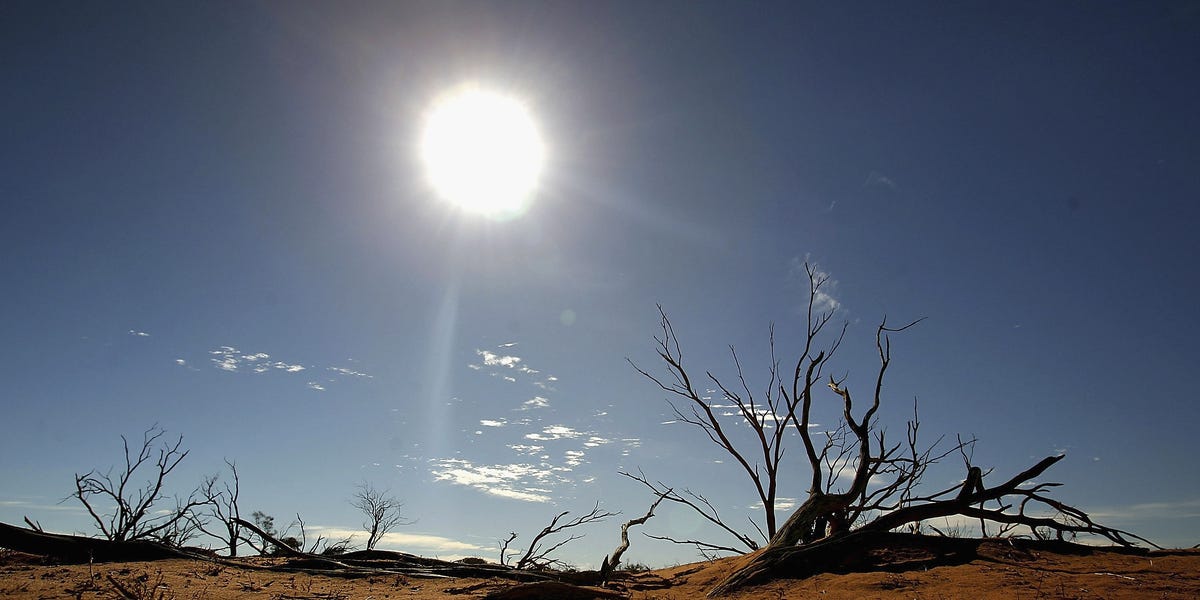

Climate change used to sound like something scheduled for “later,” the way people talk about cleaning the garage, writing a will, or finally learning what blockchain means. Not anymore. Today, climate change is in the news because it is in the weather forecast, the grocery bill, the insurance quote, the power grid, the wildfire map, the hurricane update, and sometimes the neighborhood group chat where someone asks, “Is it normal for March to feel like July wearing a hair dryer?”
The short answer: no, not really. The longer answer is why climate change headlines now appear across science, politics, business, health, sports, travel, real estate, and culture. Climate change is no longer only an environmental story. It is a human story, an economic story, a public health story, and, increasingly, a daily-life story.
This article explains why climate change keeps dominating the news, what the latest reporting is focusing on, and how readers can understand the signal without getting buried under the noise.
Why Climate Change Keeps Making Headlines
The main reason climate change is constantly in the news is simple: the evidence keeps showing up in measurable ways. Global temperatures have risen sharply since the industrial era, greenhouse gas concentrations remain high, oceans are absorbing enormous amounts of heat, sea levels are rising, and extreme weather events are becoming more frequent or more intense in many regions.
NASA, NOAA, EPA, Climate Central, and other research organizations track these changes through satellites, weather stations, ocean buoys, ice measurements, emissions inventories, and long-term climate records. That matters because climate news is not built on vibes, rumors, or one sweaty afternoon at a baseball game. It is built on decades of observations that now point in the same direction: the planet is warming, and human activities, especially the burning of fossil fuels, are the dominant driver.
In the newsroom, this changes the way stories are framed. A heat wave is no longer just a heat wave. Reporters now ask whether climate change made it more likely, more intense, longer lasting, or more dangerous. A flood is not just a flood. Journalists look at rainfall intensity, sea level rise, land development, infrastructure, and emergency preparedness. A wildfire is not just a wildfire. It is connected to drought, heat, forest management, housing expansion, and public health.
The Heat Story: When Weather Becomes a Warning Label
Extreme heat has become one of the most visible climate change news stories because it is easy to feel and hard to ignore. You do not need a PhD to understand that a sidewalk hot enough to fry your patience is a problem.
Recent reporting has focused heavily on unusually strong heat waves across the United States and abroad. Climate Central’s Climate Shift Index, for example, has been used to explain when human-caused warming makes extreme temperatures much more likely. During major heat events, news coverage increasingly highlights not just record highs but also dangerous warm nights. That second part matters. If temperatures stay high overnight, the human body gets less time to recover, especially for older adults, outdoor workers, children, people without air conditioning, and those with chronic health conditions.
Heat coverage has also become more practical. News stories now explain heat risk categories, cooling centers, hydration, workplace protections, urban heat islands, and the dangers of humidity. In other words, climate change in the news has moved from “Look at this scary chart” to “Here is how this affects your commute, your job, your power bill, and your grandmother’s apartment.” That is progress, even if the reason for it is unpleasant.
El Niño, Oceans, and the Climate Background Music
One reason climate news can seem confusing is that natural climate patterns still exist. El Niño, La Niña, volcanic eruptions, ocean cycles, and seasonal weather patterns all influence what people experience from year to year. But those natural systems are now operating on a warmer planet.
Recent news about a strengthening El Niño shows this clearly. El Niño can release stored ocean heat into the atmosphere and reshape weather patterns around the world. It can increase the odds of wetter winters in parts of the southern United States, warmer conditions in northern regions, drought in some global areas, and shifts in hurricane activity. But when El Niño occurs on top of human-caused warming, the result can be more intense global temperature spikes.
This is why ocean heat receives so much attention in climate reporting. Oceans absorb most of the excess heat trapped by greenhouse gases. That may sound helpful, as if the ocean is politely holding our climate mess in a very large blue handbag. Unfortunately, ocean heat does not disappear. It contributes to marine heat waves, coral bleaching, sea level rise, stronger rainfall, and potential changes in storm behavior.
Sea Level Rise: The Slow-Motion Story With Fast Consequences
Sea level rise is one of the clearest examples of climate change moving from science pages to front-page local news. Rising seas affect coastal flooding, storm surge, drinking water systems, roads, ports, real estate, insurance, military bases, and historic sites.
Recent PBS coverage of Jamestown, Virginia, showed how rising seas and coastal erosion are threatening places tied to American history. That kind of story matters because it makes climate change tangible. It is not only about melting ice far away. It is about the places where people live, work, remember, and build identity.
Climate Central research has also highlighted how human-caused sea level rise increases extreme water-level events. For coastal communities, the practical meaning is straightforward: floods that used to be rare can become more common, and high tides can turn into recurring disruptions. Businesses close for cleanup. Roads become unreliable. Septic systems fail. Home values and insurance costs shift. Suddenly, climate change is not an abstract debate. It is a line item in a city budget.
Climate Change and Public Health
One of the biggest shifts in climate change news is the rise of health reporting. Heat illness, asthma, wildfire smoke, mosquito-borne diseases, water contamination, mental health stress, and disaster trauma are now part of the climate conversation.
Extreme heat is especially dangerous because it can kill quickly. Wildfire smoke can travel hundreds or even thousands of miles, turning blue skies gray and making breathing harder for people with asthma or heart disease. Floods can spread contaminants. Drought can reduce water quality and food production. Even allergies can worsen when warmer seasons extend pollen production.
This health angle is important for SEO and for readers because it answers the question people actually search: “How does climate change affect me?” The answer is not only “polar bears,” although polar bears would like to remain in the meeting. The answer includes lungs, sleep, work hours, emergency rooms, school cancellations, and mental fatigue from constant disaster alerts.
The Money Angle: Insurance, Energy, Food, and Infrastructure
Climate change is also in the news because it is expensive. The cost shows up in disaster recovery, home insurance, crop losses, energy demand, water management, and infrastructure upgrades.
When heat rises, air conditioning demand rises. That can strain power grids, especially during long heat waves. When drought hits agricultural regions, food production can suffer. When storms intensify or flooding becomes more common, roads, bridges, drainage systems, and homes need repairs or redesign. When insurers see more risk, premiums can climb or coverage can become harder to find.
NOAA’s tracking of billion-dollar weather and climate disasters has become a frequent reference point in U.S. climate news because it shows the financial scale of extreme events. The point is not that every disaster is “caused by climate change” in a simple one-to-one way. The smarter point is that climate change can increase the odds, intensity, or damage potential of certain hazards, while development patterns and preparedness determine how costly those hazards become.
Climate Policy: Why the News Sounds Political
Climate change reporting often overlaps with politics because solutions involve energy, transportation, land use, agriculture, industry, finance, and regulation. That means laws, subsidies, court decisions, international agreements, state plans, and corporate targets all become part of the climate beat.
The EPA’s greenhouse gas inventory shows why policy debates matter. U.S. emissions come from transportation, electricity, industry, buildings, agriculture, and other sectors. Cutting emissions requires changes across the economy, not just swapping one lightbulb and declaring victory like a household wizard.
At the same time, climate policy is not only about cutting emissions. It is also about adaptation: cooling cities, improving flood defenses, strengthening power grids, updating building codes, managing forests, protecting water supplies, and preparing hospitals for extreme weather. The best climate news coverage explains both sides: mitigation reduces the problem, while adaptation reduces harm from impacts already underway.
How Climate News Has Changed
Years ago, climate coverage often focused on distant projections: what might happen by 2100, how much ice could melt, or what future generations might face. Today’s coverage is more immediate. The question is no longer only “What will happen later?” It is also “What happened this week, and how much did climate change influence it?”
Attribution science has changed the tone of reporting. Scientists can now analyze many heat waves, heavy rain events, and other extremes to estimate whether climate change made them more likely or more intense. That does not mean every weather event gets a simple climate label. Good reporting avoids lazy claims. But it does mean journalists can increasingly connect extreme events to broader warming with more confidence.
Another change is local relevance. Climate change stories now appear in local newspapers, public radio, city planning reports, sports coverage, travel advisories, and business pages. A story about climate change may be about a school district installing cooling systems, a farmer changing crops, a city redesigning storm drains, or a sports league adjusting match times. The climate beat has escaped the science section and is now wandering around the whole newsroom with a clipboard.
How to Read Climate Change News Without Getting Overwhelmed
Climate news can feel exhausting because the stakes are high and the headlines can be dramatic. Readers should look for three things: source quality, scale, and context.
1. Check the Source
Reliable climate reporting usually references credible data from organizations such as NASA, NOAA, EPA, peer-reviewed journals, universities, or established science-based nonprofits. Be cautious of headlines that use one cold day to “disprove” global warming or one hot day to explain the entire climate system. Weather is the mood. Climate is the personality.
2. Understand the Scale
A local flood, a regional drought, and a global temperature record are different kinds of stories. Strong articles explain whether they are discussing a single event, a long-term trend, or a projection. Climate change is best understood through patterns, not isolated snapshots.
3. Look for Solutions
The most useful climate journalism does not stop at danger. It also covers solutions: renewable energy, cleaner transportation, efficient buildings, methane reduction, urban trees, early warning systems, cooling centers, flood planning, and climate-smart agriculture. Doom may attract clicks, but solutions help people act.
Experiences Related to Climate Change in the News
For many readers, the experience of following climate change in the news begins with a strange feeling: recognition. A headline describes a heat wave, and it sounds exactly like the week they just survived. A story explains flash flooding, and they remember watching water climb over a curb that never used to flood. A report discusses wildfire smoke, and suddenly they recall the day the sun looked orange at noon and everyone checked the air quality app like it was a stock ticker.
That personal connection can be powerful. Climate change becomes easier to understand when people can link it to lived experience. A parent reading about extreme heat may think about school playgrounds without shade. A construction worker may think about long outdoor shifts in dangerous humidity. A homeowner may think about rising insurance premiums. A young person may think about future jobs, housing, and whether “normal seasons” will ever feel normal again.
There is also a social experience to climate news. People talk about it differently now. A decade ago, mentioning climate change during a weather conversation could make the room tense. Today, many people casually connect unusual heat, intense rain, smoke-filled skies, or coastal flooding to a changing climate. The conversation is not always perfect, and it can still become political faster than a Thanksgiving dinner with cable news in the background. But the basic awareness has grown.
Another common experience is climate fatigue. The news can feel like a parade of emergencies: hottest month, strongest storm, worst fire season, rising seas, failing crops, stressed grids. Readers may feel anxious, guilty, angry, or numb. That reaction is understandable. Constant exposure to risk without a sense of agency can make people tune out. This is why climate journalism needs balance. It should be honest about danger without making readers feel trapped in a disaster movie with no exit door.
Practical stories can help. People respond better when reporting explains what communities are doing: planting shade trees, redesigning streets, expanding public transit, restoring wetlands, building microgrids, improving forecasts, creating heat response plans, or protecting vulnerable residents. These stories do not pretend the problem is easy. They remind readers that action exists.
On a personal level, climate change news can also change habits. Someone may start checking heat index instead of only temperature. A family may prepare an emergency kit. A renter may ask about cooling before signing a lease. A voter may pay closer attention to infrastructure plans. A business owner may think harder about supply chains, energy use, and weather disruptions. These are not tiny reactions. They are the way public awareness becomes social adaptation.
The most valuable experience, though, may be learning to see climate change not as one distant catastrophe but as a set of connected choices. News stories about heat, storms, oceans, emissions, health, and policy are chapters in the same book. Some chapters are alarming. Some are technical. Some are surprisingly hopeful. And yes, some are written with enough acronyms to make alphabet soup feel underqualified. But together, they show a clear message: climate change is not background noise. It is part of the world people are already living in.
Conclusion: Climate Change Is News Because It Is Now
Climate change in the news is not a trend, a media obsession, or a seasonal filler story that appears when politics gets boring. It is a reflection of measurable changes affecting weather, health, infrastructure, nature, money, and daily life. The best reporting helps readers understand the difference between panic and preparation, between isolated events and long-term trends, and between problems and solutions.
The climate story is big because the climate touches everything. That can feel overwhelming, but it also means every serious solution matters. Cleaner energy, smarter cities, stronger infrastructure, better public health planning, accurate forecasting, and informed communities all have a role to play.
In the end, climate change is in the news because it has moved into the present tense. The challenge for readers is not only to notice the headlines, but to understand them, question them wisely, and use them as a guide for better decisions. The planet is sending updates. The least we can do is read beyond the headline.
Note: This article is based on real climate science and current reporting available as of July 9, 2026. Review before publication if major new climate events or policy updates occur.


