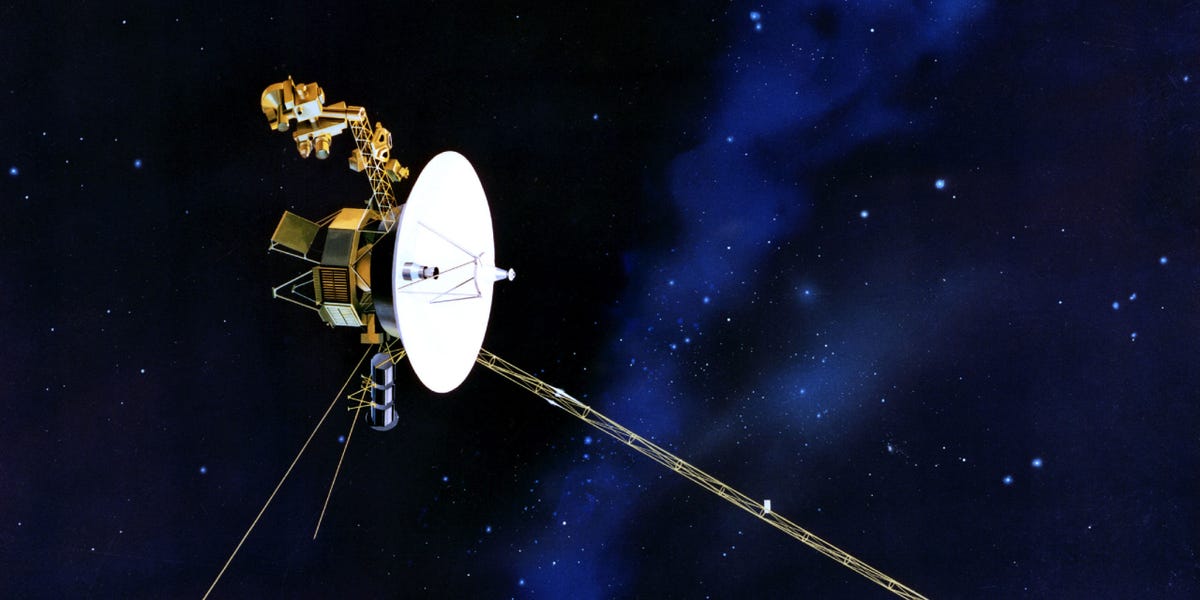

When NASA marked the Voyager spacecraft 40th anniversary in 2017, it was more than a birthday party for two aging machines with excellent work ethic and absolutely no vacation days. It was a reminder that Voyager 1 and Voyager 2 changed how humanity sees the outer solar system. Before Voyager, many moons were little more than fuzzy dots with fancy names. After Voyager, they became places: violent, icy, cracked, hazy, active, and wonderfully strange.
That is the real magic behind Voyager 1 and Voyager 2 moon discoveries. These spacecraft did not just fly past planets. They revealed that moons are not side characters in the cosmic story. In many cases, they are the main event. From the volcanoes of Io to the hidden-ocean hints of Europa, from Titan’s thick atmosphere to Miranda’s bizarre patchwork surface and Triton’s dark geysers, Voyager turned the outer planets into neighborhoods full of drama. If the solar system were a reality show, Voyager was the first camera crew allowed backstage.
This legacy still matters. Modern missions to Europa, Titan, and other ocean-world targets stand on a foundation built by Voyager. The twin probes gave scientists their first close look at the giant planets and dozens of their moons, while also giving the public something even more powerful: wonder with photographic evidence.
Why the Voyager 40th Anniversary Still Matters
The anniversary matters because Voyager did not merely confirm what astronomers suspected. It rewrote the script. The mission began in 1977, when Voyager 2 launched first and Voyager 1 followed a few weeks later. Their original job was ambitious enough: explore Jupiter and Saturn. But thanks to a rare planetary alignment and a series of gravity assists, Voyager 2 kept going to Uranus and Neptune, turning a two-planet mission into a four-planet grand tour.
That expansion changed planetary science forever. The outer solar system stopped being a neat lineup of distant balls of gas and ice. Instead, it became a messy family of worlds with active geology, complicated atmospheres, ring systems, magnetic mysteries, and moons that refused to behave like frozen leftovers from planet formation. The Voyagers showed that space is not boring, and apparently never got the memo that it was supposed to be.
By the time the mission passed its 40th anniversary, the probes had already traveled farther than anyone in 1977 could reasonably brag about at a launch party. Yet their most enduring achievement was not distance. It was perspective. The Voyagers taught us that moons are laboratories of planetary evolution. Some may even be habitats with the right ingredients for life. That realization began with flybys measured in hours and images sent home line by glorious line.
The Grand Tour That Turned Dots Into Worlds
Jupiter: Where the Moon Discoveries Got Wild in a Hurry
If Voyager had only visited Jupiter, it still would have earned a permanent place in space history. Before 1979, Jupiter’s four large Galilean moons were known, of course, but they were often imagined in broad, simplified categories. Then Voyager arrived and shattered that neat little filing cabinet.
Io was the jaw-dropper. Voyager 1 revealed active volcanoes on its surface, the first active volcanoes ever observed beyond Earth. That discovery was a thunderclap for planetary science. Until then, many people assumed small moons should be geologically dead, basically cosmic leftovers sitting around doing nothing. Io disagreed in the loudest way possible. Its constant flexing under Jupiter’s immense gravity, plus gravitational tugs from Europa and Ganymede, turned it into the most volcanically active body in the solar system. Not bad for a moon that looks like it was painted during a chemical spill.
Europa delivered a quieter but equally important shock. Voyager images showed a bright icy surface traced by long cracks and streaks, with surprisingly few large impact craters. Scientists began to wonder whether something beneath that shell was reshaping the surface. Those early observations helped spark the now-famous idea that Europa may hide a subsurface ocean. Today Europa is one of the most compelling places to search for conditions favorable to life, and that trail of curiosity runs straight back to Voyager.
Ganymede and Callisto also refused to be boring. Ganymede appeared grooved, varied, and geologically complicated, while Callisto looked ancient and heavily cratered, like a preserved record of the early solar system. In other words, four moons orbiting the same planet turned out to be four wildly different worlds. Jupiter’s system was not a set. It was an ensemble cast.
Voyager also discovered previously unknown small moons around Jupiter and confirmed that the planet has a thin ring system. These findings mattered because they showed the Jovian system was more intricate than expected. Jupiter was not just a giant planet with a few famous satellites. It was a crowded, dynamic environment full of interactions among rings, moons, gravity, and plasma.
Then Voyager 2 arrived and added more detail, including another newly identified moon and more evidence that Europa’s cracked ice and Io’s volcanic chaos were not observational flukes. By the end of the Jupiter encounters, the message was clear: moons could be active worlds in their own right. The outer solar system had officially become interesting in a deeply inconvenient way for anyone hoping to get any sleep.
Saturn: Titan Stole the Show, but the Supporting Cast Was Excellent
Saturn already had star power. Even before Voyager, the rings alone made it the photogenic celebrity of the outer solar system. But Voyager showed that Saturn’s moons deserved equal billing, especially Titan.
Titan was one of the highest-priority targets for Voyager 1 because it was already known to have a dense atmosphere. The flyby confirmed just how extraordinary that atmosphere really is. Titan was wrapped in an orange haze of nitrogen and methane, hiding the surface and making the moon feel less like a frozen rock and more like a world with weather, chemistry, and secrets. That was enormous. Titan became the first moon many people could imagine as a true planetary-style environment, not merely a cratered accessory circling a gas giant.
Voyager’s Titan data helped establish the moon as one of the most Earth-like atmospheric environments in the solar system, even though it is brutally cold and would make a beach vacation deeply regrettable. The findings laid the groundwork for later missions, especially Cassini-Huygens, which would eventually peer through the haze and reveal lakes, rivers, and rain made not of water, but hydrocarbons.
Saturn’s other moons also benefited from Voyager’s attention. The spacecraft returned valuable imagery of Enceladus, Tethys, Mimas, Dione, Rhea, Hyperion, Iapetus, Phoebe, and more, while also identifying additional small moons and revealing complex ring-moon interactions. Shepherd moons helped explain ring structures, and the Saturn system began to look like a gravitational ballet choreographed by an overcaffeinated physicist.
Most importantly, Voyager pushed scientists to stop thinking of large moons as simple frozen objects. Titan especially suggested that chemistry and atmosphere could make a moon every bit as fascinating as a planet. Saturn was no longer just “the ringed one.” It was a system of layered mysteries.
Uranus: Miranda, the Beautiful Oddball
By the time Voyager 2 reached Uranus in 1986, expectations were cautious. Uranus had a reputation for being distant, cold, and visually understated. In plain English, some people expected a scientific shrug. What they got instead was one of the strangest moons ever photographed: Miranda.
Miranda’s surface looked like it had been smashed together from different worlds. Giant cliffs, fractured terrain, patchwork regions, and bizarre textures made it seem less like a normal moon and more like a celestial collage assembled by a cosmic intern on a deadline. Scientists saw signs that Uranian moons had more geological complexity than expected, and Miranda became the symbol of that surprise.
Voyager 2 also found more than ten new moons and additional rings at Uranus, proving the system was far richer and more intricate than previously understood. Ariel, Umbriel, Titania, and Oberon each showed distinct characteristics, but Miranda stole the spotlight because it looked so gloriously improbable. Uranus, it turned out, was not bland. It was just playing hard to get.
The Uranus encounter mattered for another reason: it expanded the idea that icy moons can preserve evidence of internal activity, surface renewal, and complex histories. Even far from the Sun, moons were not necessarily frozen into permanent silence. They had stories written across their surfaces, and Voyager gave us the first chance to read them.
Neptune: Triton Refused to Follow the Rules
Then came Neptune in 1989, Voyager 2’s final planetary stop and one of the mission’s most unforgettable acts. If anyone still doubted that distant moons could surprise us, Triton ended the debate with style.
Triton is a strange moon in almost every way that matters. It orbits Neptune in a retrograde direction, suggesting it may be a captured object rather than a moon formed alongside its planet. Voyager 2 found a young-looking surface with relatively few impact craters, evidence of resurfacing, and dark plumes or geyser-like eruptions throwing material into the thin atmosphere. On a moon so cold it sounds fictional, Voyager saw activity. Again.
That was a big deal. Triton showed that even the outermost reaches of the planetary realm could host active processes. It also helped widen scientific interest in icy bodies, cryovolcanism, and ocean-world possibilities. Today Triton is often discussed as one of the most compelling targets for future exploration, and Voyager is the reason it made that list in the first place.
The Neptune flyby also revealed additional moons and ring details, while giving humanity its first close look at the planet itself. But Triton was the emotional headline. It felt like Voyager’s last planetary gift before heading outward into interstellar space: one more reminder that the solar system is stranger than our tidy categories.
What Voyager’s Moon Discoveries Really Changed
The biggest scientific lesson from the Voyager spacecraft 40th anniversary story is this: moons are not secondary worlds. They are central to understanding how planetary systems work.
- Io proved that tidal forces can drive astonishing internal heat and volcanism.
- Europa suggested that ice-covered moons may hide liquid oceans below.
- Titan showed that a moon can support a thick, chemically rich atmosphere.
- Miranda hinted that small icy worlds can have shockingly complex geological pasts.
- Triton demonstrated that activity can persist even in brutally cold, distant environments.
Those insights changed mission planning for decades. They helped inspire later exploration strategies focused on ocean worlds, astrobiology, ice geology, atmospheric chemistry, and comparative planetology. Voyager was supposed to be reconnaissance. It ended up writing the syllabus for future outer-planet science.
Voyager 1 vs. Voyager 2: Same Family, Different Achievements
Voyager 1 gets a lot of headlines because it became the first human-made object to enter interstellar space, and because its Jupiter and Saturn encounters were packed with iconic discoveries. It helped reveal Io’s volcanism, discovered new Jovian moons, identified Jupiter’s faint ring, and made Titan a scientific obsession.
Voyager 2, meanwhile, was the marathon champion. It confirmed and expanded discoveries at Jupiter and Saturn, then went on alone to Uranus and Neptune. Without Voyager 2, Miranda might still be just a name in a catalog, and Triton might still be a blurry mystery. Voyager 2 is the only spacecraft ever to visit Uranus and Neptune, which gives its moon discoveries a special kind of historical weight.
Together, the probes created a layered portrait of the outer solar system. Voyager 1 delivered early thunderbolts. Voyager 2 completed the epic sentence.
Conclusion
The phrase Voyager 1 and Voyager 2 moon discoveries sounds almost tidy, but the reality is gloriously untidy. These spacecraft found volcanoes where no one expected fire, cracks hinting at oceans beneath ice, atmospheres on moons, bizarre geological patchworks, and active plumes at the edge of the solar system. They also discovered new moons, refined what we knew about old ones, and made the giant-planet systems feel alive.
That is why the Voyager spacecraft 40th anniversary still resonates. It is not just nostalgia for a legendary mission. It is a celebration of the moment our solar system became more diverse, more surprising, and much harder to summarize in one textbook chapter. Voyager showed us that moons are not background objects. They are destinations, puzzles, and in some cases, invitations.
Four decades after launch, the twin probes still symbolize one of the boldest ideas NASA ever pursued: go far, look closely, and be prepared to be wrong about almost everything. Thankfully, Voyager was.
A Human Perspective: What It Feels Like to Look Back on Voyager 40 Years Later
There is something oddly personal about the Voyager story, even if you were not alive when the spacecraft launched. Maybe that is because the mission compresses so many human emotions into one long arc: optimism, curiosity, patience, surprise, and the stubborn refusal to stop asking questions just because the answer is very, very far away.
When people think about space exploration, they often picture giant rockets, countdown clocks, and dramatic music that sounds like it was composed by a choir of caffeinated eagles. Voyager certainly had the drama. But the emotional center of the mission is quieter. It is the experience of watching the unknown become familiar, one image at a time.
Imagine what it must have felt like for scientists in 1979 to see Io’s volcanoes appear in data from a moon that had never before been observed up close. One day it is a distant object in a telescope. The next day it is a place with erupting plumes. That shift is more than a scientific update. It is a psychological jolt. The universe suddenly gets larger, not because there is more of it, but because it contains more active worlds than we dared assume.
The same feeling runs through Europa, Titan, Miranda, and Triton. Each one forced a new emotional adjustment. Europa whispers possibility. Titan suggests atmosphere, chemistry, and eerily familiar processes in a deeply unfamiliar setting. Miranda looks like a world that survived a dramatic argument with gravity and never quite put itself back together. Triton, meanwhile, has the nerve to erupt in a place most people would have called permanently frozen and finished. Voyager did not just deliver facts. It delivered repeated doses of humility.
That may be why the mission still feels fresh decades later. It reminds us that discovery is not a straight line from ignorance to certainty. It is a series of surprises that rearrange the questions. Voyager did not solve the outer solar system. It made it more interesting. Frankly, that is a better gift.
There is also something moving about the timescale. In modern life, we are trained to expect everything quickly: fast downloads, fast shipping, fast opinions, fast takes from people who read one paragraph and now feel spiritually prepared to explain the cosmos. Voyager belongs to a different rhythm. It represents long-duration curiosity. Years passed between planetary encounters. Decades passed as the spacecraft continued outward. The mission asks us to think on a grand scale and to appreciate that some of the best answers arrive slowly, after enormous effort, from machines built with less computing power than a modern smartphone that is mostly used to order snacks.
And yet Voyager still works as a symbol of something deeply current. It says that exploration matters not because it makes us feel powerful, but because it teaches us perspective. The farther we look, the less likely we are to assume our little corner of reality is the default setting for everything else. The moons of the outer solar system are reminders that nature is creative, unruly, and under no obligation to match our first guesses.
So when people celebrate the Voyager spacecraft 40th anniversary, they are celebrating more than engineering. They are celebrating a way of thinking. Go. Look. Learn. Be surprised. Repeat. That is a pretty good philosophy for science, and honestly, not a bad philosophy for life either.
SEO Tags


