
Lithuania may look modest on the map, tucked along the Baltic Sea like a neatly folded postcard, but this small European country has a habit of being unexpectedly huge. Huge in medieval power. Huge in cultural pride. Huge in basketball energy. Huge in pink soup confidence. And yes, huge in amber sparkle, because apparently even fossilized tree resin wanted a Baltic vacation.
If you are searching for Lithuania facts, Lithuanian culture, Vilnius travel inspiration, or simply wondering what Lithuania is known for, this guide gives you ten fascinating reasons the country deserves a louder spot on your mental map. From one of Europe’s oldest living languages to a UNESCO-listed sand spit shaped by wind, sea, and human patience, Lithuania is full of stories that feel too interesting to stay hidden.
Let’s explore the top 10 fascinating facts about Lithuania, with history, food, language, travel, and a few delightful surprises packed into one friendly tour.
1. Lithuania Was Once One of the Largest Powers in Europe
Today, Lithuania is a compact Baltic country with Vilnius as its capital, but its medieval résumé is anything but small. During the era of the Grand Duchy of Lithuania, the state expanded dramatically across Eastern Europe. By the end of the 14th century, Lithuania’s influence stretched from the Baltic region toward lands near the Black Sea.
That is not “small country energy.” That is “I brought snacks for half the continent” energy.
The Grand Duchy played a major role in the political and cultural development of Eastern Europe. It later joined with Poland in a powerful political union, creating the Polish-Lithuanian Commonwealth, one of the major states of early modern Europe. This layered history explains why Lithuania feels like a crossroads: Baltic at heart, European in outlook, and historically connected to Slavic, Jewish, Polish, and German cultural currents.
2. Lithuanian Is One of the World’s Most Remarkable Living Languages
The Lithuanian language is one of the most fascinating things about Lithuania. It belongs to the Baltic branch of the Indo-European language family and is often described as highly conservative, meaning it has preserved ancient grammatical and sound features that many related languages lost long ago.
For language lovers, Lithuanian is a linguistic treasure chest. Scholars have long studied it to better understand older Indo-European language patterns. For everyone else, it is also a reminder that a modern language can carry very old echoes while still being used to order coffee, text friends, and complain about the weather like a normal human.
Lithuanian is the official language of Lithuania and one of the official languages of the European Union. It uses a modified Latin alphabet and includes beautiful, music-like sounds that may look intimidating at first but reward patient learners. Even basic words like ačiū, meaning “thank you,” can make a traveler sound instantly more thoughtful.
3. Lithuania Was the Last Pagan Country in Europe
One of the most surprising Lithuania history facts is that Lithuania was the last pagan country in Europe to officially accept Roman Catholicism, doing so in the late 14th century. Long after many neighboring regions had become Christian, Lithuania held on to its pre-Christian traditions, nature-based beliefs, sacred groves, and old rituals.
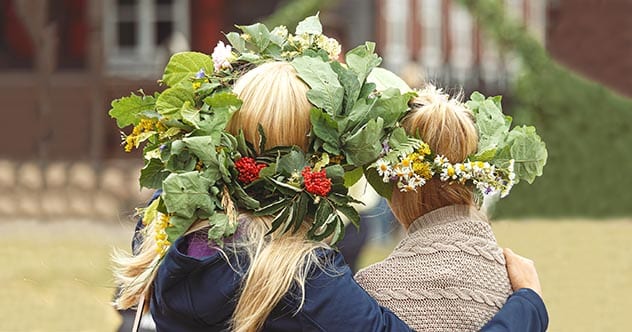
This does not mean Lithuania is frozen in the past. Modern Lithuania is a contemporary European country, but traces of older traditions still appear in folklore, seasonal festivals, songs, symbols, and respect for nature. The result is a culture where church towers, forest legends, midsummer celebrations, and ancient-sounding songs can all sit comfortably at the same table.
It is one reason Lithuanian culture feels so textured. It has Christian heritage, Baltic mythology, rural customs, and modern creativity all layered together like a very serious cultural cake. Speaking of cake, don’t worry. We will get to that.
4. Vilnius Old Town Is a UNESCO World Heritage Wonder
Vilnius, the capital of Lithuania, has one of the most beautiful historic centers in Northern and Eastern Europe. The Vilnius Historic Centre is recognized by UNESCO for its preserved medieval layout and its blend of Gothic, Renaissance, Baroque, and Classical architecture.
Walking through Vilnius Old Town feels like wandering through a stylish history book that also has good coffee. Narrow streets curve past pastel buildings, church spires rise above red roofs, and courtyards hide behind heavy doors. The city has a calm charm, but it is not sleepy. It has universities, galleries, restaurants, start-up energy, and an artsy district called Užupis that famously declared itself a republic. As one does.
For travelers, Vilnius is one of the best places to understand Lithuania’s personality. It is elegant without being stiff, historic without feeling dusty, and creative without trying too hard.
5. Lithuania Claims a Spot at the Geographic Center of Europe
Here is one of the best fun facts about Lithuania: the country has a recognized claim to the geographic center of Europe. In 1989, scientists from the French National Institute of Geography calculated a location near the village of Purnuškės, about 26 kilometers north of Vilnius, as the geographical center of the continent.
Of course, the exact center of Europe depends on how one defines Europe’s borders, islands, and farthest points. Geography, like family group photos, can get complicated. Still, Lithuania’s center-of-Europe claim gives visitors a wonderful travel brag: “I stood in the middle of Europe today.” That sounds much better than “I waited 17 minutes for my bus.”
The site is marked and easy to visit from Vilnius. It is a simple but memorable stop, especially for map nerds, road-trip fans, and anyone who enjoys standing somewhere symbolic while pretending the wind is cinematic.
6. Basketball Is Almost a Second Religion
If you want to understand Lithuania quickly, watch a basketball game with Lithuanians. Basketball is not just a sport there; it is a national passion, a shared emotional language, and occasionally a full-body cardio event for people watching from the couch.
Lithuania has produced legendary basketball talent, including Arvydas Sabonis, one of the great names in international basketball. The national team has won major European titles and Olympic bronze medals, which is especially impressive for a country with a population under three million.
Basketball became even more meaningful during the Soviet period, when Lithuanian players often represented something bigger than the scoreboard. After independence, the national team became a symbol of pride, resilience, and identity. In Lithuania, a basketball court can feel like a community square, a history lesson, and a thunderstorm of emotions all at once.
7. The Curonian Spit Is a Landscape of Sand, Forest, and Wind
The Curonian Spit is one of Lithuania’s most magical natural places. This long, narrow stretch of sand and forest separates the Curonian Lagoon from the Baltic Sea and is shared by Lithuania and Russia’s Kaliningrad region. The Lithuanian side is famous for dunes, pine forests, fishing villages, beaches, and the peaceful resort town of Nida.
UNESCO recognizes the Curonian Spit as a cultural landscape shaped by both nature and human effort. Wind and sea created the dunes, but local communities also worked for generations to stabilize the shifting sands and protect settlements from being swallowed. In other words, the Curonian Spit is beautiful, but it is also a reminder that landscapes sometimes need teamwork.
For travelers, it offers hiking, cycling, birdwatching, smoked fish, quiet beaches, and sunsets that look like the sky is showing off. Politely, but definitely showing off.
8. The Hill of Crosses Is One of Europe’s Most Powerful Pilgrimage Sites
Near the city of Šiauliai stands the Hill of Crosses, one of Lithuania’s most unforgettable landmarks. The site is covered with thousands upon thousands of crosses, rosaries, carvings, and religious symbols left by visitors over many generations.
The exact origin of the tradition is debated, but the hill is strongly associated with faith, remembrance, resistance, and national identity. During times of occupation and political pressure, crosses were repeatedly removed, yet people kept bringing them back. That quiet persistence gave the site a powerful meaning far beyond its physical size.
Today, the Hill of Crosses is both a pilgrimage destination and a moving cultural symbol. Even visitors who are not religious often find it deeply affecting. It is not flashy. It does not need to be. The place speaks in wood, metal, wind, and stubborn hope.
9. Lithuania Is Part of the Baltic Amber Story
Amber is often called “Baltic gold,” and Lithuania sits right in the heart of the amber-rich Baltic region. Amber is fossilized tree resin, often millions of years old, and the Baltic area is famous for producing a major share of the world’s amber.
In Lithuania, amber is not only jewelry. It is history, trade, mythology, craft, and souvenir temptation all rolled into one glowing golden pebble. Lithuanian legends even tell of Jūratė, a sea goddess with an amber palace beneath the Baltic Sea. According to the tale, pieces of amber washing ashore are fragments of that shattered palace. Science may explain amber as ancient resin, but the myth has better interior design.
Visitors can find amber shops, museums, and artisans throughout Lithuania, especially near the coast. Palanga, a seaside resort town, is known for its Amber Museum, housed in a former palace and surrounded by a lovely botanical park.
10. Lithuanian Food Is Comforting, Colorful, and Not Afraid of Potatoes
Lithuanian cuisine is hearty, practical, and deeply connected to the seasons. Potatoes play a starring role, especially in cepelinai, large potato dumplings often filled with meat or curd and served with sour cream or bacon sauce. They are named after zeppelins because of their shape, which is both accurate and slightly hilarious. Few dishes say “lunch” and “airship” at the same time.
Another famous Lithuanian dish is šaltibarščiai, cold beet soup with a bright pink color that looks like Barbie opened a farm-to-table restaurant. It is usually served with potatoes and is especially popular in warm weather. Then there is šakotis, a traditional tree cake made by layering batter on a rotating spit until it forms branch-like spikes. It is often served at weddings, Christmas, Easter, and big celebrations.
Lithuanian food reflects the country’s climate, agriculture, and celebration culture. It is filling, honest, and surprisingly photogenic. Yes, even the beet soup.
Why Lithuania Deserves More Attention
Lithuania may not always be the first country people name when planning a European trip, but that is part of its charm. It offers medieval history without overwhelming crowds, nature without noise, cities with personality, and traditions that feel both ancient and alive.
It is also a country of resilience. Lithuania declared the restoration of independence in 1990 and later joined both NATO and the European Union in 2004. Today it is a modern democratic country with a strong sense of identity, a growing technology sector, and a deep connection to European culture and security.
For anyone interested in the Baltic States, Lithuania is an essential stop. It is a place where language preserves ancient patterns, basketball fills arenas with emotion, forests meet folklore, and a bowl of pink soup can become a national mood.
Experience Notes: What These Lithuania Facts Feel Like in Real Life
Reading facts about Lithuania is one thing. Experiencing the country is another. The facts become much more vivid when you imagine moving through the places connected to them. Start in Vilnius Old Town early in the morning, when the streets are still quiet and the church bells seem to bounce gently between the buildings. The UNESCO description of preserved architecture suddenly becomes real: Gothic lines, Baroque curves, and soft-colored facades appear not as museum pieces, but as part of daily life. Someone hurries to work. A café opens. A tourist tries to pronounce ačiū and deserves at least partial applause.
Then picture a short trip north of Vilnius to the geographic center of Europe. It may not look like the dramatic center of a continent in a fantasy movie. There are no lightning bolts announcing, “Congratulations, you have reached Europe’s belly button.” But that is what makes it enjoyable. The place is peaceful, green, and quietly symbolic. Standing there, you realize Lithuania’s geography matches its personality: central in more ways than people often notice.
On another day, travel west toward the Baltic coast. The Curonian Spit changes the rhythm. The air smells of pine and sea. Sand dunes rise like pale waves frozen in place. In Nida, wooden houses and lagoon views make time slow down in the best possible way. This is where Lithuania’s nature feels protective and poetic. It is not the kind of landscape that shouts. It whispers, which is more dangerous, because then you actually listen.
Food experiences add another layer. Trying cepelinai for the first time can feel like accepting a friendly challenge from a potato. It is heavy, comforting, and unapologetic. Šaltibarščiai, on the other hand, surprises many visitors with its color before winning them over with its cool, tangy freshness. And šakotis looks so much like an edible sculpture that cutting into it may feel mildly disrespectful. Do it anyway. Cake exists to be admired briefly and eaten enthusiastically.
For a deeper emotional experience, the Hill of Crosses is unforgettable. The scale of the site is difficult to understand from photos. Up close, the crosses are large and small, old and new, simple and ornate. They create a landscape of memory. The wind moves through them, and the sound can feel almost like murmuring. It is one of those places where visitors naturally lower their voices, not because anyone tells them to, but because the place seems to ask for it.
Finally, try watching basketball in Lithuania, even if you are not usually a sports fan. The excitement is contagious. You may not understand every play, but you will understand the feeling: pride, nerves, hope, and collective joy packed into one bouncing orange ball. By the end, you may find yourself cheering too. This is the magic of Lithuania. Its facts are interesting on paper, but in real life, they become sounds, tastes, landscapes, and moments you remember.
Conclusion
Lithuania is a small country with a large story. It has been a medieval power, a guardian of an ancient language, a land of dunes and forests, a home of powerful spiritual landmarks, and a basketball-loving nation with serious heart. Its capital, Vilnius, offers one of Europe’s most rewarding historic centers, while its coast, food, folklore, and amber traditions add depth and color.
The top 10 fascinating facts about Lithuania show a country that is not merely “interesting for its size.” It is interesting, full stop. Whether you love history, travel, languages, sports, food, or unusual cultural details, Lithuania gives you plenty to explore. And if anyone asks what Lithuania is known for, you can now answer confidently: ancient language, big history, stunning Vilnius, Baltic amber, basketball passion, pink soup, and a national talent for being quietly unforgettable.
Note: This article is based on verified historical, cultural, travel, sports, and reference information, rewritten in original wording for web publication without unnecessary source-link clutter.


