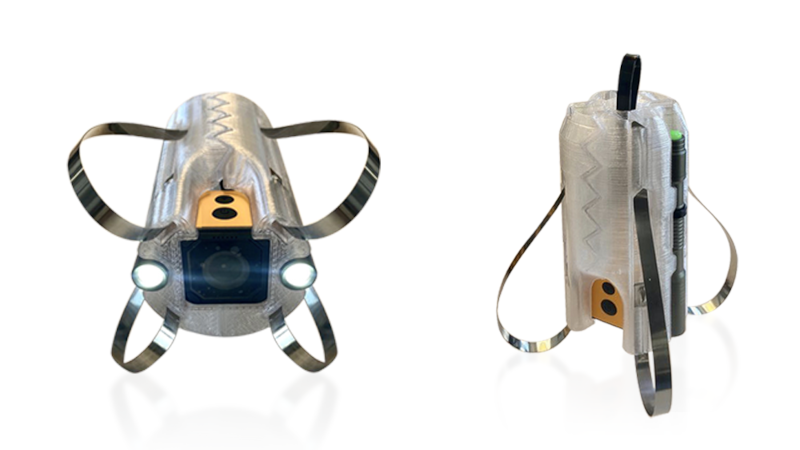

Mining has always involved a strange relationship with the invisible. A crew drills into rock, reads the cuttings, checks the core, studies the geology, and makes decisions based on everything the ground is willing to reveal. The problem, of course, is that the ground is not exactly famous for being chatty. That is where a borehole camera rig earns its keep.
A borehole camera rig is not the flashiest machine on a mine site. It does not roar like a haul truck, tower like a drill rig, or look heroic on a safety poster. It is usually a compact system made of a camera head, lights, cable, depth counter, monitor, recorder, winch, and sometimes a centering device that keeps the lens from scraping along the borehole wall like a nervous shopping cart. Yet this small inspection setup can make a big difference in how mining teams understand underground conditions, troubleshoot drilling issues, and protect workers from unnecessary risk.
In simple terms, a borehole camera lets mining teams see inside drilled holes without guessing, over-drilling, or sending people near places they do not need to be. It brings real-time visual evidence to decisions that used to depend heavily on indirect clues. For an industry where a small unknown can become an expensive surprise, that is a very welcome upgrade.
What Is a Borehole Camera Rig?
A borehole camera rig is a visual inspection system designed to be lowered into a borehole, drill hole, well, shaft, casing, or other narrow subsurface opening. The camera captures video or still images of the borehole wall and sends that footage to a surface display. Many systems also record the inspection so engineers, geologists, drillers, safety teams, and maintenance crews can review the same evidence later.
Depending on the model and job, the camera may look straight down, sideways, or both. Some systems rotate for a panoramic view. Others use 360-degree optical imaging or televiewer-style layouts that turn the inside wall of a borehole into an unwrapped visual log. That sounds fancy because it is fancy. It is basically the mining version of turning a rock tunnel into a scrollable photo album.
In mining, borehole camera rigs are used for exploration drilling, blast-hole inspection, geotechnical evaluation, water inflow checks, casing inspection, void detection, and ground-condition documentation. They are especially useful when teams need direct visual confirmation of fractures, bedding planes, blocky ground, washouts, obstructions, damaged casing, collapsed sections, or unexpected water-bearing zones.
Why Mining Needs Better Eyes Underground
Mining decisions are often made under pressure. Production schedules move quickly. Drills need to stay productive. Engineers need reliable data. Safety teams need to reduce exposure. Operators need to know whether a problem is minor, serious, or about to become the kind of problem that makes everyone in the trailer suddenly quiet.
Traditional tools such as core logging, geophysical logs, drill cuttings, caliper measurements, and water testing remain extremely valuable. A borehole camera does not replace them. Instead, it adds something beautifully simple: a picture. And in mining, a picture can confirm what a spreadsheet only politely suggests.
For example, a geologist may suspect that a fracture zone begins at a certain depth based on core recovery and drilling behavior. A camera can show whether the borehole wall is clean, broken, open, stained, washed out, or partly obstructed. A drill crew may report that the hole started behaving strangely. A camera can reveal whether the issue is sloughing ground, debris, casing damage, or an irregular borehole shape. Instead of arguing with the hole, the team can inspect it.
How Borehole Cameras Make Mining Work Easier
1. They Reduce Guesswork
Mining already has enough uncertainty. Commodity prices move. Weather happens. Equipment has opinions. The rock changes without sending a memo. Borehole imaging helps reduce at least one category of mystery by showing what is happening downhole.
When a camera rig is used after drilling, the team can visually confirm borehole condition. Is the hole open? Is the wall stable? Are there visible fractures? Is water entering from a specific interval? Has material fallen into the hole? Is casing properly seated? These observations help teams make faster and more confident decisions.
2. They Support Safer Inspections
Mining safety depends on keeping people away from unnecessary hazards whenever possible. Remote inspection tools help with that goal. A borehole camera can inspect confined, unstable, wet, or difficult-to-reach spaces from the surface. Instead of relying on risky manual checks or repeated physical probing, the team can lower a camera and view the condition in real time.
This matters in both surface and underground operations. In open-pit environments, borehole cameras can assist with drilled-hole evaluation and material identification. In underground mining, they can support checks of probe holes, drain holes, geotechnical holes, or areas where ground conditions need to be understood before crews proceed. The camera is not a substitute for a professional ground-control program, but it is a useful extra set of eyesone that does not complain about dust, mud, or being lowered into a dark hole before lunch.
3. They Improve Geological and Geotechnical Understanding
Modern borehole imaging can capture details such as fractures, joints, bedding, foliation, veins, cavities, weathering, and lithologic contacts. Optical televiewer systems work best in dry holes or clear water. Acoustic televiewer systems can be useful in fluid-filled holes and may perform better when optical visibility is poor. Video camera systems provide practical, direct footage that is easy for non-specialists to understand.
For geotechnical teams, this information can help with rock mass characterization, slope stability studies, ground-support planning, and interpretation of structural features. When borehole images are combined with core logs, drilling records, deviation surveys, and geophysical data, the result is a richer understanding of the subsurface. In plain English: the team gets fewer surprises, and fewer surprises are good for both safety and budgets.
4. They Help Troubleshoot Drilling Problems
Every driller knows that a borehole can misbehave. It may cave, deviate, collect debris, intersect broken ground, encounter water, or become blocked. Without visual inspection, diagnosing the issue can feel like trying to fix a washing machine while standing in another room and listening to it make expensive noises.
A borehole camera rig can show whether a hole is blocked by cuttings, narrowed by unstable material, damaged by casing movement, or affected by rock breakage. That information helps teams decide whether to clean the hole, redrill, change tooling, adjust the inspection plan, or document the condition and move on. It also helps avoid repeated trial-and-error steps that waste time and money.
Specific Mining Applications
Blast-Hole Inspection
In surface mining, drilled holes are critical to production planning. Camera-based inspection can help teams understand internal hole conditions, identify downhole material changes, and detect problems that could affect downstream handling. Recent research into autonomous blast-hole inspection robots shows how important this task has become: manual inspection can be slow, costly, and limited when teams need detailed information about hole geometry and material conditions.
A camera rig, whether manual or semi-automated, gives the operation more information before decisions are made. The goal is not to turn every mine site into a science-fiction movie. The goal is more practical: know what is in the hole, reduce delays, and avoid surprises that could ripple through drilling, loading, hauling, and processing.
Exploration and Core Drilling
In mineral exploration, drill core remains a star player. But core does not always tell the whole story. Recovery may be poor in broken zones. Orientation may be uncertain. Some features can be disturbed during drilling and handling. A borehole camera can provide an in-place view of the rock mass, helping geologists compare what they see in the core box with what still exists in the ground.
This can be especially helpful when evaluating structural features, water inflow, voids, clay seams, or unstable intervals. The camera helps answer a simple but powerful question: “What does it actually look like down there?”
Ground Control and Stability Work
Ground control is one of the most serious parts of mining. Whether the operation is dealing with underground openings, pit walls, benches, pillars, or slopes, understanding discontinuities in rock is essential. Borehole cameras can help document visible cracks, open fractures, weathered zones, and other features that may affect stability.
When used with engineering judgment, borehole imagery can support better support design, monitoring plans, and risk assessment. It gives teams more evidence before they make decisions about excavation, reinforcement, drainage, or follow-up investigation.
Water and Drainage Investigations
Water is helpful in a coffee mug and less charming when it unexpectedly appears in mine workings. Borehole cameras can assist with identifying water entry points, checking drain holes, inspecting casing, and documenting sediment or encrustation. Visual inspection is especially useful when a team needs to know whether water is entering through a fracture, around casing, or from a specific depth interval.
This can help with dewatering plans, environmental monitoring, and maintenance decisions. It also helps teams avoid treating the entire hole as a mystery when the problem may be concentrated in one visible section.
What a Good Borehole Camera Rig Includes
A practical borehole camera rig for mining usually needs more than a camera on a cable. It should be rugged, portable, easy to clean, and able to survive rough handling. A durable camera head, strong lighting, depth measurement, reliable cable, recording capability, and a stable deployment frame or winch can make the difference between a useful inspection and an awkward afternoon of “Is it recording?”
Depth tracking is especially important. Seeing a fracture is useful; knowing exactly where it is makes it valuable. Good lighting matters too. Boreholes are dark, and rock does not politely pose for the camera. In wet holes, visibility can be reduced by cloudy water, suspended sediment, or drilling fluids. In those cases, teams may need to flush the hole, wait for settlement, or use a different imaging method.
Centralizers can help keep the camera aligned and reduce image distortion. Side-view cameras can reveal wall conditions better than straight-down views. Rotating heads or panoramic systems can produce more complete documentation. The best rig is the one that matches the mine’s borehole diameter, depth, water conditions, inspection purpose, and data-quality needs.
Limitations: The Camera Is Smart, Not Magical
Borehole camera rigs are powerful tools, but they are not miracle machines. Optical cameras need visibility. If the water is muddy, the view may look like someone filmed soup. If the borehole is badly blocked, the camera cannot inspect past the obstruction. If the camera is not centralized, depth-referenced, or properly lit, the footage may be hard to interpret.
There is also a difference between seeing a feature and understanding its engineering meaning. A visible fracture does not automatically mean danger, and a clean-looking wall does not automatically mean long-term stability. Borehole imaging should be interpreted by qualified personnel and combined with geological, geotechnical, drilling, and safety information.
Still, even with limitations, the value is clear. The camera provides direct evidence. It helps teams ask better questions. It turns invisible conditions into visible data. In mining, that is a major advantage.
Why Borehole Camera Rigs Save Time and Money
Mining operations are expensive because nearly everything is large, specialized, and scheduled. When a drill hole fails, a production delay grows quickly. When ground conditions are misunderstood, the cost can be far greater. Borehole cameras help reduce those losses by catching problems earlier and documenting conditions more clearly.
A camera inspection can prevent unnecessary redrilling, support more accurate hole cleaning, improve maintenance decisions, and reduce disagreement between teams. The footage also becomes a record. Instead of relying on memory or handwritten notes, managers can review video evidence and compare it with future inspections.
This is especially useful for contractor communication. A drilling contractor, mine engineer, and geologist may all describe the same issue differently. A video clip has a calming effect on debates. It does not care who is right. It simply shows the hole.
The Future: Smarter Cameras, Automation, and Better Data
The future of borehole inspection in mining is moving toward smarter, more connected systems. Camera rigs are increasingly being paired with automation, robotics, LiDAR, artificial intelligence, digital logs, and 3D visualization. In some research projects, robots can identify drilled holes, position sensors, and collect downhole data with less human intervention.
This trend fits the broader movement toward safer and more data-rich mining. Mines are adopting remote sensing, autonomous equipment, monitoring systems, and digital mapping tools to reduce exposure and improve decisions. Borehole camera rigs are part of that same story. They are not glamorous, but they are practicaland practical technology is often the kind that actually sticks.
In the near future, more borehole inspections may automatically tag fractures, estimate wall condition, match footage to drill logs, and upload results to mine planning software. The camera may still be small, but the data behind it will become bigger, cleaner, and easier to use.
Field Experience: What Teams Learn When the Camera Goes Downhole
In real mining work, the biggest benefit of a borehole camera rig is often not one dramatic discovery. It is the steady removal of small doubts. Crews learn quickly that the camera is most useful when it becomes part of the normal workflow rather than an emergency tool pulled out only after something has already gone sideways.
A typical experience begins with a simple question: “Why is this hole not behaving like the others?” Maybe the drill penetration changed suddenly. Maybe water appeared where the plan did not expect it. Maybe the hole would not stay open. Without imaging, the team might make assumptions and move on. With a camera, they can lower the system, watch the footage, and identify whether the issue is broken ground, a ledge, loose cuttings, a washout, or a damaged interval.
One common lesson is that boreholes are rarely as neat as drawings make them look. On paper, a hole is a clean cylinder. In the field, it may have rough walls, small cavities, bedding breaks, stains, loose fragments, and changes in diameter. The camera helps the crew respect that reality. Rock does not read the drilling plan. It behaves according to its own history, stress, water, weathering, and structure.
Another practical lesson is the importance of preparation. The best inspections happen when the hole is ready, the camera is clean, the cable is managed, the depth counter is checked, and the team has agreed on what they are looking for. Poor setup can turn good equipment into confusing footage. A camera lens covered in mud is not a scientific instrument; it is a very expensive blur generator.
Teams also learn that communication improves when everyone can see the same evidence. A geologist may focus on fractures and lithology. A driller may notice wall damage or debris. A safety manager may care most about instability or access risk. A maintenance supervisor may look for casing wear or obstructions. The video brings those perspectives together. Instead of passing around guesses, the team can pause, replay, compare depths, and make a shared decision.
In underground settings, camera inspection can be especially valuable because space is limited, conditions change quickly, and unnecessary exposure is never welcome. A small visual check can support a bigger safety conversation. It can confirm whether follow-up work is needed or whether a suspected problem is less severe than feared. Either outcome is useful because both reduce uncertainty.
Over time, a borehole camera rig also builds institutional knowledge. Archived videos from different benches, headings, ore zones, or geotechnical domains create a visual library of ground behavior. New engineers and geologists can learn from old footage. Drillers can compare current holes with past problem areas. Managers can review evidence before approving changes to plans. That record becomes more valuable with every inspection.
The experience most teams eventually share is simple: once they get used to seeing inside boreholes, going back to pure guesswork feels uncomfortable. The camera does not solve every problem, but it makes many problems easier to understand. In mining, that is a serious win. Any tool that helps people work safer, spend less time guessing, and make better decisions deserves a place in the truckeven if it is not as loud as the big machines.
Conclusion
A borehole camera rig makes life easier in mining because it turns hidden ground conditions into visible information. It helps teams inspect holes, verify conditions, troubleshoot drilling problems, document fractures, evaluate casing, support ground-control decisions, and reduce unnecessary exposure. It is not a replacement for skilled geologists, engineers, drillers, or safety professionals. It is a force multiplier for them.
Mining will never be completely free of uncertainty. The earth is too old, too complicated, and frankly too stubborn for that. But with borehole camera rigs, mining teams can replace some of that uncertainty with real footage, shared evidence, and better decisions. For a tool that spends most of its life being lowered into dark holes, that is a pretty bright contribution.
Note: This article is for general informational and editorial purposes. Site-specific mining inspections, borehole logging, and ground-control decisions should always be handled by qualified professionals following applicable safety rules, engineering standards, and mine-site procedures.


