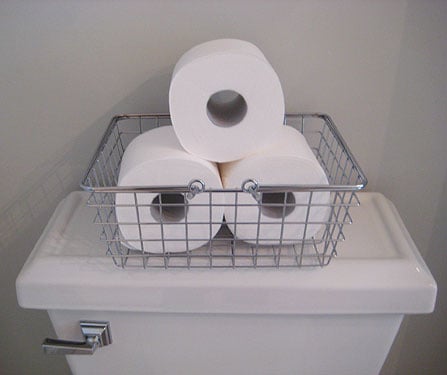

Toilet paper may never become the crown jewel of bathroom décor, but it does not have to sit on the floor in a crinkled plastic package like an abandoned grocery item. With the right container, shelf, or cabinet, those humble white rolls can become part of an organized and surprisingly polished bathroom.
Stylish toilet paper storage is not simply about appearances. A good setup keeps spare rolls dry, clean, visible, and within comfortable reach. It also prevents the dreaded moment when someone discovers an empty holder and realizes the replacements are enjoying a private vacation in the hallway closet.
Whether you have a tiny powder room, a rental bathroom, or a spacious primary suite, the following toilet paper storage ideas balance beauty with everyday practicality.
Begin With the Practical Rules of Toilet Paper Storage
Before choosing a magnificent brass basket shaped like a swan, consider how the bathroom is actually used. The best organizer should make the room easier to navigate, not create a decorative obstacle course.
Keep spare rolls within easy reach
At least one replacement roll should be accessible from the toilet. In a guest bathroom, the location should be obvious enough that visitors do not have to open six drawers and accidentally learn your entire skincare routine.
A basket beside the toilet, a freestanding holder, or a low shelf works well. If most of the supply is stored inside a cabinet, leave one or two visible backup rolls nearby.
Protect paper from moisture
Bathrooms generate humidity, splashes, and condensation. Paper is porous, so rolls should not be placed beside a shower opening, beneath dripping towels, or directly on a floor that is frequently wet. The Environmental Protection Agency recommends controlling indoor moisture and keeping relative humidity below 60 percent, ideally between 30 and 50 percent, because damp conditions can support mold growth on materials including paper.
In a steamy bathroom, choose a lidded basket, cabinet, canister, or washable container. Run the exhaust fan during and after showers, repair leaks promptly, and never return damp rolls to storage. Toilet paper is many things, but a resilient aquatic species is not one of them.
Measure before buying
Measure the rolls you normally purchase as well as the proposed storage area. Oversized rolls may not fit into vintage canisters, narrow towers, or older recessed holders. Check that a floor organizer will not interfere with the bathroom door, vanity drawers, toilet handle, or removal of the tank lid.
Store a realistic amount
An open display usually looks best with three to six rolls. Keep bulk packages in a linen closet, utility cabinet, or dry storage area and refill the decorative container as needed. Attempting to display a warehouse-sized supply can make even the most elegant bathroom resemble a very anxious convenience store.
Stylish Toilet Paper Storage Ideas That Actually Work
1. Use a lidded woven basket
A lidded basket is one of the easiest ways to hide extra toilet paper while adding warmth and texture. Seagrass, water hyacinth, rattan, and synthetic wicker complement bathrooms that feel coastal, farmhouse-inspired, bohemian, or relaxed and traditional.
Select a rectangular basket for a narrow shelf or a tall round basket for the floor. A washable liner helps protect the interior, while a lid conceals packaging and keeps splashes away. In especially humid rooms, synthetic woven materials may be easier to maintain than untreated natural fibers.
2. Turn an open basket into a deliberate display
If moisture is not a major concern, arrange three or four rolls in a sculptural open basket. Wire baskets provide an airy industrial look, while cotton rope baskets create a softer effect. A low ceramic bowl, footed vessel, or oversized decorative shell can also work in a powder room.
The secret is restraint. Fill the container neatly without creating a paper pyramid tall enough to require engineering approval. Repeating the basket material elsewhereperhaps in a hamper or traywill make the choice feel intentional.
3. Choose a slim freestanding toilet paper tower
A vertical toilet paper holder is ideal for the narrow gap between a toilet and vanity. Many versions hold one active roll at the top and several replacements below. Designs in matte black, chrome, brass, wood, and powder-coated steel make it easy to coordinate with faucets and cabinet hardware.
Look for a stable weighted base, smooth edges, and enough clearance for larger rolls. A covered lower section provides additional protection while maintaining a clean, streamlined silhouette.
4. Install floating shelves above the toilet
Floating bathroom shelves take advantage of unused vertical space without occupying the floor. Display a small basket of toilet paper alongside a framed print, folded hand towel, or plant suited to the room’s light conditions.
Keep the arrangement visually quiet. One practical container and one or two decorative objects are usually enough. Shelves should be securely anchored, positioned where no one will bump a head, and shallow enough that objects do not hover menacingly over the toilet.
5. Add an over-the-toilet storage unit
When a bathroom lacks built-in storage, an over-the-toilet organizer can introduce two or more shelves almost instantly. Open étagères feel light and airy, while units with cabinet doors conceal supplies and reduce visual clutter.
Before purchasing, measure the toilet’s width and height, note the location of water valves, and confirm that the tank lid can still be removed. Anchor tall furniture to the wall according to the manufacturer’s instructions. Toilet paper can look chic; a wobbling cabinet cannot.
6. Hide the supply inside the vanity
Closed vanity storage is perfect for minimalists who prefer not to display bathroom supplies. Reserve a drawer, pullout bin, or shelf for unopened rolls. Drawer dividers and stackable containers can keep the supply from mingling with cleaning products or toppling into plumbing.
If the vanity is deep, place daily essentials toward the front and reserve the rear for extra rolls. Labeling the bin is helpful in a shared or guest bathroom, particularly when several identical baskets are involved.
7. Roll in a narrow utility cart
A slim rolling cart can fit into an otherwise wasted gap and move out of the way during cleaning. Use the bottom tier for toilet paper, the middle for folded towels, and the top for attractive daily-use items.
Choose rust-resistant metal, sealed bamboo, or washable plastic. Matching containers placed on each tier will unify the cart and prevent it from looking like a mobile lost-and-found department.
8. Mount baskets directly on the wall
Wall-mounted wire or woven baskets create storage without consuming floor space. Install one basket beside the toilet for immediate backups or arrange two vertically to hold paper and hand towels.
Make sure the opening faces outward or upward at an accessible angle. Use hardware appropriate for the wall material and the loaded weight. In rentals, a freestanding ladder shelf or narrow leaning organizer may be a safer alternative to drilling.
9. Repurpose a glass-front cabinet
A vintage medicine cabinet, small curio cabinet, or wall-mounted display case can turn ordinary supplies into a charming arrangement. Stack rolls in one section and use the remaining shelves for towels, jars, or decorative objects.
Because glass reveals everything, spacing matters. Leave breathing room between groups and limit the color palette. Frosted or reeded glass offers a useful compromise: it hides the details while preserving a lighter appearance than solid cabinet doors.
10. Try a decorative canister
A tall ceramic, metal, or water-resistant resin canister can disguise several rolls while behaving like a decorative accessory. It is particularly effective in polished powder rooms where an open basket feels too casual.
Select a lid that lifts easily and a container wide enough for your preferred roll size. Avoid fragile glass on the floor or in households with young children. A beautiful storage idea should not require a first-aid kit.
11. Build toilet paper storage into a wall niche
During a bathroom renovation, a recessed niche can provide permanent storage without reducing floor area. Line it with the same tile as the surrounding wall for a seamless look, or use contrasting tile to create a small architectural feature.
Place the niche away from direct shower spray and make it deep enough for the selected rolls. A lower compartment can hold toilet paper while upper shelves display towels or toiletries. Unlike an improvised organizer, a well-planned niche looks as though the bathroom always intended to be this organized.
12. Give an old stool or side table a new job
A compact stool, plant stand, or petite side table can support a basket of toilet paper while introducing character. This works beautifully in traditional, cottage, eclectic, or vintage-inspired bathrooms.
Use a finish suitable for humid conditions and confirm that the piece stands firmly on tile. Keep the top arrangement simple so the furniture reads as a purposeful accent rather than something temporarily rescued from the hallway.
Match the Storage to Your Bathroom Style
Modern and minimalist bathrooms
Choose a concealed cabinet, smooth cylindrical holder, or slim metal tower. Repeat the finish of the faucet or lighting, and avoid excessive labels, patterns, and accessories. In minimalist design, empty space is part of the composition.
Farmhouse and rustic bathrooms
Weathered wood shelves, galvanized metal baskets, vintage crates, and natural wicker introduce warmth. Use one rustic statement rather than assembling an entire frontier settlement around the toilet.
Coastal and spa-inspired bathrooms
Try pale oak, bamboo, seagrass, cotton rope, or white ceramic. Soft neutrals and organic textures help practical bathroom storage feel calm and resort-like.
Glamorous and traditional bathrooms
Look for polished brass, marble, fluted glass, dark wood, or a decorative lidded vessel. Coordinating small finishessuch as knobs, frames, and the toilet paper holdercreates a polished result without requiring every metal to match perfectly.
Colorful and eclectic bathrooms
A painted wall basket, patterned container, or unexpected vintage object can become a playful focal point. Pull one color from the wallpaper, shower curtain, or tile so the storage belongs to the room rather than merely visiting it.
How to Make Toilet Paper Storage Look Professionally Styled
- Remove plastic packaging: Refill decorative storage instead of displaying the retail wrapper.
- Repeat materials: Echo the basket, wood tone, or metal finish elsewhere in the bathroom.
- Mix open and closed storage: Display a few attractive essentials and conceal the bulk supply.
- Leave negative space: Shelves appear more sophisticated when every inch is not occupied.
- Prioritize easy cleaning: Choose containers that can be lifted, wiped, or vacuumed around.
- Create a refill routine: Restock when the visible supply reaches one or two rolls.
Common Toilet Paper Storage Mistakes
Avoid placing unprotected rolls on the floor, where they can absorb moisture from spills or mopping. Do not position paper beneath plumbing connections that may leak, beside a tub where children splash, or close to an open shower.
Another frequent mistake is choosing an organizer that is too large for the room. Bulky baskets can make a small bathroom feel tighter, even when they are technically providing storage. Slim, vertical, wall-mounted, or stackable solutions generally use limited space more efficiently.
Finally, do not sacrifice accessibility for a perfect photograph. Beautiful toilet paper stored on the highest shelf is merely decorative sculpture during an emergency. Keep at least one replacement where every household member and guest can reach it comfortably.
Experience-Based Lessons From Real Bathroom Makeovers
Note: The following approximately 500-word section uses composite, experience-based scenarios to illustrate common storage challenges without identifying individual households.
The tiny powder room that needed less, not more
One compact powder room began with a large floor basket holding twelve rolls. The basket was attractive, but it blocked part of the vanity and made cleaning awkward. Every time the floor was mopped, the basket had to be lifted, and its natural fibers gradually developed water marks.
The solution was surprisingly modest: a slim wall-mounted basket holding three rolls. The remaining package moved to a dry hallway closet. A small brass hook and matching mirror frame helped the basket feel connected to the décor. The room did not gain any actual square footage, yet it immediately appeared larger because the floor was visible again.
The lesson was simple. Small-bathroom storage should support the room’s proportions. More capacity is not automatically better if the organizer becomes the largest object after the toilet.
The family bathroom where open storage failed
In a busy family bathroom, extra rolls were stacked on two open shelves near the shower. The arrangement looked fresh after cleaning, but normal life quickly intervened. Damp towels brushed against the rolls, children rearranged the stack, and water droplets occasionally reached the lowest shelf.
A shallow wall cabinet with doors replaced the open display. One active backup remained in a covered freestanding holder beside the toilet, while the cabinet stored the larger supply. The household also began running the exhaust fan consistently after showers.
The makeover was less photogenic in a dramatic before-and-after sense, but far more successful in daily use. Good organization is often quiet. It prevents small annoyances before anyone has to complain about them at breakfast.
The guest bathroom that needed clearer communication
Another bathroom had plenty of storage, but guests could not find it. Spare rolls were hidden in an unmarked vanity drawer behind extra soap and cleaning cloths. Visitors either searched awkwardly or assumed no replacements existed.
Moving two rolls into a lidded basket beside the toilet solved the problem. The basket coordinated with the towel tray, and the lid protected its contents while keeping the display discreet. Guests no longer needed instructions, which is an underrated form of hospitality.
This experience demonstrates that visibility and accessibility matter as much as capacity. A guest bathroom should quietly answer basic questions: Where is the hand towel? Is there soap? Where is the extra toilet paper? If the room answers without assistance, the storage plan is working.
The rental bathroom transformed without drilling
A renter with a pedestal sink had almost no concealed storage and could not install permanent shelving. A narrow three-tier rolling cart became the practical answer. Toilet paper went into a washable bin on the bottom, folded washcloths occupied the middle, and a soap dispenser and small plant sat on top.
Because the cart’s containers shared the same neutral color, it looked like a compact piece of furniture rather than temporary dorm-room storage. It could also roll away when the floor needed cleaning or when the renter eventually moved.
The key takeaway from every setup
Successful toilet paper storage rarely depends on an expensive organizer. The best results come from noticing the room’s moisture, available space, decorating style, and real household habits. A $20 basket that fits perfectly and stays dry can outperform a dramatic cabinet that blocks the toilet handle. Chic storage is not about disguising function; it is about giving function a better-looking home.
Conclusion: Let the Humble Roll Join the Décor
Toilet paper will always be practical, but its storage can still contribute color, texture, and order to a bathroom. A lidded basket brings warmth, floating shelves reclaim vertical space, and a narrow tower solves the problem without demanding a renovation. In damp rooms, closed or water-resistant storage offers additional protection.
Choose a solution that fits the room, keeps replacement rolls easy to find, and can be cleaned without a minor furniture-moving event. Once those basics are covered, have fun with the material and style. Even the most ordinary household supply can look surprisingly chic when it is treated as part of the design.


