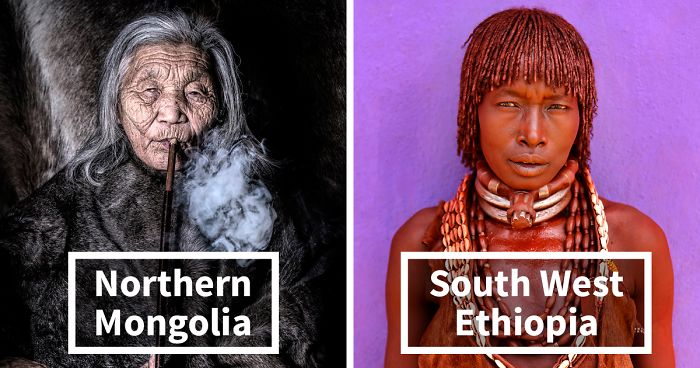
For The Last 10 Years, I‘ve Been Traveling To Inaccessible Corners Of The World And Photographing Indigenous People (30 Pics)

Some journeys begin with a plane ticket. Others begin with a small backpack, a camera wrapped in two layers of socks, and the deeply optimistic belief that “the road gets better after the river crossing.” Spoiler: it often does not. But for the last decade, traveling to remote corners of the world and photographing Indigenous people has taught me something no airport lounge ever could: the most powerful stories are rarely found where the Wi-Fi is strongest.
This photo essay is not about “discovering” people. Indigenous communities were never lost. They have always known exactly where they are, who they are, and why their lands, languages, ceremonies, clothing, foodways, and kinship systems matter. The traveler is the one doing the findingusually finding humility, patience, and the hard truth that a camera is not a passport to anyone’s private world.
Across forests, deserts, tundra, islands, mountains, and river valleys, Indigenous Peoples continue to protect cultural knowledge while facing pressure from mining, deforestation, climate change, land loss, tourism, and old-fashioned misunderstanding wearing a modern hat. A good photograph can help build empathy. A careless photograph can flatten a living person into an “exotic” image. That difference is everything.
Why Photographing Indigenous People Still Matters
Indigenous Peoples represent hundreds of millions of people across the globe, with thousands of distinct cultures, languages, and ways of relating to land. Many communities live in places that outsiders describe as “inaccessible,” although that word usually means inaccessible to delivery apps, rental cars, and people who panic when their phone says “No Service.” To the communities themselves, these places are homelands, classrooms, pharmacies, spiritual landscapes, archives, and grocery stores with better design than any supermarket.
Photography matters because visual storytelling can interrupt stereotypes. It can show that Indigenous identity is not frozen in the past. A person can wear traditional beadwork and use a smartphone. A grandmother can carry ancestral songs and also have strong opinions about WhatsApp groups. A hunter can understand satellite weather forecasts. A young artist can revive a nearly forgotten weaving pattern and post it online before lunch. Culture is not a museum display; it breathes, argues, laughs, adapts, and occasionally rolls its eyes at outsiders asking silly questions.
But photography only matters when it serves people, not the photographer’s ego. The best images do not say, “Look what I found.” They say, “Listen to what this person, family, or community wants you to understand.”
The Ethical Line Between Storytelling and Exploitation
The first rule of photographing Indigenous people is beautifully simple: ask before you photograph. The second rule is harder: accept the answer. Consent is not a decorative ritual performed after the camera is already clicking. It should be free, informed, specific, and ongoing. People should know how the images may be used, where they may appear, and whether the photographer may profit from them.
In many communities, some ceremonies, objects, burial places, songs, masks, medicines, or sacred spaces should not be photographed at all. Some images may be acceptable for family use but not public publication. Some elders may allow a portrait only if certain details are not shown. These boundaries are not obstacles to “authenticity.” They are part of the story.
Ethical photographers also avoid staging poverty, exaggerating isolation, or cropping out modern life to make a community look more “ancient.” That trick may win clicks, but it steals complexity. Indigenous people are not props in a global nostalgia machine. They are farmers, fishers, teachers, parents, artists, leaders, scientists, activists, language keepers, teenagers, toddlers, grandfathers, aunties, and, yes, people who may laugh at your hiking boots.
What “Inaccessible” Really Means
After ten years of travel, I have learned that “inaccessible” can mean many things. Sometimes it means a mountain trail that turns your knees into noodles. Sometimes it means a river journey where the boat engine coughs like an old lawn mower with secrets. Sometimes it means political restrictions, protected territories, seasonal weather, or the simple fact that a community has chosen not to welcome visitors casually.
The most inaccessible place, however, is often trust. You cannot arrive with a camera and expect a meaningful portrait in five minutes. Trust is built by showing up respectfully, explaining your purpose, listening more than talking, working with local guides, honoring community decisions, and understanding that “no” is a complete sentence.
Some of the strongest images happen after the camera has been lowered. A shared meal, a long walk, a quiet conversation with an interpreter, or an evening spent watching children chase one another through dust and laughter may reveal more than a perfectly composed frame. Photography is sometimes less about pressing the shutter and more about earning the right not to.
The 30 Pictures Behind the Journey
A collection of 30 portraits from remote Indigenous communities should never be treated like a trophy wall. Each picture should be understood as a doorway into a larger context. A face is not a full story. A garment is not a culture. A ceremony is not content. Responsible captions matter because they can either deepen understanding or repeat lazy myths.
1. Portraits of Elders
Elders often carry knowledge that is not written down: migration stories, plant medicine, songs, weather patterns, clan histories, spiritual responsibilities, and language. A portrait of an elder can hold extraordinary dignity, but only when made with permission and patience. The wrinkles on a face are not “texture” for artistic effect. They are a record of life, labor, grief, humor, survival, and authority.
2. Children and the Future of Culture
Photographing children requires extra caution. A smiling child in traditional clothing may be visually beautiful, but the image should never reduce childhood to cuteness. In many Indigenous communities, children are part of active cultural renewal: learning ancestral languages, helping with food gathering, dancing at community events, or watching grandparents repair tools. The future of culture is not abstract. It is often running barefoot, asking for snacks, and refusing to sit still for a portrait.
3. Daily Life, Not Just Ceremony
Outsiders often want the dramatic image: feathers, firelight, face paint, masks, drums, or elaborate clothing. Those moments may be important, but daily life is just as revealing. A woman preparing food, a man mending a fishing net, teenagers charging a phone from a solar panel, a family repairing a roof before rainthese scenes show culture as practice, not performance.
4. Land as a Living Relative
For many Indigenous communities, land is not just property. It is identity, responsibility, memory, and relationship. A photograph of a person standing in a forest, desert, or Arctic landscape should not treat the land as a pretty backdrop. The land is a participant in the story. It shapes clothing, diet, architecture, ceremony, travel, language, and the community’s understanding of time.
Lessons From a Decade Behind the Lens
The first lesson is that speed ruins stories. The second lesson is that discomfort is a surprisingly good teacher. The third lesson is that the phrase “waterproof boots” should be legally investigated, because many boots make bold promises and then immediately betray you in a swamp.
On a more serious note, long-term documentary photography requires a different rhythm than tourism. A tourist collects highlights. A documentary photographer collects responsibility. Before publishing a portrait, the photographer must ask: Does this image protect dignity? Does it add context? Does it reinforce stereotypes? Would the person photographed recognize themselves in the story being told?
Indigenous communities have been photographed for generations, often by outsiders who controlled the narrative. Many historic images were made without consent, mislabeled, staged, or used to promote colonial ideas. Today, photographers must work differently. That means collaborating with communities, crediting cultural knowledge appropriately, avoiding extractive storytelling, and supporting Indigenous photographers who are telling stories from within their own nations and communities.
The Role of Indigenous Photographers
One of the most important shifts in visual storytelling is the rise and recognition of Indigenous photographers documenting their own communities. Their work often carries a level of intimacy and accountability outsiders cannot replicate. They understand humor, kinship, protocol, grief, beauty, and political context from the inside. They know when a moment is public, when it is private, and when the camera should stay in the bag.
Non-Indigenous photographers can still make respectful work, but they should not behave as if they are the only bridge between Indigenous people and the world. The better approach is collaboration: hire local guides, work with translators, share images with participants, seek community feedback, pay fairly, and support local media makers. The camera should not be a tool of extraction. It should be part of a relationship.
What Makes a Powerful Indigenous Portrait?
A powerful portrait is not always the most dramatic one. Sometimes it is quiet: a hand resting on woven fiber, a teenager looking directly into the lens, an elder smiling at a joke not translated for the photographer, a child watching smoke rise from a cooking fire. The best portraits leave room for the subject’s humanity. They do not demand that Indigenous people appear noble, tragic, spiritual, primitive, or heroic every second of the day.
Good portraits also avoid visual clichés. Not every Indigenous person lives in a remote village. Not every Indigenous community wears traditional clothing daily. Not every story is about loss. Many are about innovation, humor, leadership, art, food sovereignty, education, language revitalization, and resistance. A balanced photo essay can include beauty and hardship without turning hardship into spectacle.
How Climate Change Is Changing the Story
Many Indigenous communities are on the front lines of climate change. Arctic communities face shifting ice and changing animal migration patterns. Island communities face rising seas and stronger storms. Forest communities confront fires, drought, illegal logging, and biodiversity loss. Mountain communities watch glaciers shrink and water sources change. These are not distant environmental headlines; they are daily realities.
Photography can make these realities visible, but it must avoid disaster tourism. A flooded village, a burned forest, or an eroded coastline should not be framed as a dramatic background for outsider emotion. The story should center the people living through the change, their knowledge, their solutions, and their demands for rights and protection.
Why Language Belongs in the Frame
Language is one of the deepest carriers of Indigenous knowledge. A single word can hold ecological information, spiritual meaning, family relationships, and humor that refuses to behave in translation. When languages disappear, the world loses more than vocabulary. It loses ways of seeing.
In photo essays, language can appear through captions, names, signs, songs, and quotes. Whenever possible, photographers and writers should use the names communities use for themselves, spelled correctly and checked with reliable sources or community members. This is not a tiny editorial detail. Names are dignity in text form.
Practical Advice for Respectful Travel Photography
Do Your Homework Before You Arrive
Learn about the community’s history, political status, land rights, language, and current concerns. Do not arrive with a head full of movie scenes and call it research. Read work by Indigenous writers, journalists, scholars, and artists. Understand local protocols before your camera comes out of the bag.
Work With Local People
A local guide or cultural liaison is not just someone who points at trails. This person can help prevent misunderstandings, explain protocol, translate accurately, and tell you when you are about to do something embarrassing. Listen to them. They are not an accessory to your adventure; they are essential to doing the work responsibly.
Share the Results
Whenever possible, send prints or digital copies back to the people photographed. Ask how they want to be identified. Offer captions for review if the story is sensitive. If the project earns money, consider how the community benefits. Exposure alone is not payment, and frankly, exposure does not buy school supplies, fuel, medicine, or camera batteries.
Know When Not to Photograph
Some moments are better lived than captured. Grief, ceremony, conflict, medical care, sacred practices, and private family moments may not belong to the public. The mature photographer understands that restraint can be more ethical than access.
of Field Experience: What the Road Taught Me
After ten years of traveling through remote regions and photographing Indigenous people, the most vivid memories are not always the dramatic ones. Yes, there were mountain passes where the air felt thin enough to fold, river crossings that made my backpack smell like wet socks for three heroic days, and nights when the stars looked close enough to snag on a tent pole. But the moments that stayed with me were usually smaller.
I remember being offered tea so strong it could probably negotiate a peace treaty. I remember an elder correcting my pronunciation of a local greeting five times, then laughing so warmly that my embarrassment melted into gratitude. I remember children crowding around the back of my camera, not because they were amazed by technology, but because they wanted to judge the photos immediately. Their reviews were honest. Brutal, even. Tiny art directors with muddy feet.
I learned that a camera can open conversations, but it can also close them if used carelessly. In one village, I kept my camera packed away for the first day. We walked, talked, ate, and listened. By evening, people began suggesting photographs themselves: a grandmother with her weaving, a young man with a handmade tool, a family outside a home built from local materials. The images were stronger because they were invited, not taken.
I also learned that weather has a personality, and not always a polite one. Rain arrived sideways. Dust entered lenses with the determination of a legal team. Cold turned camera buttons into tiny metal enemies. Heat made every strap feel like a bad life choice. But these inconveniences were reminders that the people living in these regions understand their environments with a sophistication outsiders often underestimate. They read clouds, animal behavior, river levels, wind, soil, snow, and silence. Their knowledge is not “old-fashioned.” It is precise, tested, and alive.
The hardest lesson was recognizing the limits of my own perspective. A beautiful image can still be incomplete. A moving portrait can still fail if the caption is careless. A story can still cause harm if it turns people into symbols instead of individuals. Over time, I became less interested in chasing the perfect shot and more interested in making images that people would feel respected by.
Traveling to inaccessible corners of the world changed my definition of access. Access is not simply reaching a place. It is being welcomed with understanding. It is knowing what not to ask, where not to stand, when not to photograph, and how to leave without taking more than you were given. The best journeys did not make me feel like an explorer. They made me feel like a guest. That is a much better title.
Conclusion: The Camera Should Carry Respect
Photographing Indigenous people in remote corners of the world is not just an artistic project. It is an ethical responsibility. The camera can preserve memory, challenge stereotypes, celebrate resilience, and bring attention to urgent issues such as land rights, language loss, climate change, and cultural survival. But it can only do that well when guided by consent, humility, accuracy, and reciprocity.
The most meaningful photographs from the last ten years are not the ones that make the world look distant and mysterious. They are the ones that make people feel closer without making them smaller. They remind viewers that Indigenous communities are not relics of the past. They are living nations, families, artists, knowledge keepers, and future-makers. And if the photographer does the job properly, the final image says less about the person behind the camera and more about the dignity of the person in front of it.
Note: This article is written as a publish-ready editorial narrative based on real documentary photography ethics, Indigenous rights principles, cultural preservation practices, and responsible travel storytelling.


