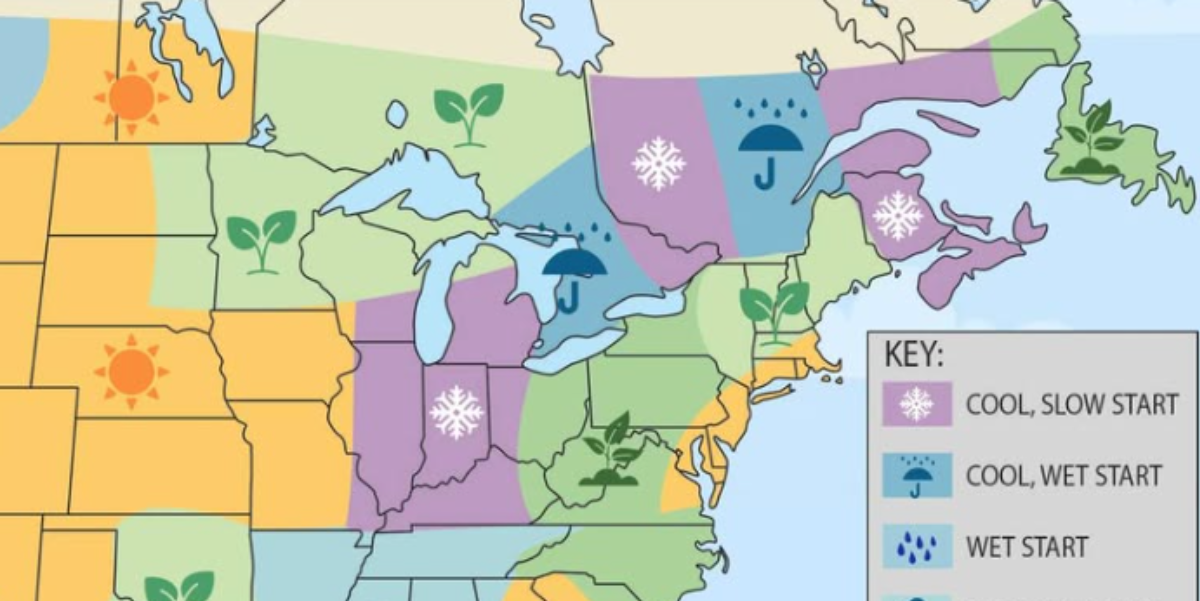

Spring gardening has always involved a little optimism, a little dirt, and at least one deeply questionable decision involving tomatoes. One warm weekend arrives, the birds start acting smug, and suddenly half the country is standing in a garden center whispering, “Maybe it’s time.” That is exactly why the release of the first-ever spring garden map made such a splash. It gave gardeners something they crave almost as much as perfect heirloom tomatoes: timing.
The map that grabbed all the attention came from The Old Farmer’s Almanac, which introduced a weather-based spring gardening guide designed to show how quickly planting season might begin across different regions. In plain English, it answered the annual question that has launched a thousand seed orders: Can I plant yet, or am I about to donate my seedlings to the frost gods?
That is what makes this launch interesting. It was not just another cute seasonal graphic designed to make gardeners feel productive while still wearing a winter coat. It was a practical planning tool built around real gardening variables like precipitation, soil moisture, temperatures, and frost timing. Instead of giving everyone the same generic advice, it acknowledged a truth every gardener learns eventually: spring is not a single event. It is a moving target wearing muddy boots.
Why This Spring Garden Map Matters
The appeal of a spring garden map is obvious. Gardeners do not just need inspiration; they need a reliable starting signal. Traditional planting advice often leans on broad averages, and averages are useful, but spring weather rarely behaves like a polite spreadsheet. Some years the soil is warm early. Some years it is wet for weeks. Some years a glorious fake spring rolls in, tricks everyone into planting, and then smacks the garden with one last cold snap like a sitcom twist nobody asked for.
This map matters because it tries to bridge the gap between long-term averages and what may actually happen in a given season. The first version used multiple categories to describe whether a region was looking at a cool, wet, dry, slow, or fast start. Later map updates focused more tightly on last frost timing, which is another smart angle because frost dates are the difference between a cheerful garden weekend and an outdoor funeral for your peppers.
In other words, the map reflects a growing shift in gardening advice. Instead of saying, “Plant around this usual date and good luck, brave citizen,” it pushes gardeners toward better timing based on conditions. That is a big deal for beginners, helpful for experienced growers, and extremely satisfying for anyone who likes charts, maps, or telling neighbors they were right all along.
What the Map Actually Tells Gardeners
At its core, the spring garden map helps gardeners understand whether their season is starting earlier than normal, later than normal, or roughly on schedule. That sounds simple, but it has major consequences for everything that follows. An earlier start may let gardeners sow cool-season crops sooner, transplant hardy seedlings earlier, and extend the season a bit. A later start suggests patience, better drainage, and more restraint with warm-season crops that hate cold soil.
The first weather-based version also looked beyond frost alone. That matters because a garden can be technically frost-free and still not be ready. Soil can stay soggy. Beds can remain cold. Germination can stall. Roots can sulk. And nothing bruises a gardener’s ego quite like a packet of seeds that responds to your enthusiasm with absolute silence.
So while the map is helpful, it is not a magic wand. It is better understood as a smarter first checkpoint. Think of it as the trailer, not the entire movie. It tells you how the season is shaping up, but you still need to confirm the rest of the story with your local frost date, soil temperature, plant type, and short-range forecast.
Spring Garden Map vs. USDA Hardiness Zone
This is where many gardeners accidentally wander into confusion. A USDA hardiness zone is not the same thing as a spring garden map. Hardiness zones are based on average annual extreme minimum winter temperatures. They help you figure out which perennial plants are likely to survive winter in your area. They are excellent for choosing what can live through January.
What they do not do is tell you exactly when to plant your cucumbers in April.
That is where frost dates and seasonal planting maps come in. Frost dates tell you the average window for the last spring freeze and the first fall freeze. A spring garden map adds another layer by asking whether this particular season is likely to run early, late, wet, dry, or otherwise dramatic. So if the USDA zone is your long-term identity, the spring garden map is your current mood.
How to Use the Map Without Wrecking Your Garden
1. Start With the Map, But Do Not Stop There
Use the map to get a regional read on the season. Is your area headed for an early start? Great. That may be your cue to prep beds, direct sow hardy crops, or start hardening off certain seedlings. Is your region delayed? Fine. You have not failed. You are just gardening on a different timeline, which is still better than gardening on a delusional one.
2. Check Your Last Frost Date
The last frost date is still the big boss of spring planting. It marks the point when freezing temperatures are generally expected to be over, though Mother Nature reserves the right to improvise. Warm-season plants like tomatoes, peppers, basil, melons, and cucumbers usually need you to wait until after that date. Hardy crops like peas, spinach, kale, radishes, carrots, and lettuce can often go in earlier, especially if the soil is workable and temperatures are cooperative.
3. Measure Soil Temperature
This step separates the eager gardeners from the effective ones. Cool-season crops can handle lower soil temperatures, and many can get going when the soil is around 40 to 50 degrees Fahrenheit. Warm-season crops are fussier. Many need soil above 60 degrees, and some truly thrive only when it is warmer. If the soil is still cold, planting heat-loving crops early is less “getting a jump on the season” and more “staging a very slow disappointment.”
4. Time Indoor Seed Starting Correctly
A spring garden map can also help you work backward. Many seeds are best started indoors about six to eight weeks before the last frost date. That schedule works well for crops like tomatoes, peppers, and eggplant. Start too late and you miss your window. Start too early and your seedlings become leggy little apartment tenants demanding more room, more light, and more emotional support.
5. Harden Off Seedlings Like a Responsible Adult
Seedlings raised indoors need a gradual transition outdoors. This is called hardening off, and yes, it sounds tough because it is. Gardeners should usually give seedlings about one to two weeks of gradual exposure to sunlight, wind, and outdoor temperature swings. Tossing them directly from a cozy windowsill into full sun and chilly wind is less “transplanting” and more “plant betrayal.”
6. Adjust for Wet, Cold, or Slow Conditions
If the map signals a wet or delayed spring, take the hint. Avoid working overly wet soil, which can compact it and make life harder for roots. Raised beds can help because they generally drain better and warm more quickly in spring. So can patience, although that tool is sold out in most households by mid-March.
What Gardeners Should Plant First
One of the smartest ways to use a spring garden map is to divide crops into categories instead of treating the entire garden like one giant all-or-nothing event. Cool-season crops are your early starters. Think peas, spinach, arugula, lettuce, radishes, carrots, beets, broccoli, cabbage, onions, and kale. These plants tolerate cool conditions and often appreciate getting established before summer heat barges in and ruins everyone’s concentration.
Warm-season crops are the divas of the vegetable patch. Tomatoes, peppers, basil, beans, squash, cucumbers, corn, melons, and eggplant generally want warmer air, warmer soil, and no frost nonsense. For them, an early spring headline is not a free pass. Even if the map suggests a faster start, you still need consistently suitable conditions. Otherwise, those plants will sit in the garden looking offended for weeks.
Why Garden Timing Feels More Complicated Now
Part of the excitement around the spring garden map comes from a simple reality: gardeners are dealing with more weather swings than they used to expect. One week can feel like late April, and the next can feel like February wearing sunglasses. That is why map-based guidance is resonating. It feels more responsive than relying on the same old date scribbled in a notebook ten years ago.
This does not mean the old rules are useless. Quite the opposite. Frost dates, hardiness zones, seed packet instructions, and local extension advice are still the backbone of smart gardening. The map just gives those tools a better opening act. It helps gardeners pay attention earlier and plan more intelligently before they start buying twelve kinds of seedlings they do not actually have room for. A noble dream, sure, but still a spatial challenge.
The Bigger Takeaway for Home Gardeners
The real value of the first-ever spring garden map is not that it predicts the future with cinematic precision. It is that it encourages gardeners to think in layers. First, check the regional pattern. Then confirm your frost date. Then look at soil temperature. Then match crops to conditions. Then harden off seedlings and keep protection nearby. That sequence is not flashy, but it works.
And honestly, that is what most gardeners want. Not perfection. Just fewer tragic surprises. Fewer tomatoes planted into cold mud. Fewer soggy seed rows. Fewer late frosts arriving like an uninvited relative with opinions. A useful map cannot eliminate risk, but it can reduce the amount of gardening done on vibes alone.
So yes, the release of a spring garden map is a meaningful development for backyard growers. It turns broad seasonal chatter into something actionable. It reminds us that when spring begins depends on where you live, what you grow, and how closely you are paying attention. It also offers the deeply comforting message that if your garden is behind someone else’s on social media, that does not mean you are late. It may just mean your zip code has different plans.
Experiences Gardeners Will Instantly Recognize
If you have gardened for more than one spring, the idea behind this map probably feels familiar in your bones. Not because you memorized a chart, but because you have lived the chaos. You have seen the first warm weekend send everyone outside with seed trays and reckless confidence. You have watched neighbors plant tomatoes in a burst of optimism, only to spend three nights covering them with bedsheets like they were tucking in restless children. A spring garden map matters because it mirrors those real experiences gardeners deal with every year.
Take the classic false spring. The air feels soft. The sun hangs around longer. Garden centers suddenly look irresistible. You convince yourself the season has turned for good, even though your rational brain is waving tiny red flags in the background. Then, just as you start imagining homegrown salsa, a cold front rolls in and reminds you that March and April are often professional pranksters. A map that warns your region is on a slow or later-than-normal start is not killing your joy. It is trying to save your basil.
Then there is the wet spring experience, which every gardener knows in one form or another. The calendar says it is time. Your seedlings say it is time. Your weekend schedule says it is definitely time. But the garden bed says, “Absolutely not.” The soil is heavy, sticky, and one bootstep away from compaction. Digging into it feels less like planting and more like making pottery. In those years, the map’s warning about moisture and delayed conditions is not abstract at all. It is the difference between working with nature and wrestling a swamp.
Gardeners in warmer regions know the opposite problem. Their spring may arrive early, but that does not mean every crop is thrilled. A hot, dry start can push growth along while quietly increasing stress on seedlings and shallow roots. Plants may technically survive, but they do not always thrive. Leaves wilt faster. Moisture disappears sooner. Mulch suddenly feels less like an optional accessory and more like a survival strategy. The map becomes useful not because it says “go,” but because it says, “Go, but bring water and a backup plan.”
Seed starting indoors creates another shared experience. Every gardener has had that year when the seedlings looked amazing under lights, then went outdoors and reacted like Victorian aristocrats confronted with weather for the first time. Hardening off sounds simple until you are carrying trays in and out every day, monitoring sun, wind, and nighttime temperatures like a plant bodyguard. A spring map helps because it lets you begin that transition with better timing instead of pure guesswork.
And perhaps the most relatable experience of all is comparison. Someone in another state is already posting lush raised beds, while your backyard still looks like winter forgot to move out. The beauty of a real spring garden map is that it reminds gardeners not to compare one region’s April to another region’s May. Gardening is local. Timing is local. Success is local. Sometimes the smartest thing you can do in spring is not plant earlier. It is plant when your garden is actually ready. That may not be glamorous, but it is how harvests happen.
Conclusion
The first-ever spring garden map caught attention because it put practical timing front and center, right where it belongs. It recognized that gardeners do not just need a calendar date; they need context. Whether your region is warming up early, dragging its feet, or acting suspiciously unpredictable, the smartest path is still the same: use the map, check your frost dates, test the soil, harden off seedlings, and match plants to conditions instead of wishful thinking.
That may not sound as dramatic as sprinting into the yard on the first warm Saturday of the year, but your plants will appreciate it. And unlike your group chat, they show appreciation by actually growing.


