
“`
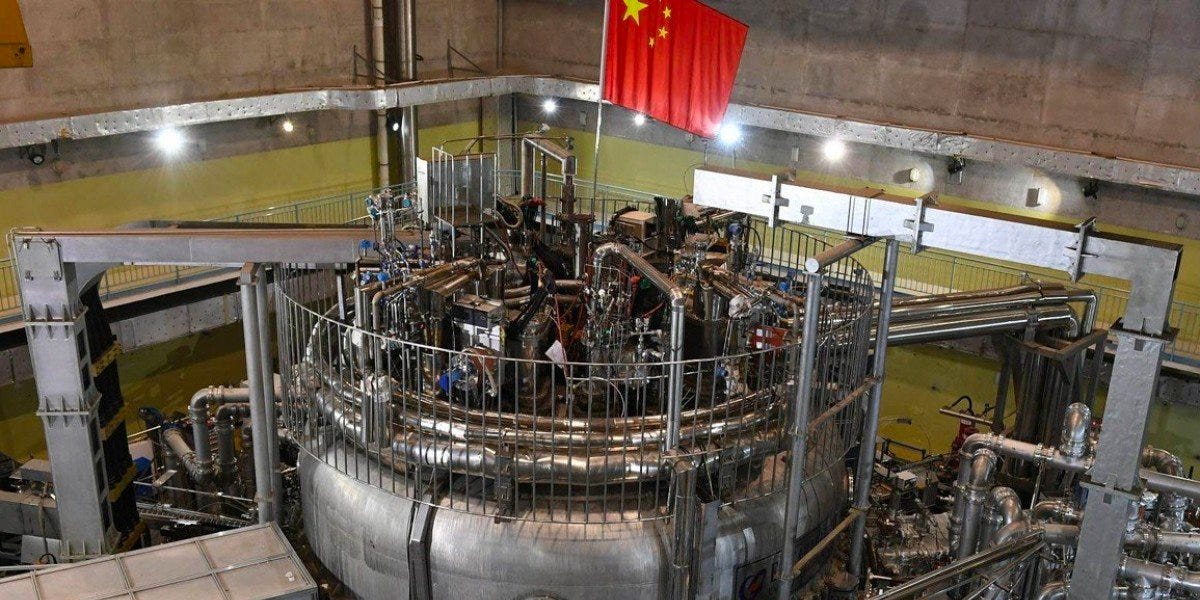
China’s “artificial sun” sounds like the kind of phrase a movie villain would whisper while standing in front of a glowing control panel. Fortunately, the real story is less “world domination laser” and more “very serious scientists trying to bottle star power without accidentally making the lab coffee machine melt.” The machine at the center of the buzz is China’s Experimental Advanced Superconducting Tokamak, better known as EAST, a nuclear fusion reactor designed to reproduce the same basic energy process that powers the sun and stars.
In recent years, China has made international headlines by pushing EAST to longer and hotter plasma experiments. The most attention-grabbing milestone came when EAST maintained steady-state high-confinement plasma for 1,066 seconds, a major step for magnetic confinement fusion research. That does not mean China has plugged an artificial sun into the power grid. No city is secretly running on star juice. But it does mean researchers are getting better at one of the hardest jobs in energy science: keeping extremely hot plasma stable long enough to make fusion power practical someday.
This article breaks down what China’s artificial sun actually is, why nuclear fusion matters, what makes EAST important, and why the road from impressive laboratory record to commercial fusion reactor is still long, expensive, and full of engineering gremlins wearing tiny lab coats.
What Is China’s “Artificial Sun”?
China’s artificial sun is not a giant glowing sphere in the sky. It is a tokamak, a donut-shaped fusion device that uses powerful magnetic fields to control plasma. Plasma is often called the fourth state of matter. It is what happens when gas becomes so hot that electrons separate from atomic nuclei, creating a charged, superheated soup that can be shaped by magnets.
The EAST reactor is located in Hefei, Anhui Province, and is operated by the Institute of Plasma Physics under the Chinese Academy of Sciences. Its full name, Experimental Advanced Superconducting Tokamak, tells you almost everything: it is experimental, advanced, uses superconducting magnets, and follows the tokamak design first developed for magnetic confinement fusion.
The nickname “artificial sun” comes from the goal of fusion itself. In the sun, light atomic nuclei fuse together under immense pressure and temperature, releasing tremendous energy. On Earth, scientists cannot recreate the sun’s gravity, so fusion machines must compensate with even higher temperatures and extremely precise control. That is why fusion plasma inside a tokamak can reach temperatures far hotter than the core of the sun. Nature gets gravity; engineers get magnets, cryogenics, computer control, and probably a lot of nervous snacks.
How Nuclear Fusion Works Without the Sci-Fi Fog Machine
Nuclear fusion is the process of combining light atomic nuclei to form a heavier nucleus. When that happens, a small amount of mass is converted into energy. This is the same principle described by Einstein’s famous equation, E=mc², though most of us remember that equation mainly as “the one that means tiny stuff can become huge energy.”
Most fusion research focuses on hydrogen isotopes such as deuterium and tritium. Deuterium can be extracted from water, while tritium is rare and must be bred or produced. In a future fusion power plant, these fuels would fuse inside a plasma, releasing heat. That heat would then be used in a familiar way: boiling water, making steam, spinning turbines, and generating electricity. In other words, even a star-in-a-bottle power plant may still end up making electricity by doing the steam-turbine tango.
Fusion vs. Fission
Fusion is often compared with nuclear fission, but the two are very different. Fission splits heavy atoms, such as uranium, to release energy. Fusion combines light atoms. Fission is already used in nuclear power plants around the world. Fusion, despite decades of research, is not yet commercially producing electricity.
Fusion has several theoretical advantages. It produces no carbon dioxide during operation, uses abundant fuel ingredients, and does not carry the same long-lived radioactive waste profile as traditional fission. It also does not create a runaway chain reaction in the way fission can. If the carefully maintained fusion conditions fail, the plasma cools and the reaction stops. That is the good news. The hard news is that achieving those conditions in the first place is like trying to hold lightning inside a magnetic hula hoop while the lightning is having a bad day.
Why EAST’s 1,066-Second Record Matters
The big number that put EAST back into global headlines was 1,066 seconds. That is about 17 minutes and 46 seconds. For daily life, 17 minutes is roughly the time it takes to microwave leftovers, forget about them, and then remember them after they have achieved the texture of a roofing shingle. For fusion research, however, 17 minutes of steady-state high-confinement plasma is a serious achievement.
Fusion power plants will need to operate continuously or at least for very long pulses. A quick burst of plasma may prove interesting physics, but it does not power homes, factories, hospitals, or the many devices humans insist on charging at the same time. EAST’s record shows progress toward long-pulse operation, which is essential for any future commercial fusion reactor.
The earlier EAST record was 403 seconds, so the 1,066-second result represented a major improvement. The point is not just bragging rights, although scientists are human and probably enjoy a good record-breaking moment. The real value is in learning how plasma behaves over time, how reactor components handle heat, and how control systems respond when the plasma tries to misbehave.
Why Tokamaks Are So Difficult to Control
A tokamak looks simple in diagrams: a ring-shaped chamber, magnetic coils, hot plasma, and arrows showing movement. In reality, it is one of the most complex machines humans have ever built. Plasma is electrically charged, unstable, and extremely sensitive. It can shift, twist, ripple, and interact with reactor walls in ways that reduce performance or damage materials.
To keep plasma away from the inner walls, a tokamak uses magnetic fields. Superconducting magnets are especially important because they can carry large electrical currents with little resistance when cooled to extremely low temperatures. That creates a delightful engineering contradiction: fusion machines must manage plasma hotter than the sun while also keeping superconducting systems colder than deep space. It is basically a temperature-themed circus act.
The Importance of High-Confinement Mode
One reason EAST’s record matters is that it involved high-confinement plasma operation. High-confinement mode, often called H-mode, is valuable because it allows plasma to retain energy more effectively. Better confinement means the plasma stays hot and dense with less energy loss, improving the chances of achieving useful fusion conditions.
However, H-mode can be tricky. Plasma edges can develop bursts or instabilities that stress reactor components. Scientists must balance temperature, density, pressure, current, magnetic geometry, and heat exhaust. That is not a casual Sunday project. It is more like conducting an orchestra where every instrument is on fire and one violin keeps trying to escape.
China’s Fusion Program Beyond EAST
EAST is the best-known Chinese fusion machine in popular coverage, but it is not the only one. China has also advanced work on HL-3, sometimes called Huanliu-3 or China Circulation-3, a large tokamak operated by the Southwestern Institute of Physics. HL-3 has been reported to achieve very high ion and electron temperatures, strengthening China’s position in magnetic confinement fusion research.
China is also developing fusion engineering infrastructure through projects such as CRAFT, the Comprehensive Research Facility for Fusion Technology. While EAST explores plasma physics and long-pulse operation, facilities like CRAFT focus on the hardware needed for future reactors: divertors, vacuum systems, superconducting magnets, heating systems, and components that must survive extreme heat and neutron bombardment.
This distinction matters. Fusion is not only a physics problem. It is an engineering marathon. A reactor must create plasma, heat it, confine it, extract energy, breed tritium fuel, protect materials, maintain safety, and do all of that reliably enough to make economic sense. Getting a plasma record is like setting a world-class lap time. Building a power plant is like designing the whole racetrack, selling tickets, hiring staff, and making sure the bathrooms work.
Is China Winning the Nuclear Fusion Race?
It is tempting to describe fusion as a race: China versus the United States, EAST versus ITER, tokamaks versus lasers, government labs versus private startups. That makes for exciting headlines, but the reality is more collaborative and more complicated.
China is one of the members of ITER, the massive international fusion project in France that includes China, the United States, the European Union, India, Japan, South Korea, and Russia. ITER is designed to demonstrate fusion power at a scale larger than today’s experimental machines. EAST has often been discussed as a valuable testbed for technologies and operating modes relevant to ITER and future reactors.
The United States is also making major fusion progress, especially through the National Ignition Facility at Lawrence Livermore National Laboratory, which achieved fusion ignition in 2022 using laser-driven inertial confinement fusion. Private U.S. fusion companies are pursuing different designs, including compact tokamaks, field-reversed configurations, stellarators, and pulsed approaches. The fusion world is less like a single horse race and more like a crowded science fair where every booth claims its device will save civilization by 2035.
What Fusion Could Mean for Clean Energy
If commercial fusion becomes practical, the energy implications could be enormous. Fusion could provide steady, low-carbon electricity that does not depend on sunshine or wind patterns. That would make it useful as a complement to renewable energy, energy storage, advanced fission, and modernized grids.
Fusion fuel is another attraction. Deuterium is abundant in seawater. Tritium is harder, but future reactors may breed it using lithium blankets around the fusion chamber. In theory, a mature fusion industry could provide huge amounts of energy with relatively small fuel inputs.
Fusion also appeals because it could help industries that are difficult to electrify or decarbonize. Steelmaking, cement production, desalination, hydrogen production, and large-scale data centers all need reliable energy. A world hungry for artificial intelligence, electric vehicles, air conditioning, and industrial growth will need more clean power, not just better slogans on reusable tote bags.
Why Commercial Fusion Is Still Not Here
Despite the excitement, China’s artificial sun has not solved the energy crisis yet. No fusion plant is currently delivering commercial electricity to the grid. The gap between a laboratory plasma achievement and a power plant is huge.
First, researchers must achieve net energy gain in a full power-plant context. Some experiments have produced more fusion energy than the energy directly delivered to the fuel, but a commercial plant must account for the entire system: heating, magnets, cooling, fuel handling, power conversion, maintenance, and downtime.
Second, materials remain a major challenge. Fusion reactions produce high-energy neutrons that can damage reactor walls and internal components. A future reactor will need materials that can survive years of bombardment while maintaining structural integrity. That is not easy. If your phone case cracks after one dramatic drop, imagine designing a reactor wall that must survive a miniature star’s tantrums.
Third, tritium supply and breeding must be solved. Deuterium is easy to find, but tritium is scarce. Many fusion designs require breeding tritium inside the reactor using lithium. That system must work reliably, safely, and efficiently.
Finally, economics matter. A fusion plant must not only work; it must compete. Solar, wind, batteries, geothermal, advanced nuclear fission, and grid technologies are all improving. Fusion must prove that it can be built, maintained, licensed, and operated at a cost that makes sense.
What “Turns On” Really Means
The phrase “China turns on its artificial sun” is catchy, but it can be misleading. EAST is not simply switched on like a desk lamp. A tokamak experiment involves carefully preparing the machine, cooling superconducting magnets, creating vacuum conditions, injecting fuel, driving plasma current, heating plasma with advanced systems, and monitoring thousands of signals in real time.
When reports say China “turned on” its artificial sun, they usually mean researchers conducted a successful fusion plasma experiment or reached a new operating milestone. That is still impressive, but it is not the same as starting a commercial reactor. Think of it as a championship-level test flight, not a daily airline route.
Global Impact: Why Everyone Is Watching China’s Fusion Progress
China’s progress matters because fusion research benefits from scale, patience, and industrial capacity. Building tokamaks requires expertise in superconducting magnets, precision manufacturing, vacuum engineering, plasma diagnostics, robotics, advanced materials, and high-power electronics. Countries that master these technologies may gain advantages far beyond fusion energy.
Fusion research can also strengthen supply chains for clean energy and high-tech manufacturing. The same engineering skills used in fusion may support aerospace, medical imaging, particle accelerators, semiconductor equipment, and advanced computing infrastructure.
That is why the world pays attention when EAST sets records or when China announces progress on HL-3 and CRAFT. These achievements show not only scientific ambition, but also the ability to coordinate long-term national research programs. In energy technology, patience can be a superpower.
Experiences and Lessons from China’s Artificial Sun
The story of China’s artificial sun offers several useful experiences for anyone interested in science, innovation, energy policy, or the future of technology. The first lesson is that big breakthroughs are usually built from many smaller improvements. A headline may focus on 1,066 seconds, but that number represents years of upgrades, failed attempts, recalibrations, and experiments that probably did not earn dramatic headlines. Science is often less like a lightning strike and more like walking uphill with a toolbox.
The second lesson is that long-term research requires patience. Fusion has been “almost here” for decades, which has made it the punchline of many energy jokes. But the slow timeline does not mean the research is pointless. Aviation, spaceflight, vaccines, semiconductors, and the internet all required long development periods. The difference is that fusion is trying to control matter at extreme temperatures while extracting useful power from it. That is not a weekend hobby unless your weekend hobbies are terrifying.
The third experience is the importance of international competition and cooperation happening at the same time. China’s EAST reactor pushes its own national goals, but its research also contributes to the broader knowledge base used by scientists around the world. ITER includes multiple major global partners, and fusion researchers regularly learn from one another’s machines, data, and engineering successes. Even when countries compete, plasma physics does not care about flags. It cares about density, temperature, confinement, and whether your magnetic field is having a good day.
The fourth lesson is that clean energy transitions need a portfolio, not a miracle. Fusion could become a major future energy source, but it is not a reason to ignore solar, wind, batteries, energy efficiency, geothermal, hydro, or existing nuclear power. Waiting for fusion to solve everything would be like refusing to fix a leaky roof because someone promised you a weather-control machine in 20 years. Fusion is exciting, but climate and energy planning still require practical action today.
The fifth experience is that public communication matters. “Artificial sun” is a brilliant nickname because it makes a complex technology instantly memorable. But it also creates confusion. Some readers imagine a glowing orb, a weapon, or a ready-to-use power plant. Good science writing must keep the excitement while removing the fog. EAST is remarkable because it advances plasma control and long-pulse operation, not because it has already replaced coal, gas, or the neighborhood power bill.
Finally, China’s artificial sun shows that the future of energy will be shaped by countries willing to invest in difficult science. Fusion may still be years away from commercial reality, but each record helps answer practical questions: Can plasma be held longer? Can components survive more heat? Can fuel cycles be managed? Can reactors run reliably? These are not small questions, but they are exactly the kind of questions humanity must answer to build a cleaner and more energy-abundant future.
Conclusion: A Star Is Not Born Yet, But the Lab Is Getting Warmer
China’s nuclear fusion reactor EAST deserves attention, but it deserves accurate attention. The artificial sun is not a magic energy machine already powering cities. It is an experimental tokamak that has achieved important milestones in high-temperature, long-duration plasma operation. Its 1,066-second record is a meaningful step toward the kind of steady operation future fusion plants will need.
The excitement is justified because fusion could transform clean energy. The caution is also justified because commercial fusion still faces enormous challenges in materials, fuel breeding, net power production, maintenance, and cost. China’s EAST, HL-3, and CRAFT programs show how seriously the country is pursuing fusion, while U.S. labs, private companies, and international projects like ITER show that the global race is broad, active, and far from over.
So yes, China has turned on its artificial sun in the sense that it has fired up one of the world’s most important fusion experiments. But the real sunrise for fusion energy will come when reactors can produce reliable electricity at commercial scale. Until then, the artificial sun remains one of science’s brightest promises: hot, difficult, dazzling, and still not something you should stare at without proper protectionor a plasma physics degree.
Note: This article is written for web publication and general education. It explains current fusion progress in plain American English while avoiding the misleading claim that commercial fusion power is already available.


