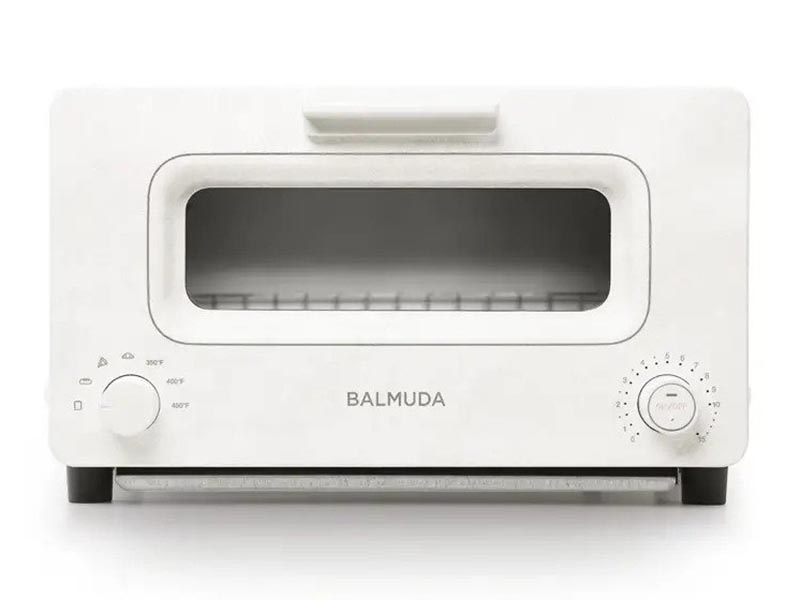

The Balmuda Toaster Steam Oven looks like the sort of appliance that might quietly serve toast in a beautifully designed Tokyo café. It is compact, elegantly minimal, and equipped with two friendly control knobs rather than a cockpit full of blinking buttons. Then you notice the tiny measuring cup.
That little cup is the clue to Balmuda’s unusual approach. Before starting one of its bread-focused programs, you pour 5ccroughly one teaspoonof water into an inlet on top. The oven turns that water into steam, gently warming the bread before finishing it with stronger heat. The goal is a thin, crisp exterior surrounding a soft, moist center instead of the dry, crunchy slab that ordinary toaster ovens occasionally produce.
It sounds extravagant, especially when the current Balmuda The Toaster Pro sits near the premium end of the countertop-appliance market. But for people who regularly buy sourdough, croissants, bagels, pizza, milk bread, or bakery pastries, this little steam toaster can make breakfast feel suspiciously close to a restaurant experience.
What Is the Balmuda Toaster Steam Oven?
The Balmuda Toaster Steam Oven is a compact Japanese-designed toaster oven built primarily for bread, pastries, pizza, and small portions of food. Unlike a large convection toaster oven, it does not try to roast a holiday chicken, dehydrate fruit, air-fry a mountain of wings, and file your taxes before lunch.
Its specialty is much narrower: controlling moisture and heat so bread becomes crisp without losing its tender interior. The current U.S. flagship, BALMUDA The Toaster Pro, expands that idea with a powerful top-heating Salamander Grill Mode for browning, melting, and finishing food.
The unit measures approximately 14.1 inches wide, 12.8 inches deep, and 8.2 inches high. It weighs about 9.7 pounds and uses 1,300 watts. Its compact oven chamber generally accommodates two slices of bread, a small pizza, a few cookies, or a single-serving baking dish. That limited capacity is intentional, although anyone feeding four hungry teenagers may describe it using a less flattering adjective.
How Balmuda’s Steam Technology Works
Step 1: Add Exactly 5cc of Water
For the bread and pastry programs, Balmuda instructs users to fill the included measuring cup with 5cc of water and pour it into the top inlet. The amount stays the same whether the oven contains one slice, two slices, thin sandwich bread, or a thick piece of sourdough.
You should not add water when using Oven Mode or Salamander Grill Mode. Those settings are designed for conventional dry heat and intense browning rather than steam-assisted toasting.
Step 2: Steam Warms the Surface
At the beginning of the cycle, the water is heated rapidly and released as steam inside the oven. The humid environment reduces moisture loss from the surface of the bread while the interior warms. This is especially useful for refrigerated, frozen, or day-old baked goods, which often become dry when exposed to aggressive heat.
Step 3: Controlled Heat Builds the Crust
After the steaming stage, Balmuda regulates its upper and lower heating elements according to the selected program. Near the end of the cycle, stronger heat creates browning and crispness. The result is not merely warm bread. Ideally, it is bread with a delicate crust and a springy center.
This approach is particularly effective because stale bread is not always completely moisture-free. As bread ages, changes in its starch structure make it feel firm and dry. Reintroducing heat in a moist environment can soften that structure, while the final burst of dry heat restores the surface crust. The machine is not performing sorcery, although a revived three-day-old croissant may inspire theological questions.
Balmuda Toaster Pro Modes Explained
Shokupan Mode
Shokupan Mode is designed for soft sandwich bread and Japanese milk bread. It gradually warms the slice and lightly browns the exterior near the end. Use it for white bread, brioche, English muffins, soft rolls, or any bread where tenderness matters more than a thick, crunchy crust.
Golden Toast Mode
Golden Toast Mode uses stronger heat for substantial breads such as sourdough, country loaves, bagels, and thick bakery slices. It creates a more pronounced crust while preserving moisture inside. This is often the best general-purpose setting for artisan bread.
Pizza Mode
Pizza Mode directs more heat toward the top, making it useful for reheating pizza, preparing open-faced sandwiches, melting cheese, or toasting the cut surface of a bagel. It helps the toppings become hot and bubbly without turning the bread underneath into construction material.
Croissant Mode
Croissant Mode gently warms pastries without subjecting them to an excessively aggressive final blast. It works well with croissants, danishes, donuts, scones, and similar baked goods that should be warm and lightly crisp rather than deeply toasted.
Oven Mode
Oven Mode offers three preset temperatures: 350°F, 400°F, and 450°F. These settings can handle small batches of cookies, roasted vegetables, baked eggs, gratins, chicken pieces, or reheated leftovers. Because the chamber is small, it heats quickly and is convenient when using a full-size oven would feel like starting a bonfire to toast one marshmallow.
Salamander Grill Mode
The defining upgrade on the Pro model is Salamander Grill Mode. Inspired by the powerful overhead broilers used in professional kitchens, it delivers intense top-down heat for one to three minutes.
This mode can brown cheese on a small pasta dish, caramelize the top of crème brûlée, blister peppers, crisp breadcrumbs, finish meatballs, toast croutons, or add color to vegetables. It does not turn the Balmuda into a full-size broiler, but it solves one of the original model’s main limitations: producing bold surface browning on small dishes.
How Well Does the Balmuda Steam Toaster Perform?
Sandwich Bread and Milk Bread
Soft bread demonstrates the appliance’s central idea clearly. A standard toaster often creates a crunchy slice from edge to edge. Balmuda aims for contrast: a lightly crisp shell with a warm, fluffy center. Butter melts easily into the surface without immediately disappearing into a dry bread desert.
The difference is most obvious with thick slices. Because the steam protects the exterior while the center heats, a substantial piece of milk bread can emerge warm throughout without becoming excessively dark.
Sourdough and Artisan Bread
Dense bakery bread benefits from Golden Toast Mode. The crust becomes crisp and aromatic, while the crumb retains some of its original chew. Balmuda cannot turn mediocre bread into a handcrafted San Francisco sourdough, but it can preserve the qualities of good bread better than many basic toaster ovens.
Placement matters. Balmuda recommends centering a single slice and spacing multiple pieces evenly. Bread that is especially tall, sugary, or oily should be watched carefully because it can sit close to the upper heater and brown quickly.
Croissants and Pastries
Pastry reheating may be the machine’s most persuasive trick. Microwaves soften croissants but can make them rubbery. Conventional ovens work well but require preheating. A dry toaster oven can crisp the outside while leaving the center cool or dehydrated.
The Balmuda Steam Toaster warms the layers while restoring surface crispness. A day-old croissant will not become younger, receive a French passport, and move back to Paris, but it can taste dramatically fresher.
Pizza and Cheesy Toast
Leftover pizza usually needs two things at once: moisture in the crust and heat on the toppings. Pizza Mode provides top-focused heating while the steam reduces drying. The cheese becomes hot, the edges regain crispness, and the center remains pleasantly chewy.
For open-faced sandwiches, Pizza Mode handles the initial heating, while Salamander Grill Mode can provide a final blast for bubbling and browning the cheese.
Frozen Bread
Frozen slices can go directly into the oven without thawing. Select the appropriate bread mode and add approximately one or two minutes compared with the time used for room-temperature bread. Freezing sliced bread is also an effective way to preserve its flavor and texture, making the Balmuda particularly useful for small households that cannot finish a loaf immediately.
Design and Everyday Usability
Part of the Balmuda Toaster Steam Oven’s appeal is visual. Its matte finish, compact proportions, analog-style controls, and softly illuminated timer make it look more like a thoughtfully designed object than a generic appliance.
Operation is refreshingly simple. One knob selects the cooking mode. The other controls time and starts the machine. There is no touchscreen menu, mobile app, Wi-Fi setup, or request to create an account before making toast. Civilization survives.
The timer runs from one to 15 minutes for most modes, with shorter limits in Salamander Grill Mode. The controls are intuitive, but choosing the perfect time takes experimentation. Bread thickness, moisture, sugar content, temperature, and personal preference all affect the outcome.
Start conservatively. An underdone slice can receive another minute of heat. A burned slice cannot be negotiated back to golden brown, regardless of how sincerely you apologize.
Cleaning and Maintenance
The crumb tray should be emptied after each use. Crumbs left inside can burn, smoke, and contribute flavors that no bakery has ever advertised. The wire rack and boiler cover are removable, making it easier to clear residue and food particles.
Allow the oven to cool before cleaning. Wipe the interior and exterior with a soft, damp cloth, and avoid flooding the steam inlet or electrical components. Cheese, oil, and sugary toppings should be cleaned promptly because repeated heating can turn small splatters into permanent archaeological exhibits.
The included 5cc cup is tiny and easy to misplace. Giving it a dedicated drawer compartment or storing it in a nearby container prevents the familiar household mystery known as “Where did that absurdly small plastic cup go?”
Advantages of the Balmuda Toaster Steam Oven
- Excellent bread texture: Steam helps maintain a moist center while the heating elements create a crisp surface.
- Impressive pastry revival: Croissants, rolls, pizza, and other leftovers can taste noticeably fresher.
- Fast operation: The compact chamber heats quickly and usually requires no lengthy preheating period for toast.
- Simple controls: Two knobs keep operation approachable and predictable.
- Beautiful countertop design: The understated appearance suits modern, minimalist, and small kitchens.
- Useful finishing heat: The Pro model’s Salamander Grill Mode improves melting, caramelizing, and surface browning.
Disadvantages to Consider
The Price Is High
The Balmuda Toaster Pro costs substantially more than many capable toaster ovens. Its value depends on how often you eat bread and whether you notice differences in texture. Someone who buys artisan bread every week may use it daily. Someone who views toast as an emergency platform for peanut butter may be perfectly happy with a much cheaper machine.
Capacity Is Limited
The oven generally fits two modest slices of bread or a small portion of food. It is excellent for one person and practical for many couples, but preparing breakfast for a large family requires multiple cycles.
The Timer Stops at 15 Minutes
For longer recipes, the timer must be restarted. That is manageable for small bakes and reheating, but inconvenient if you want a countertop oven that can independently handle extended cooking sessions.
It Is Not an Air Fryer
The Balmuda is not designed to move large amounts of hot air around a basket. It can crisp food through radiant heat, steam-assisted heating, and its top broiler, but buyers primarily interested in air-fried wings, fries, or large roasted meals should choose a different appliance.
Timing Requires Practice
The mode dial identifies the food category, not the precise browning level. Users still select the cooking time. Expect a brief learning period before finding the ideal setting for a favorite loaf, bagel, or frozen pastry.
Who Should Buy the Balmuda Toaster Steam Oven?
The Balmuda makes the most sense for bread enthusiasts, small households, apartment dwellers, design-conscious cooks, and people who frequently reheat bakery products or individual portions.
It is especially compelling when breakfast routinely includes sourdough, bagels, croissants, Japanese milk bread, English muffins, or premium frozen bread. It also suits a person who cooks for one and wants to bake two cookies, roast a handful of vegetables, or brown a small ramekin without heating a full-size oven.
Skip it if your priority is maximum capacity, bargain pricing, air-frying, rotisserie cooking, or preparing complete dinners for a family. A larger convection toaster oven will provide more cooking space and functions for the money, even if it cannot revive a croissant with quite the same finesse.
Balmuda Toaster Steam Oven Experience: What Daily Ownership Feels Like
Across long-term owner reports and hands-on kitchen testing, the Balmuda experience usually begins with skepticism. The appliance arrives in an attractive box, the owner discovers a miniature water cup, and someone nearby asks why a toaster needs hydration. The first slice often answers the question better than a technical explanation.
Soft sandwich bread develops a fine surface crispness, but the middle remains warm and plush. Thick sourdough becomes crunchy around the edges without losing all of its chew. These differences can sound minor on paper. During breakfast, however, texture is most of the event. Toast contains very few places for mediocre performance to hide.
The greatest change in everyday use is often not making fresh toast but saving food that might otherwise be disappointing. A croissant left in a paper bag overnight can become fragrant and crisp again. Refrigerated pizza can regain a flexible crust instead of emerging tough and leathery. Frozen bread can move directly from freezer to oven and taste surprisingly close to a fresh slice.
Owners also tend to develop personal timing rules. A familiar sourdough slice may need four minutes, while a thin piece of sandwich bread requires less. A refrigerated bagel takes longer than one stored at room temperature. A pastry containing sugar or exposed filling needs closer supervision. After several breakfasts, using the machine becomes instinctive: pour the water, turn the left knob, set the timer, and listen for the cheerful finish.
The tiny chamber encourages small-batch cooking. Instead of heating a large oven for one serving, users can roast a few asparagus spears, warm leftover potatoes, bake one or two cookies, or prepare a personal gratin. The Pro model makes those experiments more satisfying because Salamander Grill Mode can add color after the food is heated through.
For example, a small bowl of baked pasta can warm in Oven Mode before receiving a brief overhead blast that bubbles the cheese. An open-faced ham sandwich can toast gently in Pizza Mode and then brown under the salamander. A halved bagel can retain a soft interior while its cut surface becomes deeply toasted. These tasks are modest, but they occur far more often in daily life than roasting a whole turkey.
The limitations also become obvious quickly. Two people can usually share a batch, but serving four people means running repeated cycles. The 15-minute timer demands attention during longer recipes. Large cookware simply does not fit. Calling it a replacement for a conventional oven would be like calling a bicycle a replacement for a moving truck because both have wheels.
Cleaning is easy when handled regularly. Emptying the crumb tray and wiping splatters takes little effort. Ignoring melted cheese for several weeks creates a less charming project. The same is true of the steam system: the correct measuring cup makes adding water effortless, but losing that cup turns a delightfully precise ritual into a hunt through kitchen drawers.
The emotional part of ownership should not be ignored. Balmuda has designed the toaster to make an ordinary routine feel intentional. The knobs click pleasantly, the heating elements glow, and the compact form looks good enough to leave on the counter. None of those qualities are required to toast bread, but people interact with breakfast appliances almost every day. A product that makes the routine more enjoyable can earn affection beyond its specification sheet.
That does not automatically make the high price reasonable for everyone. The value becomes clearer through frequency. Used twice a month, the Balmuda is expensive countertop sculpture. Used every morning for toast and several evenings a week for leftovers, pastries, and small dishes, it becomes easier to justify.
The best ownership experience belongs to someone who understands what the machine is: a specialist with useful side talents. It is not the biggest, fastest, or most versatile countertop oven. It is a remarkably focused bread and reheating appliance that can also handle small cooking jobs. For the right household, that specialization is not a weakness. It is precisely why the Balmuda earns a permanent place on the counter.
Final Verdict: Is the Balmuda Toaster Steam Oven Worth It?
The Balmuda Toaster Steam Oven is worth considering when bread quality matters more than cooking capacity. Its 5cc steam system, carefully programmed heating cycles, and specialized bread modes deliver a combination of crispness and tenderness that many conventional toaster ovens struggle to reproduce.
The Pro model is more versatile thanks to its Salamander Grill Mode, but it remains a compact, premium specialist. The high price, two-slice capacity, and short timer make it unsuitable for every kitchen. Yet for a bread lover, pastry enthusiast, or one-person household, it can turn routine reheating into one of the most satisfying parts of the day.
In other words, it is still a toaster. It is simply a toaster that takes your croissant more seriously than some people take their careers.


