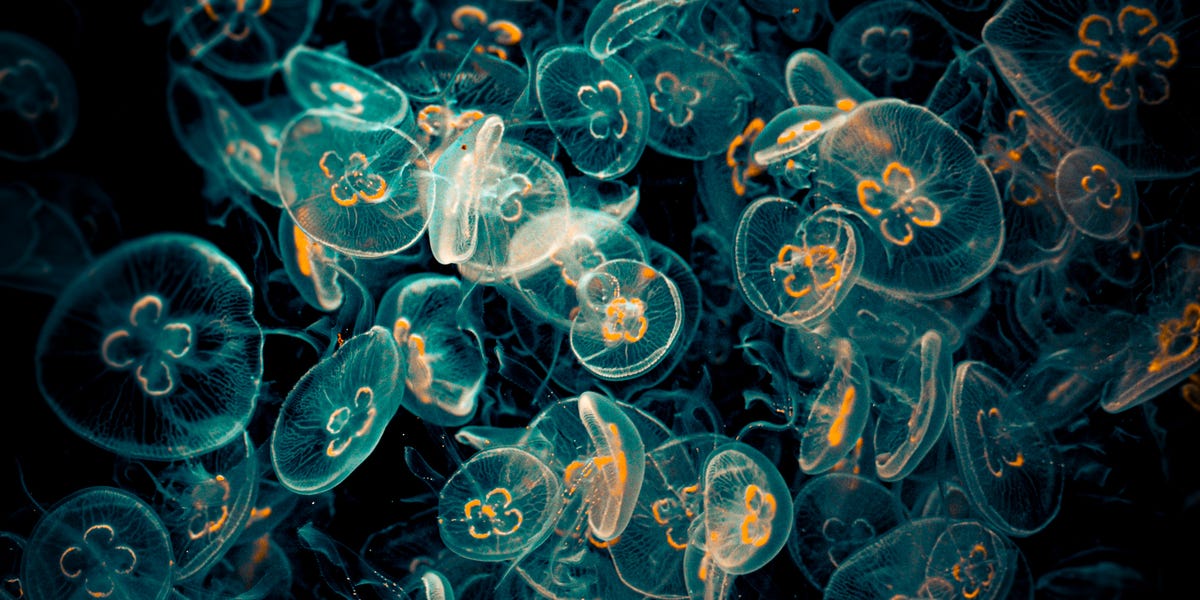

If you were writing a disaster movie, “alien creatures take nuclear reactors offline” would sound like the part where the president stares grimly at a giant screen. In real life, the creatures had no ray guns, no spaceship, and absolutely no interest in world domination. They were jellyfishsoft, brainless, drifting blobs of marine mischiefand in August 2025, they helped force four reactors at France’s Gravelines nuclear power plant offline.
The incident happened at one of Western Europe’s largest nuclear power stations, located near the northern French coast between Dunkirk and Calais. Gravelines has six 900-megawatt reactors, giving the site a total capacity of about 5.4 gigawatts. When a sudden swarm of jellyfish entered the plant’s seawater pumping stations and clogged filtration equipment, four operating reactor units shut down automatically. The other two units were already offline for planned maintenance, which meant the entire plant temporarily stopped producing electricity.
The good news: this was not a nuclear safety disaster. Operator EDF said the shutdowns had no impact on the safety of the facility, workers, or the environment. The less comforting news: nature just reminded one of Europe’s biggest energy machines that even a creature with the texture of wet gelatin can cause a very expensive headache.
What Actually Happened at the Gravelines Nuclear Plant?
The Gravelines nuclear power plant uses seawater from a canal connected to the North Sea as part of its cooling process. Like many coastal power plants, it depends on a steady intake of water to help remove heat from key systems. Before that water can be used, it passes through screening and filtration equipment designed to stop seaweed, debris, fish, and other marine life from entering the plant’s cooling circuits.
That is where the jellyfish staged their accidental uprising. A large, sudden concentration of jellyfish reached the pumping stations and clogged parts of the filtration system, including pre-screens and rotating filter drums. As water flow became restricted, the reactors responded the way they are designed to respond: they protected themselves by shutting down automatically.
According to EDF’s later technical recap, units 4, 2, and 3 shut down late on August 10, 2025, followed by unit 6 early on August 11. Units 1 and 5 were already undergoing scheduled maintenance. The sequence sounds dramaticand it was operationally seriousbut it also showed that the plant’s safety systems worked as intended. When the cooling-water supply was affected, the units did not politely “wait and see.” They stopped.
Why Nuclear Plants Need So Much Cooling Water
Nuclear reactors generate heat by splitting atoms, but the electricity-making process is not magic. Heat turns water into steam, steam spins turbines, and turbines generate electricity. After steam does its job, it must be cooled and condensed back into water so the cycle can continue. That is why large power plantsnuclear, coal, gas, and even some industrial facilitiesare often built near rivers, lakes, or coastlines.
At coastal nuclear plants, seawater is commonly used as a cooling resource. This does not mean seawater runs through the reactor core like soup in a pot. Cooling systems are separated and carefully engineered. Still, the plant needs reliable water flow. If the intake system becomes clogged, production may have to be reduced or stopped until the blockage is cleared.
Think of it like a high-performance computer that depends on fans and ventilation. If dust blocks the vents, the system overheats or shuts down to protect itself. Now replace dust with thousands of squishy sea creatures and the laptop with a multi-gigawatt nuclear power station. Congratulationsyou have the Gravelines jellyfish incident.
Were These Really “Alien Creatures”?
No, not in the extraterrestrial sense. No little green pilots were found floating in the filter drums. The “alien” label works because jellyfish look wonderfully strange: translucent bodies, trailing tentacles, no bones, no brain, no central heart, and a survival strategy that seems to be “vibe with the current and ruin someone’s infrastructure plans.”
Reports identified the creatures involved as jellyfish, with some experts pointing to barrel jellyfish, a large species found in European waters. These animals can grow impressively wide and are generally not dangerous to humans compared with more venomous jellyfish species. But when enough of them gather in one place, their harmless individual nature becomes a collective problem. One jellyfish is a beach curiosity. A thick bloom of jellyfish in front of a cooling-water intake is an engineering challenge wearing a wobbly hat.
Why Jellyfish Swarms Are Becoming a Bigger Problem
Jellyfish blooms are not new. These animals have been pulsing through the oceans for hundreds of millions of years, long before humans invented power grids, concrete seawalls, or office chairs that promise “ergonomic support” and deliver betrayal. What is changing is the number of places where jellyfish blooms are colliding with modern infrastructure.
Several environmental factors can favor jellyfish. Warmer waters can lengthen reproductive windows for some species. Nutrient pollution from farms, cities, and industry can feed algal blooms, which may reduce oxygen levels when the algae die and decompose. Many fish struggle in low-oxygen water, but jellyfish can tolerate conditions that push competitors away. Overfishing may also remove predators and competitors, leaving jellyfish more room in the food web.
Coastal development can help too. Artificial structures such as docks, seawalls, platforms, and aquaculture equipment can create surfaces where jellyfish polyps attach and reproduce. In other words, humans may unintentionally build little jellyfish nurseries while also building the industrial systems jellyfish later interrupt. It is not a conspiracy. It is ecology with a slapstick soundtrack.
Gravelines Was Not the First Jellyfish Power-Plant Problem
The Gravelines shutdown made headlines because four reactors went offline at one of Europe’s biggest nuclear sites. But jellyfish have disrupted power plants before. Similar problems have been reported at nuclear and conventional power stations in Scotland, Sweden, Japan, China, Israel, the Philippines, and the United States.
In 2011, jellyfish clogged seawater filters at the Torness nuclear power station in Scotland, forcing a shutdown. In 2013, a large jellyfish cluster affected a reactor at Sweden’s Oskarshamn nuclear plant. In other countries, jellyfish blooms have jammed cooling-water systems at coal and nuclear plants alike. The common thread is not nuclear technology specifically; it is the vulnerability of any coastal facility that depends on large volumes of seawater.
That distinction matters. The phrase “jellyfish shut down a nuclear plant” sounds like the opening line of a tabloid article found under a stack of lottery tickets. But the underlying issue is practical: water intake systems must be protected against biological clogging. The same ocean that provides cooling water also contains living things, and those living things do not check the engineering manual before drifting into the wrong canal.
Was the Public Ever in Danger?
Available information indicates that the public was not in danger. EDF stated that the automatic shutdowns did not affect facility safety, worker safety, or the environment. The event was also treated as an operational and filtration problem rather than a radiological emergency.
This point deserves emphasis because nuclear stories often attract runaway imagination. A cooling-water intake blockage is serious, but serious does not automatically mean catastrophic. Nuclear plants are designed with layers of protection, monitoring, and automatic responses. In this case, the reactors shut down because operating conditions required it. That is not a failure of safety culture; it is safety culture doing its job, even if the trigger happened to be a gelatinous sea mob.
The real disruption was electricity production. With all six units unavailablefour due to the jellyfish event and two already in maintenancethe site temporarily stopped generating power. For an energy system, that is still a big deal. Large plants are planned into national supply forecasts, and unexpected outages can complicate grid management, market prices, and maintenance schedules.
What Operators Can Do About Jellyfish
Power-plant operators cannot politely ask jellyfish to form a single-file line away from the intake. Instead, they rely on prevention, monitoring, and rapid response. Common defenses include coarse screens, rotating drum filters, debris removal systems, intake design improvements, and operational procedures that reduce power or shut units down if water flow becomes unreliable.
After events like Gravelines, operators typically review forecasting methods, local marine monitoring, cleaning strategies, and emergency staffing. Some researchers have worked on early-warning systems that use ocean conditions, currents, temperature, and historical bloom patterns to predict when jellyfish may arrive near sensitive infrastructure. The goal is not to defeat jellyfish forever. The goal is to avoid being surprised by a living lava lamp the size of a small weather system.
In the longer term, plant designers may need to consider how warming seas, shifting marine populations, and coastal ecological changes affect intake systems. Infrastructure built for past ocean conditions may face different biological pressures in the future. That does not mean coastal nuclear power is doomed. It means climate adaptation is not just about sea walls and storm risk; it is also about filters, pumps, sensors, and creatures that look like they escaped from a science-fiction aquarium.
The Climate Connection: Not Simple, but Important
It would be too neat to blame every jellyfish bloom on climate change alone. Marine ecosystems are complicated. Jellyfish populations rise and fall for many reasons, including currents, salinity, temperature, food supply, predators, breeding habitat, and human activity. Still, warmer waters and altered coastal ecosystems can create conditions that help some jellyfish thrive.
Climate change can warm seas and shift seasonal patterns. Nutrient runoff can contribute to algal blooms and low-oxygen zones. Overfishing can reduce pressure from jellyfish predators and competitors. Coastal construction can create new surfaces for jellyfish polyps. Shipping can move species into new waters through ballast water. None of these factors acts like a single villain twirling a mustache. Together, however, they can tilt the playing field.
That is why the Gravelines incident matters beyond one plant. It is a case study in how energy infrastructure interacts with living systems. We often talk about electricity as wires, turbines, reactors, and markets. But electricity also depends on rivers, oceans, weather, fish, algae, and yes, jellyfish. The grid is not floating above nature. It is plugged into it.
Why This Story Captured So Much Attention
The headline practically writes itself: brainless sea blobs defeat nuclear reactors. It is strange, funny, and a little humbling. Humans build machines capable of powering millions of homes, then a swarm of creatures with no brain and no calendar appointment clogs the waterworks.
But the fascination runs deeper than comedy. The story exposes a modern anxiety: advanced infrastructure can be surprisingly vulnerable to ordinary natural events. We expect cyberattacks, storms, equipment failures, and political disputes. We do not expect a power station to be challenged by animals that look like floating umbrellas.
That surprise is useful. It reminds planners, engineers, and policymakers that resilience is not just about guarding against the most cinematic threats. Sometimes the most important risk is boring, wet, and already in the intake canal.
Lessons From the Jellyfish Shutdown
1. Automatic shutdowns are a feature, not a flaw
When the Gravelines units shut down, the event interrupted production, but the automatic response helped protect the plant. Modern reactors are designed to stop operating when key parameters move outside accepted limits. That can sound alarming, but it is exactly what should happen.
2. Cooling systems deserve more public attention
People often focus on reactor vessels, fuel, and control rooms. Cooling-water systems are less glamorous, but they are essential. If water intake is blocked by debris, seaweed, fish, or jellyfish, a plant may need to reduce output or stop.
3. Marine ecology is now an infrastructure issue
Power plants, desalination facilities, ports, and data centers all interact with local environments. As ecosystems shift, facility operators must monitor not only machinery but also biological patterns.
4. “Rare” events may become planning assumptions
If jellyfish blooms become more frequent in certain coastal regions, operators cannot treat them as bizarre one-offs. They become part of the risk model, like heat waves, storms, or supply-chain disruptions.
Experience-Based Takeaways: What This Story Feels Like on the Ground
Imagine working at a coastal power facility on a warm evening. The machinery is humming, screens are reporting normal conditions, and the sea outside looks calm enough for a postcard. Then alarms begin showing increased pressure across intake filters. At first, it could be routine debris. Seaweed happens. Driftwood happens. Plastic waste happens. Operators investigate, teams check screens and pumps, and the pattern keeps building. The water is still coming, but not as freely as it should.
Then the cause becomes clear: jellyfish. Not one or two, but enough to turn an intake system into a seafood traffic jam. This is where the experience becomes less funny for the people on shift. A reactor does not care whether the blockage is caused by a storm, a broken component, or a squad of confused jellyfish. It cares about water flow, temperature, pressure, and safe operating limits. The human job is to respond calmly, follow procedure, and avoid turning a manageable event into a bigger one.
For engineers and maintenance crews, the experience is messy and practical. Filters must be inspected. Screens may need cleaning. Pump performance must be verified. Equipment has to be checked for damage, even if early reports suggest the filters survived. Restarting a reactor is not like restarting a phone after it freezes. You do not hold down two buttons, sigh dramatically, and hope for the best. Restart requires diagnostics, approvals, sequencing, and confidence that the cooling-water source is reliable again.
For nearby communities, the experience is different. People see headlines and may worry that “nuclear plant shutdown” means danger. Communication becomes essential. Operators and authorities must explain what happened in plain language: jellyfish clogged non-nuclear pumping-station filters; reactors shut down automatically; safety systems worked; no radiological release occurred. Clear public messaging can prevent confusion from growing faster than the jellyfish bloom itself.
For grid planners, the experience is another reminder that electricity reliability depends on a thousand unglamorous details. Losing several large units at once can affect supply planning, even when the outage is temporary. Backup generation, imports, demand forecasts, maintenance timing, and weather all matter. A jellyfish bloom may sound silly, but a multi-gigawatt plant going offline is not a joke to the people balancing the grid.
For environmental observers, the event feels like a symbol. The ocean is not a passive cooling pond. It is alive, changing, and sometimes inconvenient. When human infrastructure pulls huge volumes of water from marine environments, it must deal with what lives there. The Gravelines shutdown was not nature “attacking” civilization. It was civilization receiving a very slimy invoice from nature for assuming the sea would always behave predictably.
The practical lesson is not panic. It is preparation. Better monitoring, stronger intake management, ecological forecasting, and honest climate-risk planning can reduce future surprises. Jellyfish are not evil. They are not aliens. They are not plotting against the electrical grid in an underwater conference room. But when enough of them arrive at the wrong place at the wrong time, they can remind everyone that resilience begins where engineering meets ecology.
Conclusion
The story of a “mob of alien creatures” taking four nuclear reactors offline is funny because it sounds impossibleand important because it is real. In August 2025, jellyfish clogged cooling-water filtration systems at the Gravelines nuclear plant, causing four operating reactors to shut down automatically while two others were already in maintenance. No public safety crisis followed, but the incident exposed a serious challenge for coastal energy infrastructure.
As seas warm and coastal ecosystems change, jellyfish blooms may become a more frequent problem for power plants and other facilities that depend on seawater. The solution is not to declare war on jellyfish. It is to build smarter monitoring systems, design more resilient intakes, improve ecological forecasting, and treat marine life as part of infrastructure planning. After all, the future of energy may depend not only on reactors, turbines, and transmission lines, but also on whether anyone remembered to plan for a drifting army of gelatinous weirdos.
Note: The “alien creatures” in this article are jellyfish, not extraterrestrials. The article is based on public reports, operator statements, and scientific context about jellyfish blooms, coastal cooling-water systems, and power-plant resilience.