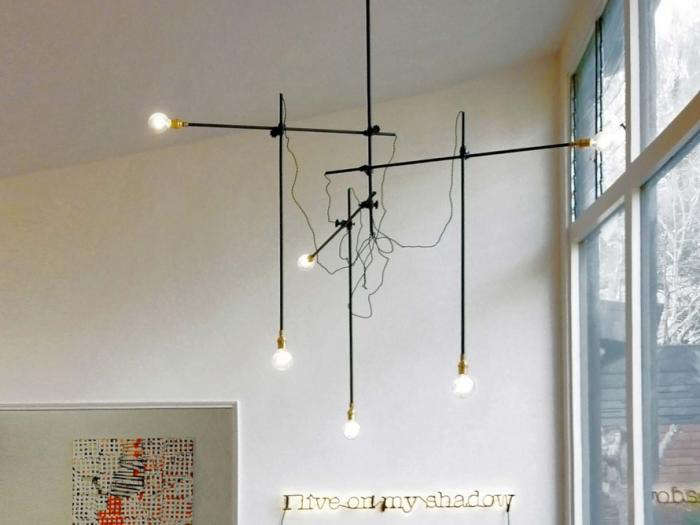

The 6 Arm Industrial Chandelier Workstead is not the sort of light fixture that quietly enters a room, apologizes for taking up space, and hides near the ceiling. It arrives with confidence. It stretches, pivots, balances, and turns lighting into architecture. If a regular chandelier is a polite dinner guest, the Workstead Industrial Chandelier is the guest who knows wine pairings, has excellent boots, and somehow makes exposed metal look elegant.
Designed by Workstead, a multidisciplinary American studio known for lighting, interiors, hospitality projects, and historically sensitive design, this chandelier takes inspiration from 19th-century factory lighting and translates it into something far more refined. It has the industrial DNA: metal tubing, adjustable joints, visible structure, and a straightforward attitude. But it also has the polish of a sculptural object made for modern dining rooms, lofts, kitchens, studios, and boutique-style residential interiors.
In short, this is a chandelier for people who want lighting with presence, flexibility, and a little mechanical poetry.
What Is the 6 Arm Industrial Chandelier by Workstead?
The 6 Arm Industrial Chandelier by Workstead is a multi-arm ceiling fixture built around the idea of movement. Instead of presenting a single fixed silhouette, it uses articulated arms and adjustable clamps to create a fixture that can be visually reconfigured. The result is part chandelier, part mobile, part industrial sculpture.
Workstead describes its Industrial Chandelier as a distilled interpretation of factory lighting, made with slender metal tubing, hand-cast adjustable clamps, and cloth-covered cord. It can be arranged horizontally or vertically depending on the room, ceiling height, and desired mood. Horizontally, it works beautifully over a dining table or long kitchen island. Vertically, it becomes more dramatic, almost like a suspended drawing in space.
That flexibility is the secret sauce. A lot of chandeliers are beautiful but bossy: they tell the room what to do. This one collaborates. It can feel graphic and linear in a minimalist dining area, moody and vintage-inspired in a brick-walled loft, or crisp and architectural in a modern farmhouse with black-framed windows.
Why This Chandelier Stands Out
It Turns Industrial Design Into Something Elegant
Industrial lighting can sometimes look like it was rescued from a garage and told to behave. The Workstead version is more disciplined. It keeps the rawness but removes the clutter. The exposed bulbs, metal arms, and mechanical joints still feel honest, but the proportions are carefully controlled.
This is why the fixture works in upscale interiors. It has enough grit to keep a room from feeling too polished, but enough restraint to avoid turning your dining room into a themed warehouse restaurant called “The Rusty Wrench.”
It Has Adjustable, Sculptural Presence
The arms are the star. With multiple axes of movement and joints that can rotate, the chandelier can be arranged to suit the space. Over a rectangular table, the arms can extend outward in a balanced horizontal composition. In a taller entry or stairwell, the fixture can drop more vertically for a stronger statement.
This makes the chandelier especially useful in rooms that need a focal point but not a giant decorative hat. It defines the zone beneath it without relying on crystal, oversized shades, or ornamental drama.
It Works With Several Design Styles
The phrase “industrial chandelier” may sound specific, but this fixture is surprisingly adaptable. It fits naturally in industrial interiors with exposed brick, concrete floors, steel windows, and reclaimed wood. Yet it also pairs well with transitional, modern rustic, minimalist, and contemporary spaces.
In a white kitchen, it adds contrast. In a walnut dining room, it adds edge. In a loft, it feels perfectly at home. In a farmhouse, it prevents the room from drifting too far into “pumpkin patch gift shop,” which is an underrated public service.
Key Design Features
Multi-Arm Configuration
The 6-arm design gives the chandelier visual reach. Rather than concentrating light in one central cluster, the arms distribute points of illumination across a broader area. This is especially helpful over long dining tables, open kitchens, and living spaces where a single pendant may feel too small.
Industrial Materials
The fixture uses metal tubing, cast clamps, brass socket details, and cloth-covered cord. These materials help create the vintage factory-inspired look without making the piece feel artificially aged. It looks engineered rather than decorated.
Horizontal or Vertical Arrangement
One of the biggest advantages of the Workstead Industrial Chandelier is that it can be assembled in different orientations. A horizontal setup gives a lower, wider look that suits dining rooms and kitchen islands. A vertical setup creates a taller, more dramatic shape, ideal for spaces with higher ceilings.
Damp-Rated and Listed Construction
Workstead’s current Industrial Chandelier is listed for safety standards and damp-rated, which can broaden where it may be used. As always, buyers should confirm specifications with the retailer or manufacturer before installation, especially for bathrooms, covered outdoor areas, or humid environments.
Where to Use the 6 Arm Industrial Chandelier
Dining Room
The dining room may be the most natural home for this fixture. Its elongated form can echo the shape of a rectangular table, while the exposed bulbs create a warm, intimate glow. For best results, the chandelier should feel centered over the table rather than centered only in the room. Dining tables have feelings too, apparently.
A common design guideline is to choose a chandelier that is narrower than the table and hang it roughly 30 to 36 inches above the tabletop. With the Workstead chandelier, the adjustable arms make proportion especially important. You want drama, not accidental forehead contact.
Kitchen Island
In a kitchen, the 6 Arm Industrial Chandelier can replace the predictable row of three pendants. This is a strong choice for homeowners who want the island to feel more like a gathering spot than a prep station. The fixture’s linear quality works well over stone counters, butcher block, or waterfall islands.
Because the bulbs are exposed, dimming is important. At full brightness, exposed bulbs can feel energetic; at dinner-party brightness, they feel warm and cinematic. The difference is basically “operating room” versus “small plates and compliments.” Choose wisely.
Loft or Open-Concept Living Space
Open spaces need zoning. Rugs help. Furniture placement helps. Lighting helps even more. A sculptural chandelier can visually anchor a dining or seating area without adding walls. The Workstead fixture is ideal for this job because its arms create a strong overhead outline.
In open-plan rooms, pair it with quieter lighting nearby: wall sconces, recessed lights, table lamps, or shaded pendants. The goal is a layered lighting plan, not a ceiling full of fixtures arguing with each other.
Entryway or Stairwell
In a taller entry, the vertical configuration can become a memorable first impression. It gives height, structure, and a little gallery-like seriousness. This is a great use case for homes with exposed beams, plaster walls, black steel railings, or historic architectural details.
How to Style It
With Natural Wood
Industrial lighting becomes warmer when paired with wood. A black or brass Workstead chandelier over a long oak, walnut, or pine table creates balance: metal gives structure, wood gives soul. Add linen napkins, handmade ceramics, and a simple bowl of fruit, and suddenly your dining room looks like it has opinions about olive oil.
With Brick, Concrete, or Plaster
Raw materials are the chandelier’s natural companions. Exposed brick makes the fixture feel historic. Concrete makes it feel modern. Limewash or plaster walls soften the industrial edges and create a more collected, European-inspired atmosphere.
With Minimalist Furniture
Because the chandelier already has movement and geometry, it pairs well with simple furniture. Think clean-lined dining chairs, a restrained table, and limited accessories. Let the fixture do the talking. It has six arms; it clearly has something to say.
With Vintage Pieces
A vintage cabinet, antique mirror, or old worktable can make the chandelier feel as if it belongs to a layered home rather than a showroom. Workstead’s design language often feels strongest when old and new are allowed to share the same room.
Buying Considerations Before You Commit
Measure the Room Carefully
Before buying, measure ceiling height, table width, room length, and walking clearance. Because this chandelier has adjustable arms, the footprint can feel larger than a compact pendant. That is part of its charm, but it also means planning matters.
Think About Bulb Temperature
A warm color temperature, such as 2700K, usually works best for dining and living spaces. It gives a soft, inviting glow rather than a cold, blue-white cast. Industrial fixtures can look harsh with the wrong bulb, so do not treat bulbs as an afterthought. They are small, but mighty, like espresso.
Use a Dimmer
A dimmer is almost essential for exposed-bulb chandeliers. It allows the fixture to shift from practical task lighting to ambient evening lighting. For kitchens and dining rooms, this flexibility is worth every bit of planning.
Hire a Professional Installer
Because the fixture is hardwired and sculptural, professional installation is recommended. A skilled electrician can ensure the canopy, wiring, support, and final positioning are safe and clean. This is not the moment to discover your personal brand is “confident but underqualified.”
Pros and Cons
Pros
- Distinctive sculptural design with strong visual impact.
- Adjustable arms allow for flexible styling.
- Works in industrial, modern, rustic, and transitional interiors.
- Excellent choice for dining rooms, kitchen islands, lofts, and entries.
- Made with a refined mix of metal, cast details, and cloth-covered cord.
Cons
- Premium price point compared with mass-market chandeliers.
- Requires careful measurement before installation.
- Exposed bulbs may need dimming to avoid glare.
- Lead times may apply depending on finish, availability, and retailer.
- Not ideal for very low ceilings unless configured thoughtfully.
Is the 6 Arm Industrial Chandelier Workstead Worth It?
For buyers who want a simple light fixture, this may be more than they need. But for homeowners, designers, and design lovers who want a centerpiece with craftsmanship, flexibility, and long-term style, the 6 Arm Industrial Chandelier Workstead makes a strong case for itself.
It is not trendy in the disposable sense. It does not rely on a novelty shape or a finish that will look tired in two years. Instead, it draws from factory lighting, architectural proportion, and mechanical movement. That gives it staying power.
The best reason to choose it is not just that it lights a room. Many fixtures can do that. The reason is that it changes how the room feels. It creates a focal point, adds rhythm overhead, and brings a crafted, intentional quality to the space.
Real-Life Experience: Living With a 6 Arm Industrial Chandelier Workstead
Imagine installing the 6 Arm Industrial Chandelier Workstead over a long dining table in a home with white walls, dark floors, and a kitchen that opens into the living room. Before the chandelier, the space may feel pleasant but slightly unfinished. The table is there. The chairs are there. The room technically works. But it lacks that one visual decision that tells the eye, “This is the center of gravity.”
Once the chandelier is installed, the room changes immediately. During the day, even when the lights are off, the arms create a graphic line against the ceiling. It feels architectural, almost like a hand-drawn sketch made from metal. Guests notice it before they notice the table setting, which is both flattering and mildly annoying if you spent twenty minutes folding napkins.
At night, the fixture earns its keep. With warm bulbs and a dimmer, the exposed lights create a glow that feels intimate without being sleepy. Dinner becomes more atmospheric. A simple weeknight meal looks a little more composed. Even takeout feels upgraded, as if the noodles have entered their design era.
The adjustable arms also make a practical difference. In a room where furniture shifts occasionally, the chandelier can be rebalanced visually. If the table is extended for a holiday dinner, the arms can be opened wider. If the space needs a more compact feel, the arms can be tightened into a cleaner arrangement. That flexibility makes the fixture feel less like a static purchase and more like a design tool.
One thing users often learn quickly is that bulb choice matters. Clear exposed bulbs can be beautiful, but brightness must be controlled. A dimmer turns the fixture from “hello, we are inspecting dental records” into “welcome, please stay for dessert.” Frosted bulbs or lower-lumen bulbs may be better in rooms where glare is a concern.
Cleaning is another small reality. The arms, sockets, and bulbs collect dust like any open fixture. The good news is that the design is relatively straightforward, without hundreds of crystals or tiny decorative pieces. A microfiber cloth and a careful hand usually do the job. Turn off the power, let bulbs cool, and do not attempt chandelier maintenance while balancing dramatically on a dining chair. That is not design confidence; that is a future anecdote.
The biggest experiential benefit is emotional. The chandelier makes the room feel considered. It suggests that someone cared about proportion, material, and atmosphere. It also bridges old and new beautifully. In a historic home, it can echo utilitarian lighting from another era. In a new build, it can add character where the architecture feels too clean. In a loft, it looks like it was born there and has simply been waiting for you to catch up.
The fixture is not invisible, and that is the point. It rewards people who want lighting to be part of the design conversation. If your ideal chandelier is quiet, shaded, and barely noticeable, this may not be your match. But if you want a chandelier that feels sculptural, intelligent, flexible, and just a bit theatrical, the Workstead 6 Arm Industrial Chandelier is easy to love.
Conclusion
The 6 Arm Industrial Chandelier Workstead is a refined statement piece for interiors that need structure, warmth, and character. It blends the honesty of factory lighting with the elegance of modern American design, creating a fixture that works as both illumination and sculpture. Its adjustable arms, industrial materials, and flexible configurations make it especially compelling for dining rooms, kitchen islands, lofts, and open-plan spaces.
It is not the cheapest chandelier in the room, and it does require planning. But for those who value craftsmanship, proportion, and atmosphere, it offers something mass-market lighting rarely does: personality with discipline. It is industrial, yes, but not rough. It is dramatic, but not loud. It is practical, but never boring. Basically, it is the lighting equivalent of a very well-tailored black jacket.
Note: Product specifications, finishes, lead times, bulb compatibility, and installation requirements may change. Always confirm current details with Workstead or an authorized retailer before purchasing or installing the fixture.


