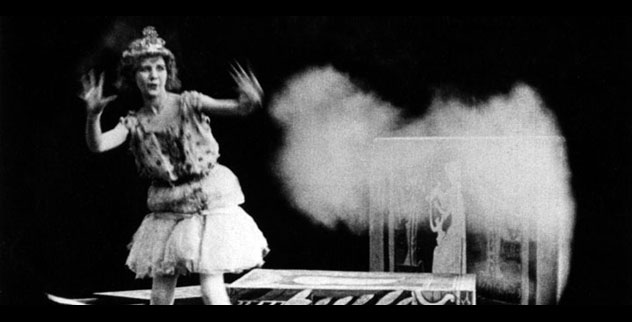

If the words National Film Registry make you think of Casablanca, The Godfather, and other cinematic household names, that is fair. But the Registry has always had a mischievous streak. The Library of Congress does not preserve only crowd-pleasers and canonical studio classics. It also protects films that are strange, daring, handmade, dreamlike, abrasive, hypnotic, and gloriously hard to explain to your cousin who only watches superhero movies.
That is where avant-garde cinema comes in. These are the films that test what movies can be. They may ditch conventional plot, use found footage, scratch directly onto film, treat editing like jazz, or turn a simple gesture into something cosmic. In other words, avant-garde works are often the lab experiments of film history. Sometimes they look like dreams. Sometimes they look like a nervous system learning to dance. Sometimes they look like someone stole a projector and decided to reinvent reality in the basement.
The National Film Registry matters because it recognizes that American film heritage is bigger than the box office. It includes shorts, experimental works, independent productions, documentaries, and films that were once dismissed as too weird, too personal, or too far outside the mainstream. That is exactly why this list is so exciting. These ten avant-garde works on the National Film Registry prove that film history is not only made by Hollywood epics. It is also made by radicals with scissors, splicers, paint, trance logic, and a healthy disregard for the rules.
What Makes an Avant-Garde Film Registry-Worthy?
Before jumping into the list, it helps to define the terms. An avant-garde film is typically experimental in form, structure, or technique. It may reject traditional narrative, foreground visual rhythm, collapse dream and reality, or make the medium itself part of the subject. The National Film Registry, meanwhile, honors films that are culturally, historically, or aesthetically significant. Put those ideas together, and you get something wonderful: films that may be small in running time but huge in influence.
Many of the titles below helped shape later music videos, art films, independent cinema, personal documentary, queer cinema, collage filmmaking, and abstract animation. Even when they were made on shoestring budgets, these films opened doors that larger productions later walked through in polished boots.
1. Rose Hobart (1936)
Joseph Cornell’s Rose Hobart is one of the great acts of cinematic rearrangement. Cornell, better known in the art world for his box assemblages, took footage from the 1931 jungle melodrama East of Borneo and reshaped it into something uncanny, intimate, and entirely new. Instead of serving the original plot, the re-edited images revolve around actress Rose Hobart herself, turning a routine studio picture into a private obsession and a surrealist object.
What makes Rose Hobart so important is not just that it is weird in a deliciously elegant way. It also helped establish the found-footage film as a serious artistic form. Cornell showed that editing could be an act of authorship every bit as powerful as directing original footage. He did not simply quote another movie; he transformed it. The result feels like a dream assembled from old Hollywood fragments, and that dream has echoed through decades of collage cinema ever since.
2. Meshes of the Afternoon (1943)
If American experimental film had a hall of fame lobby, Meshes of the Afternoon would be in it, probably standing under moody light while a mirror-faced figure glides past in the background. Made by Maya Deren and Alexander Hammid, the film follows a woman through a looping series of repeated actions, symbolic objects, and unsettling doubles. A key, a knife, a flower, a staircase, a hooded figure, a window: everything feels both ordinary and loaded with psychic voltage.
Meshes of the Afternoon is often celebrated as a landmark of the “trance film,” and for good reason. It does not tell a story in the usual sense; it pulls viewers into subjective experience. Deren treats cinema as a tool for exploring interior life, not just exterior action. That approach influenced generations of filmmakers, from feminist artists to narrative directors who learned that mood, rhythm, and repetition can do as much storytelling work as dialogue. At barely over a dozen minutes, it feels bigger on the inside than many three-hour epics.
3. Motion Painting No. 1 (1947)
Oskar Fischinger’s Motion Painting No. 1 is a reminder that paint can dance if you give it a camera and enough ambition. Fischinger created the film by photographing layers of oil paint on glass as they were repeatedly altered over time. Through stop-motion photography, the painting appears to bloom, recede, mutate, and reorganize itself in rhythmic conversation with Bach’s Brandenburg Concerto No. 2.
This is abstract animation at an exceptionally high level. There are no characters, no plot twists, and no villain explaining his master plan for world domination. Instead, there is motion, color, music, and pure visual intelligence. Fischinger demonstrates that cinema can be built from shape and tempo alone. That idea was central to avant-garde film and later proved influential far beyond it, especially in animation, music visualization, and the long history of filmmakers trying to make the eye hear.
4. Eaux d’artifice (1953)
Kenneth Anger’s Eaux d’artifice is short, lush, and intensely stylized. Set amid the fountains and statuary of the Villa d’Este in Italy, the film follows a small costumed figure moving through a landscape of water, stone, and theatrical light. Anger shot the film in black and white through red filters, creating a rich, sculptural atmosphere that feels both aristocratic and haunted.
One of the pleasures of Eaux d’artifice is how little it needs to explain itself. It operates like a moving ritual. Anger’s control of costume, architecture, light, and music turns the location into a magical environment rather than a simple backdrop. The film also reveals another truth about the avant-garde: experimental cinema is not always rough or raw. Sometimes it is ornate, precise, and jewel-like. Sometimes it enters the room wearing brocade and says nothing, which is honestly a power move.
5. A MOVIE (1958)
Bruce Conner’s A MOVIE is one of the most influential compilation films ever made. Built from found footage, leader, countdowns, newsreels, sensational imagery, and snippets from various sources, it is edited to Ottorino Respighi’s Pines of Rome. In just twelve minutes, Conner creates a head-spinning critique and celebration of spectacle, violence, disaster, desire, and mass media itself.
The title is a joke, a challenge, and a manifesto. A MOVIE asks what a movie is when its pieces come from elsewhere. It also turns juxtaposition into argument. Conner’s editing is funny, shocking, and strangely musical. You can see the seeds of later essay films, pop montage, archival remix culture, and even the grammar of certain trailers and music videos here. It is both a time capsule and a detonation device. Once you see it, you understand that montage is not just a technique. It is a philosophy.
6. Dog Star Man (1961–64)
Stan Brakhage’s Dog Star Man is less a film than an expedition. Consisting of a prelude and four parts, this silent cosmological epic combines images of a bearded man climbing a mountain with flashes of nature, light, the body, painted film, scratched emulsion, and superimposed imagery that seems to erupt from consciousness itself. Calling it “narrative” would be generous. Calling it “an experience” is safer.
Brakhage pushed the medium toward a more direct, sensory form of seeing. He did not want viewers to passively consume illustrated stories; he wanted them to confront vision in a more primal way. Dog Star Man is one of the clearest examples of that ambition. It can feel ecstatic, bewildering, exhausting, and transcendent, sometimes all in the same minute. The Registry’s recognition of this film matters because it acknowledges that American cinema includes works that operate like poems, symphonies, and private cosmologies rather than conventional entertainment.
7. Scorpio Rising (1964)
With Scorpio Rising, Kenneth Anger created a film that feels like a prophecy delivered through leather jackets, pop songs, chrome, and dangerous levels of style. The film centers on biker culture but expands into a provocative collage of masculinity, camp, religion, fascist imagery, celebrity iconography, desire, and rebellion. It was controversial on release, faced censorship battles, and eventually became one of the defining works of underground cinema.
Its influence is enormous. The pop soundtrack is not background decoration; it drives meaning through irony and collision. The editing creates associations rather than explanations, and those associations are electric. Long before MTV, Anger showed how songs and images could lock together to produce attitude, commentary, and intoxication all at once. Scorpio Rising also remains vital in discussions of queer representation and subcultural filmmaking. It is risky, stylish, and impossible to confuse with polite cinema.
8. Our Lady of the Sphere (1969)
Larry Jordan’s Our Lady of the Sphere brings collage animation into the realm of the mystical and the mischievous. Jordan, a key figure in Bay Area independent film, uses found graphics to create floating, animated compositions that seem to belong to another dimension. Inspired by The Tibetan Book of the Dead, the film does not unfold like a logical story. It drifts, dazzles, and hovers in a realm of symbolic play.
That dreamlike freedom is precisely why it belongs on the National Film Registry. Our Lady of the Sphere represents an important strand of American avant-garde practice: the handmade animated collage as a vehicle for inner landscapes. The film feels playful and metaphysical at once, as if a Victorian scrapbook accidentally became sentient. It is a vivid reminder that experimental cinema is not only about negation or difficulty. It can also be whimsical, sensuous, and full of wonder.
9. My Name Is Oona (1969)
Gunvor Nelson’s My Name Is Oona is one of the most lyrical films on the Registry. Centered on Nelson’s young daughter, it uses superimposition, slow motion, repetition, and fluid editing to evoke childhood not as a neat stage of development but as a drifting, vivid, nonlinear state of being. Rather than explaining a child, Nelson creates a cinematic environment that feels closer to memory, sensation, and emotional weather.
The result is tender without becoming sentimental. My Name Is Oona is personal cinema in the richest sense. It transforms domestic material into something elemental and expansive, proving that intimate subjects can yield radical form. The film also broadens the common stereotype of avant-garde work as cold or purely conceptual. Nelson’s movie is experimental, yes, but it is also deeply human. It shows that innovation can come wrapped in gentleness, and that a child’s world can be a site of formal revolution.
10. Free Radicals (1979)
Len Lye’s Free Radicals strips cinema down to line, rhythm, darkness, and energy. Lye scratched directly into black film stock so that white streaks and marks would burst alive on screen, dancing to music from the Bagirmi people of Central Africa. The images are minimal, but the effect is anything but small. The film feels raw, physical, and astonishingly alive, as if the projector were channeling lightning.
It is one of the purest demonstrations of direct filmmaking, where the artist works on the film strip itself rather than photographing the outside world. In an age saturated with digital perfection, Free Radicals still feels startlingly modern because it is so immediate. Every scratch announces the artist’s hand. Every flash reminds us that cinema is not just representation; it is also light, surface, pulse, and movement. Few Registry titles make that point more clearly or more thrillingly.
Why These Films Still Matter
These avant-garde works on the National Film Registry matter because they preserve not just titles, but possibilities. They document moments when filmmakers ignored commercial expectations and asked more dangerous questions. What if a movie could behave like a poem? What if editing could become the main event? What if the camera could record thought instead of action? What if paint, found footage, scratches, and repetition were not side techniques but the whole language?
Together, these ten films map an alternate history of American cinema. It is a history of independence, obsession, queer imagery, abstraction, female authorship, collage practice, and formal invention. They also expose a useful myth: that the mainstream is the whole story. It is not. Film history has always been shaped by artists working outside the center, sometimes in apartments, art spaces, museums, and co-ops, often with very little money and an unreasonable amount of vision. Thank goodness for that.
The Experience of Watching These Films Today
Watching avant-garde films on the National Film Registry today can feel a little like switching from everyday conversation to poetry without warning. At first, some viewers may resist the shift. Where is the plot? Who is the protagonist? Why is no one explaining what this mirror-faced figure is doing in my afternoon? But that discomfort is often the beginning of the experience, not the failure of it.
These films ask for a different kind of attention. Instead of chasing a clear chain of events, you start noticing rhythm, shape, texture, repetition, color, gesture, and emotional atmosphere. Meshes of the Afternoon can make you feel as if you are trapped inside a thought you cannot quite shake. A MOVIE can leave you exhilarated and slightly rattled, like you just scrolled through the collective unconscious with a symphony blasting in the background. Dog Star Man can feel like climbing a mountain inside someone else’s nervous system.
There is also something wonderfully physical about many of these works. In Free Radicals, you almost feel the scratch of the artist’s hand on the film stock. In Motion Painting No. 1, paint seems to breathe and reorganize itself before your eyes. In Scorpio Rising, music, leather, and image collide so forcefully that the movie feels less screened than summoned. Even quieter pieces like My Name Is Oona carry a tactile intimacy, as if memory itself were brushing past the lens.
For modern audiences raised on algorithmic recommendations and carefully optimized content, these films can also be refreshingly unhelpful. They do not flatter the viewer with easy explanations. They do not care about being bingeable. They do not pause to ask whether you are still watching. They assume you are capable of uncertainty, curiosity, and interpretation. Honestly, that confidence in the audience is part of their charm.
The best way to approach them is with patience and a little humility. You do not need to “solve” them. You only need to meet them halfway. Watch how images repeat. Notice how music changes meaning. Pay attention to mood before meaning. Let the film work on you before you work on it. Some of these pieces may not fully click on first viewing, and that is fine. Avant-garde cinema has always rewarded return visits. Like modern art, jazz, or an excellent but slightly intimidating espresso, it can become more pleasurable once you stop demanding that it behave like something else.
In that sense, the experience of these Registry titles is bigger than film history. They remind us that art does not need to be easy to be valuable, and it does not need to be mainstream to be foundational. You may finish one of these works confused, delighted, irritated, moved, or all four at once. That is not a bad outcome. That is evidence that the film actually did something. And in a media culture built on instant readability, that kind of encounter feels almost avant-garde in itself.
Conclusion
The National Film Registry is often described as a safeguard for America’s moving-image heritage, and these ten titles prove why that mission matters. Avant-garde films preserve a record of cinematic risk. They show artists testing form, challenging taste, and expanding what a movie can be. From the haunting loops of Meshes of the Afternoon to the electric scratches of Free Radicals, these works remain alive because they still provoke, inspire, and destabilize.
That is the beauty of the Registry’s broader vision. It does not only preserve familiar greatness. It preserves artistic audacity. And if film history is a house, avant-garde cinema is the room where someone knocked down a wall, painted the ceiling, replaced the staircase with a ladder, and somehow made the whole place more interesting.
SEO Tags


