
There are two types of people at bedtime: those who gently drift off like a Disney woodland creature, and those who lie in bed replaying one awkward sentence they said in 2014. If you belong to the second group, welcome. Your brain is not broken; it may simply need a better off-switch. That is where yoga before bed can help.
Bedtime yoga is not about twisting yourself into a pretzel, sweating through your pajamas, or attempting a dramatic handstand beside the laundry basket. It is a calm, slow, body-friendly routine designed to release tension, steady your breathing, quiet your nervous system, and prepare your mind for sleep. Think of it as a polite memo to your body: “The workday is over. Please stop acting like we are being chased by a tiger.”
Research and guidance from leading health organizations suggest that gentle yoga, stretching, breathing exercises, and consistent sleep habits can support relaxation and better sleep quality. While yoga is not a magic cure for insomnia or medical sleep disorders, it can be a practical part of a healthy bedtime routineespecially when paired with a cool, dark bedroom, less screen time, and a consistent sleep schedule.
What is bedtime yoga?
Bedtime yoga is a gentle form of yoga practiced in the evening, usually within the last 30 to 60 minutes before sleep. Unlike energetic yoga classes that build heat and strength, nighttime yoga focuses on slow movements, supported poses, deep breathing, and relaxation. The goal is not performance. The goal is peace.
Common styles that fit well before bed include restorative yoga, yin yoga, gentle hatha yoga, yoga nidra, and simple breath-based stretching. These practices encourage the body to move away from “fight-or-flight” alertness and toward a calmer “rest-and-digest” state. In normal human language: your shoulders stop trying to become earrings, your jaw unclenches, and your thoughts stop holding a committee meeting.
Benefits of yoga before bed
1. It helps reduce stress and mental noise
Stress is one of the biggest sleep thieves. When your mind is busy, your body often follows: heart rate rises, breathing becomes shallow, and muscles tighten. Gentle yoga combines movement and breathing in a way that helps you slow down. Instead of telling your brain, “Stop thinking,” which never works, yoga gives your attention somewhere useful to land: your breath, your body, and the present moment.
Simple poses such as Child’s Pose, Legs Up the Wall, and Reclined Bound Angle Pose can create a sense of physical safety and ease. That matters because relaxation is not only mental; it is physical. When the body softens, the mind often gets the hint.
2. It releases muscle tension from the day
Modern life is not exactly designed for graceful posture. Many people spend hours sitting, driving, looking down at phones, or working at computers. By bedtime, the hips, back, neck, hamstrings, and shoulders may feel tight enough to qualify as office furniture.
Bedtime yoga uses slow stretching to release common tension areas. A forward fold can soften the back body. A gentle twist can ease the spine. Legs Up the Wall can relax tired legs. Even five minutes of stretching can make your body feel less like a crumpled receipt and more like an actual human being.
3. It supports better sleep quality
Yoga may help some people fall asleep more easily and feel more rested. The effect likely comes from several factors working together: reduced stress, slower breathing, relaxed muscles, and a more predictable nighttime routine. Sleep experts often recommend a calming wind-down period before bed, and yoga fits beautifully into that window.
Yoga is especially helpful when it replaces habits that stimulate the brain, such as late-night scrolling, stressful emails, intense workouts, or dramatic “just one more episode” television decisions. Your nervous system knows the difference between a peaceful stretch and a crime documentary at midnight. It has opinions.
4. It encourages deeper breathing
Breathing is the remote control for the nervous system. Shallow, fast breathing can keep the body alert, while slow, steady breathing can encourage relaxation. Bedtime yoga often includes diaphragmatic breathing, also called belly breathing, where you breathe deeply into the lower ribs and abdomen instead of lifting the chest and shoulders.
Try this simple rhythm: inhale through the nose for four counts, pause gently for one count, then exhale slowly for six counts. The longer exhale is the key. It signals the body to settle down, like turning down the volume on a loud room.
5. It creates a consistent bedtime ritual
Your body loves patterns. A consistent bedtime routine teaches your brain what comes next. When you do the same calming sequence each nightdim lights, put away screens, practice yoga, breathe, get into bedyour body begins to associate those steps with sleep.
This is why bedtime yoga works best when it is simple and repeatable. You do not need a 90-minute flow, incense imported from a mountaintop, or a playlist called “Celestial Whale Dream.” A short, realistic routine is more powerful than an ambitious routine you do twice and abandon forever.
Best yoga poses before bed
The best yoga poses before bed are gentle, comfortable, and easy to hold. Avoid intense backbends, fast vinyasa flows, hot yoga, or anything that makes you feel energized instead of calm. Use pillows, blankets, or cushions whenever needed. Comfort is not cheating; it is the whole point.
1. Child’s Pose
Child’s Pose is one of the most calming bedtime yoga poses. Kneel on the floor, bring your big toes together, and sit your hips back toward your heels. Fold your torso forward and rest your forehead on the mat, a pillow, or stacked hands. Your arms can stretch forward or rest beside your body.
Why it helps: This pose gently stretches the hips, thighs, and lower back while creating a quiet, inward feeling. It is especially useful when your mind feels scattered.
Hold: 1 to 3 minutes.
2. Cat-Cow Stretch
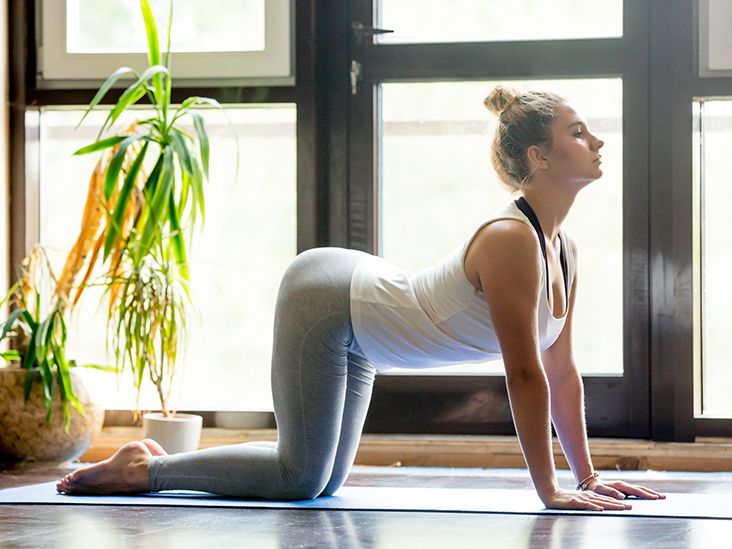
Start on your hands and knees. As you inhale, gently arch your back and lift your chest for Cow Pose. As you exhale, round your spine and tuck your chin for Cat Pose. Move slowly with your breath.
Why it helps: Cat-Cow releases stiffness in the spine, shoulders, and neck. It is a great transition pose if you have been sitting all day.
Repeat: 6 to 10 slow rounds.
3. Seated Forward Fold
Sit with your legs extended in front of you. Bend your knees slightly if your hamstrings feel tight. Inhale to lengthen your spine, then exhale and fold forward from your hips. Rest your hands on your legs, the floor, or a pillow.
Why it helps: This pose stretches the back body and encourages quiet focus. The key is softness. Do not yank yourself toward your toes like they owe you money.
Hold: 1 to 2 minutes.
4. Reclined Bound Angle Pose
Lie on your back, bend your knees, and bring the soles of your feet together. Let your knees fall open to the sides. Place pillows or folded blankets under your thighs if your hips feel strained.
Why it helps: Reclined Bound Angle Pose opens the hips and chest while allowing the whole body to rest. It pairs well with slow belly breathing.
Hold: 2 to 5 minutes.
5. Legs Up the Wall
Sit sideways next to a wall, then gently swing your legs up as you lower your back to the floor. Your hips can be close to the wall or a few inches away. Rest your arms wherever comfortable.
Why it helps: This restorative pose can ease tired legs and create a deeply relaxing effect. It is a favorite for people who stand, walk, or sit for long hours.
Hold: 3 to 10 minutes.
6. Supine Spinal Twist
Lie on your back and hug your knees toward your chest. Let both knees fall gently to one side while keeping your shoulders relaxed. Turn your head in the opposite direction if it feels good, then switch sides.
Why it helps: A gentle twist can release the lower back and help digestion feel more comfortable after a long day.
Hold: 1 to 2 minutes per side.
7. Happy Baby Pose
Lie on your back, bend your knees, and bring them toward your armpits. Hold the backs of your thighs, ankles, or outer feet. Keep your lower back relaxed on the floor.
Why it helps: Happy Baby stretches the hips and lower back. It also has a silly name, which is a bonus because bedtime routines should not take themselves too seriously.
Hold: 1 to 2 minutes.
8. Corpse Pose
Lie flat on your back with your arms resting by your sides, palms facing up. Let your feet fall open. Close your eyes and scan your body from head to toe, relaxing each area as you go.
Why it helps: Corpse Pose trains the body to be still without forcing sleep. It is a simple bridge between yoga practice and bedtime.
Hold: 3 to 7 minutes.
A simple 10-minute bedtime yoga routine
If you want a practical sequence, start here. This routine is short enough to do even when you are tired, which is important because bedtime motivation has the strength of a wet paper towel.
- Minute 1: Sit comfortably and take slow belly breaths.
- Minutes 2–3: Move through Cat-Cow Stretch.
- Minutes 4–5: Rest in Child’s Pose.
- Minutes 6–7: Practice Supine Spinal Twist, one minute per side.
- Minutes 8–9: Relax in Legs Up the Wall or Reclined Bound Angle Pose.
- Minute 10: Finish in Corpse Pose with slow breathing.
This routine can be done on a yoga mat, rug, or even beside your bed. If you are extremely tired, do the final three poses only. A tiny routine done consistently beats a perfect routine that lives only in your imagination.
Breathing techniques to pair with bedtime yoga
Diaphragmatic breathing
Place one hand on your chest and one hand on your belly. Inhale slowly through your nose and let your belly rise. Exhale gently and let your belly fall. Keep the shoulders relaxed. Practice for two to five minutes.
Extended exhale breathing
Inhale for four counts and exhale for six to eight counts. Do not strain or hold your breath aggressively. The goal is calm, not winning a lung Olympics.
Body scan relaxation
Lie down and bring attention to each part of your body: forehead, jaw, neck, shoulders, chest, belly, hips, legs, and feet. As you exhale, imagine releasing tension from each area. This works well in Corpse Pose or after you get into bed.
When should you do yoga before bed?
The best time to do yoga before bed is usually 15 to 45 minutes before sleep. Keep the routine gentle and slow. Vigorous exercise close to bedtime may make some people feel more alert, especially if it raises heart rate and body temperature. Gentle yoga, however, is usually relaxing enough for the evening.
Try practicing after you have finished heavy meals, work tasks, and screen-heavy activities. A good order might look like this: prepare for tomorrow, dim the lights, put your phone away, do gentle yoga, brush your teeth, and get into bed. Yes, your phone may complain. It will survive.
Safety tips for bedtime yoga
Yoga before bed should feel soothing, not painful. Move slowly, avoid forcing deep stretches, and use props for support. If a pose causes sharp pain, dizziness, numbness, or shortness of breath, stop and choose a more comfortable position.
People who are pregnant, recovering from surgery, managing chronic pain, dealing with balance problems, or living with heart, lung, spine, or joint conditions should check with a qualified healthcare professional before starting a new routine. Also, if sleep problems continue for weeks or affect daily life, it is wise to speak with a healthcare provider. Yoga can support healthy sleep habits, but persistent insomnia, sleep apnea, restless legs, or severe anxiety may need professional care.
Common mistakes to avoid
Doing poses that are too intense
Bedtime is not the moment to chase your most ambitious fitness goals. Save power yoga, hot yoga, arm balances, and intense core work for earlier in the day. At night, choose poses that lower your energy instead of lighting it up like a stadium.
Holding your breath
If you are gripping, straining, or holding your breath, the pose is too much. Back off until you can breathe smoothly. In bedtime yoga, the breath is more important than the shape.
Practicing with bright screens nearby
A relaxing yoga routine loses some of its power if your phone is glowing beside you like a tiny rectangle of chaos. Turn off notifications, dim the room, and give your brain fewer reasons to stay awake.
Expecting instant results
Some people feel calmer after one session. Others need a week or two for the routine to become familiar. Bedtime yoga works best as a habit, not a one-night negotiation with your nervous system.
Who can benefit most from yoga before bed?
Bedtime yoga may be especially helpful for people who feel physically tense at night, have racing thoughts, spend long hours sitting, experience mild stress, or want a healthier alternative to late-night scrolling. It can also be useful for anyone building a more consistent sleep routine.
Beginners can start with just three poses: Child’s Pose, Legs Up the Wall, and Corpse Pose. These are approachable, calming, and easy to modify. You do not need to be flexible. You do not need special clothes. You do not even need to look elegant. Nobody looks elegant adjusting a pillow under their knees at 10:42 p.m., and that is completely fine.
How to make bedtime yoga a lasting habit
The easiest way to stick with bedtime yoga is to remove friction. Keep a mat, blanket, or pillow near your bed. Choose a short routine. Practice at the same time each night. Pair it with an existing habit, such as brushing your teeth or setting your alarm.
Also, make the routine pleasant. Use soft lighting. Wear comfortable clothes. Keep the room cool. Choose quiet music if it helps. The more your brain enjoys the ritual, the more likely it is to repeat it.
A helpful rule is this: never make bedtime yoga so complicated that you need emotional support to begin. Five calm minutes are enough to build the habit.
Personal experience: what bedtime yoga can feel like in real life
The first time someone tries yoga before bed, the experience is often less “spiritual awakening” and more “wow, my hamstrings have filed a complaint.” That is normal. Many people discover that their bodies have been carrying the day around like an overloaded backpack. The neck is tight from screens, the hips are stiff from sitting, and the mind is still trying to solve tomorrow’s problems even though tomorrow has not clocked in yet.
A realistic bedtime yoga session might begin with resistance. You may not feel like rolling out a mat. You may think, “I am too tired to stretch,” which is funny because the whole point is to become the good kind of tired. But once you sit down, lower the lights, and take a few slow breaths, the body often begins to cooperate. The first minute may feel awkward. The second minute feels quieter. By the fifth minute, you may notice your breathing has slowed without forcing it.
Child’s Pose is often the pose that changes the mood first. With the forehead resting on a pillow and the arms relaxed, the body gets permission to stop performing. There is nothing to achieve. No emails to answer. No dishes to impress. Just breathing. For people who spend the day being productive, this can feel surprisingly powerful.
Legs Up the Wall can feel even more dramatic in the best possible way. Tired legs settle, the lower back softens, and the room seems quieter. This pose is especially comforting after a day of standing, walking, studying, commuting, parenting, working, or simply existing in modern society, which should honestly come with a stretching requirement.
The biggest benefit many people notice is not that they fall asleep instantly like someone unplugged them. It is that the transition into sleep becomes less chaotic. Instead of going from phone screen to pillow to mental overthinking festival, bedtime yoga creates a buffer. It gives the day a closing ceremony. The body receives a signal that it is safe to rest.
After a week of consistent practice, the routine can start to feel familiar. The same few poses become a cue. The breath slows sooner. The mind wanders less aggressively. Even on nights when sleep is not perfect, the routine still provides a calmer ending to the day. That matters. Better sleep is not always built from one huge change; sometimes it is built from small signals repeated night after night.
One helpful experience-based tip is to keep the routine almost laughably simple. Do not create a 27-step ritual involving candles, chanting, herbal tea, journaling, moon phases, and a blanket folded at a mathematically suspicious angle. Start with three poses and one breathing technique. If the routine feels easy, you will actually do it. If you actually do it, it can start working.
Another useful lesson is to stop judging how “good” the yoga looks. Bedtime yoga is not content. It is care. Your knees can be bent. Your props can be messy. Your pajamas can have cartoon animals on them. The only requirement is that the practice helps you feel a little more settled than when you started.
Over time, yoga before bed can become less of a workout and more of a nightly reset. It says: the day is done, the body can soften, the mind can loosen its grip, and sleep is welcome to arrive whenever it is ready. No pressure. No drama. Just a quieter landing.
Conclusion
Yoga before bed is a simple, gentle, and practical way to prepare the body and mind for rest. By combining slow movement, relaxed stretching, and steady breathing, bedtime yoga can reduce stress, release muscle tension, support better sleep quality, and create a consistent nighttime routine. The best poses are not the most impressive ones; they are the ones that help you feel calm, comfortable, and ready to let the day go.
Start small. Try 10 minutes. Choose Child’s Pose, Legs Up the Wall, a gentle twist, and Corpse Pose. Breathe slowly. Keep your room quiet and your phone out of reach. Your sleep routine does not need to be perfect. It just needs to be peaceful enough that your nervous system stops acting like it has breaking news.


