
Some questions are unfair in the best possible way. Asking for the world’s most beautiful flower shop is a little like asking for the world’s best sunset, croissant, or dog with floppy ears. You can make a strong case, sure, but you will also start an argument at brunch. Still, it is a glorious question, because it leads us straight into a world of overflowing buckets, perfumed air, moody lighting, sculptural branches, and shopkeepers who somehow make a bunch of tulips look like high art.
If we are going to be serious about it, beauty in a flower shop is not just about having the fanciest roses or the most expensive orchids. The truly unforgettable floral spaces create atmosphere. They tell a story. They feel local, alive, and a little bit magical. The best ones are part studio, part stage set, part neighborhood ritual. You walk in to buy peonies and leave wondering whether you should also change your life, move into a cottage, and start referring to your weekends as “foraging time.”
So, is there one flower shop that deserves the crown? Maybe. But the better answer is that the most beautiful flower shop is the one that turns flowers into an experience rather than a transaction. And when you look at real shops around the world, a few patterns bloom again and again.
Can One Flower Shop Really Be “The Most Beautiful”?
Technically, yes. Emotionally, absolutely not. Beauty is slippery. One person wants a tiny black shed overflowing with branches and terracotta pots. Another wants a high-design boutique where flowers sit beside hand-thrown ceramics and cashmere throws. Someone else wants a joyful little truck covered in blossoms rolling down a sunny street. The title depends on what kind of beauty moves you.
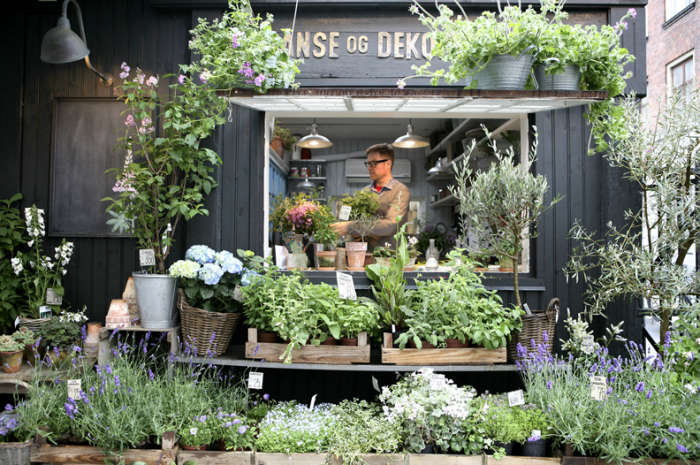
That said, some shops come up again and again because they do more than sell bouquets. They create a world. A great example is Blomsterskuret in Denmark, a flower shed that has been described as overflowing with starter plants, topiaries, and fresh-cut flowers. It is humble, rustic, and wildly photogenic without feeling staged. In floral terms, it is not trying too hard, which is exactly why it works.
At the other end of the spectrum are flower-forward retail spaces that feel like design destinations. These shops mix flowers with pottery, candles, home goods, art, and fashion. They prove that modern floral beauty is not just botanical. It is editorial. It is immersive. It is the difference between buying flowers and stepping into a mood board that smells amazing.
What Actually Makes a Flower Shop Beautiful?
1. Abundance Without Chaos
A beautiful flower shop feels lush, but not messy. That balance is harder than it looks. Flowers are naturally dramatic, which means a shop can turn from romantic to “someone lost a fight with a wholesale bucket” in about three seconds. The best spaces know how to frame abundance. Buckets line up with intent. Branches shoot upward where they can be admired. Color palettes shift with the season. There is freedom, but also rhythm.
That is why so many admired florists lean into sculptural design. They do not just pile blooms together. They create height, shape, negative space, and movement. Even a single stem can feel luxurious when it is presented with confidence.
2. A Strong Sense of Place
The world’s most beautiful flower shop should not feel interchangeable. It should belong to its neighborhood and its maker. A Venice shop should not feel like a copy of a London one. A Brooklyn florist should not feel like it was shipped in from nowhere. The prettiest floral spaces have personality baked into the walls.
Take Flowerboy Project in Los Angeles. It pairs flowers with lifestyle goods, blending floral design with a broader creative point of view. Or consider Brave Floral in New Jersey, where vibrant design, a changing exterior wall, playful color, and carefully chosen objects help turn the shop into a destination. These places are not generic bouquet factories. They have a voice.
3. More Than Flowers on the Shelves
One of the biggest clues that a flower shop is truly beautiful is that you want to linger there. Not because you are indecisive about ranunculus, but because the entire space invites you to stay. The best shops now often include pottery, candles, books, vases, textiles, coffee, or gifts. Flowers remain the star, but the supporting cast matters.
This is one reason floral boutiques have become so compelling in the design world. Beautiful vessels, handmade ceramics, lighting, and scent all deepen the experience. A flower shop becomes a place where beauty is layered rather than singular.
4. Seasonality
The most beautiful shop is almost always in conversation with the season. Spring should feel different from autumn. Late summer should not look like February in a trench coat. Seasonal flowers make a shop feel more alive, more grounded, and more honest.
That seasonality also matters because shoppers increasingly care where their flowers come from and whether they reflect local growing cycles. In other words, beauty is not just visual anymore. It includes story, sourcing, and timing. A bunch of local branches in winter can feel more beautiful than imported blooms that look technically perfect but emotionally flat.
5. Mood, Memory, and Emotion
Flowers affect people in ways that go beyond décor. That is part of what makes floral retail special. A beautiful flower shop can feel like therapy with better lighting. Flowers are tied to celebration, sympathy, romance, hospitality, apology, gratitude, and simple Tuesday self-care. They are emotionally loaded in the most charming way possible.
That is also why these spaces land differently from other stores. You are not just buying an object. You are buying a feeling, or sending one to someone else. A shop that understands this can feel unforgettable even if it is small. In fact, some of the most beautiful ones are tiny. Beauty loves scale, but it also loves intimacy.
Real Shops That Make a Strong Case
Blomsterskuret: The Poetic Front-Runner
If the phrase world’s most beautiful flower shop sounds familiar, it is because Blomsterskuret has already inspired exactly that kind of praise. The shop’s appeal is not flashy. It is deeply atmospheric: a dark little shed, rustic fixtures, pottery, plants, and flowers spilling outward in a way that feels accidental, though it obviously is not. It captures a kind of floral beauty that many shoppers crave right now: romantic, tactile, imperfect, and rooted in craft.
Blomsterskuret also wins points for restraint. It does not scream luxury. It whispers character. And sometimes that is more seductive than marble floors and dramatic branding ever could be.
Flowerboy Project: Floral Beauty Meets Lifestyle Retail
In Los Angeles, Flowerboy Project shows how a flower shop can become a whole aesthetic ecosystem. It merges flowers with vases, coffee, skincare, and lifestyle objects, creating a space that feels breezy, curated, and deeply modern. This is not the old-school florist model with a cooler in the back and ribbon in every color known to humankind. This is floral retail as world-building.
That matters because contemporary shoppers often want a bouquet that fits into a wider visual life. They are decorating homes, hosting dinners, styling shelves, and posting photos. Flowerboy Project understands that flowers are now part of a lifestyle conversation, not just a gift category.
The Unlikely Florist: Beauty on Wheels
Then there is The Unlikely Florist, which reminds us that beauty does not even need four permanent walls. The brand’s roving flower-shop energy and artistic floral identity prove that a memorable flower business can be cinematic, playful, and mobile. There is something irresistible about flowers presented with movement, surprise, and personality. It turns the act of finding the florist into part of the charm.
This kind of concept expands the definition of what a flower shop can be. Beauty is no longer tied only to architecture. It can live in branding, storytelling, and the sheer delight of encountering flowers where you did not expect them.
Brave Floral and the Rise of the Floral Concept Store
Brave Floral represents another major shift: the flower shop as design-led neighborhood hub. The shop’s colorful interior, seasonal exterior display, houseplants, candles, and objects turn it into a place that rewards browsing. You might go for a bouquet and leave with a vase, a playlist recommendation, and the sudden belief that your entryway could be much cuter.
This model works because it understands how people shop now. They want experience, curation, and personality. A beautiful shop makes customers feel as though they have discovered something, even if they came in looking for the universal emergency bouquet: “I forgot an important date but would still like to seem thoughtful.”
The New York Flower District: Beauty as Energy
Not every beautiful flower destination is a single boutique. Sometimes beauty lives in a district. New York’s Flower District remains compelling because it offers scent, texture, color, and movement all at once. It is less polished than a jewel-box florist and more alive. Buckets crowd the sidewalks. Branches lean into the morning. Florists, stylists, and designers move through the market with purpose. It feels like backstage at a floral theater production.
That kind of beauty is important to mention because the world’s most beautiful flower shop might not be “best” because it is the neatest. It might be best because it is the most alive.
Why Modern Flower Shops Feel More Beautiful Than Ever
Part of the answer is cultural. Flowers have moved beyond traditional gifting into everyday living. People buy them for dinner parties, work-from-home desks, kitchen counters, and plain old morale. They want flowers that feel personal, seasonal, and maybe a little less stiff than yesterday’s formal bouquet.
Part of the answer is design. Florists have become tastemakers. They collaborate with hotels, fashion labels, home brands, and boutiques. They teach workshops. They style spaces. They think like artists, merchants, and set designers all at once. As a result, flower shops are becoming richer visual environments.
And part of the answer is emotional. Research and industry commentary alike keep circling back to the same point: flowers and plants support well-being, positive emotion, and a sense of connection. That does not mean every bouquet is a miracle worker. It just means humans are wired to respond to living beauty. A flower shop delivers that in stereo.
So, Which Shop Wins?
If the question is which flower shop most perfectly captures the fantasy of floral beauty, Blomsterskuret has a very serious claim. It is intimate, memorable, and rich with character. It feels discovered rather than manufactured. It makes flowers look like they belong to a slower, lovelier version of life.
But if your definition of beauty includes modern retail theater, curated objects, and immersive styling, then shops like Flowerboy Project, Brave Floral, or flower-led concept spaces in New York make equally strong arguments. In truth, the world’s most beautiful flower shop is probably not a single address. It is a category of feeling.
It is the place where flowers are presented not as inventory, but as wonder.
A 500-Word Floral Experience: Walking Into the Dream Shop
You push open the door, and before your eyes fully adjust, your nose figures it out first. Green stems. Damp leaves. Something peppery. Something sweet. Something faintly citrusy and expensive, like the kind of perfume that would never admit it once started life as a flower. The air does not smell sprayed or staged. It smells alive.
Then the colors arrive. Not all at once, but in little waves. Apricot ranunculus in a bucket by the entry. A row of cloudy mauve sweet peas that look too delicate to survive a strong opinion. Branches reaching upward like they are trying to leave the building. A parade of tulips leaning with the confident laziness of models who know they do not need to stand up straight to be admired.
Nothing is arranged in the frantic way that says, “We had inventory and panicked.” Everything feels loose, but intentional. The flowers are not trapped. They are staged the way art is staged, with space around them so your eye can rest before it falls in love again. A terracotta vase sits beside a stack of linen-wrapped books. A little brass lamp warms the corner near the paper rolls. Even the scissors look photogenic, which frankly feels rude.
A florist in an apron is trimming stems with the calm focus of a surgeon who has chosen a much nicer career. Snip. Turn. Strip a leaf. Step back. Adjust one branch by half an inch. Magic. Nearby, someone is choosing a bouquet for a dinner party, but now they are distracted by candles, then by ceramics, then by a green glass vase that absolutely was not on the shopping list and absolutely is going home with them.
Music hums in the background, low enough that the flowers still feel like the main event. The counter is scattered with ribbon, twine, and the soft paper rustle of wrapping in progress. A just-finished bouquet lands there for a moment, all movement and softness, and suddenly the whole room seems to lean toward it. This is the trick of a truly beautiful flower shop: it makes you slow down without asking permission. You came in to buy one thing. Now you are noticing shape, shadow, fragrance, color temperature, and whether your apartment has been unfairly deprived of flowering branches.
There is no pressure in the room, only invitation. You are allowed to browse, to ask, to hover, to change your mind from roses to hellebores to a single magnolia branch because apparently you are now the kind of person who buys a single magnolia branch. It feels less like shopping and more like being gently talked into a better mood.
By the time you leave, bouquet in hand, the street outside seems flatter than before. Too gray. Too rushed. You catch yourself glancing back through the window. Inside, the shop is still glowing, still fragrant, still quietly rearranging the world one stem at a time. And that is when you know you have found it: not just a beautiful flower shop, but one that briefly made everything else look less alive.
Final Thoughts
The world’s most beautiful flower shop is probably the one that makes you feel more awake when you leave than when you entered. It might be a rustic shed in Denmark, a design boutique in Los Angeles, a colorful neighborhood shop in New Jersey, or a flower-filled market block in New York. What matters is not just the blooms, but the atmosphere around them: seasonality, curation, craftsmanship, emotion, and a sense of delight.
So yes, you can ask the question. You should ask it, in fact. Just be prepared for the answer to come wrapped in kraft paper, tied with twine, and smelling faintly of peonies.
SEO Metadata


