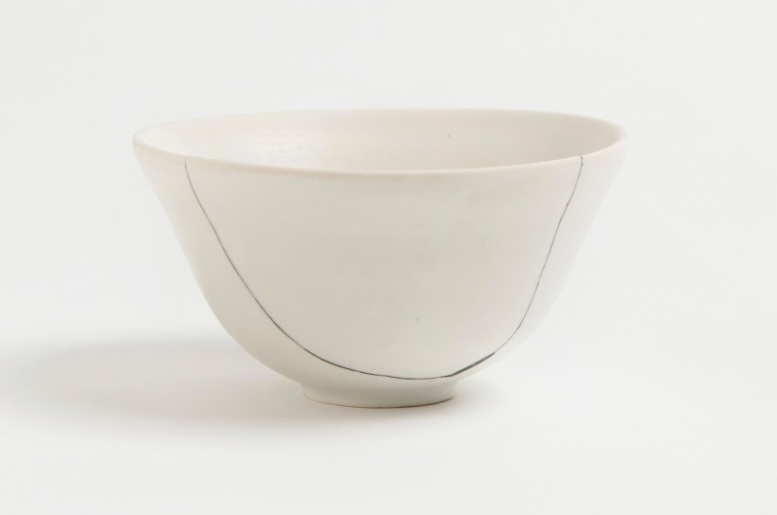

Some bowls are here to hold olives. Some are here to hold your keys. And some walk into the room like they own the lease. White Fracture Ceramic Bowl No. 3 belongs in that last category. It is the kind of object that makes people stop mid-sentence, tilt their head, and ask, “Wait, is that a bowl, a sculpture, or the chicest identity crisis I’ve ever seen?”
That reaction is exactly why this piece works. It is not trying to be loud in a neon, look-at-me way. It is quieter than that, smarter than that, and frankly more interesting. This handmade ceramic bowl is associated with ceramist Romy Northover, whose work has been described as an “ancient future” blend of old-world craft language and modern visual tension. In the case of White Fracture Ceramic Bowl No. 3, the drama comes from the visible fracture lines and the decision to embrace repair as part of the object’s identity rather than hide it under a polite layer of perfection.
That alone makes it a compelling subject for design lovers, collectors, and anyone who has ever looked at a handmade object and felt that machine-made perfection suddenly seemed a little boring. This is a bowl with a pulse. It suggests history, fragility, repair, survival, and beauty all at once. Not bad for something that could also technically sit on a console table and make your candles look expensive.
What Exactly Is White Fracture Ceramic Bowl No. 3?
At its core, White Fracture Ceramic Bowl No. 3 is a decorative ceramic bowl that turns breakage into a design feature. The piece has been presented as a ceramic object made in the United States by Northover, a British-born ceramist based in New York. It is relatively compact, with dimensions that put it squarely in the sculptural-object zone rather than the “family-size pasta night” category. In other words, this is not the bowl you reach for when serving salad to eight hungry people. This is the bowl you place where light can hit it just right.
The most memorable visual element is the fractured surface treatment. Instead of disguising cracks or restoration lines, the bowl highlights them. That approach nods to kintsugi, the Japanese tradition of repairing broken ceramics in a way that makes the break part of the beauty. Traditionally, kintsugi uses lacquer and metallic powders, often gold, to emphasize the repaired lines. White Fracture Ceramic Bowl No. 3 updates that philosophy with a darker, more contemporary look by using black repair material instead of the expected gilded seam.
That single choice changes the entire mood. Gold repair can feel luminous, ceremonial, even romantic. Black repair feels graphic, architectural, and a little more moody. It gives the bowl an edge. Think less tea ceremony whisper, more gallery wall with excellent lighting and very strong opinions.
Why the Fracture Matters
The fracture is not decoration slapped on after the fact. It is the whole point. In a culture that loves flawless finishes and identical copies, a bowl that puts damage, repair, and irregularity front and center feels unexpectedly honest. That honesty is part of what makes the bowl resonate with current interest in wabi-sabi decor, handmade pottery, and interiors that feel collected rather than algorithmically assembled.
Wabi-sabi is often reduced to “imperfection is beautiful,” which is true but incomplete. The deeper appeal lies in accepting time, wear, irregularity, and transience as meaningful. White Fracture Ceramic Bowl No. 3 fits beautifully into that framework because it does not just look handmade; it looks lived through. Even when encountered as a new piece, it suggests a story. It feels as though it has already survived something, which gives it emotional temperature that slick décor objects often lack.
That emotional charge is what separates this bowl from generic “artisan-inspired” home accessories. Plenty of products mimic the visual language of handmade ceramics without carrying any real sense of risk or material presence. This bowl, by contrast, feels unapologetically specific. It asks the viewer to consider the crack not as a flaw but as an event. And suddenly the object becomes less about utility and more about memory, time, and how beauty changes when perfection is no longer the goal.
The Appeal of a Kintsugi-Inspired Bowl in Modern Interiors
There is a reason handmade ceramics continue to pull focus in interior design. They soften rooms. They add texture where flat surfaces dominate. They break up the tyranny of overly smooth spaces full of hard edges, shiny finishes, and things that look like they were approved by a committee of robots. A ceramic bowl with visible fracture lines introduces nuance. It gives the eye something to explore.
White Fracture Ceramic Bowl No. 3 works especially well in interiors that lean minimalist, organic, Japandi, rustic-modern, or quietly eclectic. In a neutral room, it adds depth without screaming for attention. In a layered room, it acts as a grounding element. On a wood table, the white ceramic and dark fracture lines create contrast. On stone, the bowl feels almost archaeological. On open shelving, it reads like functional art. On a coffee table, it can anchor books, beads, or absolutely nothing at all.
And yes, empty is an option. A good bowl does not always need to perform. Sometimes its job is simply to exist beautifully and make everything around it seem more intentional.
Best Places to Style It at Home
Entry console: Let it catch keys or small daily objects, turning clutter into composition.
Coffee table: Pair it with oversized art books, a low candle, and one organic element such as a branch or seed pod.
Open kitchen shelving: Use it to introduce a sculptural note among plates, mugs, and cutting boards.
Dining table centerpiece: Leave it mostly empty, or fill it with citrus, walnuts, or dried botanicals for a seasonal look.
Bedroom dresser: A bowl like this can hold jewelry while still reading as grown-up décor, not random countertop chaos.
Is It Functional or Purely Decorative?
This is where design gets fun. White Fracture Ceramic Bowl No. 3 lives in the sweet spot between functional pottery and ceramic art. Visually, it behaves like sculpture. Structurally, it is still a bowl. That dual identity is part of the appeal.
Could it hold objects? Absolutely. Could it be styled with fruit, wrapped candies, or little seasonal accents? Very likely. But should it automatically be treated as everyday dinnerware? Not without knowing the maker’s care and food-safety guidance. Handmade ceramics vary, and a piece centered on visible repair aesthetics is often better approached like a collectible object first and a serving vessel second.
That is not a limitation. It is actually a clue about how the piece wants to live. Some objects are meant to be used hard and often. Others are meant to slow you down. White Fracture Ceramic Bowl No. 3 feels like the latter. It belongs in the category of objects you notice every day and appreciate a little more each time.
What Makes Romy Northover’s Approach Stand Out?
Many contemporary makers borrow from historical craft traditions, but the strongest ones do not simply repeat them. They translate them. That is what makes Northover’s approach interesting. Rather than reproducing classical kintsugi in a literal way, she reworks the idea through a contemporary lens. The black fracture lines give the bowl a sharper graphic identity and make the repaired areas feel less ornamental and more structural.
That update matters because it keeps the piece from drifting into nostalgia. White Fracture Ceramic Bowl No. 3 does not feel like a museum replica or a respectful imitation. It feels current. The bowl acknowledges the past without getting stuck there, which is probably why the phrase “ancient future” suits the work so well.
There is also a strong artistic tension in the name itself. “White” suggests calm, purity, simplicity. “Fracture” introduces rupture, violence, and repair. Put those together, and the object becomes emotionally richer before you even see it. That is excellent naming, by the way. If bowls had movie trailers, this one would deserve ominous cello music.
How to Judge a Bowl Like This Before Buying
If you are considering a piece like White Fracture Ceramic Bowl No. 3 for your home or collection, do not shop by color alone. A good collectible ceramic bowl should reward close looking. Start with the silhouette. Is the profile balanced? Does it feel static or alive? Handmade bowls often reveal their best character from the side rather than from directly above.
Next, look at the fracture pattern. Are the repair lines visually integrated, or do they feel gimmicky? In the strongest pieces, the fracture does not read as surface decoration. It feels inevitable, as though the form and the seam belong to each other. Texture also matters. Fine ceramics can look dead if the surface is too perfect. A little variation in glaze, edge thickness, or contour usually makes the bowl more compelling.
Then ask a practical question: where will this live? A striking white ceramic decorative bowl can disappear in a cluttered room and absolutely sing in a restrained one. Buying a sculptural bowl without thinking about placement is like buying a dramatic hat and then acting surprised when your closet does not know what to do with it.
Care Tips for Handmade Ceramic Bowls
A bowl like this deserves sensible care, not panic. Keep it away from high-traffic edges where it could be bumped. Dust it gently with a soft, dry cloth. If the maker has confirmed that the finish and repair materials are suitable for light use, clean with care and avoid abrasive tools. If no such guidance is available, treat the piece as decorative art and skip the dishwasher entirely. The dishwasher is many things, but subtle is not one of them.
If you use the bowl to hold objects, choose dry items that will not stain or scratch the interior. For styling, dried botanicals, folded linen, beads, matchbooks, or seasonal natural objects are smart options. If the bowl is sitting solo, even better. Let the piece breathe. Handmade ceramics often look best when they are not crowded by too many competing textures.
Why Pieces Like This Keep Their Appeal
Trends come and go, but the best ceramic objects survive because they offer more than trend value. White Fracture Ceramic Bowl No. 3 taps into several enduring desires at once: the desire for authenticity, the desire for tactility, the desire for homes that feel personal, and the desire to own fewer things that matter more.
It also reflects a larger shift in taste. People increasingly want objects with visible evidence of the hand, the process, and even the accident. They want pieces that feel human. The charm of this bowl is not that it is pristine. It is that it is not. Its beauty lives in tension: clean white ceramic against dark repair, stillness against fracture, utility against art. That combination gives it staying power.
In a market full of lookalike home accessories, White Fracture Ceramic Bowl No. 3 has what every memorable object needs: character. Not manufactured personality. Real character. The kind that makes a room feel more thoughtful and the owner look like someone who notices details.
Living With White Fracture Ceramic Bowl No. 3: A More Personal Experience
Now for the part design catalogs rarely explain: what it actually feels like to live with an object like this. Not in theory. Not on a perfectly lit product page. In real life, where there are fingerprints on glass, unopened mail on the table, and a permanent mystery charging cable no one claims.
White Fracture Ceramic Bowl No. 3 is the kind of piece that changes depending on when you look at it. In the morning, it feels crisp and architectural. Daylight pulls out the white clay body and makes the black fracture lines look deliberate and almost drawn. You notice the contrast first. At night, especially under warmer lamplight, the bowl softens. It feels older, moodier, and more intimate. The cracks start to read less like design and more like biography.
That shift is part of the experience. A lot of décor gives you its whole story in five seconds. Bowl. Nice glaze. Done. This one keeps giving you different versions of itself. One day it feels minimal. Another day it feels emotional. Another day it feels like a tiny manifesto on why things do not have to be flawless to deserve attention.
There is also something oddly comforting about keeping a visibly “broken” object in view, especially one that has been transformed rather than hidden. It changes the mood of a space in a subtle way. Rooms can become exhausting when everything in them looks too finished, too polished, too correct. This bowl interrupts that perfection politely. It says, “Relax. Texture is allowed. History is allowed. A crack is not the end of the world.” Honestly, that is a healthier message than most throw pillows deliver.
In practical use, the bowl becomes a stage set for small rituals. Drop your rings into it at the end of the day, and suddenly the act feels intentional instead of absentminded. Fill it with lemons, and the fruit looks more vivid against the white ceramic. Leave it empty on a shelf, and it still earns its place because the fracture lines keep the silhouette from feeling inert. It has presence without needing constant props.
Guests tend to notice it too. Not always immediately, but eventually. Someone reaches for a book on the coffee table, then pauses. Someone setting down a glass glances at the console and asks about the bowl. That is the magic of strong ceramic art: it does not shout from across the room, but it starts conversations once people get close. And those conversations are better than the usual “Where did you get that lamp?” because they drift into bigger subjects like repair, craft, memory, and why handmade objects feel different from mass-produced ones.
Over time, the bowl starts to feel less like an accessory and more like part of the room’s emotional grammar. It helps a space say something. Not something dramatic. Just something specific. It says the home values materiality. It says the owner is interested in form, not just trend. It says beauty can be a little uneasy, a little imperfect, and still deeply satisfying.
That is probably the best way to describe the experience of White Fracture Ceramic Bowl No. 3: satisfying. Not flashy. Not disposable. Not one of those pieces you loved for six weeks because social media told you to. It is slower than that. Better than that. The bowl grows on you because it asks for attention and rewards it. The more closely you look, the more it feels like the object is not only occupying space but shaping it.
And maybe that is what great ceramics do at their best. They turn the everyday into a little gallery of feeling. They remind us that function can be poetic, that damage can become form, and that a bowl can be more than a bowl. Sometimes it can be a whole design philosophy sitting quietly on your table, minding its business and looking excellent while doing it.
Final Thoughts
White Fracture Ceramic Bowl No. 3 is more than a decorative object with good angles. It is a thoughtful example of how contemporary ceramics can borrow from historical repair traditions while still feeling fully modern. Its white surface, dark fracture lines, and handmade presence make it memorable on sight, but its real strength is conceptual. It turns repair into visual language. It makes imperfection feel designed, not apologetic.
For collectors, it offers individuality. For decorators, it offers texture and soul. For everyday observers, it offers one of the most useful reminders in craft and design: things do not have to hide their scars to be beautiful. Sometimes the scar is the whole reason you look twice.


