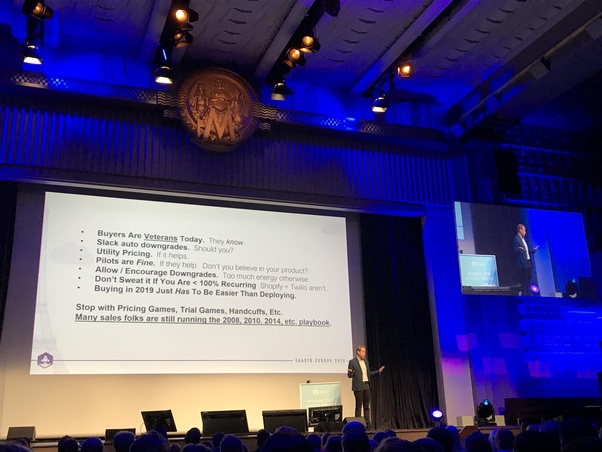

The psychology behind the B2B enterprise sale is simple in theory and wonderfully messy in real life: companies do not buy thingspeople inside companies do. Those people have targets to hit, bosses to impress, budgets to defend, reputations to protect, and inboxes that look like raccoons got into them overnight. So while enterprise selling often looks like spreadsheets, procurement checklists, ROI models, and “circle back next quarter” emails, underneath all that corporate armor is a deeply human decision-making process.
A B2B enterprise sale is rarely won by having the shiniest product, the longest feature list, or the most aggressively enthusiastic sales deck. It is won by reducing uncertainty, building trust, aligning stakeholders, making the buying process feel safe, and helping a group of busy people believe that change is worth the risk. That is the real psychology of enterprise sales: not pushing harder, but making the decision easier.
In this article, we will unpack the buyer psychology behind complex B2B sales, including fear of risk, group decision-making, trust, authority, internal politics, emotional motivation, and the subtle art of helping buyers feel smart rather than sold to. Because in enterprise sales, nobody wants to feel “closed.” They want to feel confident.
Understanding the B2B Enterprise Sale
A B2B enterprise sale is a complex business-to-business transaction involving large organizations, long sales cycles, multiple stakeholders, formal procurement processes, legal review, security evaluation, budget approvals, and enough meetings to make a calendar quietly weep. Unlike a small business sale, where one owner may make the final decision, enterprise buying usually involves a committee.
That committee may include executives, department heads, finance leaders, IT teams, procurement managers, legal reviewers, security specialists, end users, and one mysterious person who appears in the final meeting and asks the hardest question. Each person has different priorities. The CFO wants financial justification. IT wants integration and security. Legal wants manageable risk. End users want the tool to actually work without requiring three training sessions and a motivational poster. Executives want strategic impact.
This is why enterprise selling is psychological before it is procedural. A seller is not only selling a product. They are helping a group of people reach agreement despite different fears, incentives, and definitions of success.
The Core Psychology Behind Enterprise Buying
1. Buyers Are Trying to Avoid a Bad Decision
One of the strongest forces in B2B buyer psychology is risk avoidance. In consumer buying, a bad purchase might mean returning a blender that sounds like a helicopter. In enterprise buying, a bad purchase can mean wasted budget, operational disruption, angry teams, delayed projects, compliance issues, and someone’s professional reputation taking a very public nap on the conference room floor.
This is why B2B buyers often appear cautious, slow, or indecisive. They are not necessarily uninterested. They are protecting themselves and their organization from potential embarrassment. The larger the deal, the more the buyer asks: “What happens if this goes wrong?”
Smart enterprise sellers understand this. They do not simply promote benefits. They reduce perceived risk. They provide case studies, implementation plans, security documentation, customer references, proof of adoption, pilot programs, ROI models, and clear success metrics. In other words, they give the buyer enough confidence to move from “This sounds promising” to “I can defend this decision internally.”
2. Loss Aversion Is Stronger Than Opportunity
In psychology, loss aversion means people tend to feel the pain of loss more strongly than the pleasure of an equivalent gain. In enterprise sales, this explains why “increase productivity by 20%” may be less motivating than “avoid losing $2 million annually to inefficient processes.” The first sounds nice. The second sounds like something the board may ask about while everyone suddenly becomes fascinated by their shoes.
Enterprise buyers are often more motivated by problems that are already costing them than by benefits that feel optional. That does not mean sellers should use fear-based manipulation. It means they should help buyers clearly understand the cost of inaction. What happens if the company does nothing? What delays continue? What risks grow? What revenue leaks remain hidden? What customer experience problems get worse?
The psychology of the B2B enterprise sale depends heavily on reframing change. Buyers usually see change as risky. Effective sellers help them see the status quo as risky too.
The Buying Committee: Where Logic Meets Group Therapy
The buying committee is one of the defining features of enterprise sales. It exists to reduce risk, but it also creates complexity. Every stakeholder sees the purchase through their own mental filter. The same software platform may look like a revenue accelerator to a sales leader, a budget concern to finance, a security headache to IT, and a training burden to operations.
This creates a psychological challenge: consensus. Enterprise deals often stall not because the vendor failed to impress one buyer, but because the internal buying group could not align. The seller may think they are competing against another vendor, when in reality they are competing against confusion, disagreement, budget anxiety, and the ancient corporate monster known as “let’s revisit this later.”
How Stakeholders Think Differently
Enterprise sales psychology becomes clearer when you understand the internal roles:
- The champion wants the solution and needs help persuading others.
- The economic buyer cares about financial impact, payback period, and budget priority.
- The technical buyer evaluates security, integration, scalability, and operational fit.
- The end user wants usability, speed, and relief from daily pain.
- Procurement focuses on pricing, terms, vendor stability, and compliance.
- Legal looks for risk hiding inside contract language like a raccoon in a chimney.
- The executive sponsor wants strategic alignment and measurable business outcomes.
A strong enterprise seller does not use one message for all of them. They translate value into each stakeholder’s language. For finance, value means measurable return. For IT, it means secure implementation. For end users, it means fewer headaches. For executives, it means growth, efficiency, resilience, or competitive advantage.
Trust Is the Currency of the Enterprise Sale
Trust is not a fluffy bonus in B2B sales. It is the operating system. When buyers evaluate an enterprise vendor, they are asking several trust-based questions: Will this company deliver what it promises? Will the salesperson disappear after the contract is signed? Will implementation be painful? Will support be responsive? Will this vendor make me look smartor make me update my LinkedIn profile?
Trust is built through consistency, expertise, transparency, and relevance. A seller who admits limitations can be more persuasive than one who pretends the product can cure every business problem from churn to bad office coffee. Buyers are trained to detect exaggeration. When every platform is “AI-powered,” “seamless,” “game-changing,” and “best-in-class,” the words begin to sound like elevator music.
Enterprise buyers trust sellers who diagnose before prescribing. They trust people who ask thoughtful questions, understand the business context, and bring useful insight even before a contract exists. The best sales conversations feel less like a pitch and more like a strategic consultation.
Credibility Beats Charisma
Charisma can open a door, but credibility keeps it open. In B2B enterprise sales, buyers are less impressed by slick persuasion and more influenced by evidence. They want to know: Have you solved this problem before? For companies like ours? At our scale? Under similar constraints?
That is why proof matters. Customer stories, benchmarks, technical documentation, third-party validation, implementation timelines, and peer references all reduce uncertainty. Social proof is especially powerful because buyers trust other buyers who have already survived the decision.
The Emotional Side of B2B Buying
Many people assume B2B buying is purely rational. This is adorable, like assuming office printers work because everyone follows the instructions. B2B buyers absolutely care about logic, data, and ROI. But emotion still plays a major role because humans do not remove their brains and replace them with procurement software when they enter the office.
Enterprise buyers feel anxiety, ambition, frustration, pride, skepticism, urgency, and hope. They want to solve business problems, but they also want personal wins. A VP wants to lead a successful transformation. A manager wants their team to stop wasting time on manual work. A technical leader wants a secure solution that does not create weekend emergencies. A CFO wants confidence that money is being spent wisely.
The emotional drivers in enterprise sales are often professional emotions: confidence, safety, control, status, relief, and trust. A good B2B sales strategy speaks to these emotions without becoming cheesy. The message is not “Buy our platform and achieve your dreams under a sunset.” It is “This decision is sound, defensible, and likely to make your team better.”
Why Buyers Delay Decisions
Delayed decisions are a classic enterprise sales challenge. From the seller’s side, delay can look irrational. From the buyer’s side, delay often feels safe. Saying yes creates responsibility. Saying no may close off an opportunity. Saying “not yet” keeps options open and avoids immediate risk.
There are several psychological reasons enterprise buyers delay:
- Fear of making the wrong choice: The buyer needs more confidence before committing.
- Internal disagreement: Stakeholders are not aligned on priorities or urgency.
- Unclear business case: The value is interesting but not financially compelling.
- Change fatigue: The organization is tired from too many initiatives.
- Procurement friction: Legal, security, or vendor review slows the process.
- Status quo bias: Doing nothing feels easier than changing something important.
The solution is not to pressure buyers with artificial urgency. The solution is to clarify the decision. What problem matters most? Who needs to be involved? What risks must be addressed? What evidence is missing? What timeline is tied to business impact? When sellers help buyers organize the decision, they become valuable instead of annoying.
The Role of Cognitive Bias in Enterprise Sales
Cognitive biases influence how enterprise buyers interpret information. These biases are not defects; they are shortcuts the brain uses to make complex decisions manageable. In B2B sales, several are especially important.
Status Quo Bias
Status quo bias makes buyers prefer the current situation, even when it is flawed. Existing systems may be inefficient, expensive, or unpopular, but they are familiar. Familiar pain often feels safer than unfamiliar improvement. Sellers must show not only why the new solution is better, but why staying the same is costly.
Confirmation Bias
Buyers often look for information that supports what they already believe. If a buyer thinks switching vendors is risky, they may focus on implementation challenges. If they believe the current system is broken, they may focus on proof that change is urgent. Sellers should understand the buyer’s existing beliefs before presenting evidence.
Authority Bias
Enterprise buyers pay attention to credible experts, respected brands, analyst recognition, peer recommendations, and executive endorsements. Authority does not replace substance, but it lowers perceived risk. This is why thought leadership, strong customer logos, and expert-led discovery can influence complex sales.
Social Proof
Buyers want to know that others like them have made the same decision successfully. A case study from a similar industry or company size can be more persuasive than a generic product claim. The hidden message is: “You are not the first person to take this leap, and the last person did not fall into a volcano.”
Enterprise Buyers Want Control
Modern B2B buyers do significant research before speaking with sales. They compare vendors, read reviews, ask peers, watch demos, browse websites, and consult internal teams. By the time they engage a seller, they may already have a shortlist and strong assumptions.
This changes the seller’s role. The seller is no longer the gatekeeper of information. The seller is a guide who helps buyers make sense of information. Buyers want control, but they also want clarity. They do not want to be dragged through a rigid sales process. They want a buying experience that respects their intelligence and time.
That means enterprise sales teams need strong digital content, transparent pricing guidance where possible, clear product education, useful comparison materials, and buyer enablement resources. Every touchpoint either increases confidence or creates doubt.
The Psychology of the Champion
In many enterprise deals, the champion is the person who believes in the solution and advocates for it internally. This person is psychologically important because they carry the deal inside the organization when the seller is not in the room.
But champions need support. They may like the product, but liking it is not enough. They need a business case, internal talking points, objection handling, executive-ready summaries, and evidence that helps them persuade colleagues. A seller who treats the champion like a messenger misses the point. The champion is a partner.
The key question is: “Can this person successfully sell the idea internally?” If the answer is no, the deal is fragile. Great enterprise sellers equip champions with the language, proof, and confidence needed to influence the buying committee.
Why Simplicity Wins Complex Deals
Enterprise buying is complicated. That does not mean your message should be. In fact, the more complex the sale, the more important simplicity becomes. Buyers are overloaded with information. When a seller adds more confusion, the buyer’s brain does the reasonable thing: it postpones the decision and goes looking for coffee.
Simplicity helps buyers understand value quickly. A clear message answers three questions:
- What problem do you solve?
- Why does it matter now?
- Why are you the safest and smartest choice?
Every demo, proposal, business case, and executive presentation should reinforce those answers. Complexity may impress in a product manual, but clarity wins in a boardroom.
Specific Example: Selling Enterprise Cybersecurity Software
Imagine a company selling cybersecurity software to a large healthcare organization. The seller might be tempted to lead with advanced features: threat detection, dashboards, automation, integrations, machine learning, compliance workflows, and enough acronyms to make alphabet soup file a complaint.
But the psychology of the sale requires a deeper approach. The CIO worries about breaches, downtime, and board accountability. The security team worries about alert fatigue and integration. Legal worries about compliance exposure. Finance worries about cost. Department leaders worry about disruption. End users worry about yet another tool slowing them down.
The winning sales strategy would not be “Look at our amazing features.” It would be “Here is how we reduce breach risk, integrate with your current environment, support compliance, lower manual workload, and give leadership clearer visibility without creating chaos.”
That message speaks to business outcomes and emotional needs: safety, control, credibility, and confidence.
How Sales Teams Can Apply Buyer Psychology Ethically
Buyer psychology should never be used to manipulate. In enterprise sales, manipulation is short-sighted anyway. Large customers remember bad experiences, and procurement teams have the memory of elephants with contract folders.
Ethical sales psychology means understanding how buyers think so you can help them make better decisions. It means being transparent about fit. It means making trade-offs clear. It means guiding stakeholders through uncertainty rather than exploiting confusion.
Practical Ways to Use Psychology in B2B Enterprise Sales
- Lead with diagnosis: Ask questions before presenting a solution.
- Map stakeholder motivations: Understand what each buyer cares about.
- Reduce risk: Provide proof, references, implementation plans, and realistic expectations.
- Support internal consensus: Help champions communicate value across departments.
- Make the cost of inaction visible: Show what happens if nothing changes.
- Use clear language: Replace jargon with business meaning.
- Respect buyer control: Offer useful content and flexible engagement paths.
- Build trust through honesty: Admit limitations and focus on true fit.
The Future of B2B Enterprise Sales Psychology
The psychology behind B2B enterprise sales is becoming even more important as buying journeys become more digital, more self-directed, and more crowded with information. Buyers can research vendors without speaking to sales. Artificial intelligence can summarize options. Review platforms can reveal customer sentiment. Social networks can shape perception long before a formal buying process begins.
But this does not make human selling irrelevant. It makes human selling more strategic. When buyers are overwhelmed by information, they need interpretation. When stakeholders disagree, they need alignment. When risk feels high, they need confidence. When every vendor sounds similar, they need a trusted guide who can make the decision feel clear.
The future belongs to sales teams that combine data with empathy, digital convenience with human insight, and strong business cases with emotional intelligence. In plain English: enterprise buyers still want the numbers, but they also want to sleep at night.
Experience-Based Insights: What the Psychology of B2B Enterprise Sales Feels Like in the Real World
In real enterprise sales conversations, the most important moments are often not the dramatic ones. They are the quiet moments when a buyer pauses after a demo and says, “That makes sense, but implementation worries me.” That sentence may look small, but psychologically it is huge. The buyer is not rejecting the solution. They are revealing the emotional obstacle: uncertainty.
One practical lesson from enterprise selling is that buyers often ask logical questions to express emotional concerns. “How long does onboarding take?” may really mean, “Will this disrupt my team and make me responsible for a messy rollout?” “Can you send more case studies?” may mean, “I need social proof before I risk recommending this.” “How does pricing scale?” may mean, “Will I get trapped defending a cost I cannot control?”
Experienced sales professionals learn to listen beneath the words. They do not rush to answer only the surface question. They explore the concern behind it. For example, instead of replying with a generic implementation timeline, a strong seller might say, “Usually when teams ask that, they are trying to understand disruption risk. Is that what you are weighing here?” That kind of response builds trust because it shows the seller understands the buyer’s real world.
Another experience-based truth: the best champion is not always the most enthusiastic person. Sometimes the loudest fan has little internal influence. A quieter stakeholder who understands the business case, has credibility with leadership, and can navigate internal politics may be far more valuable. Enterprise sales teams should evaluate not only whether someone likes the solution, but whether they can mobilize change.
It is also common for a deal to appear healthy while hidden opposition grows elsewhere in the account. A department head may love the product, but IT may quietly worry about integration. Finance may question whether the benefit is measurable. Procurement may think the vendor is too expensive. Legal may dislike contract terms. If the seller only speaks with the friendly contact, the deal can collapse late in the process and everyone acts surprised, as if the spreadsheet slipped on a banana peel.
The practical fix is stakeholder discovery. Ask early: “Who else will weigh in on this decision?” “What concerns might they raise?” “Who has stopped similar projects in the past?” “What would make this easy to approve?” These questions are not pushy when asked with genuine curiosity. They help the buyer think through the decision more clearly.
In enterprise sales, momentum is psychological too. A deal feels real when the buyer takes internal action: inviting new stakeholders, sharing data, scheduling technical review, discussing success metrics, or asking for procurement steps. Polite interest is not the same as momentum. A buyer who says “This looks great” but never involves anyone else may simply be avoiding an uncomfortable no.
Finally, the most effective enterprise sales experiences are built on mutual respect. Buyers do not want to be chased. They want to be helped. They do not want fake urgency. They want a real reason to act. They do not want a vendor who says yes to everything. They want a partner who can tell the truth, guide the process, and make them feel confident in front of their colleagues.
That is the psychology behind the B2B enterprise sale in its most useful form: help buyers reduce risk, create internal alignment, understand value, and feel secure enough to choose change. The seller who does that is no longer just selling. They are making a difficult decision easier to make.
Conclusion
The psychology behind the B2B enterprise sale is not about clever tricks or pressure tactics. It is about understanding human behavior inside complex organizations. Enterprise buyers are rational, but they are also cautious, emotional, political, ambitious, and deeply aware of risk. They need proof, but they also need trust. They need ROI, but they also need confidence. They need a product that works, but they also need a decision they can defend.
The best enterprise sales teams know how to reduce uncertainty, support buying committees, equip champions, simplify complex decisions, and build credibility at every step. They recognize that every stakeholder is asking a slightly different version of the same question: “Is this the right decision for us, and will I be safe supporting it?”
Answer that question clearly, honestly, and repeatedly, and the psychology of the enterprise sale starts working with you instead of against you.


