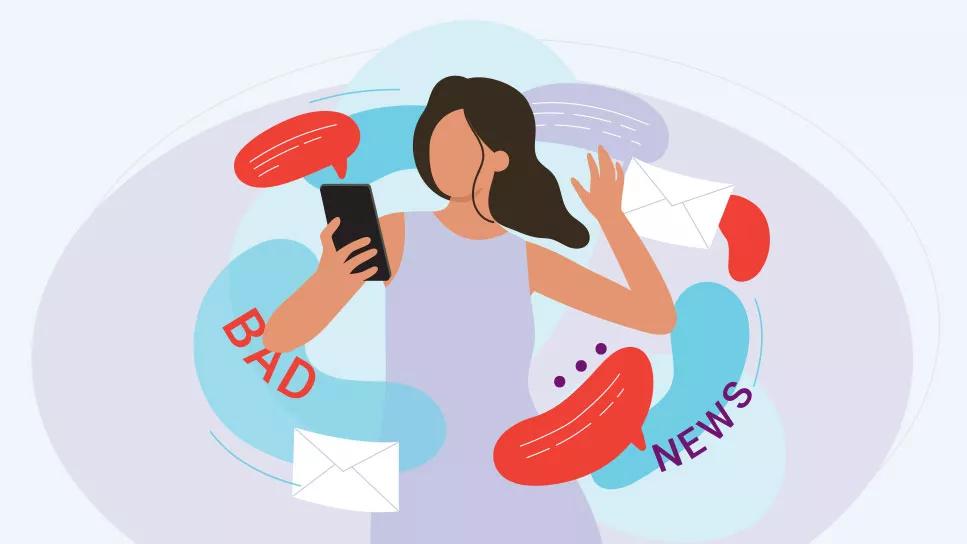

If you have ever picked up your phone to “just check one thing” and resurfaced 45 minutes later feeling tense, tired, and somehow less informed than when you started, congratulations: you have probably met doomscrolling. It is the digital equivalent of opening the fridge five times and hoping one of those visits magically turns into cake. Only instead of cake, you get stress.
Doomscrolling has become one of the most recognizable habits of modern internet life. It usually starts innocently enough. You want an update. You want context. You want to know whether the thing happening in the world is getting better or worse. Then the algorithm serves one alarming headline after another, one hot take leads to three more, and suddenly your brain is running a marathon while your body is still planted on the couch.
The problem is not staying informed. Being informed is useful. The problem is getting trapped in a loop of consuming upsetting content long after it has stopped helping you. In this article, we will break down what doomscrolling really is, why it feels weirdly hard to stop, what it can do to your mood and body, and how to build practical habits that let you stay aware without turning your nervous system into a smoke alarm.
What Is Doomscrolling?
Doomscrolling is the habit of repeatedly scrolling through negative, distressing, or emotionally charged news and social media content for longer than intended. It is not the same as reading the news for ten minutes, checking for weather alerts, or following a developing event that directly affects your safety. Doomscrolling is what happens when useful information turns into compulsive consumption.
In plain English, it is when your thumb keeps moving even though your mood is clearly filing a formal complaint.
Doomscrolling vs. Staying Informed
Healthy news consumption has a purpose. You check a few trustworthy sources, learn what you need, and move on with your day. Doomscrolling feels different. It often comes with a sense of urgency, dread, or compulsion. You tell yourself you are looking for clarity, but instead you collect more noise, more anxiety, and more tabs you never wanted in your brain.
A good rule of thumb is this: if your scrolling helps you make a decision, prepare for something real, or understand an issue more clearly, it may be useful. If it leaves you overwhelmed, wired, helpless, or unable to stop, you have likely crossed into doomscrolling territory.
Why Do People Doomscroll?
Doomscrolling is not just about weak willpower or “being bad with your phone.” It often comes from very human instincts.
1. Your brain hates uncertainty
When life feels unstable, your brain looks for information that might help you feel safer or more in control. This makes sense. If there is a threat, getting accurate information can be useful. The problem is that the internet rarely says, “That is enough for today, champ.” It says, “Would you also like seventeen more reasons to worry?”
2. Negative content grabs attention fast
Humans tend to notice threat-related information more quickly than neutral information. That bias can help us react to danger, but it also makes alarming content especially sticky online. Bad news feels urgent. Dramatic headlines feel important. Outrage feels clickable. Your attention gets pulled toward what seems threatening, even when it is not helpful in the moment.
3. Algorithms are built to keep you engaged
Platforms are designed to keep you scrolling. Infinite feeds remove natural stopping points. Recommendations keep serving related content. Notifications nudge you back in. Sometimes you even get a useful article or reassuring update, which makes your brain think, “See? Keep going. The next scroll might be the one.” That occasional reward can make the habit even harder to break.
4. Doomscrolling can feel like taking action when it is really just absorbing stress
Reading, watching, and refreshing can create the illusion that you are doing something productive. Sometimes you are. But often, doomscrolling is passive. It loads your mind with distress without moving you toward a decision, a plan, or a meaningful action.
What Doomscrolling Does to Your Mind and Body
Doomscrolling can affect more than your mood. It can spill into sleep, attention, relationships, and physical comfort too. This is one reason the habit feels so draining. It is not just “too much screen time.” It is too much emotionally intense input, often without recovery time.
Mood and mental health
One of the biggest effects of doomscrolling is emotional overload. The constant stream of upsetting material can reinforce anxious thoughts, deepen sadness, increase irritability, and leave you feeling tense or helpless. For people who are already stressed, depressed, or prone to worry, the effect can hit even harder.
Doomscrolling can also fuel rumination. Instead of helping your brain resolve uncertainty, it can keep you mentally circling the same fears. You may feel like you are gathering facts, but emotionally it can start to feel more like marinating in alarm.
Sleep problems
If doomscrolling had an official favorite hobby, it would be ruining bedtime. Scrolling late at night is a perfect storm: stimulating content, endless novelty, bright screens, and an already tired brain with poor impulse control. Emotional content can make you feel more alert when you should be winding down, and blue light exposure does not exactly tuck your circadian rhythm in with a blanket.
The result? You go to bed later, fall asleep more slowly, sleep less well, and wake up feeling like your brain was hit by a browser with 63 open tabs.
Physical effects
Doomscrolling is not only a mental experience. People may also notice headaches, muscle tension, eye strain, neck or shoulder discomfort, low appetite, and that strange full-body feeling of being keyed up for absolutely no useful reason. Long periods of sitting do not help either. If your doomscrolling happens in bed or on the couch, it can crowd out movement, daylight, and other habits that support mood.
Less connection, less joy, less real life
Another cost of doomscrolling is opportunity. Time spent spiraling through bad news is time not spent walking, talking, laughing, stretching, cooking, resting, or doing anything else that reminds your nervous system the world is not made entirely of alerts. It can quietly steal attention from the people and activities that keep you grounded.
Signs You Might Be Doomscrolling
- You plan to scroll for five minutes and somehow lose half an hour.
- You keep reading upsetting content even though it is clearly making you feel worse.
- You refresh for updates repeatedly without gaining much new information.
- You feel tense, helpless, angry, numb, or exhausted after using your phone.
- You scroll most often late at night, first thing in the morning, or during stressful moments.
- You find it hard to stop because you are afraid you will miss something important.
- Your sleep, focus, work, school, or relationships are starting to suffer.
If several of these sound familiar, you are not broken. You are human in a system designed to hold attention. The good news is that habits can be redesigned.
How To Stop Doomscrolling Without Ignoring the World
You do not have to throw your phone into the sea and move into a lighthouse. Most people do better with realistic boundaries than dramatic digital vows they cannot keep by Tuesday.
1. Decide what “enough” looks like before you open an app
Pick a time limit and a purpose in advance. For example: “I am going to check two trusted news sites for 15 minutes after lunch.” This gives your brain a stopping point before the scroll begins. Without a plan, the feed becomes the boss.
2. Choose a few trustworthy sources instead of wandering the whole internet
The more random accounts, reposts, and opinion-heavy content you consume, the more overwhelmed you are likely to feel. Narrow your intake. Read fewer sources with better standards. Your nervous system does not need 80 takes on the same headline from people whose only credential is typing fast.
3. Create no-scroll zones
Some times of day are especially vulnerable. Bedtime is the obvious one. The first 30 minutes after waking up is another. Protect both. Keeping your phone away from the bed, charging it across the room, or using an old-school alarm clock can remove the easy slide into “just one quick check” mode.
4. Turn off nonessential notifications
Push alerts are tiny digital elbows. They keep reactivating your attention and making everything feel urgent. If your phone buzzes every time the world has a feeling, your mind never gets a break. Disable nonessential alerts, especially from social apps and breaking-news feeds.
5. Replace the habit, do not just remove it
Doomscrolling often fills a gap: boredom, stress, loneliness, avoidance, or bedtime procrastination. If you only tell yourself “stop scrolling,” your brain will often go hunting for the same relief in the same place. Replace the ritual with something concrete: a walk, music, journaling, stretching, a puzzle, tea, a book, a call to a friend, or five minutes outside.
6. Notice how your body feels while you scroll
This sounds simple, but it works. Check in with your shoulders, jaw, stomach, and breathing. Are you clenching? Holding your breath? Feeling hot, jittery, or heavy? That physical awareness can be your cue to stop before your brain starts arguing like a defense lawyer for the feed.
7. Turn information into action
One of the most effective ways to interrupt doomscrolling is to convert passive distress into real-world action. Donate. Volunteer. Email a representative. Help a neighbor. Talk to your community. Even small actions can reduce the helplessness that fuels endless scrolling.
8. Make bedtime boring again
Boring is underrated. A consistent wind-down routine helps: dimmer lights, no alerts, no heated comment threads, no dramatic video rabbit holes. Read something light, take a shower, stretch, or journal. Bedtime should feel like a landing, not a hostage negotiation with your phone.
9. Get help if the habit feels impossible to control
If doomscrolling is seriously affecting your sleep, mood, concentration, school, work, or relationships, it may help to talk with a mental health professional. Sometimes the scrolling is less about the phone and more about anxiety, depression, stress, or compulsive coping underneath it.
A Practical Daily Plan To Cut Back on Doomscrolling
Here is a simple way to make this real:
- Morning: no news for the first 30 minutes after waking. Drink water. Open curtains. Let your brain boot up like a civilized machine.
- Midday: check updates from two reliable sources for 10 to 15 minutes.
- Afternoon: if stress spikes, take a movement break before touching your phone.
- Evening: stop news and social scrolling at least 30 to 60 minutes before bed.
- Night: keep the phone away from the bed and use a replacement habit such as reading, music, or journaling.
This plan is not fancy. That is the point. Small, boring, repeatable rules usually beat grand digital declarations.
Real-Life Experiences With Doomscrolling and What Actually Helps
For many people, doomscrolling does not feel dramatic while it is happening. It feels normal. That is part of why it is tricky. The behavior slips into everyday routines and starts masquerading as “being informed,” “taking a break,” or “winding down.”
Take the classic late-night scroller. This person gets into bed planning to relax for ten minutes. One headline leads to another, then a comment thread, then a video, then a totally unrelated but equally alarming post suggested by the algorithm. Suddenly it is 12:47 a.m. They are tired but not sleepy, overstimulated but weirdly numb, and already annoyed at tomorrow morning. The most helpful fix for this kind of doomscrolling is often environmental, not motivational: keep the phone away from the bed, set a shutdown time, and replace the ritual with something lower-stimulation like fiction, journaling, or music.
Then there is the lunch-break doomscroller. This person opens the phone during a short break at work or school hoping to “catch up.” Instead of feeling refreshed, they go back to their day carrying a fresh layer of dread, anger, or helplessness. Their body is still at the desk, but mentally they are somewhere between five global crises and a stranger’s unhinged opinion. For this person, the best change is often time-boxing and source control. A quick check of one or two reliable outlets is very different from free-range grazing across the whole internet.
Another common experience shows up in people who are already stressed. Maybe a parent is worried about money, health, or the safety of their kids. Maybe a student is anxious about the future. Maybe someone is carrying personal grief and finds that bad news suddenly hits much harder than it used to. In these cases, doomscrolling can become an attempt to get ahead of danger. The thought is, “If I keep reading, I will be prepared.” But the feeling that follows is usually not preparedness. It is overload. What helps here is pausing to ask one honest question: “Is this giving me useful information, or is it feeding my fear?” That question alone can interrupt the trance.
There is also the “I need to know everything right now” personality, the person who feels guilty when they unplug. They may worry that stepping away means being careless, uninformed, privileged, or out of touch. But constant exposure does not automatically equal meaningful engagement. In fact, many people become more effective, compassionate, and clearheaded when they consume less and act more. Staying informed is a good goal. Staying activated around the clock is not.
What most healthy experiences have in common is not perfect discipline. It is structure. People do better when they create stopping points, protect bedtime, notice how certain content affects them, and intentionally reconnect with offline life. A walk, a conversation, sunlight, exercise, a hobby, a meal without a screen, even five quiet minutes can help reset a brain that has been marinating in digital alarm.
The goal is not to become indifferent. The goal is to stay informed without letting the feed eat your attention, your sleep, and your peace. You are allowed to care deeply and still log off. In fact, that balance may be the healthiest thing you do all day.
Conclusion
Doomscrolling is what happens when the search for information turns into a cycle of distress. It can leave you more anxious, less rested, less focused, and less connected to real life. But it is not unbeatable. The most effective fix is usually not total avoidance. It is intentional consumption.
Set limits. Choose better sources. Protect your mornings and nights. Notice how your body responds. Replace scrolling with actions that actually restore you. And when something matters to you, move from passive consumption to meaningful action.
The world will still be complicated tomorrow. Your phone will still be dramatic. But with a few smart boundaries, your brain does not have to attend every emergency meeting your feed tries to schedule.
SEO Tags


