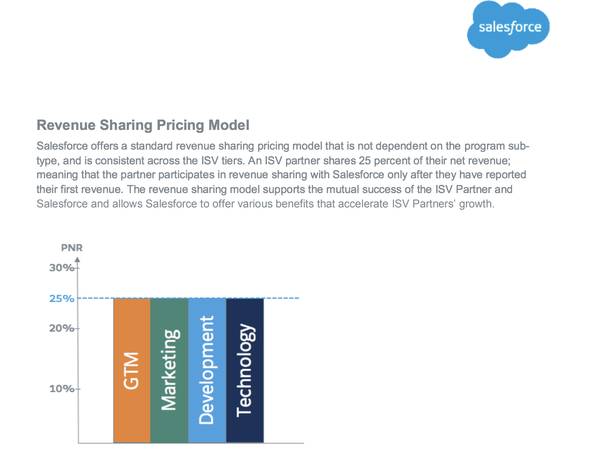
We are a SaaS company. A larger partner of ours who sells a complimentary product wants to have their sales reps sell our product alongside theirs. They want 25-50% of the first year’s revenue. Should we do it?

Here is the short answer: yes, you should seriously consider itbut only if the deal is structured like a performance-based customer acquisition channel, not like handing someone the keys to your revenue kingdom and hoping they bring them back before dinner.
For a SaaS company, a larger partner with an established sales team can be a gift wrapped in pipeline. They already have customer trust, industry relationships, account access, and sales reps who know how to get meetings. If their product is complementary to yours, the combination may make perfect sense to buyers. Their reps can position your software as a natural add-on, an upgrade, or the missing puzzle piece that makes the customer’s stack work better.
But the phrase “they want 25-50% of the first year’s revenue” deserves a good, long stare. Not a panic stare. More like the stare you give a restaurant bill when someone ordered the lobster and suggested “let’s split evenly.” The percentage may be totally reasonableor wildly expensivedepending on what the partner actually does.
This article breaks down how to decide whether a 25-50% first-year revenue share makes sense, what terms to negotiate, what red flags to avoid, and how to turn a large partner’s sales force into a growth engine instead of an expensive field trip.
The Core Question: Is This a Sales Channel or Just an Expensive Referral?
The first thing to clarify is the partner’s real role. In SaaS partnerships, words like “partner,” “reseller,” “co-sell,” “referral,” “affiliate,” and “channel” often get tossed around like confetti at a revenue kickoff. They are not the same thing.
If your larger partner is only introducing prospects, then 25-50% of first-year revenue may be too rich. A simple referral usually deserves a smaller commission because the partner is not carrying the sales process. They are opening the door, not moving the furniture in.
If their sales reps are actively prospecting, pitching, demoing, handling objections, navigating procurement, helping close the deal, and possibly supporting onboarding, then a higher percentage becomes more reasonable. In that case, you are not just paying for a name drop. You are paying for distribution, trust, labor, and speed.
Think of the Payment as CAC
The cleanest way to evaluate the deal is to treat the partner’s cut as customer acquisition cost, or CAC. If you normally spend 35% of first-year revenue to win a customer through ads, sales development, account executives, content, events, and the occasional very sad webinar sandwich, then paying a partner 25% may be a bargain.
For example, imagine your annual contract value is $20,000. A 25% first-year partner fee equals $5,000. If that customer stays for five years, expands to $30,000 per year, and has healthy gross margins, that $5,000 acquisition cost starts to look excellent. You bought a long-term revenue stream for a one-time toll.
Now imagine the same $20,000 customer churns after year one, requires heavy support, never expands, and would probably have bought from you directly anyway. Suddenly, paying $10,000 at a 50% share feels less like a partnership and more like paying VIP pricing for your own customer.
The math must answer one question: does the partner bring customers you would not have acquired as quickly, cheaply, or reliably on your own?
When 25% of First-Year Revenue Is a Good Deal
A 25% first-year revenue share is often reasonable for a SaaS partner who does meaningful work. It can be especially attractive when the partner has a larger sales organization, a trusted brand, and access to your ideal customer profile.
At 25%, you are giving up one quarter of year-one revenue but keeping 100% of future renewal revenue, assuming the agreement is written that way. If your SaaS product has strong retention, high gross margin, and expansion potential, this can be a smart trade.
Green Flags for Saying Yes at 25%
A 25% share may be worth it if the partner sells into accounts you cannot reach efficiently, has customer relationships your team lacks, bundles your product into a stronger joint solution, and commits real sales capacity. It is also a better deal when the partner helps qualify leads, co-hosts demos, trains reps, supports implementation, and agrees to clear pipeline reporting.
In other words, 25% can be a fantastic price for real distribution. It is a questionable price for “we mentioned you in one email and then went spiritually missing.”
When 50% of First-Year Revenue Might Be Acceptable
Fifty percent sounds painful because, well, it is. Giving away half of first-year revenue can feel like watching your ARR walk out wearing someone else’s jacket. But there are cases where it still makes sense.
A 50% first-year revenue share may be acceptable if the partner is doing nearly everything required to win the customer: sourcing the opportunity, leading the sales conversation, positioning your product, managing procurement, handling implementation support, and making your product part of a larger strategic purchase.
It can also make sense when you are entering a new market, vertical, or enterprise segment where the partner has credibility you cannot quickly build. If the partner can compress a 12-month market entry plan into a 90-day sales motion, a higher first-year fee may be the cost of skipping several very expensive mistakes.
Use 50% as a Performance Tier, Not the Default
The smartest structure is not “fine, take 50% and please be gentle.” A better approach is tiered compensation. For example, offer 25% for registered referrals that close with your team doing most of the work, 35% for co-sold deals where the partner is materially involved, and up to 50% only for partner-sourced, partner-led, net-new customers that meet strict criteria.
This makes the deal fair. The partner earns more when they create more value. You avoid paying luxury pricing for economy-class effort.
The Biggest Rule: Avoid Sharing Renewal Revenue Forever
First-year revenue share can be fine. Lifetime revenue share is where SaaS founders start aging in dog years.
If the partner asks for 25-50% of the first year only, that is manageable. If they ask for a piece of renewals, expansions, upgrades, or all future revenue from the customer, slow down. Renewal revenue is the heartbeat of SaaS. Giving away too much of it can damage your long-term economics, valuation story, and ability to reinvest in customer success.
A fair compromise is to pay on first-year revenue only, or pay a smaller renewal percentage for a limited period only if the partner continues to provide meaningful account support. Do not pay indefinite commissions to a partner who disappears after the contract is signed. Ghosting should not be a monetization strategy.
Run the Deal Through Your SaaS Economics
Before signing anything, open a spreadsheet. Yes, spreadsheets are where enthusiasm goes to become accountable. Model the economics across several scenarios.
Key Questions to Calculate
Start with your average annual contract value, gross margin, churn rate, expansion rate, sales cycle length, customer success cost, implementation cost, and expected lifetime value. Then compare your direct CAC against the partner payout.
For example, if your direct CAC is $8,000 per customer and the partner can acquire similar or better customers for $5,000 through a 25% commission, the channel is attractive. If the partner wants $10,000 on a $20,000 contract and still requires your sales team to do most of the work, the deal becomes harder to justify.
Also consider payback period. If your gross margin is 80%, a $20,000 annual contract produces $16,000 in gross profit before operating costs. Paying $5,000 to acquire that customer may be healthy. Paying $10,000 may still work if retention and expansion are strong, but it leaves less room for onboarding, support, and product investment.
Make Sure the Revenue Is Incremental
The worst partner deal is one where you pay commission on customers you were already going to win. That is not channel growth. That is putting a toll booth in your own driveway.
Use deal registration rules. A partner should only earn commission on deals they register before meaningful sales activity begins, and you should have the right to reject deal registration if the account is already in your pipeline, already a customer, already in active conversation, or obviously sourced by your own marketing.
This protects both sides. The partner knows they will get credit for real opportunities. You avoid arguments over who “influenced” a deal because someone once liked a LinkedIn post from 2021.
Define the Sales Motion Clearly
Do not assume the partner’s reps will sell your product well just because they sell their own product well. Complementary does not mean identical. Their reps need to understand your buyer, pain points, qualification criteria, pricing, packaging, objections, demo flow, security requirements, implementation timeline, and competitive landscape.
Build a Simple Partner Enablement Kit
Give them a concise sales deck, battlecards, discovery questions, pricing guardrails, one-page product overview, objection-handling guide, demo videos, customer stories, and an escalation path for technical questions. Make it easy for them to sell your software without accidentally promising that your product also makes coffee, resolves childhood trauma, and integrates with a toaster.
Training matters. Require certification before reps can pitch independently. Host live enablement sessions. Record short refresher videos. Provide clear rules for what they can and cannot say. The larger the partner, the more important consistency becomes.
Protect Your Brand and Customer Experience
Your partner’s reps may be the first people customers hear from about your product. That means they are carrying your brand into the market. If they oversell, misprice, confuse the buyer, or push your product into bad-fit accounts, your team inherits the mess.
That is why customer-fit rules are essential. Define your ideal customer profile, minimum technical requirements, excluded industries if any, required integrations, and success criteria. A bad-fit customer may still produce first-year revenue, but it can drain support resources and churn quickly. SaaS growth is not just about adding logos. It is about adding customers who survive onboarding without everyone needing a group nap.
Negotiate Control Over Pricing and Discounting
Large partners often want flexibility. That can be useful, but unlimited discounting is dangerous. If their reps can discount heavily to close their own primary product, your SaaS offering may become the free fries in the combo meal.
Keep control of pricing. Set discount limits, approval workflows, minimum contract values, and rules for bundling. If the partner sells your product below a certain threshold, the deal may not qualify for full commission. This ensures both sides pursue quality revenue, not just fast signatures.
Decide Who Owns the Customer Relationship
This is one of the most important parts of the agreement. Who owns the customer relationship after the sale? Who handles onboarding? Who manages renewals? Who supports the customer? Who receives product feedback? Who can upsell? Who is responsible if the customer is unhappy?
For many SaaS companies, the best answer is shared selling but vendor-owned product relationship. The partner can introduce and influence the account, but your team should retain access to the customer for onboarding, support, renewals, and expansion. Otherwise, you risk being trapped behind the partner, unable to understand customer needs or prevent churn.
Start With a Pilot, Not a Marriage
Do not roll out the program to the partner’s entire sales force on day one. Start with a pilot. Pick a small group of motivated reps, a defined territory or segment, a limited time window, and clear success metrics.
A good pilot might run for 90 to 180 days. Measure partner-sourced pipeline, qualified opportunities, win rate, sales cycle length, average contract value, onboarding success, customer fit, and support burden. You are not just testing whether the partner can produce deals. You are testing whether those deals are worth having.
Pilot Structure Example
You might agree to pay 30% of first-year revenue for net-new, partner-sourced customers during a six-month pilot. The partner must register deals, complete sales training, attend joint pipeline reviews, and meet minimum qualification standards. If the pilot produces strong customers and clean operations, the program can expand. If it produces confusion, channel conflict, and three deals that require emergency therapy for your customer success team, you can pause without drama.
Recommended Deal Structure
Here is a practical structure for this situation:
Offer 25% of first-year net revenue for qualified referrals that close with your team leading the sale. Offer 35% for co-sold deals where the partner materially participates in discovery, proposal, and closing. Offer up to 50% only for partner-sourced and partner-led deals in approved accounts, especially if the partner handles significant sales effort or implementation support.
Pay commission only after the customer pays you. Use net revenue, not list price, as the basis. Exclude taxes, refunds, credits, discounts, chargebacks, professional services unless agreed, and non-recurring pass-through costs. Pay monthly or quarterly to reduce risk. Claw back commission if the customer cancels or fails to pay within a defined early period.
Limit the commission to the first 12 months unless the partner provides ongoing account management that you truly value. Protect renewals and expansions unless explicitly earned. Require deal registration, training, pipeline visibility, and customer-fit standards. Include termination rights and a clear process for active deals if the partnership ends.
Should You Do It?
Yesif the partner can create incremental revenue, reach qualified customers, shorten your sales cycle, and improve market credibility. A 25% first-year revenue share is often a reasonable customer acquisition cost for a strong SaaS partner. A 50% share can also work, but only when tied to major partner effort, net-new accounts, and strong customer economics.
Noor at least not yetif the partner wants high compensation for vague effort, demands renewal revenue forever, refuses deal registration, controls the customer relationship completely, discounts without guardrails, or cannot prove that its reps will actually sell your product.
The right mindset is simple: do not ask, “Is 25-50% too much?” Ask, “Compared with our current CAC, customer lifetime value, sales capacity, and market access, is this partner channel profitable and strategically useful?”
If the answer is yes, pay the partner gladly. Great distribution is expensive, but slow growth can be more expensive. Just make sure you are buying real growthnot renting someone else’s logo at enterprise pricing.
Additional Experiences and Practical Lessons From SaaS Partner Deals
In real SaaS partnerships, the biggest surprises rarely come from the commission percentage itself. They come from messy execution. Everyone is excited in the first meeting. The partner says their reps love the product. Your team imagines pipeline flowing like a chocolate fountain at a very well-funded conference. Then the agreement is signed, and nothing happens for six weeks because no one trained the reps, no one created a target account list, and no one knows who is supposed to follow up.
One common experience is that partner sales reps will prioritize whatever helps them hit quota fastest. If your product is easy to attach to their main sale, they will mention it. If it requires extra explanation, a separate demo, legal review, or technical discovery, they may skip it unless the incentive is strong and the process is simple. This is why enablement and compensation must work together. A generous commission cannot fix a confusing sales motion.
Another lesson: large partners move slower than founders expect. Their sales teams may need internal approval, manager buy-in, enablement calendars, CRM fields, legal review, and product marketing support. A startup can decide on Tuesday and launch on Thursday. A larger partner may need four meetings to decide who owns the spreadsheet. Do not confuse this with lack of interest. It is often just organizational gravity wearing dress shoes.
Successful SaaS companies usually make the first few partner deals very hands-on. They join calls, coach reps, review discovery notes, help with demos, and document objections. After several wins, patterns emerge. The company learns which customer segments convert, which pitch works, what questions buyers ask, and where the partner’s reps need help. Only then does the program become scalable.
There is also a trust-building phase. Partners want to know that you will not steal their accounts, embarrass them with poor support, or change pricing halfway through a sales cycle. You want to know they will not oversell, underqualify, or treat your product as a throw-in. The best agreements are not built on optimism alone. They are built on rules that keep both sides honest when revenue is on the table.
A practical tip: create a shared weekly pipeline review during the pilot. Keep it short. Review new registered deals, stuck opportunities, next steps, expected close dates, and support needs. This prevents the classic partnership disease known as “we thought you were handling that.” Left untreated, this condition can kill deals quietly in the CRM.
Another smart move is to define what counts as “material involvement.” For example, a partner may qualify for higher commission only if they sourced the opportunity, joined discovery, influenced the decision-maker, and helped close. This avoids disputes later. Without definitions, every deal becomes a courtroom drama starring two sales teams and a very tired partnership manager.
Finally, remember that the best SaaS partner programs improve over time. Your first version will not be perfect. Start with a controlled pilot, learn from real deals, refine the commission tiers, improve the enablement materials, and expand only when the numbers prove the motion works. If the partner is serious, they will respect a structured approach. If they resist accountability and only want a large cut, that tells you plenty.
The practical conclusion: do the deal if it is structured as a measurable, incremental, first-year acquisition channel. Protect renewals, define responsibilities, test with a pilot, and pay more only when the partner truly does more. A great partner can help your SaaS company grow faster than your direct team alone. A vague partner can become an expensive logo on a slide deck. Choose accordingly.
SEO Tags


