
There was a time when a summer road trip ended with a windshield that looked like it had lost a fight with a confetti cannon. Today, plenty of drivers arrive with glass so clean it could audition for a window commercial. That change may seem small, even convenient, but ecologists hear something ominous in that silence. Around the world, many insect populations are shrinking in abundance, range, and diversity. Not every species is falling everywhere, and scientists are careful not to flatten a complex story into one dramatic headline. Still, the overall message is hard to ignore: when the tiny creatures that keep ecosystems running begin to vanish, the rest of nature starts wobbling too.
This is why the decline of insects matters far beyond the bug enthusiasts, butterfly counters, and people who actually know the difference between a moth and a butterfly without needing Google. Insects pollinate crops, recycle waste, feed birds and fish, help control pests, aerate soil, and keep food webs stitched together. They are not a decorative side quest in the story of life on Earth. They are infrastructure. Lose enough of that infrastructure, and ecosystems do not merely become less pretty. They become less stable, less productive, and less resilient.
Why insect decline is more than a “bug problem”
Insects are easy to underestimate because they are small, common, and usually not great at public relations. Pandas have branding. Whales have soundtrack music. Insects have a PR challenge involving wasps at picnics and mosquitoes at 2 a.m. But ecologically speaking, insects do the sort of work that entire landscapes depend on.
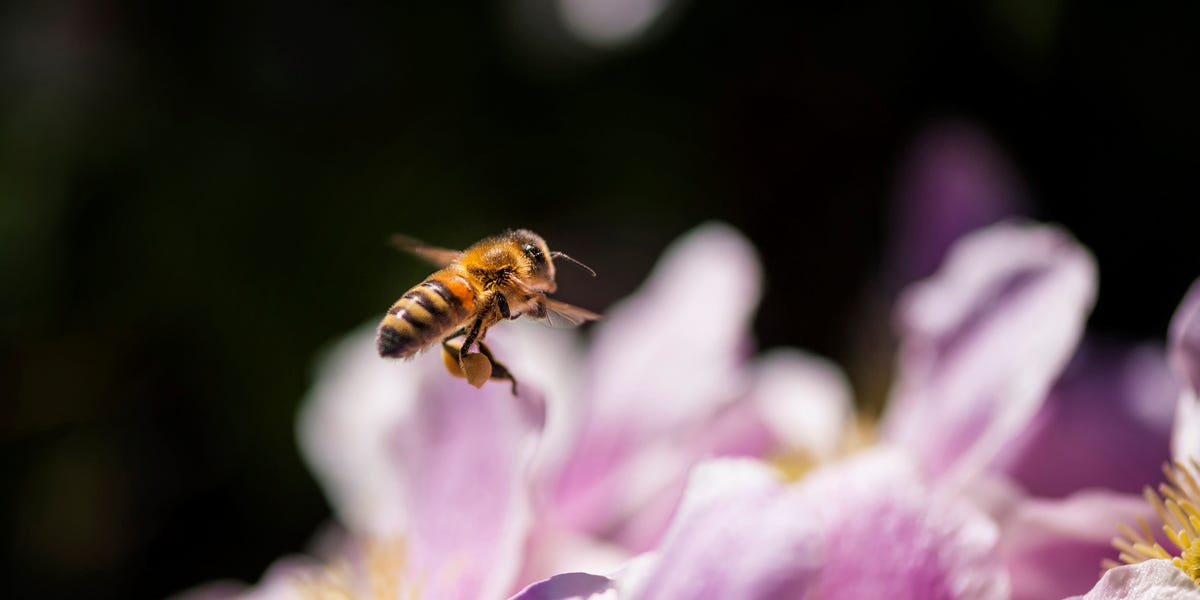
Pollinators alone support an enormous share of plant reproduction and food production. Bees, butterflies, moths, beetles, flies, and other pollinating insects help flowering plants reproduce and help keep farms productive. Fruits, nuts, vegetables, seeds, and forage crops all depend in part on insect pollination. When insect numbers fall, the risk is not limited to fewer butterflies in a meadow. The risk extends to lower crop yields, weaker wild plant communities, and food webs that begin to fray from the roots up.
Other insects handle jobs people rarely notice until they are missing. Dung beetles recycle animal waste. Predatory insects suppress agricultural pests. Aquatic insects feed fish and signal freshwater health. Ants move seeds. Termites and beetles help break down dead wood and organic matter. Take enough of these workers off the clock, and ecosystems start missing deadlines in a hurry.
What scientists are seeing around the world
The trend is real, even if the details vary
The phrase “insect apocalypse” makes for a spicy headline, but the science is more nuanced than a one-line disaster movie trailer. Insect trends vary by region, habitat, and species. Some populations are relatively stable. A few are increasing in certain places. Yet the broad body of evidence now points to a serious pattern of decline across many insect groups and many parts of the world.
That pattern has shown up in long-term field studies, meta-analyses, biodiversity reviews, and region-specific monitoring projects. One influential global meta-analysis found that terrestrial insects were declining on average over time, even as some freshwater insects showed improvements where water quality had recovered. That matters because it reminds us that ecosystems are not doomed by fate. They respond to pressure, but they can also respond to protection.
Recent scientific reviews have sharpened the picture further. Researchers increasingly describe insect decline as a “death by a thousand cuts” problem: not one universal cause, not one simple fix, but a pileup of pressures that together wear down insect populations year after year. Habitat disappears. Pesticide exposure rises. Climate extremes intensify. Artificial light changes behavior. Invasive species spread. The result is not always a dramatic overnight crash. Often it is a slow draining away of abundance until one day the air feels strangely empty.
Butterflies are sending a particularly clear warning
Butterflies are among the best-monitored insects, which makes them useful messengers. And unfortunately, the message has not been cheerful. A major 2025 study found that butterfly abundance in the United States fell by 22 percent between 2000 and 2020 across hundreds of species. More than 100 species declined by over half. In ecological terms, that is not a blip. That is a giant blinking dashboard light saying, “Something under the hood is definitely not fine.”
Long-term work in relatively undisturbed forested sites in the southeastern United States has also found steep losses in bees and butterflies. That is especially sobering because forests are often imagined as refuges, places buffered from the worst human pressures. Yet even there, pollinator richness and abundance dropped sharply over 15 years. In other words, insect decline is not just a story about industrial farmland and strip malls. It can show up in places that still look green and healthy to the human eye.
Monarch butterflies offer another familiar example. Their decline has become a symbol of what happens when migration routes, breeding habitat, overwintering sites, and climate stability all come under stress at once. Monarchs are famous for crossing enormous distances, but even an iconic migration cannot outrun habitat loss forever.
Why this points to ecosystem collapse risk
Food webs depend on insect abundance, not just insect existence
It is tempting to think, “Well, as long as some insects remain, nature will manage.” That is a comforting idea. It is also not how ecosystems work. Food webs are not powered by a token sample pack of life. They depend on abundance. Birds need enough caterpillars to raise chicks. Fish need enough aquatic insect larvae to feed. Bats need swarms, not symbolic gestures. Even if a species technically remains present, a large drop in numbers can hollow out its ecological role.
This is one reason scientists worry about insect decline as a warning sign of broader ecosystem instability. Insect losses can ripple upward and outward. Fewer herbivorous insects can alter plant communities. Fewer pollinators can reduce seed production. Fewer predatory insects can allow pest outbreaks. Fewer decomposers can slow nutrient cycling. These changes do not stay politely in their lane.
Insects help ecosystems stay resilient
Healthy ecosystems are not static postcards. They are dynamic systems that recover from drought, floods, fire, storms, and disease partly because they contain enough biodiversity to absorb shocks. Insects contribute heavily to that resilience. Pollinators help plant communities regenerate. Soil-dwelling insects support nutrient turnover. Aquatic insects link streams to forests and vice versa. Lose enough of that complexity, and ecosystems become more brittle.
This is why insect decline is best understood as a warning of ecosystem collapse, not because every forest and farm is about to implode tomorrow morning, but because the loss of insects weakens the very processes that keep ecosystems functioning over time. Collapse often begins quietly, with reduced resilience, simplified food webs, and fewer backup options when the next stress arrives.
What is driving insect decline?
Habitat loss and habitat degradation
The biggest culprit in many regions is habitat loss. Native grasslands, wetlands, hedgerows, and flowering field margins have been cleared, paved, mowed, drained, or converted into simplified landscapes that offer little food or shelter. Even where habitat technically remains, it may be too fragmented to support breeding, overwintering, or migration. An insect may survive in one patch, but if it cannot move safely to another, that patch becomes an ecological cul-de-sac.
Agricultural intensification
Modern agriculture can be highly productive for people while being remarkably hostile to insects. Large monocultures reduce plant diversity. Frequent mowing and tilling destroy nesting sites. Herbicides remove “weeds” that insects use for nectar and larval food. Insecticides can kill target pests, but they also harm beneficial insects directly or indirectly. Even sublethal exposure can interfere with navigation, reproduction, feeding, and development. That means an insect does not have to die on contact for a chemical to help push a population downward.
Climate change
Climate change adds a destabilizing force to everything else. Rising temperatures, shifting seasons, drought, heavy rainfall, and more frequent extremes can all disrupt insect life cycles. Some insects emerge too early or too late relative to flowering plants. Others are pushed beyond their thermal limits. Species adapted to cool conditions, stable moisture, or predictable seasonal cues can be especially vulnerable. Climate change is not replacing older threats; it is piling on top of them and making them harder to survive.
Pollution, invasive species, and artificial light
Insects also face stress from air pollution, water contamination, invasive predators, pathogens, and light pollution. Artificial night lighting can disrupt feeding, mating, navigation, and predator avoidance. That may sound like a niche problem until you remember how much of the modern world glows all night long. We did not just build cities. We built giant illuminated obstacles for creatures that evolved under dark skies.
Why people should care, even if they are not “outdoorsy”
Because insect decline reaches into kitchens, gardens, farms, forests, rivers, and local economies. Pollination supports many of the foods people like to post online before eating. Pest control by beneficial insects reduces crop damage. Insects support birds, fish, amphibians, and mammals that people value culturally and economically. The economic value of pollination alone is enormous, but the ecological value is even larger because many benefits do not fit neatly into a spreadsheet.
There is also a human experience loss that rarely shows up in policy summaries. Fewer fireflies. Quieter summer nights. Fewer butterflies over vacant lots and schoolyards. Fewer children growing up with the everyday wonder of small, living things all around them. Biodiversity loss is not just a scientific metric. It changes the texture of daily life.
What can actually help
Protect and restore habitat
The good news is that insects can respond when conditions improve. Habitat restoration matters. Native flowering plants matter. Reduced mowing matters. Wetland protection matters. Connected habitat corridors matter. Small patches help, but connected landscapes help more. A pollinator garden is useful; a region with gardens, meadows, field margins, and protected natural habitat is far better.
Use pesticides more carefully and less often
Reducing unnecessary pesticide use is a major step. That does not require pretending all pest management is bad or that agriculture can run on good vibes alone. It does require smarter use, better timing, lower exposure, and more investment in integrated pest management. The goal should be to control serious threats without treating all insect life like collateral damage.
Make ordinary places friendlier to insects
Backyards, school grounds, road verges, parks, farms, campuses, and corporate landscapes can all become part of the solution. Plant native species. Leave some stems and leaf litter for overwintering. Cut back on bright outdoor lighting at night. Reduce needless lawn uniformity. In short, let places be a little less sterile and a little more alive. Nature rarely performs best when managed like a hotel lobby.
Support long-term monitoring and policy
One reason insect decline took time to recognize is that insects are undercounted compared with birds and mammals. Long-term monitoring, museum collections, community science, and better policy all matter. If societies do not measure insect trends consistently, they end up arguing with the smoke alarm instead of checking whether the kitchen is actually on fire.
The bottom line
The worldwide decline of insects is not a niche concern for entomologists with butterfly nets and heroic patience. It is a warning about the state of ecosystems that humans also depend on. Insects hold together pollination, decomposition, pest control, freshwater food webs, and the daily functioning of landscapes that feed and support us. When they decline, they reveal that our environmental systems are under more stress than they can gracefully absorb forever.
That warning should not produce despair. It should produce urgency, precision, and humility. The same research that documents insect losses also shows that conservation, habitat recovery, and smarter land management can help. This is not one of those problems where the only available response is to stare dramatically into the middle distance. We know many of the pressures. We know many of the solutions. The challenge is whether we will act before the silence of missing insects becomes the soundtrack of a less functional planet.
Experiences From a Quieter Living World
One of the strangest things about insect decline is how ordinary it can feel at first. Nobody wakes up one morning and says, “Ah yes, the trophic structure appears compromised.” What people notice instead are little absences. A porch light that used to attract a wild orbit of moths now glows over mostly empty air. A child chases fewer butterflies than their parents remember. A fishing trip feels different because the evening hatch never really gets going. A garden still blooms, but it hums less. The world does not announce that it is losing ecological complexity. It just gets quieter, thinner, and a little less animated.
Older generations often describe summer as something louder and busier than it feels now. Windshields collected bugs. Streetlights attracted clouds of insects. Fireflies turned yards into blinking fairy tales with excellent timing and no need for batteries. Whether every memory is perfectly calibrated is not really the point. The point is that people in many places are reporting the same unsettling pattern: fewer insects in the everyday spaces where they used to be impossible to ignore.
Farmers and gardeners notice the change in practical ways. Fruit trees blossom, but pollination can feel less reliable. Pest problems can become more erratic because beneficial insects are also under pressure. The old ecological balance, never perfect, starts acting like a chair with one leg shorter than the others. It still stands, technically, but everybody knows something is off. Landscapes become more dependent on constant human intervention when insect communities are no longer doing as much of the free labor they once did.
Naturalists and birdwatchers often describe a second-order sadness: it is not just the insects they miss, but the animals that depend on them. Fewer caterpillars can mean fewer nestlings successfully raised. Fewer aquatic insects can alter stream life. The decline of insects can feel like watching the base of a pyramid erode while the upper levels pretend they are not involved. But they are involved. They always were.
There is also a cultural experience wrapped up in all this. Insects are part of how many people first learn wonder. A monarch landing on a school playground. A ladybug crawling onto a finger. A dragonfly skimming a pond like a tiny helicopter that somehow graduated from engineering school. These encounters matter. They teach curiosity. They connect people to seasons, weather, plants, and place. When insects become scarce, people do not only lose ecosystem services. They lose routine contact with wildness in miniature.
That is why the most hopeful experiences often come from restoration. People plant native flowers and suddenly bees return. A neglected corner is left unmowed and fills with life. A wetland is restored and dragonflies come back like they never stopped reading the invitation. These moments are powerful because they show that insect decline is not just a story of loss. It is also a story of responsiveness. Give nature better conditions, and it often answers. Not instantly, not perfectly, and not everywhere, but enough to remind us that collapse is a warning, not a destiny. The living world is still talking. The question is whether we are willing to listen before it has to whisper.