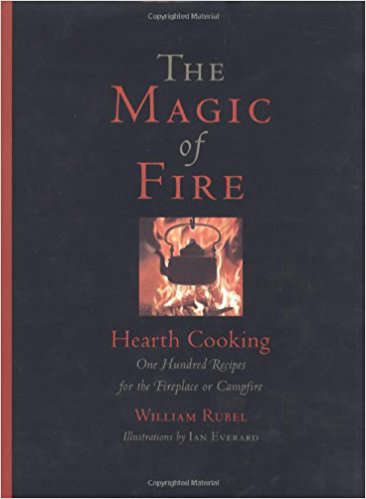
The Magic of Fire: Hearth Cooking: One Hundred Recipes for the Fireplace or Campfire

Note: This original article synthesizes publicly available information about William Rubel’s book, traditional open-hearth cooking, historical foodways, modern campfire safety, and food-safety best practices.
Introduction: Why Fire Still Feels Like a Kitchen Miracle
Before kitchen islands, air fryers, smart ovens, and refrigerators that judge your snack choices at midnight, there was fire. Simple, wild, glowing fire. It warmed homes, gathered families, cooked dinner, dried socks, and occasionally reminded everyone that eyebrows are not guaranteed. That ancient relationship is exactly what makes The Magic of Fire: Hearth Cooking: One Hundred Recipes for the Fireplace or Campfire such a fascinating cookbook. Written by William Rubel and published by Ten Speed Press, the book is not merely a collection of campfire recipes. It is a love letter to open-hearth cooking, fireplace cooking, ember roasting, ash baking, cast iron cooking, and the delicious patience required when the stove does not come with buttons.
At roughly 296 pages and built around one hundred recipes, the book explores a style of cooking that predates the modern range but still feels surprisingly fresh. Its focus is not “survival food,” though you could certainly feed hungry campers with it. Its real subject is the art of controlling heat without dials: cooking beside flames, over coals, under ashes, inside Dutch ovens, and near the slow glow of a carefully managed hearth.
In a world obsessed with speed, The Magic of Fire invites readers to slow down, watch the coals, smell the wood smoke, and cook with all five senses. It is practical, poetic, and slightly mischievousthe kind of book that makes a potato seem like an event.
What Is The Magic of Fire About?
The Magic of Fire: Hearth Cooking is centered on cooking in a fireplace or over a campfire using traditional techniques. The book covers methods such as ash baking, ember roasting, hearthside grilling, string roasting, spit roasting, and Dutch oven baking. These are not just nostalgic tricks from a museum kitchen. They are real cooking methods that use direct heat, radiant heat, stored heat, and smoke to create flavor that modern appliances can imitate only with great effort and a suspicious number of settings.
William Rubel approaches fire as both a tool and a living presence in the kitchen. A gas burner is obedient. A fire has opinions. It changes every few minutes. It burns high, settles low, throws sparks, creates coals, and rewards cooks who pay attention. This is why hearth cooking is more than “put food near flame.” It is heat management, timing, judgment, and a little theatrical flair. If a regular kitchen is a lab, the hearth is a campfire opera.
The recipes and explanations in the book reflect a broad tradition of open-fire foodways. Historically, people baked bread under ashes, simmered stews in heavy pots, roasted meats on spits, cooked vegetables in embers, and used covered iron pots as portable ovens. The book brings those practices into a form modern readers can understand, whether they have a working fireplace, a backyard fire pit, or a legal campsite with a fire ring.
Why Hearth Cooking Matters in a Modern Kitchen World
Modern cooking is wonderfully convenient. Nobody should feel guilty about loving a microwave. It reheats leftovers with the confidence of a tiny lightning storm. But convenience can make us forget how cooking actually works. Hearth cooking brings the basics back into view: heat, time, moisture, fat, smoke, texture, and patience.
When cooking over live fire, you cannot simply set a temperature and walk away. You learn to read the fire. Flames are dramatic but often too aggressive for delicate cooking. Coals are steadier and more predictable. Ash can insulate food and create a gentle baking environment. A Dutch oven can become a compact baking chamber when coals are placed below and on top. A hanging pot can simmer slowly without scorching. In other words, the hearth teaches heat literacy.
This is one reason the book remains appealing to cooks, campers, historical food enthusiasts, and backyard experimenters. It reminds readers that excellent cooking does not always require more technology. Sometimes it requires fewer gadgets and more attention. Also, cast iron. Always cast iron.
The Main Cooking Techniques Explained
Ash Baking
Ash baking sounds alarming until you realize it is one of the oldest and cleverest cooking methods. Food is protectedoften by its own skin, leaves, dough, foil, or another coveringand placed in hot ash or beneath embers. Potatoes, onions, beets, squash, and flatbreads can all benefit from this steady, surrounding heat. The result is earthy, tender, and faintly smoky. It is the culinary equivalent of finding treasure in a pile of gray dust.
Ember Roasting
Ember roasting uses the glowing coals left after flames die down. This method is excellent for vegetables because embers deliver intense but even heat. Carrots, peppers, eggplants, sweet potatoes, and corn can be roasted directly or with minimal wrapping. The outside may char, but inside the food becomes sweet, soft, and concentrated. The trick is knowing when the char is flavor and when it is a cry for help.
Hearthside Grilling
Hearthside grilling places food near or above the fire, often on a grate, skewer, or long-handled tool. This is closer to what many people imagine when they hear “campfire cooking.” Meat, fish, bread, and vegetables can all be cooked this way. But unlike a standard backyard grill, a hearth fire creates several temperature zones. The cook can move food closer to flames for searing or farther away for gentle cooking.
String and Spit Roasting
String roasting involves suspending food near the fire so it slowly turns and cooks from radiant heat. Spit roasting uses a rod or spit to rotate food. Both methods are old, elegant, and surprisingly practical when done carefully. They show how people cooked before rotisserie buttons existed. The fire does the heating, gravity does some of the work, and the cook supervises like a very serious campfire manager.
Dutch Oven Baking
The Dutch oven may be the superhero of fireplace and campfire cooking. With a heavy lid and thick walls, it holds heat evenly and can bake bread, biscuits, cobblers, stews, braises, and roasts. When coals are placed under the pot and on the lid, heat surrounds the food much like an oven. It is simple, rugged, and so useful that it deserves its own little cape.
What Makes William Rubel’s Approach Special?
The strength of The Magic of Fire is that it does not treat fire cooking as a gimmick. Rubel looks at the hearth as a full cooking system. He gives attention to equipment, technique, atmosphere, history, and the sensory experience of cooking. The book’s illustrations by Ian Everard also help turn the subject into something visual and inviting. This matters because hearth cooking is physical. You learn it by seeing the distance from food to flame, the color of coals, the angle of a pot, and the way heat moves through a fireplace.
The book also respects beginners. Many live-fire cookbooks assume the reader already owns a medieval kitchen, a stack of specialty gear, and possibly a goat. Rubel’s approach is more welcoming. Many techniques can be attempted with simple tools: a safe fire area, cast iron cookware, long utensils, sturdy gloves, and ingredients that forgive small timing errors. Potatoes and onions are especially kind teachers. They rarely panic.
Historical Roots: The Hearth as the Original Home Kitchen
Open-hearth cooking was once everyday cooking. Before enclosed stoves became common, fireplaces were used for roasting, boiling, simmering, frying, baking, drying, and warming. Historical sites across the United States demonstrate that hearth cooks had to manage the fire all day. They drew coals forward, hung pots from cranes, set skillets on trivets, baked in Dutch ovens, and used different heat zones for different dishes.
This makes the hearth feel less primitive and more sophisticated. A skilled hearth cook did not simply “cook over fire.” They organized heat. A large flame could roast. A small flame could simmer. Coals could bake. Residual heat could keep food warm. Ash could protect and insulate. The fireplace was not one burner; it was an entire cooking station with moving parts.
That history gives The Magic of Fire cultural depth. The book connects modern readers to colonial kitchens, rural food traditions, campfire meals, European peasant cooking, and the universal human habit of gathering around flame. It is not only about recipes. It is about remembering that food has always been social, seasonal, practical, and a little smoky.
Flavor Analysis: Why Food Cooked Over Fire Tastes Different
Live-fire cooking creates flavor through several processes at once. First, high heat encourages browning. That deep, savory crust on roasted meat, charred vegetables, or toasted bread comes from chemical reactions that create complex flavors. Second, wood smoke adds aroma. Different woods can produce different effects, from mild sweetness to stronger smoky notes. Third, fire creates unevenness in a good way. A roasted onion may have blackened edges, silky layers, and sweet juices all in one bite.
Modern ovens are designed for consistency. Fire is designed by nature to be dramatic. That drama can be delicious when controlled. A carrot roasted in embers tastes more concentrated than a boiled carrot. Bread baked in a Dutch oven beside a fire can develop a crust that feels rustic and deeply satisfying. A stew simmered near a hearth seems to pick up atmosphere along with flavor. Technically, it is heat, smoke, fat, and time. Emotionally, it tastes like someone told dinner a story.
Best Foods for Fireplace or Campfire Cooking
Not every food is ideal for beginners. Delicate sauces and expensive cuts of meat may not be the best first experiment unless you enjoy suspense. The easiest starting points are forgiving ingredients that can handle variable heat.
Vegetables
Root vegetables are excellent for ember roasting and ash baking. Potatoes, sweet potatoes, onions, beets, carrots, and squash all become sweeter and softer with slow heat. Corn can be roasted in husks. Eggplant and peppers can be charred until their skins blister, then peeled for dips, salads, or smoky side dishes.
Breads and Biscuits
Flatbreads, bannock-style breads, biscuits, and simple loaves work well in cast iron or Dutch ovens. Bread is one of the most rewarding hearth foods because the transformation is obvious: dough enters looking pale and uncertain, then emerges browned, fragrant, and suddenly popular.
Stews and Braises
Heavy pots are perfect for slow dishes. Beans, soups, braised meats, and vegetable stews benefit from gentle heat and time. The hearth encourages relaxed cooking, where the pot bubbles quietly and everyone pretends they are not checking it every five minutes.
Fish and Meat
Fish can cook quickly near radiant heat, while chicken thighs, sausages, and tougher cuts can be more forgiving than lean steaks. For safety, meat and poultry should be checked with a food thermometer rather than guessed by color alone. Fire makes food beautiful, but it is not a certified inspector.
Safety: The Unromantic Ingredient That Saves Dinner
No article about fireplace cooking or campfire recipes should ignore safety. Fire is beautiful, but it is not casual. Anyone cooking with open flame should follow local rules, use established fire areas when outdoors, avoid fire during bans or dangerous weather, keep water or proper extinguishing tools nearby, and make sure the fire is completely out before leaving. If the coals are too hot to touch, they are too hot to abandon.
Food safety matters too. Outdoor cooking can brown food quickly on the outside while the center remains undercooked. A thermometer is the simplest solution. Whole cuts of beef, pork, lamb, and veal should reach 145°F with a rest time. Ground meats should reach 160°F. Poultry should reach 165°F. Cold foods should stay cold until cooking, cooked foods should be protected from cross-contamination, and leftovers should not lounge around in warm weather like they are on vacation.
For indoor fireplace cooking, ventilation and fireplace condition are essential. A fireplace used for cooking should be clean, safe, and appropriate for wood fires. Painted, treated, or unknown wood should not be used for cooking because it can release harmful fumes. Long-handled tools, heatproof gloves, stable cookware, and adult supervision are wise choices. The goal is dinner, not a thrilling call to the fire department.
How the Book Helps Modern Readers
The Magic of Fire works because it translates an old skill into a modern reading experience. It gives readers permission to treat the fire as a cooking partner instead of a decorative background. It also broadens the meaning of “recipe.” In hearth cooking, a recipe is not only a list of ingredients. It is a sequence of decisions: where to place the pot, when to rake coals, how close to set the food, when to turn it, and how to judge doneness.
This makes the book valuable even for people who do not cook every recipe. Reading it can improve the way someone grills, camps, bakes in cast iron, or thinks about heat. It encourages flexibility. If the coals are too hot, move the pot. If the bread browns too fast, adjust the heat. If the potato disappears into ash, congratulations, you have invented archaeology dinner.
Examples of Meals Inspired by the Book’s Spirit
A simple hearth-inspired meal might begin with ember-roasted onions and potatoes, followed by a Dutch oven bean stew, skillet cornbread, and baked apples. Nothing about that menu requires luxury ingredients, yet each dish gains character from the fire. Another campfire meal could include foil-wrapped vegetables, grilled fish, toasted flatbread, and fruit warmed near the coals. For a more ambitious fireplace dinner, one might try a slow-simmered soup, spit-roasted poultry, and a cast iron fruit cobbler.
The point is not to copy the past perfectly. The point is to borrow its intelligence. Hearth cooking teaches that simple food can become memorable when cooked with care. It also proves that “rustic” does not mean careless. The best open-fire meals are planned, watched, adjusted, and served with a healthy respect for both flavor and flame.
Who Should Read The Magic of Fire?
This book is ideal for cooks who love history, campers who want better meals, fireplace owners who wonder whether the hearth can do more than hold holiday stockings, and food lovers who enjoy technique-driven cooking. It also suits readers interested in traditional foodways, cast iron cooking, and slow living.
It may not be the perfect book for someone who wants fifteen-minute weeknight dinners with no smoke, no ash, and no drama. Hearth cooking is slower. It asks for attention. It may involve soot. Your clothes may smell like wood smoke, which is either a problem or a personality upgrade depending on your social circle.
of Experience: What Cooking With Fire Teaches You
The first experience most people have with live-fire cooking is usually humbling. You begin with confidence. You have watched videos. You have read instructions. You own tongs. Then the fire behaves like a tiny weather system with flames leaning one way, coals forming another way, and your food demanding decisions you did not expect. This is the moment hearth cooking becomes interesting.
One of the greatest lessons is patience. A beginner wants flames because flames look powerful. An experienced fire cook wants coals because coals behave better. The shift from flame-chasing to coal-respecting is almost philosophical. You learn that the loudest heat is not always the best heat. A steady bed of embers can roast vegetables beautifully, bake bread evenly, and simmer a pot without the wild mood swings of open flame.
Another lesson is observation. In a modern kitchen, the oven tells you the temperature. At the hearth, the fire gives clues. The color of coals, the speed of sizzling, the smell of browning, the sound of bubbling stew, and the distance between pot and heat all matter. You become more alert. You stop cooking by command and begin cooking by conversation. The food says, “I am browning too fast.” The fire says, “Move me.” The cook says, “I should have worn better gloves.” Everyone learns.
Fire also changes the social feeling of cooking. People gather around it naturally. Someone watches the bread. Someone turns the vegetables. Someone tells a story that may or may not be true. A person who has never shown interest in helping with dinner suddenly wants to poke the fire with a stick. This is not always useful, but it is deeply human. Hearth cooking turns a meal into an event before the first bite is served.
There is also a pleasant acceptance of imperfection. A campfire potato may have a black patch. A flatbread may puff unevenly. A stew may pick up more smoke than planned. But these small irregularities often make the meal better, or at least more memorable. Fire cooking teaches that perfection is not always the goal. Flavor, warmth, and shared experience matter more.
Perhaps the most surprising experience is how ordinary ingredients become exciting. A plain onion roasted in embers can taste rich, sweet, and almost luxurious. Apples baked near coals turn soft and fragrant. Corn roasted in husks becomes smoky and juicy. Bread cooked in cast iron feels like a major achievement, even if the recipe is simple. The fire gives humble food a sense of occasion.
That is the real magic behind The Magic of Fire. It is not just that fire cooks food. It changes the cook. It slows the room down. It sharpens attention. It makes dinner feel earned. In a culture where meals can arrive through a phone app faster than you can set a table, hearth cooking reminds us that waiting can be delicious.
Conclusion: The Lasting Glow of The Magic of Fire
The Magic of Fire: Hearth Cooking: One Hundred Recipes for the Fireplace or Campfire remains compelling because it treats fire as more than heat. It treats fire as heritage, technique, flavor, and atmosphere. William Rubel’s work helps readers understand how ash baking, ember roasting, hearthside grilling, string roasting, spit roasting, and Dutch oven baking can still fit into modern life when practiced safely and thoughtfully.
The book’s greatest value is not nostalgia. It is reconnection. It reconnects cooks with the physical nature of heat, the history of the hearth, the beauty of simple ingredients, and the pleasure of making a meal slowly. For campers, it offers better outdoor cooking ideas. For home cooks, it offers a deeper understanding of fire and food. For anyone tired of push-button everything, it offers a glowing reminder that the oldest kitchen technology on earth still has plenty to teach.
In the end, hearth cooking is not about rejecting modern kitchens. It is about remembering what came before themand occasionally letting a potato become the star of the evening. That, frankly, is magic.


