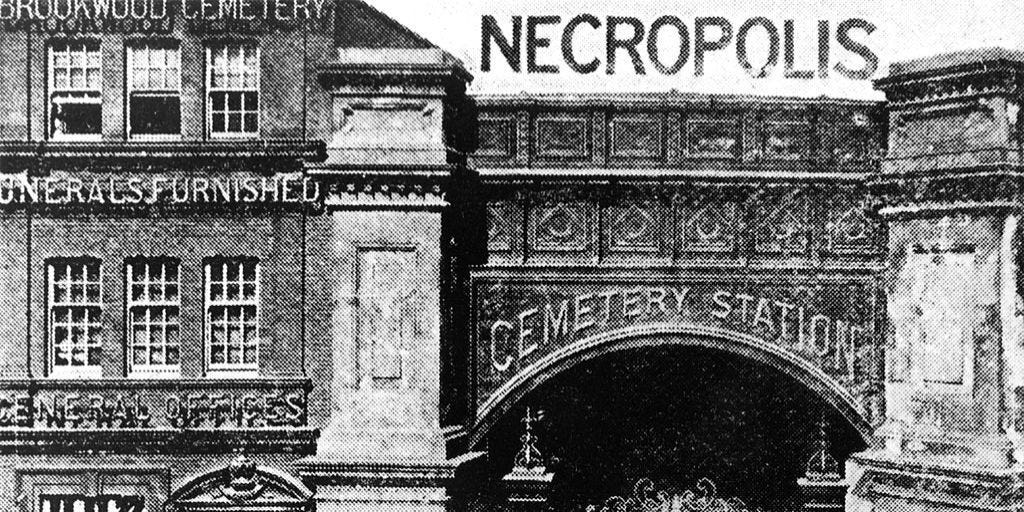

Victorian London had many unusual inventions: gas lamps, underground railways, elaborate mustaches, and a heroic commitment to turning every social problem into an engineering project. But few solutions were as strangeor as practicalas the London Necropolis Railroad, a funeral train built to carry the dead from overcrowded London to a vast cemetery in the Surrey countryside.
Officially known as the London Necropolis Railway, this was not a spooky urban legend, a Halloween marketing stunt, or the rejected plot of a gothic novel. It was a real rail service, launched in 1854, with a special London terminus, dedicated coffin carriages, mourners’ waiting rooms, funeral chapels, and separate arrangements based on class and religion. In simple terms: London had too many bodies and not enough burial space, so the city put death on a timetable.
The result was one of the most fascinating pieces of Victorian transport history. The London Necropolis Railroad was practical, eerie, surprisingly organized, and deeply revealing. It shows how Victorians approached death, technology, public health, social class, and urban planningall aboard one very somber train.
Why London Needed a Train for the Dead
By the mid-19th century, London was growing at a furious pace. Industrialization pulled people into the capital, housing grew denser, disease spread easily, and traditional parish churchyards were overwhelmed. The living were packed into the city; unfortunately, so were the dead.
Old burial grounds were often small, badly managed, and dangerously overcrowded. Coffins could be stacked, graves reopened too soon, and the smell from packed churchyards was not exactly what one would call “subtle.” Victorian Londoners feared that crowded burial sites were not only unpleasant but also a public health threat. Cholera outbreaks made the issue even more urgent, even though the science of disease transmission was still developing.
The obvious answer was to move burials away from the crowded center. London already had several large suburban cemeteries, sometimes called the “Magnificent Seven,” but even these did not fully solve the problem. The city needed landlots of itand land close enough to reach without turning every funeral into an exhausting all-day expedition by horse-drawn hearse.
That is where the railway came in. To Victorian entrepreneurs, the train was not just a way to move commuters, coal, and mail. It was a machine for solving distance. If people could travel by rail, why not coffins? It sounds grim, but from a logistics point of view, it was brilliant. Death had met modern transportation, and the two shook hands politely in black gloves.
The Birth of the London Necropolis Company
The London Necropolis and National Mausoleum Company was formed in the early 1850s with an enormous ambition: to create a vast cemetery outside London that could serve the capital for generations. The company acquired land at Brookwood in Surrey, roughly 23 miles southwest of London, and developed what became Brookwood Cemetery.
Brookwood was designed on a scale that matched Victorian confidence. It was not merely a graveyard; it was a planned landscape, a burial city, a “necropolis” in the literal sensea city of the dead. When it opened in 1854, it was considered one of the largest cemeteries in the world. Today, Brookwood remains the largest cemetery in the United Kingdom and an important historic landscape.
The railway was central to the plan. Without it, Brookwood was too far away for ordinary London funerals. With it, the cemetery became accessible. The London Necropolis Railroad connected the company’s London station near Waterloo with the cemetery in Surrey, allowing coffins and mourners to travel together in a controlled, dignified, and efficient way.
On November 13, 1854, the first scheduled funeral train left London for Brookwood. A new chapter in transportation history had begun: the commuter rail of the afterlife.
Where the Funeral Train Started
The original London terminus of the Necropolis Railway stood near Waterloo, close to Westminster Bridge Road. This location was chosen carefully. It was connected to the London and South Western Railway, making the route to Brookwood possible, and it allowed bodies to be brought in from across the city.
The station was purpose-built for funerals. It had private entrances so mourners did not have to stand in the public street with coffins. It included waiting rooms, storage areas, and lifts to raise coffins to platform level. The architecture and operations were designed to reduce embarrassment, delay, and spectacle. Victorian mourning could be public, elaborate, and emotionalbut it still preferred not to block traffic.
The station also reflected the class-conscious world of the time. Mourners and coffins could travel first, second, or third class. Even in death, the Victorians did not abandon the seating chart. First-class funerals received better facilities; lower-cost funerals used simpler arrangements. From a modern perspective, sorting the dead by ticket class feels almost absurd. From a Victorian business perspective, it was simply how society worked.
How the London Necropolis Railroad Worked
The London Necropolis Railroad was a specialized funeral service, but it still operated like a railway. It had schedules, tickets, carriages, staff, platforms, and rules. Coffins were transported in dedicated hearse vans, while mourners rode in passenger carriages. The journey from London to Brookwood took the funeral party from the smoky city to the quieter countryside, passing through landscapes that promoters hoped would feel peaceful rather than depressing.
At Brookwood, the railway branch entered the cemetery itself. There were separate cemetery stations serving different burial sections. The southern section was associated with Anglican burials, while the northern section served Nonconformists and others. This religious separation mattered in Victorian Britain, where burial customs, consecrated ground, and denominational identity carried real weight.
Once the train arrived, coffins were unloaded and taken to the appropriate burial area. Mourners attended the service, visited the grave, and then returned to London by train. The whole process offered a level of order that horse-drawn funeral travel could not easily match.
It was also cheaper than many traditional funeral arrangements. The company wanted Brookwood to be a practical option for different income levels, not only the wealthy. The railroad made a distant cemetery economically possible for London families who otherwise might have struggled with the cost and time of burial outside the city.
A Funeral System Built Around Class
One of the most striking aspects of the London Necropolis Railroad was the way it preserved Victorian class divisions. The living traveled by class, and so did the dead. A first-class coffin did not simply mingle with a third-class coffin like some kind of democratic skeleton convention.
This may sound comically severe, but it reflected the broader culture. Victorian Britain was intensely hierarchical. Railway travel itself was divided by class, with different ticket prices, different comfort levels, and different social expectations. The Necropolis service applied that same logic to funerals.
For families, class-based funeral packages allowed different levels of ceremony and privacy. For the company, they provided a clear pricing model. For historians, they offer a fascinating glimpse into a society where status could follow a person all the way to the graveand apparently onto the baggage car.
The 1902 Station: Making Death Look Respectable
As Waterloo expanded, the Necropolis station had to move. In 1902, a new terminus opened at 121 Westminster Bridge Road. This building was more elegant and less obviously gloomy than one might expect from a station devoted to funerals. The company understood branding long before modern marketers started putting mood boards next to coffee machines.
The new station included improved waiting areas, mortuary rooms, workshops, and a chapel space for services. It was built to handle grief discreetly. Families could gather, coffins could be prepared, and funeral parties could depart without the chaos of a normal passenger station.
The surviving building at Westminster Bridge Road is one of the most tangible reminders of the railway today. Many passersby have no idea they are walking past the remains of a station once designed to send London’s dead into the countryside. That is part of the fascination: the city has absorbed the story, covered it with everyday life, and left only quiet architectural clues behind.
Brookwood Cemetery: The Destination
Brookwood Cemetery was more than the endpoint of the London Necropolis Railroad. It was the reason the railroad existed. Spread across a vast landscaped site, Brookwood was intended to be spacious, orderly, and dignifieda powerful contrast to the cramped urban churchyards that had alarmed reformers.
The cemetery served people of many faiths and backgrounds. Over time, it became the resting place of ordinary Londoners, notable figures, military dead, religious communities, and cultural groups. The cemetery’s scale allowed sections to be reserved for parishes, organizations, and specific communities. It was, in effect, a map of London’s diversity laid out in graves, monuments, trees, paths, and silence.
Brookwood also includes the Brookwood American Cemetery and Memorial, where American military dead from the First World War are buried. That detail gives the site an international dimension and connects this Victorian burial project to the larger history of war, remembrance, and transatlantic memory.
Why the Railway Declined
The London Necropolis Railroad never became quite the burial monopoly its promoters imagined. It was useful, memorable, and in many ways visionary, but London’s funeral habits did not completely reorganize themselves around one company’s dream. Other cemeteries continued to operate, and families often preferred burial closer to home when possible.
As the 20th century advanced, motor vehicles changed funeral logistics. Motor hearses offered flexibility that scheduled trains could not. A hearse could go directly from a home, hospital, or funeral chapel to a cemetery without needing a special station, a timetable, or a transfer. The railway’s great advantagemoving people and coffins efficiently over distancebecame less essential.
Then came the Second World War. In April 1941, bombing damaged the London terminus so severely that the dedicated service effectively came to an end. The railway infrastructure was not rebuilt after the war. By then, road transport had become dominant, and the Necropolis Railway belonged to another age.
For roughly 87 years, the service had carried coffins and mourners between London and Brookwood. Estimates often place the number of burials associated with Brookwood during the railway era in the hundreds of thousands. The railroad did not solve London’s burial problem forever, but it did create one of the most unusual funeral systems ever built.
Why the London Necropolis Railroad Still Fascinates Us
The story grabs attention because it sounds macabre: a train for the dead. But the deeper reason it fascinates is that it makes death practical. Modern people often hide death away in hospitals, funeral homes, and carefully worded announcements. Victorians, for all their heavy mourning clothes and dramatic memorial customs, were sometimes startlingly direct. If the dead needed transport, build a railway.
The Necropolis Railroad also reveals how infrastructure shapes private life. Railways did not merely change vacations and commuting; they changed funerals. They altered where people could be buried, how families traveled, how cemeteries developed, and how cities managed space.
There is also something strangely moving about the idea of mourners making that journey together. A train carriage is a public-private space: you are with your family, but also part of a larger system. The funeral train turned grief into a route, a schedule, a shared passage from city noise to cemetery quiet.
Experiences Related to the London Necropolis Railroad
To understand the London Necropolis Railroad today, imagine tracing the route as a traveler rather than reading it as a footnote. Start near Waterloo, where modern London moves at full speed. Buses groan, commuters hurry, tourists point phones at everything, and coffee shops do their sacred duty. Somewhere beneath all that ordinary motion is the memory of a station built for the most final departure of all.
Standing near Westminster Bridge Road, the experience is not immediately spooky. That is what makes it interesting. The story hides in plain sight. The surviving former Necropolis building does not shout, “Coffins once came through here!” It behaves like London architecture often does: politely mysterious, slightly altered, and unwilling to explain itself unless you already know the secret.
From there, the mind begins to reconstruct the scene. A Victorian funeral party arrives in dark clothing. A coffin is moved discreetly inside. Staff guide mourners to waiting rooms. The railway clock matters because grief, in this system, has a departure time. Somewhere above or beside them, the ordinary railway world continues: passengers, porters, luggage, newspapers, steam, whistles. London keeps moving, because London has always kept moving, even when someone’s world has stopped.
The journey to Brookwood adds another layer. Today, a train ride into Surrey can feel routine, but for Victorian mourners, the trip carried emotional weight. The city slowly loosened its grip. Brick and smoke gave way to open land. The distance itself became part of the ceremony. Instead of a short walk to a crowded parish yard, families traveled outward, away from the pressures of London, toward a landscaped cemetery designed to feel spacious and permanent.
Brookwood Cemetery is best experienced slowly. It is not just a place of graves; it is a landscape of memory. Paths curve through trees. Monuments rise in different styles. Some graves are grand, others modest. Names appear, disappear, and reappear in family groups, military rows, religious sections, and quiet corners. The cemetery’s size makes the original ambition of the London Necropolis Company easier to grasp. This was not a small solution. It was a Victorian mega-project for mortality.
Walking there, the railroad story becomes less of a novelty and more of a human system. Every coffin carried by the Necropolis train represented a family making arrangements under stress. Every ticket represented someone choosing, or being forced by cost and circumstance, into a particular kind of farewell. Every platform held people who had probably slept badly, spoken softly, and wondered what life would feel like after the return train reached London.
That is the emotional core of the story. The London Necropolis Railroad is easy to treat as quirky history, and yes, it is undeniably quirky. A dedicated funeral train sounds like something invented by a novelist after too much tea. But it was also a practical response to grief at scale. It helped a crowded city care for its dead when old systems were failing. It turned new technology toward an ancient human need: to bury, to mourn, to remember, and to move forward without quite leaving the past behind.
Conclusion: The Final Stop of Victorian Ingenuity
The London Necropolis Railroad was one of the strangest and smartest transport solutions of the 19th century. Born from overcrowded burial grounds, public health fears, and railway optimism, it carried London’s dead from Waterloo to Brookwood Cemetery for nearly nine decades. It was solemn, efficient, class-conscious, and unmistakably Victorian.
Its story matters because it connects big historical forces to intimate human moments. Urban growth, disease, technology, religion, social status, and mourning all met on the same platform. The Necropolis train was not just a curiosity; it was a reminder that cities must plan not only for the living but also for the dead.
Today, the railway is gone, but its traces remain in Brookwood Cemetery, in the surviving Westminster Bridge Road building, and in the imagination of anyone who hears the phrase “a train for the dead” and immediately wants to know more. Some railways promise adventure. This one promised finalitywith reserved seating.
Note: This copy-ready article is based on verified historical information from transport-history, cemetery, museum, and heritage resources. Source links are intentionally omitted from the publishable HTML version.