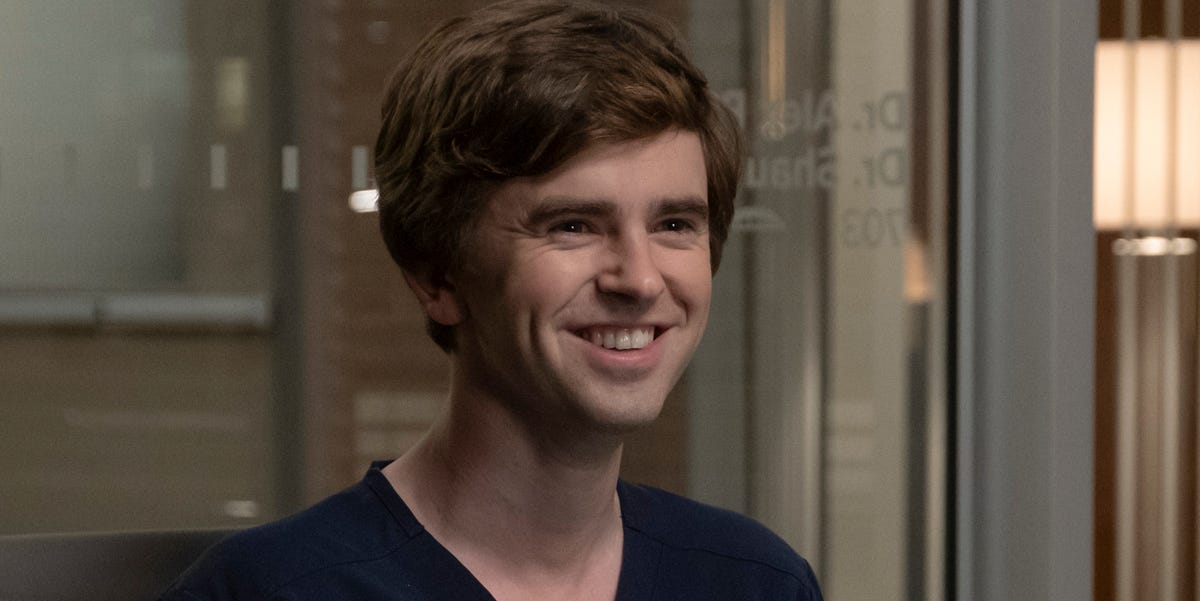

Freddie Highmore did not just play Dr. Shaun Murphy on The Good Doctor; he lived with the character long enough for Shaun to become part of the modern TV medical-drama family tree. After seven seasons, countless surgeries, several heartbreaks, one unforgettable mentor relationship, and enough hospital hallway conversations to qualify as cardio, Highmore has been reflecting on what the ABC drama leaves behind after Season 7.
The simple answer is this: The Good Doctor became more than a weekly medical mystery. It became a conversation starter about neurodiversity, empathy, workplace inclusion, mentorship, grief, family, and the awkward miracle of learning how to understand people who process the world differently. That is a big assignment for a primetime drama. Most TV doctors are busy enough saving patients from rare diseases with 12 syllables. Shaun Murphy had to save lives while also carrying a cultural conversation on his shoulders.
Highmore has said that one of his greatest hopes is that the series helped challenge stereotypes around autism, even in a small way. That idea sits at the center of the show’s post-Season 7 legacy. The finale may have closed the doors of San Jose St. Bonaventure Hospital, but the questions the show raised are still very much open: How do we make space for different minds? How do we separate support from pity? How do we see ability without turning it into a superhero cape? And how do we say goodbye to a TV character who somehow made hospital cafeteria scenes emotionally dangerous?
Why Freddie Highmore’s Shaun Murphy Connected With Viewers
From the pilot episode in 2017, Shaun Murphy was written as a brilliant young surgeon with autism and savant syndrome who had to prove himself in a medical system not built with him in mind. The premise could have easily become a gimmick. Instead, Highmore’s performance gave the character a specific rhythm: precise, direct, vulnerable, stubborn, funny when he did not mean to be, and deeply committed to doing the right thing even when his delivery needed a little polishing.
Shaun’s appeal was never only that he was exceptional in the operating room. Plenty of medical dramas have genius doctors who can diagnose a tropical parasite before the opening credits. What made Shaun different was that the show placed his professional gifts beside his social challenges, his emotional growth, and his everyday frustrations. Viewers watched him become a resident, a colleague, a husband, a father, and eventually a leader.
Highmore’s performance worked because he treated Shaun as a full character, not a message in a white coat. Shaun could be inspiring, but he could also be wrong. He could be compassionate, but not always tactful. He could be brave, but sometimes rigid. That complexity gave the audience permission to love him without pretending he was perfect. In the world of TV doctors, perfection is usually suspicious anyway. If a surgeon is too charming, hide the scalpels.
Season 7 Turned the Ending Into a Beginning
The seventh and final season arrived with a smaller episode count, but it had a huge emotional checklist. The show needed to honor Shaun’s journey, resolve long-running relationships, bring back familiar faces, and give fans a finale that felt conclusive without looking like the writers had simply locked the hospital and run away.
Highmore described the final season as a kind of graduation: nostalgic, emotional, and forward-looking. That comparison fits. Season 7 was not only about ending a show; it was about showing how far Shaun had come. He was no longer the uncertain young doctor entering a skeptical hospital boardroom. He was a father trying to balance medicine, marriage, and parenthood. In other words, he had moved from proving he belonged to figuring out what kind of person he wanted to be while belonging.
The fatherhood storyline gave Season 7 extra weight. Shaun and Lea’s baby changed the emotional stakes because parenthood forced Shaun into a new kind of uncertainty. Medicine rewards answers. Parenting laughs at your answers, spills applesauce on them, and wakes you up at 3 a.m. Shaun’s growth was not measured only by surgical wins but by his willingness to adapt, listen, and love in ways that did not always come naturally.
The Finale: Glassman, Grief, and the Future of Neurodiversity
The series finale, titled “Goodbye,” centered heavily on Dr. Aaron Glassman, Shaun’s mentor and father figure. Glassman’s terminal diagnosis forced Shaun into one of the hardest lessons of his life: not every problem can be solved by intelligence, persistence, or a risky treatment plan. Sometimes love means staying present instead of trying to fix the unfixable.
That was a powerful final test for Shaun. For much of the series, his greatest strength was his refusal to stop looking for answers. In the finale, the show asked him to do something even harder: accept a truth that no doctor could cut out, medicate, or reverse. Glassman’s death became the emotional bridge between Shaun’s past and his future.
The flash-forward gave fans a glimpse of that future. Shaun becomes chief of surgery and helps create the Dr. Aaron Glassman Foundation for Neurodiversity in Medicine with Claire. It was a fitting full-circle moment. The mentor who once fought for Shaun’s place in the hospital inspired Shaun to fight for others. That is the kind of legacy television loves, and when done well, audiences do too. It says the story does not end when the character leaves our screens; it continues in the values they pass on.
Highmore’s Biggest Hope: Changing Perceptions Around Autism
Freddie Highmore has repeatedly framed the show’s impact around one central hope: that The Good Doctor helped challenge stereotypes about autism. This matters because television often becomes an informal classroom. Viewers may not take notes, but they absorb attitudes, expectations, and emotional cues from the stories they watch.
For many fans, Shaun made autism more visible in mainstream entertainment. He showed a character on the spectrum working in a high-pressure profession, forming relationships, making mistakes, raising a family, and growing over time. That was meaningful to viewers who had rarely seen autistic characters placed at the emotional center of a network drama.
At the same time, the show’s legacy is complicated, and honest analysis should not pretend otherwise. Some critics and autistic viewers felt that Shaun’s portrayal leaned too heavily on familiar media patterns, especially the genius-savant framework. Others argued that the series sometimes simplified autism for dramatic effect. Those criticisms do not erase the show’s impact; they make the conversation more mature.
The strongest legacy of The Good Doctor may be that it widened the door. It did not finish the work of representation, because no single series can do that. But it did make neurodiversity part of a mainstream medical drama watched by millions. The next step for television is broader: more autistic characters, more autistic writers, more autistic actors, and more stories that show the spectrum as a spectrum, not a single dramatic template.
Kayla Cromer’s Season 7 Arrival Added a New Layer
One of Season 7’s most important additions was Kayla Cromer as Charlotte “Charlie” Lukaitis, an autistic medical student inspired by Shaun. Her arrival gave the series an opportunity to show that autistic people are not interchangeable. Charlie was not simply Shaun 2.0 with a different badge. She had her own personality, ambitions, habits, and learning curve.
Cromer’s casting also mattered because she is an autistic actress playing an autistic character. That brought a different kind of authenticity to the final season and reflected a growing expectation in the entertainment industry: representation should include who gets to tell the story, not just who appears in it.
Through Charlie, the show acknowledged something crucial. Shaun could be a pioneer within the fictional world of St. Bonaventure, but the future of neurodiversity in medicine could not rest on one person. Real progress requires systems, mentors, colleagues, and institutions willing to make room for different ways of thinking. That message made the finale’s foundation storyline feel less like a symbolic bow and more like a mission statement.
The Show’s Impact on Medical Drama Storytelling
Medical dramas have always been about more than medicine. ER brought urgency. Grey’s Anatomy brought romance, identity, and workplace family. House brought diagnostic puzzles and one spectacularly cranky genius. The Good Doctor carved out its space by making difference itself part of the workplace story.
Shaun’s cases often mirrored his internal life. A patient might force him to confront loss. A diagnosis might test his communication skills. A workplace conflict might expose how easily institutions praise talent while resisting accommodation. That is where the show worked best: when the medical plot and the human plot were stitched together like a clean surgical closure.
The series also gave viewers a long-form portrait of growth. Shaun did not transform overnight. He learned slowly, sometimes painfully, often with help. That patience was important. In real life, growth rarely arrives with dramatic music and perfect lighting. It comes through repetition, feedback, failure, apology, and trying again. Television loves breakthroughs, but The Good Doctor often found meaning in gradual change.
Why Fans Still Care After Season 7
Fans stayed with The Good Doctor because the show built emotional anchors. Shaun and Glassman were the heart. Shaun and Lea gave the series romance and domestic growth. Claire, Park, Morgan, Lim, Asher, Jordan, Jared, and the wider hospital team gave the drama a sense of community. The medical cases mattered, but the relationships kept viewers checking in.
Highmore’s goodbye resonated because he had spent seven seasons growing with the role. He was not only the lead actor; he also served as a producer and directed episodes. That behind-the-scenes involvement made his farewell feel personal. He understood the show not just as a performer but as someone invested in its tone, structure, and long-term meaning.
When a series runs for seven seasons, it becomes part of viewers’ routines. People watch during college, after work, with parents, between shifts, or while folding laundry with heroic inconsistency. The characters become familiar in a way that sneaks up on you. Then one day the finale arrives, and suddenly a fictional hospital feels like a real place you used to visit every Tuesday night.
Related Experiences: Why the Story Still Feels Personal
One reason The Good Doctor continues to matter after Season 7 is that many viewers did not experience it as just another medical show. They experienced it as a weekly reminder that people are often more layered than first impressions suggest. Shaun’s journey encouraged audiences to look twice: at the quiet coworker, the blunt classmate, the brilliant but socially awkward student, the person who seems difficult until someone bothers to understand the pattern behind the behavior.
For families with autistic loved ones, the show could be emotional in a very specific way. Some viewers saw pieces of their children, siblings, partners, or friends in Shaun’s directness, sensory challenges, honesty, or intense focus. Others watched with mixed feelings, appreciating the visibility while wishing the portrayal captured more of their own lived reality. Both experiences are valid. Representation can comfort and frustrate at the same time. In fact, that tension is often proof that the subject matters deeply.
The workplace angle also gave the series a practical kind of relevance. Shaun’s story asked what inclusion looks like after the inspirational speech ends. It is easy for an organization to say it values difference. It is harder to redesign communication, mentorship, feedback, and leadership so different people can genuinely succeed. St. Bonaventure was fictional, but the workplace questions were not. Many viewers have known what it feels like to be underestimated, misunderstood, or treated as a problem to manage instead of a person to support.
The mentor relationship between Shaun and Glassman became another major emotional experience for fans. Their bond was messy, loving, funny, and occasionally exhausting, which is usually how television signals that a relationship is alive. Glassman believed in Shaun before others did, but he also had to learn when to guide and when to let go. Shaun, in turn, had to learn that love is not the same as control. The finale’s focus on acceptance turned that relationship into the show’s final lesson.
There is also the comfort-TV factor. Despite its heavy cases and tragic turns, The Good Doctor often returned to hope. Someone got another chance. A patient survived. A friendship repaired itself. A character discovered courage they did not know they had. In a world where news alerts arrive with the subtlety of a falling piano, that kind of hope is not small. It is one of the reasons viewers keep returning to medical dramas: they offer crisis, competence, compassion, and resolution in under an hour. Real life rarely has that tidy a runtime.
After Season 7, Freddie Highmore’s reflections remind fans that the show’s impact is not measured only by ratings, awards, or finale reactions. It is measured by conversations at dinner tables, social media debates, classroom discussions, and private moments when someone felt seen. That is a lasting legacy, even if the fictional hospital lights are finally off.
Conclusion
The Good Doctor ended after Season 7, but Freddie Highmore’s comments about the show’s impact explain why the finale did not feel like a simple closing chapter. Shaun Murphy’s story became a mainstream conversation about autism, acceptance, medical ambition, mentorship, and the hard work of becoming understood. The series had flaws, as all long-running shows do, but its influence is undeniable. It gave viewers a character who was different without being less, brilliant without being invincible, and hopeful without being naive.
Past Season 7, the show’s most meaningful legacy may be its invitation to keep going. Keep challenging stereotypes. Keep improving representation. Keep asking how workplaces, schools, hospitals, and stories can become more inclusive. And, when in doubt, remember Glassman’s unofficial wisdom from the finale: do not be an ass. Honestly, not a bad motto for medicine, television, or Monday mornings.


