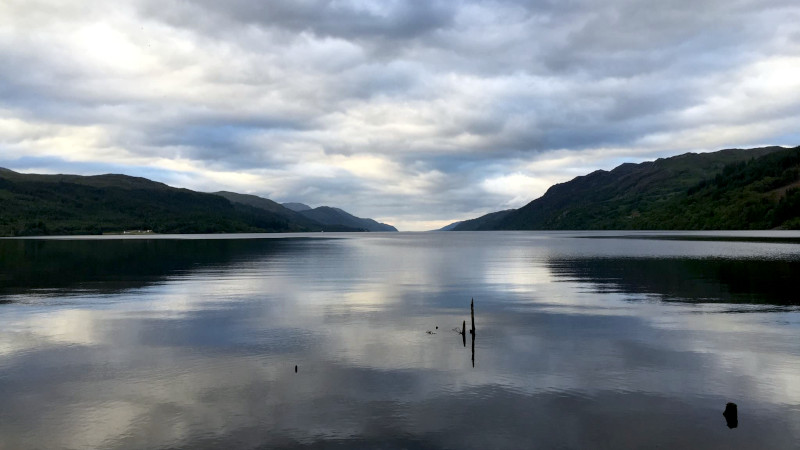

Some mysteries politely fade away when science turns on the lights. The Loch Ness Monster, however, has spent nearly a century squinting back at the flashlight and saying, “Nice try.” From grainy photographs and breathless newspaper headlines to sonar sweeps, environmental DNA studies, drones, hydrophones, and internet livestreams, the hunt for Nessie has become one of the world’s most enduring legends. It is part folklore, part tourism engine, part scientific curiosity, and part human refusal to accept that a suspicious ripple might simply be a duck having a dramatic afternoon.
Loch Ness, a long, deep freshwater lake in the Scottish Highlands, is almost perfectly designed for mystery. Its dark, peat-stained water limits visibility. Its steep sides and great depth make it feel bottomless to the imagination. It is large enough to hide secrets, gloomy enough to encourage rumors, and beautiful enough to keep visitors staring across the surface long after common sense has gone back to the hotel for tea.
This article explores the everlasting hunt for the Loch Ness Monster: where the legend began, why it exploded in the 1930s, what science has actually found, and why Nessie still refuses to retire from public life despite a suspicious lack of reliable headshots.
Why Loch Ness Is the Perfect Home for a Monster Story
Before we meet the monster, we need to understand the stage. Loch Ness stretches roughly 23 miles through the Scottish Highlands and reaches depths of more than 750 feet. It contains more freshwater by volume than any other lake in Great Britain, making it less of a pond and more of a mood with shorelines.
The loch’s water is famously dark because peat from surrounding hills drains into it. That murkiness matters. In clear tropical water, a floating log is a floating log. In Loch Ness, a floating log is a prehistoric reptile, a giant eel, a tourist attraction, and possibly a documentary series. Low visibility, unpredictable weather, and long sightlines across the water create ideal conditions for misidentification. Boat wakes can look like humps. Birds can look like necks. Waves can look like something deciding whether to become famous.
The Ancient Roots of the Nessie Legend
The story most often linked to the earliest written account comes from the life of St. Columba, an Irish monk who traveled through the region in the sixth century. According to the account, Columba encountered a dangerous water beast near the River Ness in 565. The creature had reportedly attacked a swimmer, then threatened another man before Columba commanded it to retreat. Conveniently for everyone except the monster, it obeyed.
Modern readers should treat that story as religious literature, not a field report filed by a waterproof biologist. Medieval texts often used dramatic beasts to show spiritual authority. Still, the tale gave later generations a powerful origin point. Whether the original creature was folklore, metaphor, or a very misunderstood animal with terrible public relations, it helped plant the idea that strange things might live in the waters around Loch Ness.
The 1933 Spark: When Nessie Became a Global Celebrity
The modern Loch Ness Monster craze began in 1933. That year, reports of strange sightings around the loch reached newspapers at just the right moment. Roads around the area had improved, tourism was growing, cameras were becoming more common, and newspapers loved a story with scales, suspense, and no need to interview the subject.
One of the key reports came from Aldie Mackay, manager of the Drumnadrochit Hotel, who described seeing a “water beast” in the loch. Soon after, additional sightings fueled public imagination. The name “monster” entered the coverage, and the legend moved from local curiosity to international sensation. People came to watch the water. Reporters came to watch the people watching the water. Loch Ness had become a theater, and every ripple auditioned for the lead role.
The Famous “Surgeon’s Photograph” and the Hoax That Would Not Die Quietly
No single image shaped the Loch Ness Monster legend more than the 1934 “surgeon’s photograph.” It appeared to show a long neck rising from the water, like a tiny plesiosaur posing for a passport photo. For decades, the picture became the iconic image of Nessie. Posters used it. Books used it. Television specials used it. Generations of monster fans looked at it and whispered, “There she is.”
Then came the awkward part: the photo was later revealed as a hoax. The “monster” was reportedly made with a small model head attached to a toy submarine. In other words, one of the most famous cryptid images in history was closer to a bathtub prank than a zoological breakthrough.
Yet the exposure did not kill the legend. If anything, it proved how deeply Nessie had settled into public imagination. A debunked photo might destroy a weaker myth. Nessie simply adjusted her invisible crown and continued swimming through pop culture.
What Could Witnesses Be Seeing?
The most reasonable explanations for Loch Ness Monster sightings are not boring; they are surprisingly interesting. Human perception is not a perfect recording device. It is more like an enthusiastic intern: useful, imaginative, and occasionally convinced a swan is a Jurassic animal.
Boat Wakes and Optical Illusions
Boat wakes can travel long distances across Loch Ness, especially when the surface is calm. From the right angle, a series of waves may appear as several humps moving together. If the boat itself is out of view, the wake can look independent, almost alive. Add low light, mist, distance, and a little expectation, and suddenly the loch has “proof.”
Birds, Otters, Seals, and Other Everyday Suspects
Birds with long necks can create convincing silhouettes, especially at dawn or dusk. Otters can roll at the surface. Seals occasionally enter connected waterways. Large fish, floating branches, and even wave patterns can look strange when seen briefly. Most sightings happen under imperfect conditions, which is exactly when the brain tries to fill in the missing details. Unfortunately, the brain enjoys drama.
Giant Eels
One of the more persistent natural explanations is the giant eel theory. Loch Ness contains eels, and environmental DNA research has found eel DNA in the water. That does not prove a monster eel exists, but it keeps the door open for an explanation that is less “prehistoric sea dragon” and more “unusually ambitious spaghetti with fins.”
Science Joins the Hunt: Sonar, Cameras, and eDNA
The hunt for the Loch Ness Monster has never been limited to binoculars and wishful thinking. Over the years, investigators have used underwater cameras, sonar, submersibles, hydrophones, and DNA testing. Some efforts were driven by believers, others by skeptics, and many by people who simply wanted to understand what was actually living in the loch.
Sonar has produced occasional intriguing readings, including moving underwater targets that could not be immediately explained. But sonar is not a magic monster detector. It can pick up fish, debris, bubbles, temperature layers, and equipment artifacts. A strange sonar trace is a clue, not a creature. It says, “Something happened here,” not “Please welcome our guest, Nessie.”
Environmental DNA, or eDNA, brought a newer scientific approach. Animals shed genetic material into their environment through skin cells, mucus, waste, and other traces. By sampling water, researchers can identify organisms living in or around a lake without directly catching them. A major eDNA survey of Loch Ness found no evidence of a large unknown reptile or prehistoric survivor. It did, however, confirm plenty of known life, including eels.
That finding was not the dramatic monster reveal some hoped for, but it was still valuable. It showed how a legendary mystery can draw public attention to real science. Nessie may not have appeared, but biodiversity didand biodiversity is a much better guest at academic conferences.
The 2023 High-Tech Search: Drones, Hydrophones, and Global Watchers
In 2023, Loch Ness hosted one of its largest organized searches in decades. Volunteers and researchers used modern tools such as thermal-imaging drones, infrared cameras, hydrophones, webcams, and coordinated surface watches. The event attracted people both on-site and online, proving that the monster hunt has evolved from local legend into global participatory theater.
The search did not produce definitive proof of a monster, but it did reveal something important: the hunt itself is now part of the legend. People were not just looking for Nessie. They were joining a tradition. They were becoming temporary guardians of a mystery that has survived hoaxes, skeptical essays, scientific studies, and more blurry photos than a toddler’s first camera roll.
Why the Loch Ness Monster Still Matters
On paper, the case for Nessie is weak. There is no confirmed physical evidence, no clear photograph, no verified carcass, no reliable DNA, and no repeatable scientific observation. If Nessie were applying for official animal status, the paperwork would come back with a polite but firm rejection.
Yet culturally, Nessie is wildly successful. The Loch Ness Monster has become a symbol of curiosity. The legend brings visitors to the Scottish Highlands, supports local businesses, inspires books and documentaries, and gives people a reason to stand beside cold water for suspiciously long periods. Not every mystery survives because it is likely. Some survive because they are fun, flexible, and emotionally useful.
Nessie also lives in the space between skepticism and wonder. Most people do not need to fully believe in the monster to enjoy the story. They simply need to enjoy the possibility. A world with one unexplained ripple left in it feels slightly larger than a world where every ripple has already been assigned to “wind, probably.”
The Psychology of Seeing Monsters
The Loch Ness Monster is also a case study in how humans interpret uncertainty. When people expect to see something unusual, they are more likely to interpret ambiguous shapes as meaningful. This does not mean witnesses are lying. Many are probably sincere. But sincerity is not the same as accuracy.
Distance distorts scale. Mist softens outlines. Waves move in patterns. A bird diving and resurfacing can appear larger than it is. A branch floating upright can create a neck-like shape. Once the mind has a famous templatelong neck, dark body, mysterious humpsit tends to match unclear images to that template.
This is why Nessie sightings often say as much about human imagination as they do about Loch Ness. The monster may be a creature of water, but it is also a creature of expectation.
Believers, Skeptics, and the Healthy Middle
The debate around Nessie often divides people into believers and skeptics, but the most interesting position may be in the middle. A healthy approach says: enjoy the mystery, respect eyewitnesses, investigate claims carefully, and do not confuse “unexplained” with “prehistoric reptile confirmed.”
That middle ground keeps the story alive without abandoning reason. It allows a person to visit Loch Ness, scan the surface, feel a tiny thrill at a strange wave, and still accept that science has not found a monster. It is curiosity with a seatbelt.
Experiences From the Everlasting Hunt for Nessie
To understand why the Loch Ness Monster hunt refuses to end, imagine arriving at the loch early in the morning. The air is cold enough to make your coffee feel like a medical necessity. Mist hangs over the water. The hills rise dark and quiet on both sides. You tell yourself you are a rational person. You know the evidence. You have read the studies. You are not going to be fooled by a duck, a wave, or a log with ambition.
Then something moves.
It is probably nothing. In fact, it is almost certainly nothing. But for a few seconds, your brain becomes a committee meeting with no chairperson. One part says, “That is a wave.” Another says, “Waves do not usually behave like that.” A third, wearing a novelty monster hat, whispers, “Nessie.”
This is the experience that keeps the legend alive. The hunt is not only about finding an animal. It is about participating in a shared moment of uncertainty. Visitors stand along the shore and do what people have done for generations: they look, they wonder, they tell stories. Some bring cameras with zoom lenses. Some join organized watches. Some stare from tour boats. Others glance at the water casually, pretending not to care, while secretly hoping to become the person who finally captures the world’s clearest monster video.
The modern Nessie experience is also surprisingly social. Around Loch Ness, conversations start easily. Someone points at a ripple. Someone else jokes about needing a bigger net. A local guide explains how boat wakes can trick the eye. A child asks whether monsters eat sandwiches. Everyone laughs, but nobody stops looking at the water.
There is also a deeper emotional pull. The hunt gives people permission to be curious without needing a guaranteed result. In daily life, we are trained to want answers quickly. Search engines respond in seconds. Maps tell us where to turn. Apps track weather, traffic, calories, and sleep. Loch Ness offers something different: a mystery that does not hurry. It asks you to wait. It asks you to observe. It asks you to accept that not knowing can be part of the pleasure.
For travelers, the monster becomes a lens through which the entire landscape feels more alive. Urquhart Castle looks more dramatic because Nessie might be nearby. The deep water seems deeper because stories have filled it. Even skeptical visitors often leave with a softer attitude. They may not believe in a creature, but they understand why others keep watching.
The best Nessie hunt, then, is not a frantic search for proof. It is a slow, playful encounter with place, history, science, folklore, and imagination. Bring a camera, but also bring patience. Bring skepticism, but do not forget wonder. And if a suspicious ripple appears, take the photo first and identify the duck later.
Conclusion: The Monster That Refuses to Sink
The everlasting hunt for the Loch Ness Monster continues because it is bigger than a creature. It is a story about how legends form, how evidence is tested, how landscapes shape imagination, and how people keep room in their minds for the unknown. Science has not confirmed Nessie. In fact, the strongest evidence points toward ordinary explanations: waves, animals, optical illusions, hoaxes, and the occasional eel with excellent branding.
But the absence of proof has not drained the loch of mystery. Nessie endures because the legend is enjoyable, adaptable, and rooted in one of the most atmospheric places on Earth. The monster may never surface in the way believers hope. Still, as long as people gather on the shore, scan the dark water, and ask “What was that?” the hunt will continue.
And somewhere on Loch Ness, a perfectly innocent ripple is probably preparing for its close-up.


