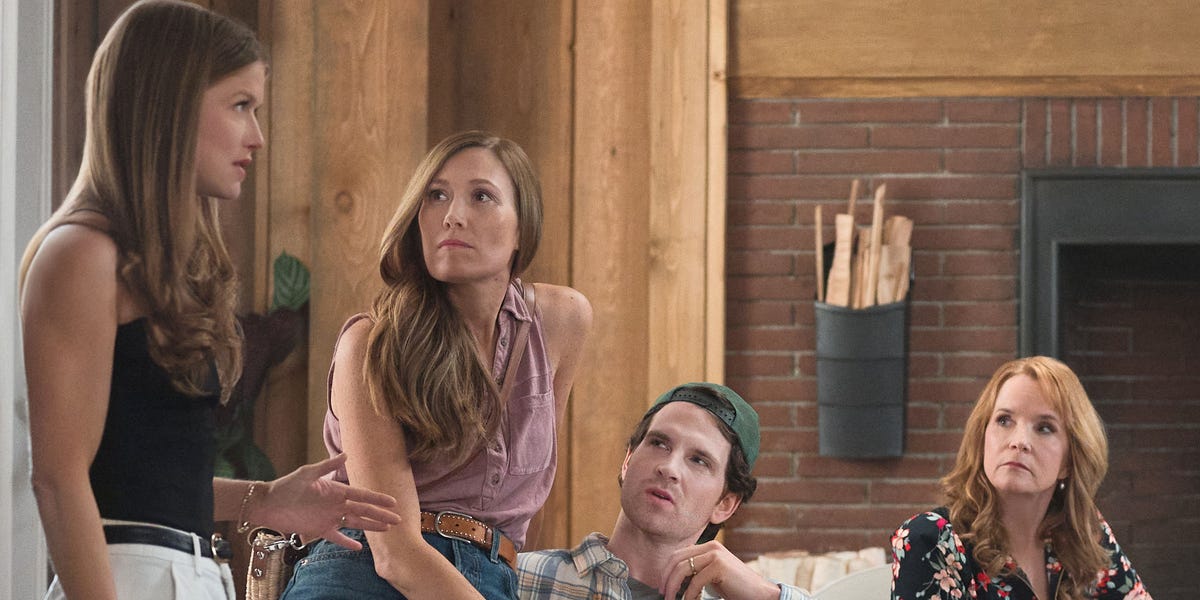
‘The Chicken Sisters’ Is the First Hallmark+ Drama Series to Debut on the Streamer

Note: This article is based on publicly available information from Hallmark Media, entertainment coverage, author materials, and television review sources. It is written for web publication without source links, as requested.
A Fried-Chicken Feud Lands at the Center of Hallmark+’s Big Streaming Moment
Hallmark has always known how to make comfort television feel like a warm blanket, a snowy town square, and a perfectly timed romantic misunderstanding. But with The Chicken Sisters, the brand stepped into a slightly saucier chapter: family drama, small-town rivalry, reality-TV chaos, and enough fried chicken tension to make a Sunday dinner feel like a courtroom trial.
The Chicken Sisters debuted on Hallmark+ on September 10, 2024, the same day Hallmark’s refreshed streaming service officially launched. That made the series one of the streamer’s most important early originals and its first major scripted drama to arrive under the Hallmark+ banner. For a company best known for holiday movies, cozy mysteries, and feel-good romances, this was more than another title drop. It was a statement: Hallmark+ would not simply be a digital shelf for familiar comfort content. It would be a home for exclusive series with continuing storylines, recognizable stars, and enough emotional seasoning to keep viewers coming back episode after episode.
Based on KJ Dell’Antonia’s bestselling novel, The Chicken Sisters brings viewers to the fictional town of Merinac, where two rival fried chicken restaurants, Mimi’s and Frannie’s, have divided families, friendships, loyalties, and probably more than one church potluck seating chart. The premise sounds funnyand it isbut underneath the crispy coating is a story about mothers and daughters, sisters and resentment, old wounds, reinvention, forgiveness, and the dangerous power of letting a family feud marinate for way too long.
What Is The Chicken Sisters About?
At its heart, The Chicken Sisters is a multigenerational family drama about two restaurants and two families that have spent years turning fried chicken into a battlefield. On one side is Mimi’s, operated by Gus Moore, a sharp-edged matriarch played by Wendie Malick. On the other side is Frannie’s, run by Nancy Hillier, played by Lea Thompson. If that casting alone does not get longtime TV fans to lean forward, check your remote for emotional damage.
The rivalry becomes even more complicated because Gus’s daughter Amanda, played by Schuyler Fisk, married into the opposing family. That means Amanda is not merely caught between two restaurants; she is caught between two versions of home. Meanwhile, her sister Mae, played by Genevieve Angelson, returns to town after building a more glamorous life away from Merinac. The result is a family reunion with all the warmth of a skillet and all the emotional sparks of hot oil meeting water.
The drama intensifies when a reality cooking competition called Ultimate Kitchen Clash arrives in town. Suddenly, the private grudges of Mimi’s and Frannie’s are not so private anymore. Cameras roll. Secrets wobble toward the surface. Everyone tries to look calm while behaving exactly like people who are absolutely not calm. In other words, television has entered the chat.
A Small Town Where Everyone Picks a Side
One of the cleverest parts of the series is how the restaurant feud becomes a stand-in for larger emotional divisions. Merinac is not just a backdrop; it behaves like a character. The town has opinions. The town has history. The town has probably seen people change grocery checkout lines because someone from the wrong chicken camp was buying paper towels.
This kind of setting fits Hallmark’s strengths. The network has long understood the emotional pull of close-knit communities, where the mayor knows your coffee order and your neighbor has somehow heard your life update before you have processed it yourself. But The Chicken Sisters adds sharper edges to that formula. The town is charming, yes, but it is also divided. The relationships are heartfelt, but not simple. The food looks comforting, but the people serving it are carrying years of hurt.
Why the Hallmark+ Debut Matters
When Hallmark+ launched, it replaced and expanded upon Hallmark Movies Now, giving the company a more ambitious streaming identity. Instead of functioning only as a library for existing favorites, Hallmark+ arrived with exclusive original programming, member perks, and a broader mix of scripted and unscripted projects. The Chicken Sisters became a key part of that launch strategy because it offered something serialized, character-driven, and built for weekly conversation.
That is important in the modern streaming world. A single movie can deliver a satisfying two-hour escape, but a drama series asks viewers to invest in people over time. It invites them to wonder whether Amanda and Mae will reconnect, whether Gus and Nancy can ever stop treating each other like rival generals, and whether a reality-show crew is the worst thing to happen to Merinac or exactly the chaos the town needed.
By putting The Chicken Sisters at the front of its new streaming service, Hallmark signaled that Hallmark+ would lean into familiar brand values while expanding the kinds of stories it could tell. The series still offers heart, humor, community, and reconciliation, but it also explores identity, disappointment, ambition, regret, and family loyalty. That blend makes it feel both comfortably Hallmark and slightly more grown-up than a standard feel-good movie.
The Cast Gives the Series Its Flavor
A story like The Chicken Sisters needs performers who can handle comedy, hurt feelings, family history, and the occasional dramatic side-eye. Fortunately, the cast comes stacked like a holiday dessert table.
Wendie Malick as Gus
Wendie Malick brings bite, timing, and vulnerability to Gus Moore. Gus could easily become only the stern mother figure, but Malick gives her layers. She is prickly because she has been hurt. She holds tight to Mimi’s because the restaurant is not just a business; it is memory, pride, identity, and survival. Gus is the kind of character who can make a room colder with one sentence, then quietly remind viewers that tough people are often carrying the most tender disappointments.
Lea Thompson as Nancy
Lea Thompson plays Nancy Hillier, the woman on the other side of the chicken war. Nancy is not written as a simple villain, which helps the show avoid turning the feud into a cartoon. She has her own loyalties, fears, and reasons for protecting Frannie’s. Thompson gives the character warmth and stubbornness, making Nancy a believable rival and a compelling mother figure for Amanda.
Schuyler Fisk as Amanda
Schuyler Fisk’s Amanda is one of the emotional anchors of the series. She stayed in Merinac, crossed family lines through marriage, and now finds herself wondering whether the life she chose still fits. Amanda’s conflict is not flashy, but it is deeply relatable. Many viewers understand the strange feeling of waking up one day and asking, “How did I become the person everyone expected me to be?” Preferably before breakfast, but life rarely schedules existential crises politely.
Genevieve Angelson as Mae
Genevieve Angelson plays Mae, the sister who left and reinvented herself. Mae’s return forces old questions into the open: Who had it easier? Who made the braver choice? Who abandoned whom? The tension between Mae and Amanda works because neither sister is entirely right or entirely wrong. Their conflict is not only about chicken, careers, or family loyalty. It is about the painful human desire to be understood by the one person who knows exactly where all your emotional buttons are located.
A Supporting Cast That Adds Texture
The broader cast includes James Kot as Frank Jr., Rukiya Bernard as Sabrina, Ektor Rivera as Sergio, Jake Foy, and Margo Martindale as the narrator. Martindale’s narration gives the series a knowing, storybook quality, as if Merinac itself has leaned over the fence to tell viewers what really happened. That touch helps balance the show’s humor and drama while reinforcing its Southern-flavored storytelling style.
From Reese’s Book Club Pick to Hallmark+ Original Series
The Chicken Sisters began as a novel by KJ Dell’Antonia, whose fiction often explores family, happiness, motherhood, ambition, and the emotional math of the lives people choose versus the lives they imagine. The book was selected as a Reese’s Book Club pick, which helped introduce it to a wider readership and positioned it as exactly the kind of female-centered, relationship-rich story that adapts naturally to television.
The television version keeps the central framework of the book while making changes that give the series room to grow. One notable difference is that Amanda’s husband, Frank, is alive in the show, while the book handles that character differently. This kind of adjustment matters because serialized television needs ongoing relationships, friction, reversals, and room for future episodes. A faithful adaptation does not always mean a scene-by-scene copy. Sometimes it means preserving the emotional recipe while changing the cooking method.
That is one reason The Chicken Sisters works as a Hallmark+ drama. It does not rely only on the novelty of “two chicken restaurants are feuding,” although, frankly, that is already a delicious elevator pitch. It uses the feud to explore bigger questions: What does loyalty cost? Can sisters forgive each other without pretending the past did not happen? How much of our identity is chosen, and how much is inherited like a family recipe written on an index card?
Why Viewers Respond to the Show
The appeal of The Chicken Sisters comes from its mix of comfort and conflict. It is easy to watch, but it is not empty. The show offers a cozy small-town atmosphere while still allowing its characters to be messy, defensive, proud, insecure, and occasionally spectacularly bad at communication. In other words, they behave like relatives.
It Combines Food, Family, and Feelings
Food stories are powerful because meals are never just meals on screen. Fried chicken in The Chicken Sisters represents legacy, pride, competition, and belonging. When characters argue over restaurants, they are really arguing over memory. When they protect a recipe, they are protecting a version of the past. When a cooking show arrives, it exposes not just who can fry the best chicken, but who has been quietly simmering with resentment for years.
It Offers a Familiar Hallmark Warmth with More Serialized Drama
Traditional Hallmark fans will recognize the emotional safety of the series. The show is not trying to become grim prestige television where everyone whispers in dark rooms and nobody owns a lamp. It still believes in healing, second chances, community, and the possibility that people can change. But it also gives viewers a more layered continuing story than a single movie can provide.
It Understands Sisterhood as Both Love and Combat Sport
The Amanda-and-Mae relationship is especially effective because it captures the strange truth of sibling bonds. Sisters can be each other’s historians, cheerleaders, rivals, and accidental emotional assassins. A single sentence at the wrong moment can carry fifteen years of subtext. The show leans into that complexity without losing its sense of humor.
Critical Reception and Audience Conversation
Like many Hallmark projects that stretch the brand in a new direction, The Chicken Sisters received a range of reactions. Some viewers enjoyed its humor, cast chemistry, and family-centered storytelling. Others felt the accents, character choices, or gender dynamics were uneven. That split is not surprising. A show built around heightened small-town rivalry and Southern flavor is naturally going to invite strong opinionsespecially from viewers who know exactly how a fictional town should sound, cook, and gossip.
Still, the show generated enough attention and audience investment to continue beyond its first season. Hallmark later renewed The Chicken Sisters for Season 2, with returning cast members and an expanded storyline beyond the pages of the original novel. That renewal suggests that Hallmark saw long-term value in the world of Merinac and in serialized family drama as part of its programming mix.
For Hallmark+, the significance is clear. A streaming platform needs recognizable anchors, and The Chicken Sisters gave the service a launch title that could attract book lovers, Hallmark regulars, fans of the cast, and viewers hungry for warm but dramatic family storytelling. That is a lot of audiences for one chicken basket, but the show was built to hold them.
What The Chicken Sisters Says About Hallmark’s Future
The arrival of The Chicken Sisters on Hallmark+ reflects a broader shift in how entertainment brands think about loyal audiences. Hallmark does not need to abandon what viewers love about it. The company’s strength has always been emotional accessibility: stories about love, family, tradition, forgiveness, home, and hope. But a streamer gives Hallmark room to deepen those ideas through longer arcs and more varied formats.
With Hallmark+, the brand can offer holiday movies, cozy mysteries, reality programs, romantic series, and dramas like The Chicken Sisters under one digital roof. That creates a stronger relationship with fans who want more than seasonal programming. It also helps Hallmark compete in a crowded streaming landscape by leaning into what it does best instead of trying to imitate every other platform.
The Chicken Sisters is not trying to be edgy for the sake of being edgy. Its drama is domestic, emotional, and community-based. Its stakes are personal rather than apocalyptic. Nobody has to save the universe; they just have to survive family dinner, which, depending on the family, may be harder.
Viewing Experience: Why This Series Feels Like a Watch-Party Show
There is something especially watchable about a show that understands the pleasure of taking sides. The Chicken Sisters practically invites viewers to declare themselves Team Mimi’s or Team Frannie’s, even though the smarter answer is probably “Team Please Communicate Like Adults.” But where is the fun in that?
The show works well as a casual group watch because its conflicts are easy to follow but emotionally loaded. You can watch it with a friend, pause every ten minutes, and say, “Okay, but she did have a point,” followed immediately by, “Actually, no, that was deeply petty.” That is the sweet spot for family dramedy: characters make choices that are understandable, frustrating, and entertaining all at once.
The food element also adds to the experience. It is nearly impossible to watch a fried-chicken drama without wanting something crunchy nearby. This is not a show to pair with a sad desk salad unless you enjoy emotional betrayal from your own lunch. A proper viewing setup includes snacks, iced tea, maybe biscuits, and at least one person willing to gasp whenever a family secret starts walking toward the light.
Another enjoyable part of the series is its pace. It does not move like a thriller, and it should not. The pleasure comes from watching old tensions reveal themselves gradually. A glance across a restaurant, a clipped comment from Gus, an awkward moment between Amanda and Maethese are the little sparks that keep the story cooking. The show understands that in families, the loudest argument is sometimes not as revealing as the thing nobody says out loud.
For viewers who enjoy adaptations, The Chicken Sisters also offers the fun of comparing page to screen. Fans of the novel can notice what changed, what stayed, and how the series expands the material for television. New viewers do not need to have read the book, but the story’s literary roots help explain why the characters feel built around internal conflicts rather than simple plot mechanics.
As a Hallmark+ launch drama, the series also delivers a useful test case for the platform. It shows that Hallmark audiences are open to serialized stories when those stories remain emotionally grounded. The show does not chase shock value. It builds its drama from recognizable human experiences: wanting approval, fearing failure, resenting a sibling, protecting a parent, questioning a marriage, and wondering whether going home means going backward or finally moving forward.
That is why The Chicken Sisters lingers longer than its playful title might suggest. Yes, it is a show about rival chicken restaurants. Yes, the name sounds like something your aunt would recommend while handing you leftovers in a suspiciously reused butter container. But beneath the fun is a thoughtful story about women trying to understand the lives they built and the families that shaped them. It is funny, warm, occasionally melodramatic, and sincere in a way that fits Hallmark’s brand while nudging it into richer territory.
The best way to experience it is to let the premise be as big and flavorful as it wants to be. Accept the feud. Enjoy the cast. Appreciate the family chaos. Do not overthink why everyone in town has invested so much emotional energy into fried chicken supremacy. In small towns, people have fought over less. At least this feud comes with side dishes.
Final Thoughts
The Chicken Sisters is more than a quirky title in Hallmark’s growing library. It represents a strategic step for Hallmark+ and a creative expansion of the Hallmark formula. By debuting as a major scripted drama on the new streamer, the series helped define what Hallmark+ could become: a place for comforting stories with deeper arcs, familiar stars in emotionally layered roles, and family drama that knows when to make viewers laugh.
The show’s recipe is simple on the surface: two restaurants, one feud, a reality competition, and a town that cannot mind its own business. But the real ingredients are pride, longing, forgiveness, sisterhood, and the universal truth that family history has a way of showing up whether invited or not. With its strong cast, book-club pedigree, and warm Southern-inspired setting, The Chicken Sisters gave Hallmark+ a flavorful debut drama and gave viewers a reason to pull up a chair in Merinac.
In a streaming world overflowing with dark antiheroes, expensive dragons, and shows that require a family tree just to understand episode two, The Chicken Sisters offers something refreshingly human. It is about people who hurt each other, love each other, misunderstand each other, and still might find their way back to the same table. Preferably with extra napkins.
SEO Tags


