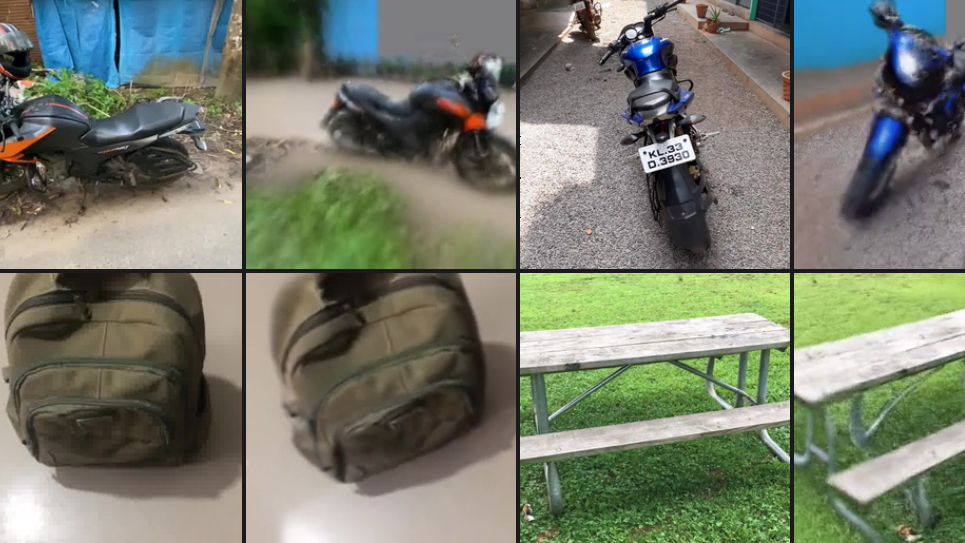

Imagine taking one ordinary image of a chair, a street corner, a living room, or a mountain trail, then spinning around it as if a tiny invisible drone had suddenly appeared with a full camera crew. That is the promise behind synthesizing 360-degree views from single source images. It sounds like science fiction wearing a computer vision lab coat, but recent advances in AI, neural rendering, diffusion models, neural radiance fields, and 3D reconstruction have pushed this idea from “cute demo” into a serious technology category.
At its heart, this field asks a deceptively simple question: can a machine look at one flat image and infer what the rest of the scene might look like from other angles? The answer is increasingly yes, although the machine still has to guess. A single image does not show the back of a sofa, the far side of a statue, or what is hiding behind a tree. So modern systems combine visual clues, learned world knowledge, camera geometry, depth estimation, and generative AI to produce plausible 360-degree views. It is not pure reconstruction. It is reconstruction plus imagination, with math trying very hard not to daydream too much.
What Does 360-degree View Synthesis Mean?
360-degree view synthesis is the process of generating new viewpoints around an object or scene from limited visual input. When the source is a single image, the task becomes especially difficult because the system must infer geometry, texture, lighting, depth, and hidden surfaces from just one frame. In other words, the AI gets one postcard and is asked to build the whole vacation.
The output can take several forms. For an object, the model may create an orbital sequence: front view, side view, back view, and everything in between. For a room or landscape, the system may generate a navigable visual path, allowing the viewer to move the virtual camera around the scene. For immersive media, the result may become a 3D-like environment used in virtual reality, augmented reality, gaming, e-commerce, robotics simulation, or film previsualization.
Why Single Source Images Are So Hard
Traditional 3D reconstruction relies on multiple photos captured from different angles. Photogrammetry, for example, compares overlapping images to triangulate points in space. NeRF-based workflows also usually benefit from many views because they optimize a continuous 3D representation from repeated observations. More views mean fewer guesses. One image means the model must make peace with uncertainty.
The key challenges include occlusion, depth ambiguity, scale confusion, lighting inconsistency, reflective surfaces, and missing context. A glossy vase may reflect a window that is not actually part of its shape. A chair leg hidden behind another chair leg may need to be hallucinated. A road stretching into the distance may require a plausible continuation beyond the visible frame. This is why single-image 360 view synthesis is not merely a graphics problem. It is also a reasoning problem.
The Invisible Half Problem
The most obvious issue is the invisible half. If the input image shows the front of a sneaker, the back of the sneaker is unknown. A human might guess based on brand style, symmetry, and common shoe design. AI models do something similar, but at scale. They learn from massive collections of images and 3D-like training data to predict what unseen surfaces might look like. When the guess is good, the result feels magical. When the guess is bad, the sneaker may grow a second tongue in the back like a fashion experiment nobody approved.
The Camera Control Problem
Generating a pretty image is not enough. For 360-degree synthesis, the output must obey camera movement. If the user requests a 90-degree turn to the right, the new image should actually look like the same scene from that new angle. This is where camera-conditioned diffusion models and 3D-aware representations become important. They help the system understand not only what to generate, but where the virtual camera is supposed to be.
The Technology Behind Single-Image 360 View Synthesis
Several major research directions have shaped this field. Each brings a different tool to the table, like a slightly chaotic but brilliant engineering potluck.
Neural Radiance Fields
Neural radiance fields, commonly known as NeRFs, represent a scene as a continuous function that maps 3D position and viewing direction to color and density. In plain English, a NeRF learns how light behaves throughout a scene so it can render new views. Early NeRF systems produced impressive photorealistic novel view synthesis, but they typically required many input images and significant optimization time.
Later work improved speed, scale, and anti-aliasing. Mip-NeRF 360, for instance, focused on unbounded 360-degree scenes where a camera rotates around a point, helping neural rendering handle complex real-world environments. NVIDIA’s Instant-NGP pushed another important frontier: faster training and real-time rendering through efficient neural graphics primitives. These developments made neural rendering more practical, although single-image synthesis still requires additional generative priors because one picture alone cannot fully define a 3D world.
Diffusion Models
Diffusion models changed the conversation because they are excellent at generating plausible images. Instead of only reconstructing what is visible, diffusion-based systems can infer missing content based on learned visual patterns. For single-image novel view synthesis, the model can take an input image and a target camera pose, then produce a new view that appears consistent with the original.
Models such as 3DiM demonstrated how diffusion can translate one input view into sharp, consistent completions across multiple views. Zero-1-to-3 showed how a system could change the camera viewpoint of an object from a single RGB image using learned geometric priors. SV3D extended the idea by using latent video diffusion to generate high-resolution orbital views around objects, improving multi-view consistency. The general trend is clear: image generation models are becoming better at respecting 3D structure instead of treating every frame like a separate painting.
3D-aware Diffusion and Zero-shot 360 Synthesis
ZeroNVS is especially relevant to the title of this article because it focuses on zero-shot 360-degree view synthesis from a single image, including in-the-wild scenes rather than only isolated objects on clean backgrounds. That matters because the real world is messy. Rooms contain furniture, windows, clutter, shadows, and one mysterious cable that appears in every photo no matter how carefully you stage the shot.
By using 3D-aware diffusion and training on mixed data sources that include objects, indoor scenes, and outdoor scenes, this type of model aims to generate more coherent views around complex environments. It also tackles depth-scale ambiguity, which is the problem of figuring out how far apart objects really are when a single image provides limited geometric evidence. The better the model handles depth and camera conditioning, the more believable the 360-degree result becomes.
How the Workflow Usually Works
A typical single-image 360-degree synthesis pipeline begins with an input image. The system analyzes visible content, estimates depth, identifies objects and scene layout, and predicts camera parameters. Then it generates one or more novel views based on target camera positions. Some workflows stop at generated images or videos. Others use the synthesized views to optimize a 3D representation such as a NeRF, mesh, point cloud, or Gaussian splat representation.
In object-centric workflows, the model may remove or ignore the background and focus on rotating around the main subject. This is useful for product visualization, game assets, collectibles, furniture previews, and digital twins of small objects. In scene-centric workflows, the model must understand the broader environment. This is harder because the background is not just decoration; it is part of the spatial world.
Step 1: Reading the Image
The AI first extracts visual cues. Edges, shadows, perspective lines, object boundaries, texture gradients, and known object categories all help. A table has a likely shape. A car has predictable symmetry. A hallway has vanishing points. The model uses these hints to infer depth and layout.
Step 2: Predicting the Hidden Geometry
Next, the system estimates what exists outside the visible view. This is the creative leap. It might infer the back of a chair, the continuation of a wall, or the side of a building. Strong models do not simply copy pixels. They synthesize new surfaces that match the style, lighting, and structure of the source image.
Step 3: Generating New Camera Angles
The system then renders or generates target views. Camera control is essential here. Without it, the output may look attractive but spatially random. Good 360-degree synthesis requires consistency across a sequence, so the object or scene does not morph between frames like a dream sequence directed by a caffeinated blender.
Step 4: Refining Consistency
Many pipelines refine the generated outputs using multi-view consistency checks, depth constraints, score distillation, or 3D optimization. The goal is to reduce flicker, floating artifacts, distorted geometry, and mismatched textures. This refinement step often separates a fun demo from a production-ready asset.
Real-world Applications
Synthesizing 360-degree views from single source images has practical value across several industries. The most obvious is e-commerce. A seller could upload one product photo and generate an interactive 360-degree preview. Shoppers could inspect a shoe, lamp, chair, or gadget from multiple angles without requiring a full studio shoot. That does not eliminate professional product photography, but it can make visual catalogs richer and faster to produce.
In gaming and virtual production, single-image view synthesis can accelerate concept development. Artists can start with a sketch or reference image, then create rough 3D-like views for blocking, mood exploration, and asset planning. The technology can also help generate background environments for previs, storyboarding, or VR experiences.
Architecture and interior design are another natural fit. A designer could transform a single room image into multiple viewpoints to explore layout possibilities. Real estate platforms may eventually use these tools to create more immersive property previews from limited photography. However, accuracy matters here. If a model invents a second window, moves a doorway, or makes a studio apartment look like a palace, the technology becomes less helpful and more legally spicy.
Robotics and autonomous systems can also benefit. Simulated viewpoints help train perception systems under varied camera positions. If a robot can reason about what a scene may look like from another angle, it can navigate and plan more effectively. In education, museums, and cultural heritage, single-image 360 synthesis could help create interactive experiences from archival photographs, although careful labeling is necessary to distinguish authentic reconstruction from AI-generated interpretation.
Limitations: The Magic Has Terms and Conditions
The biggest limitation is hallucination. A model may generate plausible content that is not true. For entertainment, that may be fine. For medical imaging, engineering inspection, insurance claims, crime scene analysis, or historical documentation, it can be dangerous. A synthesized view should never be treated as photographic evidence unless it has been validated through real multi-view data.
Another limitation is consistency. Single images leave too much room for interpretation, so outputs may drift as the camera moves. Textures can smear, object parts can change shape, and backgrounds can lose coherence. Reflective and transparent materials remain especially difficult because their appearance depends strongly on viewpoint and environment.
Compute cost is also a factor. While newer methods are faster than early neural rendering pipelines, high-quality 360-degree synthesis may still require powerful GPUs, optimization time, or cloud infrastructure. Lightweight applications are improving, but instant, perfect, phone-ready 360 reconstruction from one casual image is still a challenging goal.
Best Practices for Better Results
The quality of the source image matters. A clean, well-lit photo with a clear subject usually produces better results than a blurry, cropped, cluttered image. For object synthesis, the subject should be fully visible, centered, and separated from the background when possible. For scene synthesis, wide-angle images with strong perspective cues can help the model infer layout.
Avoid extreme shadows, heavy reflections, motion blur, and severe occlusions. The model can guess, but it guesses better when the image gives it a fighting chance. Think of the AI as a very talented intern: brilliant, fast, occasionally weird, and much better when you provide clear instructions.
For professional use, generated views should be reviewed by humans. If the output will influence a buying decision, design approval, or technical workflow, accuracy checks are essential. The best use of single-image 360 synthesis today is not replacing reality; it is expanding creative possibility while keeping a human editor in the loop.
The Future of 360-degree View Synthesis
The field is moving toward more stable geometry, better camera control, faster generation, and stronger scene understanding. Large-scale 360-video datasets are helping models learn how real environments change across viewpoints. Video diffusion models are improving temporal and multi-view consistency. Neural rendering methods and Gaussian splatting techniques are making real-time display more practical. Together, these advances point toward a future where one image can become a navigable visual space with fewer artifacts and less manual cleanup.
We should expect hybrid systems to dominate. A future pipeline may use a diffusion model to imagine missing views, a depth model to estimate geometry, a neural radiance field or Gaussian splat representation to organize the scene, and a renderer to deliver smooth interaction. In short, the best systems will not rely on one magic trick. They will use a toolbox.
Practical Experience: What It Feels Like to Work With Single-Image 360 View Synthesis
Working with single-image 360-degree view synthesis feels a bit like asking an artist, architect, detective, and fortune teller to share one keyboard. The process begins with excitement because the first results can look astonishing. You upload one image, choose a camera path, and suddenly the subject rotates or the room opens into a new angle. For anyone who remembers spending hours modeling basic 3D shapes by hand, this feels almost rude. Convenient, yes, but rude to the old workflow.
The first lesson is that source image selection matters more than most beginners expect. A crisp product image with even lighting can produce a surprisingly convincing orbit. A messy photo with cropped edges, harsh reflections, and three unrelated objects in the background may produce a visual adventure nobody requested. The model might not know whether the main subject is the lamp, the chair, or the cat judging everyone from the corner. Clear composition is not just aesthetic; it is technical guidance.
The second lesson is to inspect every angle. The front view may look perfect, while the back view quietly invents details. A generated backpack might gain extra straps. A wooden table may change grain direction. A living room may grow a new shelf, because the model decided the wall looked lonely. These errors are not always obvious in a quick preview, but they become important in e-commerce, design, or training data workflows. A polished single frame can hide a confused 3D structure.
The third lesson is that prompts and constraints help, but they do not replace validation. If a system allows text guidance, describing the subject can improve results: “modern white ceramic mug with curved handle,” for example, is better than “thing on desk.” Camera path settings also matter. Small viewpoint changes are easier than dramatic 180-degree turns. If you push too aggressively, the model must invent more unseen content, and invention is where the gremlins live.
The fourth lesson is to match the tool to the job. For a creative mood board, approximate views may be enough. For a product page, the result needs careful review. For engineering or documentation, single-image synthesis should be treated as a visualization aid, not a measurement tool. The technology is powerful precisely because it can imagine. That same imagination is why it needs boundaries.
The most rewarding experience comes when the workflow is used as a collaborator rather than a truth machine. A designer can generate alternate angles, choose the most useful ones, correct mistakes, and refine the final asset. A marketer can create richer visuals from limited photography. A developer can prototype immersive interfaces before investing in full 3D capture. The best results happen when human judgment and AI synthesis work together: the model provides speed and visual possibility, while the human provides taste, context, and the ability to say, “No, the chair should not have five legs.”
Conclusion
Synthesizing 360-degree views from single source images is one of the most exciting frontiers in computer vision and generative AI. It blends novel view synthesis, neural radiance fields, diffusion models, 3D reconstruction, depth estimation, and camera-aware generation into a technology that can turn one image into many plausible perspectives. The results are already useful for product visualization, gaming, virtual production, real estate, education, robotics, and creative design.
Still, the technology should be used with clear expectations. A generated 360-degree view is not automatically a factual reconstruction. It is a smart, visually informed prediction. When the image contains enough clues, the output can be stunning. When the scene is ambiguous, the model may improvise. Sometimes that improvisation is helpful. Sometimes it gives a sofa an identity crisis.
The future will bring faster, more consistent, and more controllable systems. As datasets improve and hybrid rendering pipelines mature, single-image 360 view synthesis will become a common creative and technical tool. The smartest users will treat it neither as a toy nor as an oracle, but as a powerful assistant for exploring visual space from the smallest possible starting point: one image.


