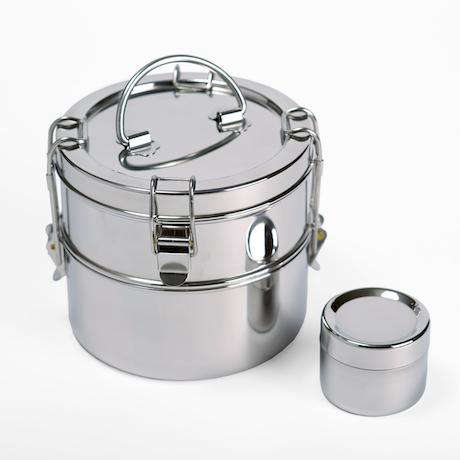

A stainless steel food carrier is the quiet overachiever of the lunch world. It does not flash neon graphics, send notifications, or congratulate you for packing leftovers. It simply carries food, survives daily bumps, resists lingering odors, and usually looks better after years of service than a plastic container looks after one accidental meeting with tomato sauce.
Whether you need a compact lunch box for work, a divided container for school, a stackable tiffin for family meals, or a vacuum-insulated food jar for hot soup, stainless steel offers a durable and practical option. However, not every metal lunch container performs the same way. Steel grade, insulation, lid design, gasket quality, capacity, and cleaning requirements all affect how useful a carrier will be in real life.
This guide explains how stainless steel food carriers work, what makes them appealing, how to choose the right model, and how to use one without turning your lunch bag into a mobile chili disaster.
What Is a Stainless Steel Food Carrier?
A stainless steel food carrier is a reusable container designed to transport meals, snacks, leftovers, or prepared ingredients. Depending on its design, it may be a simple single-layer box, a divided bento-style container, a stackable multi-tier tiffin, or a double-wall vacuum-insulated jar.
Stainless steel itself is an iron-based alloy containing chromium. The chromium helps create a thin protective surface layer that improves resistance to rust and corrosion. Different grades may also contain nickel, molybdenum, manganese, or other elements to produce particular characteristics.
Food carriers commonly use grade 304 stainless steel, sometimes marketed as 18/8 or 18/10 steel. Grade 316 includes molybdenum and generally provides greater resistance to corrosion, especially in environments containing salt or certain acids. Both can be suitable for food-contact products when properly manufactured, finished, and used for their intended purpose.
The U.S. Food and Drug Administration regulates substances that come into contact with food, including materials used in packaging, cookware, and storage containers. A trustworthy carrier should be clearly sold as food-safe rather than described only as “metal,” “rust-resistant,” or another conveniently foggy marketing phrase.
Why Choose a Stainless Steel Food Carrier?
Durability for Everyday Use
Stainless steel is difficult to crack, chip, or shatter during normal use. A steel lunch container may become dented if dropped, but a small dent is often cosmetic rather than fatal. Glass is wonderfully transparent but less enthusiastic about falling onto a concrete parking lot.
This durability makes stainless steel especially useful for commuters, construction workers, students, travelers, campers, delivery drivers, and anyone whose lunch spends part of the day bouncing around inside a backpack.
Resistance to Stains and Odors
A smooth stainless steel interior typically resists food stains and smells better than many plastic surfaces. Curry, garlic, onions, chili, and tomato sauce may still leave residue around a silicone gasket, but the metal body itself is usually straightforward to clean.
This is important for people who frequently rotate between strongly flavored meals. Yesterday’s tuna salad should not be invited to participate in today’s apple slices.
A Reusable Alternative to Disposable Packaging
A well-made reusable food carrier can replace years of disposable bags, takeout boxes, plastic wrap, and single-use utensils. The U.S. Environmental Protection Agency recommends reusable food-service ware as the preferred option when an effective reuse system is maintained. Its environmental advantage depends on using it repeatedly, keeping it for a long time, and washing it efficientlynot buying twelve matching containers and forgetting eleven in a cabinet.
A Smooth, Cleanable Food-Contact Surface
Stainless steel is widely used in commercial kitchens and food-processing equipment because it can be manufactured with smooth, durable surfaces that are relatively easy to clean. NSF food-equipment standards emphasize sanitary design and the cleanability of surfaces that contact food. At home, the same principle applies: fewer cracks, rough seams, and inaccessible corners generally mean fewer places for old food to establish permanent residency.
Lower Weight Than Comparable Glass Containers
Steel carriers are generally lighter than glass containers of a similar size. They are not always lighter than plastic, particularly when heavily insulated, but they can offer a useful middle ground between portability and toughness.
Main Types of Stainless Steel Food Carriers
Single-Layer Lunch Boxes
These are simple stainless steel boxes with one main compartment. They work well for sandwiches, salads, rice dishes, sliced fruit, baked goods, and meals that do not need separate sections.
Single-wall steel does not provide meaningful insulation by itself. It may feel cool or warm when food is added because metal transfers heat efficiently, but it will not safely maintain temperature for hours without an insulated bag, ice packs, or another temperature-control method.
Compartment and Bento-Style Containers
Divided containers keep foods organized and can reduce the need for several small boxes. Fixed compartments are easy to use but may limit portion flexibility. Removable cups offer more options, although they also create more pieces to wash and more lids to mysteriously vanish.
Check whether the dividers are leakproof. Many divided steel lunch boxes prevent solid foods from touching but do not stop yogurt, dressing, or sauce from moving between compartments.
Stackable Tiffin Carriers
A stainless steel tiffin uses two or more stacked tiers held together by clips or a frame. One level might contain rice, another vegetables, and another protein or dessert. This design is convenient for varied meals, family portions, picnics, and cuisines traditionally served as several dishes.
Tiffins are highly reusable and space-efficient, but traditional versions may not be watertight. Soups and thin sauces belong in a genuinely sealed tier unless you enjoy conducting an unplanned leak test on your laptop.
Vacuum-Insulated Food Jars
An insulated food jar has inner and outer steel walls separated by a vacuum layer that slows heat transfer. It is designed for foods such as soup, oatmeal, chili, stew, pasta, or cold fruit and yogurt.
Insulation performance varies considerably. Independent testing of popular models has found meaningful differences in heat retention, leak resistance, ease of opening, cleaning, and odor removal. Capacity also matters: a nearly full jar generally retains temperature more effectively than a large jar containing only a small serving.
Commercial Catering Carriers
Larger stainless steel carriers are used by restaurants, caterers, institutions, and meal-delivery businesses. They may hold several food pans or use insulated outer shells to maintain serving temperatures. Commercial buyers should consider sanitation certifications, handle strength, stacking stability, temperature records, replacement parts, and local health-code requirements.
How to Choose the Best Stainless Steel Food Carrier
Confirm That It Is Intended for Food Contact
Look for clear food-use labeling and information about the steel grade, lid materials, gasket, coatings, and recommended temperatures. Avoid anonymous containers that provide no manufacturer, material specification, care instructions, or contact information.
Terms such as “premium stainless,” “surgical quality,” and “eco metal” may sound impressive while explaining almost nothing. Specific information is more useful than shiny adjectives.
Choose the Right Capacity
A small snack container may hold 8 to 12 fluid ounces, while an individual lunch box often holds approximately 24 to 40 fluid ounces. Larger tiffins and family carriers can hold considerably more.
Consider the food rather than relying on capacity alone. A compact jar may hold plenty of dense chili but not enough leafy salad. Wide containers accommodate sandwiches and cut fruit, while deep containers work better for soup and layered meals.
Examine the Lid and Seal
The lid often determines whether a food carrier becomes a beloved daily tool or an expensive napkin holder. Look for:
- A removable, replaceable silicone gasket
- Strong but manageable locking clips
- A lid that aligns without excessive force
- Few hidden channels where food can collect
- Clear leak-resistant or leakproof claims
- Replacement lids and seals sold separately
“Leak-resistant” does not necessarily mean “safe to turn upside down beside important paperwork.” Test a new carrier at home with water before trusting it with soup.
Decide Whether You Need Insulation
Choose a vacuum-insulated jar when you must maintain a hot or cold meal until lunchtime. Choose a basic steel box when food will be refrigerated at the destination or carried in an insulated bag with sufficient ice packs.
A decorative outer sleeve may protect hands and reduce scratches, but it is not necessarily thermal insulation. Look for double-wall vacuum construction and manufacturer temperature-retention information.
Check the Opening Size
A wide mouth makes filling, eating, and cleaning easier. Narrow jars may retain heat effectively but can be awkward for chunky soup or pasta. The best opening allows an adult hand, bottle brush, or cleaning tool to reach the bottom without an archaeological expedition.
Consider the Entire Product, Not Just the Steel
A stainless steel body may last for decades, while a poorly designed hinge, plastic tab, painted finish, or silicone seal fails much sooner. Evaluate every component. A product is only as reusable as its least replaceable part.
Food Safety When Using a Stainless Steel Carrier
Keep Cold Food at 40°F or Below
Perishable foods such as meat, poultry, seafood, eggs, dairy products, cooked grains, and cut produce should remain at 40°F or colder. Use an insulated lunch bag with cold sources when refrigeration is unavailable. Federal food-safety guidance recommends using two cold sources, such as frozen gel packs and a frozen water bottle, for packed perishable lunches.
Keep Hot Food at 140°F or Above
For hot meals, preheat an insulated food jar with boiling water according to the manufacturer’s instructions. Heat the food thoroughly, empty the preheating water, add the steaming-hot meal, and close the lid immediately.
Do not assume that a jar still feels warm enough to be safe. Thermal performance varies according to the starting temperature, food volume, ambient conditions, time, and container design.
Follow the Two-Hour Rule
Perishable food should not remain in the temperature danger zone for more than two hours, or more than one hour when the surrounding temperature is above 90°F. Refrigerate leftovers promptly in shallow containers, use most cooked leftovers within three to four days, and reheat them to 165°F.
Never Put Stainless Steel in a Microwave
Metal food carriers are not microwave-safe. Transfer the meal to a container specifically labeled for microwave use. Some all-metal containers can be used in conventional ovens, but only when the manufacturer explicitly permits it. Plastic lids, silicone gaskets, decorative coatings, and insulated walls may not be oven-safe.
Use Extra Care With Acidic Foods
Research on stainless steel cookware shows that nickel and chromium release can increase when acidic foods are cooked for long periods, particularly in new cookware, with results varying by alloy and usage conditions. Those studies primarily involve extended cooking rather than ordinary short-term lunch storage, so they should not be treated as proof that a standard food carrier is hazardous.
For most users, reputable food-grade stainless steel remains a practical storage material. Someone with a medically confirmed sensitivity to nickel or specific medical restrictions should discuss material choices with a qualified clinician. Avoid making a diagnosis based on the fact that your lunch box contains the same word as a periodic-table element.
How to Clean and Maintain a Stainless Steel Food Carrier
Wash It Soon After Use
Empty the container, separate removable parts, and wash them with warm water, dish detergent, and a soft sponge or brush. Cleaning immediately prevents dried starch, cheese, sauces, and oils from hardening around seams.
Check whether the body, lid, clips, and gasket are dishwasher-safe. A steel base may tolerate a dishwasher even when the insulated lid or painted exterior does not.
Remove and Clean the Gasket
Silicone seals can trap moisture and food residue. Remove the gasket periodically, wash both the seal and its channel, rinse them well, and allow everything to dry completely before reassembly.
If a seal develops persistent odor, discoloration, cracks, swelling, or looseness, replace it. A damaged gasket can turn “leakproof” into an optimistic historical description.
Avoid Harsh Abrasives and Chlorine Cleaners
Steel wool, metal scrapers, and aggressive abrasive pads can scratch the surface. Chloride-containing cleaners may also damage stainless steel under certain conditions. Use mild products unless the manufacturer recommends a specific cleaning method.
Water spots can usually be reduced by rinsing thoroughly and drying the container with a clean towel. For stubborn residue, soak it in warm soapy water rather than attacking it as though it has personally offended you.
Store It Open
After washing, store the carrier with its lid loosened or removed. Air circulation helps prevent trapped odors and moisture. This is particularly important for vacuum-insulated jars with deep interiors.
Best Foods to Pack in Stainless Steel Containers
A basic stainless steel lunch box is excellent for sandwiches, wraps, crackers, nuts, cheese, sliced vegetables, fruit, sushi, rice, roasted vegetables, baked goods, and relatively dry entrées.
Use sealed cups for dressing, salsa, yogurt, hummus, or juicy fruit. A leakproof insulated jar is better for soup, curry, oatmeal, chili, macaroni and cheese, stew, and saucy pasta.
To preserve texture, separate crisp and wet components until serving. Keep croutons away from soup, granola away from yogurt, and tortillas away from juicy fillings. Food does not understand personal boundaries, so the container must enforce them.
Common Mistakes to Avoid
- Assuming every stainless steel container is insulated
- Buying a carrier without checking its usable capacity
- Trusting an untested lid with soup
- Microwaving the metal container
- Packing warm perishable food without temperature control
- Leaving the silicone gasket in place during every cleaning
- Using steel wool or harsh chlorine-based cleaners
- Closing and storing the container while it is still damp
- Ignoring damaged seams, corrosion, or a loose seal
- Choosing a complicated design that is annoying to wash daily
Frequently Asked Questions
Is a stainless steel food carrier safe?
A properly manufactured carrier intended for food contact is generally a practical choice for storing and transporting meals. Purchase from a reputable manufacturer, follow its temperature and cleaning instructions, and replace components that become damaged.
Can stainless steel keep food hot?
Only an insulated design is intended to maintain temperature for an extended period. A basic single-wall box transfers heat quickly and should not be treated as a thermos.
Can I put a steel food carrier in the refrigerator?
Most non-electric stainless steel containers can be refrigerated, but manufacturer instructions should always be checked. For rapid cooling, USDA guidance recommends placing leftovers in shallow containers rather than packing a large volume of hot food into one deep vessel.
Can it go in the freezer?
Some steel containers are freezer-safe, but lids and gaskets may have separate limitations. Leave expansion space when freezing liquids and avoid overfilling. Do not freeze a vacuum-insulated carrier unless its manufacturer specifically approves that use.
Is stainless steel better than glass or plastic?
No material wins every category. Steel is durable, relatively light, opaque, and resistant to odors. Glass lets you see the food and is microwave-friendly when labeled accordingly, but it is heavier and breakable. Plastic is lightweight and inexpensive, but it may stain, retain odors, scratch, or wear faster. The best choice depends on how the container will be transported, heated, cleaned, and stored.
Conclusion: Real-World Experiences With a Stainless Steel Food Carrier
The most noticeable change after switching to a stainless steel food carrier is not dramatic. There are no trumpets. Lunch does not suddenly become a lifestyle brand. Instead, several small annoyances begin disappearing.
The carrier feels sturdy in a bag. It does not flex when filled with a dense meal, and the base does not become permanently orange after one serving of tomato-based pasta. After lunch, the interior usually washes clean without a long negotiation involving baking soda, sunlight, and emotional support.
A basic rectangular carrier works especially well for sandwiches, grilled chicken, roasted vegetables, rice, fruit, and snack combinations. Its low profile fits neatly into a backpack, and the wide opening makes it easy to eat directly from the container. The tradeoff is that a single-wall box follows the temperature of its surroundings. Put chilled food in it, and it becomes cold to the touch. Put hot food in it, and it becomes a small hand warmer while allowing the meal to cool. An insulated bag and ice packs are therefore essential for perishable cold lunches.
A vacuum-insulated food jar creates a different experience. Preheating the jar before adding hot soup or chili makes a visible difference. The container feels cool outside while the food remains hot inside, which still seems mildly suspicious the first few times it happens. A wide-mouth jar is easier to fill and clean, while a narrow one tends to collect one last spoonful at the bottom that no normal utensil can reach.
Stackable tiffins are excellent when a meal includes several components. Rice can occupy one tier, vegetables another, and protein a third. At lunchtime, opening the stack feels more satisfying than uncovering one mixed pile of food. However, traditional tiffin designs are frequently better at organizing food than containing liquids. Thick curry may travel successfully, while thin broth may begin exploring the surrounding bag before noon.
The silicone seal deserves more attention than it receives. In regular use, the steel body may remain almost odorless while the gasket quietly collects traces of garlic, dressing, or curry. Removing and washing the seal every few uses solves most problems. Letting the components dry separately also prevents the closed container from producing the mysterious “cupboard smell” that appears when clean-looking items are stored damp.
Size is another lesson learned through experience. A container advertised with an impressive volume may still be unsuitable for a sandwich because it is too deep and narrow. A divided box may seem organized until the largest compartment turns out to be slightly smaller than the food you pack every day. Measuring a typical lunch before buying is less glamorous than impulse shopping, but it prevents owning an elegant steel box that fits exactly three strawberries and a disappointed cracker.
Over time, small scratches and dents may appear. They are usually signs of use rather than failure. A brushed finish tends to disguise wear better than a mirror finish, which displays every fingerprint like a tiny museum exhibit. Painted exteriors can look attractive, although plain steel may age more gracefully when carried daily.
The greatest advantage is longevity. A good stainless steel food carrier becomes part of a routine rather than a disposable accessory. It moves from refrigerator to office, school, park, road trip, or picnic and returns ready for another meal. Replacement seals and lids extend its useful life, while a simple design reduces the chance that one fragile piece will ruin the entire product.
For most people, the best stainless steel food carrier is not the model with the longest feature list. It is the one that matches the meal, fits the bag, controls temperature appropriately, opens without a wrestling match, and can be cleaned quickly on a busy evening. Choose those qualities well, and the carrier may outlast several lunch bags, a few jobs, and at least one solemn promise to stop buying takeout.
Note: Food-contact safety, temperature performance, dishwasher compatibility, oven use, freezer use, and leak resistance vary by product. Always follow the carrier manufacturer’s instructions and current federal food-safety guidance.


