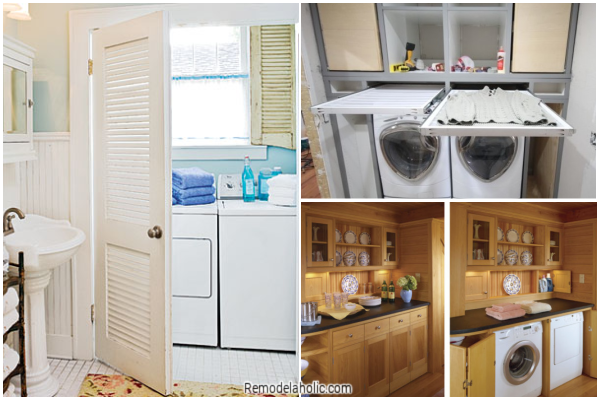

A small laundry room can feel like a practical joke designed by someone who has never carried a basket of damp towels. The door bumps the hamper, detergent bottles crowd the washer, and the only available folding surface is apparently “the rest of the house.” Fortunately, limited square footage does not have to produce limited function.
The best small laundry room ideas do more than make the room look attractive. They improve movement, place frequently used supplies within reach, provide space for sorting and folding, and make the appliances easier to maintain. Whether your laundry area occupies a narrow room, a hallway closet, a bathroom corner, or one wall of a mudroom, a thoughtful layout can make every inch work harder.
Before ordering baskets that match your wallpaper perfectly, begin with the unglamorous essentials: appliance dimensions, door clearance, plumbing, electrical connections, ventilation, and access for repairs. A beautiful shelf is not especially useful when a technician has to remove it with a crowbar.
Plan the Small Laundry Room Layout First
Measure the room in several places because walls, floors, and ceilings are not always as straight as they appear. Record the width, depth, and ceiling height, then note the locations of outlets, water valves, drains, dryer vents, doors, windows, and baseboards.
Next, compare those measurements with the installation specifications for the exact washer and dryer models you plan to use. Include space for hoses, cords, ventilation, appliance doors, and service access. Do not assume that every “standard-size” machine has identical dimensions. Manufacturers may require different clearances, and stacked appliances should be installed only when the models are designed to work together with the appropriate stacking hardware.
Choose a Layout That Matches Your Space
A one-wall laundry layout works well in narrow rooms. Place the washer and dryer side by side, add a countertop above front-loading machines, and use the wall for cabinets, shelves, or a hanging rail.
A stacked layout uses vertical space and leaves room beside the appliances for a utility sink, tall cabinet, sorting hamper, or pull-out storage cart. It is especially useful in closets and compact bathrooms.
A galley layout places appliances on one wall and shallow storage on the opposite wall. Keep the walkway open and avoid deep cabinets that turn laundry day into a sideways shuffle.
A laundry-and-mudroom combination can include hooks, shoe storage, a bench, and divided hampers. The key is assigning each function a defined zone so sports equipment does not migrate onto the folding counter and establish permanent residency.
1. Use Vertical Space from Floor to Ceiling
When floor space is scarce, look up. The wall above the washer and dryer can hold upper cabinets, open shelving, a drying rail, or a combination of all three.
Store daily supplies between waist and eye level. Reserve higher shelves for extra paper products, seasonal linens, rarely used cleaners, and bulk refills. A slim folding step stool can make tall storage accessible without occupying much room.
Floor-to-ceiling cabinetry can also make a small laundry room look more intentional. Instead of scattering several unrelated organizers around the room, one continuous cabinet system creates a calmer visual line and provides significantly more storage.
2. Stack the Washer and Dryer
Stacking the appliances can free nearly half of the original floor area. That newly available space might accommodate a narrow utility sink, a cabinet for brooms and cleaning tools, or a vertical bank of pull-out hampers.
Controls should remain reachable for everyone who uses the machines. Check the height of the dryer panel before purchasing a set, particularly for shorter household members. Also confirm whether the dryer door can be reversed; changing the swing direction can prevent it from blocking a wall or doorway.
Never place one appliance on another simply because they appear to fit. Use compatible models and the manufacturer-approved stacking kit.
3. Add a Countertop Above Front-Loading Machines
A counter spanning the washer and dryer instantly creates a sorting, stain-treating, and folding station. It also prevents socks, coins, and other small objects from dropping into the mysterious canyon between the appliances.
Butcher block brings warmth to a utility space, while laminate offers a budget-friendly, easy-to-clean surface. Quartz and solid-surface materials are durable but may require professional fabrication. Whatever material you choose, make sure the counter does not interfere with ventilation, water connections, or appliance removal.
For renters, a removable appliance-top shelf may provide similar function without permanent construction.
4. Install a Fold-Down Work Surface
If the machines are stacked or the room is too narrow for a fixed counter, mount a fold-down table on an empty wall. It can serve as a folding station when open and disappear when the laundry is finished.
Use sturdy wall anchors or attach the hardware directly to wall studs. A shallow fold-down surface can also work as a compact ironing station, provided the material is suitable for heat and moisture.
5. Mix Closed Cabinets with Open Shelves
Open shelves keep detergent, stain remover, and dryer supplies easy to reach. Closed cabinets conceal bulk packages, cleaning products, lightbulbs, pet supplies, and the collection of miscellaneous objects that every laundry room somehow adopts.
A practical arrangement is one open shelf for everyday products with cabinets above it for less attractive supplies. This provides convenience without forcing you to maintain a showroom-perfect display of detergent bottles.
Adjustable shelves are particularly useful because storage needs change. A shelf arranged for short bottles today may need to accommodate a tall refill container tomorrow. Small-space design guidance consistently emphasizes vertical shelving, overhead cabinetry, narrow storage, and work surfaces above appliances.
6. Slide a Rolling Cart into a Narrow Gap
The few inches beside a washer may appear useless, but a slim rolling cart can hold stain treatments, dryer balls, clothespins, cleaning cloths, and small bottles. Because the cart pulls out, items at the back remain accessible.
Measure the gap at the top, middle, and floor before buying a cart. Hoses, baseboards, and uneven walls can reduce the usable width. Choose wheels that roll smoothly and include a stop or handle so the cart does not vanish behind the dryer.
7. Turn the Door into Storage
The back of the laundry room door is valuable real estate. Add an over-the-door organizer for brushes, cleaning cloths, lint rollers, garment bags, and other lightweight supplies.
A mounted rack can hold an ironing board, while hooks can support reusable shopping bags or an empty laundry basket. Avoid storing heavy liquids in a flimsy fabric organizer, and confirm that the added storage does not prevent the door from opening fully.
In an extremely tight room, consider replacing a swinging door with a pocket door, sliding door, bifold door, or curtain where building conditions allow. Recovering the door-swing area can dramatically improve movement.
8. Add a Wall-Mounted Drying Rack
A retractable or fold-down drying rack provides space for sweaters, workout clothes, and delicate garments without permanently occupying the floor. Mount it above a sink, counter, or waterproof surface so dripping clothes do not damage flooring.
A short hanging rod beneath a cabinet is another efficient option. Use it for air-drying shirts or hanging garments immediately after the dryer cycle to reduce wrinkles. In a laundry closet, a tension rod can work for light items if it is securely positioned.
9. Create a Built-In Sorting System
Sorting laundry before wash day eliminates the dramatic floor pile that appears five minutes before guests arrive. Use two or three labeled hampers for categories that match your routine, such as lights, darks, towels, delicates, or household linens.
Pull-out hamper drawers offer a streamlined appearance. Rolling canvas sorters are less expensive and easier to move. For families, assign each person a basket or cubby so clean clothing can leave the laundry room without requiring one heroic individual to deliver everything.
10. Use Shallow Storage in Narrow Rooms
Full-depth cabinets can overwhelm a narrow laundry area. Shallow cabinets, picture ledges, spice-rack-style shelves, and wall rails can store smaller supplies without reducing the walkway.
A pegboard is another flexible solution. Hooks and small baskets can be rearranged as needed to hold brushes, scissors, mesh washing bags, sewing supplies, and missing-sock containers. Apparently, socks require their own witness protection program.
11. Convert a Closet into a Laundry Station
A hallway, bathroom, or kitchen-adjacent closet can become a functional laundry area when proper plumbing, electrical service, drainage, ventilation, and structural support are available.
Stacked appliances usually leave room for shelving on one side or above the machines. Louvered doors or another approved ventilation solution may be required depending on the appliance and installation. Keep shutoff valves accessible rather than sealing them behind decorative paneling.
Before converting a closet, consult qualified professionals and review local building requirements. Locating the laundry area near existing plumbing may simplify a renovation, but water management, venting, noise, and vibration still require careful planning.
12. Include a Small Utility Sink When Possible
A compact utility sink is useful for hand-washing garments, soaking stained items, rinsing muddy shoes, filling cleaning buckets, and handling jobs you would rather keep away from the kitchen sink.
Choose a narrow sink cabinet, wall-mounted basin, or deep sink with a fitted cover that doubles as counter space. A high-arc or pull-down faucet makes it easier to rinse large items. If a sink would eliminate essential storage or block appliance access, a portable soaking basin may be the more practical choice.
13. Improve the Lighting
Small laundry rooms are often windowless, which makes stains harder to see and matched socks surprisingly difficult to identify. Bright, even lighting improves both function and appearance.
Use a ceiling fixture for overall illumination and add under-cabinet lighting above the counter. High-quality LED fixtures produce useful light while adding little heat. Avoid relying on one dim bulb behind your head, unless shadow puppetry is part of your laundry routine.
A mirror, glossy backsplash, or light-colored surface can reflect illumination, but the room does not have to be entirely white. Good lighting allows you to use richer cabinet colors without making the space feel like a cave.
14. Use Color and Pattern Strategically
Because a laundry room is small, it is an excellent place to try a bold paint color, patterned tile, or lively wallpaper. A design that might feel overwhelming across an entire living room can become charming in a compact utility space.
For a visually larger room, keep the main surfaces coordinated and reduce abrupt color changes. Painting cabinets and walls in similar tones can create a more continuous appearance. Vertical wall paneling or a tall wallpaper pattern may draw the eye upward.
Durability still matters. Choose finishes that tolerate moisture and regular cleaning, especially near sinks and appliances. Current design guidance also favors combining attractive finishes with practical cabinetry, shelving, baskets, and clutter control rather than treating the room as decoration alone.
15. Keep the Floor Clear
A clear floor makes a small laundry room feel larger and reduces tripping hazards. Wall-mount whatever can reasonably leave the floor, including drying racks, ironing boards, shelves, hooks, and cleaning-tool holders.
Choose hampers that fit beneath a counter or roll into a designated bay. Store the vacuum, mop, and broom vertically inside a narrow cabinet rather than leaning them in the corner, where they will fall over whenever someone looks at them sternly.
Small Laundry Room Safety Ideas
Keep Dryer Ventilation Accessible
Do not push a dryer so tightly against the wall that the vent becomes crushed or restricted. Clean the lint filter regularly, inspect the area behind the dryer, and make sure the exterior vent opens during operation. The U.S. Fire Administration advises professional dryer installation and emphasizes keeping lint filters and venting systems clean and unobstructed.
Plan for Water Leaks
Keep water shutoff valves visible and reachable. Depending on the location and local requirements, protective measures may include a washer pan, water-resistant flooring, a floor drain, leak sensors, or an automatic shutoff device. Upper-floor laundry spaces deserve particular attention because a small leak can damage rooms below.
Store Laundry Products Safely
Decorative jars may look tidy, but concentrated liquid laundry packets should remain in their original closed packaging and be stored out of a child’s sight and reach. Cleaning products should not be transferred into drink bottles, food containers, or unlabeled dispensers.
Consider Ventless Technology Carefully
Heat-pump and other ventless dryers may be useful where conventional exterior venting is difficult. Heat-pump models remove moisture through a condenser rather than releasing humid air through a traditional dryer vent. Compare cycle times, capacity, electrical requirements, drainage arrangements, and maintenance needs before choosing one.
Budget-Friendly Small Laundry Room Makeover Plan
Under $100
Declutter the room, patch the walls, add labels, install several sturdy hooks, and purchase matching bins for open shelves. A fresh coat of paint can make the room feel cleaner and brighter without changing the layout.
Between $100 and $500
Add floating shelves, a narrow rolling cart, a wall-mounted drying rack, improved lighting, and a removable folding surface. Replace worn cabinet hardware and use a washable runner to add comfort and pattern.
Between $500 and $2,000
Install stock cabinets, a permanent countertop, a backsplash, better flooring, or a compact utility sink. Costs vary widely according to materials and whether plumbing or electrical work is required.
Major Renovation
A larger investment may involve moving hookups, stacking new appliances, waterproofing the floor, adding a drain, improving ventilation, or converting a closet. Spend first on safe installation and dependable infrastructure. Decorative tile is easier to enjoy when water is not dripping through the ceiling below.
Experience-Based Lessons from Small Laundry Rooms
Living with a compact laundry area quickly reveals the difference between storage that merely exists and storage that actually helps. A shelf mounted near the ceiling may look efficient in a photograph, but it becomes frustrating when the detergent used every day requires a step stool. The most successful arrangement places frequently used products within comfortable reach and sends bulk refills, seasonal items, and rarely used supplies higher up.
Another common lesson is that a folding surface matters more than expected. Without one, clean clothing travels to a bed, sofa, or dining table, where it competes with sleeping, sitting, homework, and dinner. Even a narrow counter or fold-down shelf can keep the entire laundry process in one place. It does not need to hold a mountain of clothing; it only needs enough room to fold one item at a time and place it into the correct basket.
Small laundry rooms also expose weak routines. When every load produces a pile of unmatched socks, empty pockets, loose buttons, and clothes needing repair, those objects need assigned destinations. A small divided container can hold pocket finds, sewing repairs, and lonely socks. Without designated storage, these items spread across the counter until the workspace becomes a museum of unfinished decisions.
Open shelving provides a similar reality check. It is convenient, affordable, and attractive when carefully arranged. It is less charming when crowded with six half-empty detergent bottles, a burned-out lightbulb, pet shampoo, and a package nobody remembers buying. In everyday use, a combination of one accessible shelf and one closed cabinet is often easier to maintain than a wall of completely open storage.
Movement is another factor that drawings do not always capture. A layout can technically fit while still feeling awkward once appliance doors, cabinet doors, hampers, and people are added. Before installing permanent cabinetry, mark the proposed dimensions on the floor and walls with painter’s tape. Open the washer door, pretend to carry a basket, and walk through each step of the routine. This simple rehearsal can reveal whether a cabinet handle catches clothing or a hamper blocks the exit.
Finally, the most useful small laundry room is not necessarily the one with the most features. A sink is valuable only when it leaves enough room to work. Three sorting hampers are helpful only when the household uses those categories. A decorative ladder is not storage if nobody can reach it safely. Successful design begins with the actual laundry routine: where dirty clothes arrive, how they are sorted, where wet garments dry, where clean items are folded, and how they leave the room.
Once that workflow is clear, the room becomes easier to design. Every shelf, hook, basket, and cabinet receives a purpose. The result may still be small, but it will no longer feel accidental. And while an organized room cannot make laundry disappear, it can prevent one missing sock from turning the entire afternoon into a personal crisis.
Conclusion
The smartest small laundry room ideas focus on function before decoration. Measure carefully, use vertical storage, create a dedicated folding surface, keep the floor open, and choose organizers that support your real routine. Stackable appliances, shallow cabinets, pull-out carts, fold-down racks, and door-mounted storage can turn an awkward corner into an efficient laundry station.
Style still deserves a place. Thoughtful lighting, coordinated finishes, attractive hardware, and a bold wall treatment can make the room feel like part of the home rather than a forgotten appliance closet. Just remember that safe ventilation, water protection, accessible connections, and secure product storage are more important than any photograph-ready detergent display.
Editorial note: This article synthesizes practical guidance and design principles from U.S. home-improvement publications, appliance manufacturers, consumer organizations, and federal safety resources, including HGTV, Better Homes & Gardens, Architectural Digest, Martha Stewart, House Beautiful, Good Housekeeping, This Old House, Consumer Reports, The Home Depot, Lowe’s, Whirlpool, Maytag, ENERGY STAR, the U.S. Fire Administration, and the U.S. Consumer Product Safety Commission.


