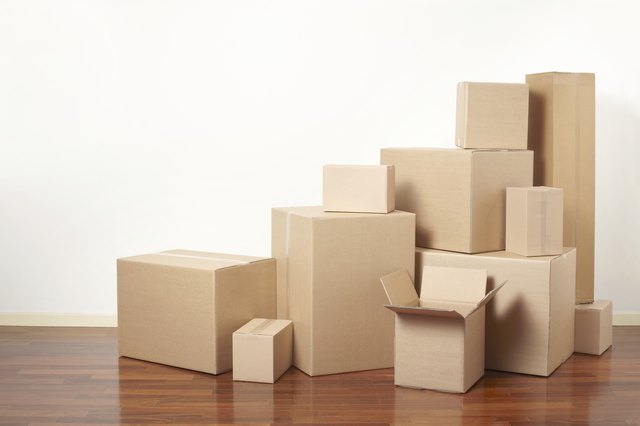

Cardboard is the undercover hero of modern life. It keeps your online orders from arriving as “modern art,” turns cereal into breakfast instead of confetti, and somehow survives being reused as a moving box even after it’s been folded, taped, untaped, and judged by your cat.
But “cardboard” isn’t one single material. It’s a whole family of paper-based structures with different strengths, surfaces, and survival skills. Understanding the properties of cardboard helps you choose the right board for shipping, product packaging, retail displays, crafts, and storagewithout paying for performance you don’t need (or accidentally buying a box that collapses if someone looks at it sternly).
What “Cardboard” Actually Means
In everyday conversation, people use “cardboard” as a catch-all term. In packaging and materials science, it usually refers to two main categories: paperboard (solid board) and corrugated fiberboard (the classic shipping-box sandwich).
Paperboard (Solid Board)
Paperboard is a thick, stiff paper-based sheet without flutes. Think: cereal boxes, shoe boxes, cosmetic cartons, greeting cards, notebook covers, and many retail packages. Paperboard is valued for:
- Printability (smooth surfaces can take high-quality graphics)
- Foldability (creases cleanly for cartons and sleeves)
- Stiffness-to-weight (rigid enough for structure without being heavy)
Corrugated Fiberboard (Fluted Board)
Corrugated fiberboard is made by bonding a wavy inner layer (the fluting) between flat liner sheets. That fluted middle acts like a tiny series of arches/columns, which is why a corrugated box can be lightweight yet surprisingly strong. Corrugated is used for:
- Shipping boxes and mailers
- Produce and food distribution cases
- Retail-ready packaging and point-of-sale displays
- Protective pads, partitions, and corner guards
The Structure That Creates the Properties
Cardboard’s performance comes from a mix of fiber, geometry, and bonding.
Fiber Composition: Virgin vs. Recycled Content
Cardboard is primarily made from wood fiber. Depending on the application, manufacturers use different blends of virgin fiber (often for strength, stiffness, and consistent performance) and recycled fiber (often for sustainability and cost). Many containerboard producers offer multiple grades of linerboard and corrugating medium engineered for specific performance needs.
Basis Weight and Caliper: “How Much Stuff” and “How Thick”
Two common material concepts show up in specs:
- Basis weight: how much the paper weighs per unit area (a proxy for material content).
- Caliper: thickness of the sheet or combined board.
Heavier and thicker often (not always) increase stiffness and strength, but structure matters so much that a smart flute and grade choice can outperform “just make it thicker” approacheswhile using less material.
Adhesives: The Quiet MVP
The liners and flutes are typically bonded with starch-based adhesives. Strong, consistent bonding is crucial: weak bonds can cause delamination, crushing, or “mysterious box failure” that looks like bad luck but is really physics and glue having an argument.
Mechanical Properties: How Cardboard Handles Force
If cardboard had a résumé, this would be the skills section. Mechanical properties determine whether a box survives stacking, shipping impacts, automated conveyors, and that one corner of your garage where gravity goes to misbehave.
Compression Strength and Stacking Performance
For shipping boxes, the most critical property is often compression strengththe ability to resist being crushed from top to bottom. This directly affects stacking in warehouses and pallets in transit. Compression performance is commonly evaluated with lab tests and standards for shipping containers.
A key point: a box can fail from stacking load even if no one drops it. If your distribution reality is “pallets stacked high,” you care about compression. If your reality is “rough handling and punctures,” you care about other properties too.
Edge Crush Test (ECT): Strength Along the Edge
ECT measures the edgewise compressive strength of corrugated board. In plain English: it tells you how strong those flutes are when the board is squeezed on its edge, which correlates strongly with stacking strength. ECT values are commonly reported as a number like “32 ECT.”
Why it matters: ECT is performance-focused. It helps manufacturers and shippers select lighter-weight corrugated materials that still meet stacking demandsoften reducing material use while maintaining protection.
Mullen (Burst) Strength: Resistance to Rupture
Burst strength (often called the Mullen test) measures how much force it takes to rupture the face of corrugated board. This is useful when packages face puncture risk or rough handling. Burst ratings are commonly expressed in pounds (for example, a “200#” burst rating).
In many real-world scenarios, neither ECT nor burst alone tells the whole story. ECT is a strong predictor for stacking and compression; burst relates more to puncture/rupture resistance. The right choice depends on what “failure” looks like in your supply chain.
Bending Stiffness: The “Sag Test” You Do Without Knowing It
Stiffness affects how cardboard behaves as a paneldoes it bow when lifted, sag under product weight, or stay square? Stiffness matters for:
- Retail displays that must stay upright and sharp-looking
- Large boxes that need sidewall rigidity
- Mailers that must resist bending in parcel systems
Flat Crush and Cushioning
Corrugated flutes don’t just add strengththey add cushioning. The fluted layer can absorb shock and distribute loads. Flat crush resistance reflects how well the flutes resist being squashed flat (which can reduce protective performance fast).
Tear, Puncture, and Abrasion Resistance
These are the “handling reality” properties:
- Tear resistance: helps prevent rips when straps, edges, or fast movements stress the board.
- Puncture resistance: important for sharp products, corner impacts, and rough conveyor events.
- Abrasion resistance: affects scuffing, especially for printed surfaces and retail presentation.
Geometry Matters: Flutes, Walls, and Direction
Two pieces of cardboard with the same “thickness” can behave completely differently if their internal geometry differs. Corrugated’s secret weapon is flute design.
Flute Profiles (A, B, C, E…)
Flutes vary in height and count. Generally speaking:
- Larger flutes tend to provide more cushioning and thickness.
- Smaller flutes tend to offer better print surfaces and can be great for retail packaging and mailers.
The flute is the wavy medium between linerboards, and it reinforces the boardmaking it more rigid and resistant to crushing compared with a flat sheet of the same weight.
Single-Wall, Double-Wall, Triple-Wall
Corrugated can be built in layers:
- Single-wall: one fluted medium + two liners (common for typical shipping boxes).
- Double-wall: two fluted mediums + three liners (higher stacking strength, heavier loads).
- Triple-wall: three fluted mediums + four liners (industrial-grade protection).
Directionality: Machine Direction vs. Cross Direction
Paper fibers align during manufacturing, and corrugated has flute direction. This means cardboard properties can vary by directionlike wood grain, but flatter and more likely to arrive in bulk.
Practical takeaway: box designers pay attention to orientation so that the strongest direction supports the main load.
Environmental Properties: Moisture Is the Final Boss
Cardboard is strong, but it’s also a paper-based materialso moisture and humidity can reduce performance. That’s not a flaw so much as a reminder that water is extremely persuasive.
Humidity and Strength Loss
As relative humidity rises, paper fibers absorb moisture and mechanical strength (especially compression strength) can decrease. This is why boxes that are fine in a dry warehouse can struggle in humid environments or cold-chain distribution with condensation. Many packaging engineers build safety factors into stacking calculations to account for environmental conditions and time under load.
Creep: Strength Changes Over Time Under Load
Even without dramatic humidity changes, corrugated boxes can lose effective stacking strength over time when supporting a constant load (think weeks of warehousing). That’s why test results from a quick lab compression can differ from long-term real-life stacking.
Coatings and Treatments
To improve moisture resistance or add functionality, cardboard can be treated with coatings or laminations (for water resistance, grease resistance, or enhanced print performance). The trade-off is that some treatments can change recyclability, repulping behavior, or costso it’s a balancing act, not a “free upgrade.”
Surface and Functional Properties
Cardboard isn’t just about brute strength. It also needs to communicate, protect, and behave nicely in production.
Printability and Graphics
For retail packaging, the surface is everything. Smooth paperboard and top-coated linerboards can support high-resolution printing and vibrant colors. Corrugated can also be printed with strong visual results, but the flute structure and liner choice influence how sharp graphics appearespecially on thinner or more textured liners.
Convertibility: Cutting, Folding, Scoring, and Gluing
A material can be strong and still be a nightmare to convert. Good cardboard design considers:
- Score quality (creases that fold cleanly without cracking)
- Die-cut precision (for tabs, windows, and complex shapes)
- Glue and tape performance (closing systems that hold through shipping conditions)
Thermal and Acoustic Insulation (Yes, a Little)
Corrugated’s trapped air pockets provide modest insulation. It’s not a cooler replacement, but it can help buffer short temperature swings and reduce direct heat transfer compared with a thin plastic film. This is one reason corrugated is common in food distribution and protective packaging.
Barrier Properties: The “Keep Stuff Out” Feature Set
Basic cardboard is breathable and porous compared with plastics or foils. That can be good (ventilation for produce) or bad (moisture sensitivity). Barrier properties can be enhanced with coatings and laminations for:
- Water resistance (reducing wicking and surface wetting)
- Grease resistance (food packaging applications)
- Water vapor control (helpful for certain storage/shipping needs)
Again: improved barrier often means trade-offs in recyclability, cost, or downstream processing.
Sustainability Properties: Why Cardboard Gets the “Good Reputation”
Cardboard’s sustainability profile is one of its biggest strengths. It’s made from renewable fiber, widely collected, and commonly recycled into new paper products.
Recycling Rates and Recovery
U.S. recycling data and industry reporting show strong recovery for corrugated boxes, though the exact percentage depends on the year and methodology used. Government waste-and-recycling data has reported very high recycling rates for corrugated boxes in certain years, and industry organizations also publish annual estimates for paper and cardboard recovery.
Recycled Content and Fiber Life
Cardboard often contains recycled fiber, and those fibers can be recycled multiple times before they become too short to bond effectively. That multi-cycle life is part of why paper-based packaging is often described as a “circular” material stream when collection systems work well.
Lightweight Strength (Less Material, Same Job)
Performance-based specs like ECT can enable lighter-weight board choices that still meet stacking requirements. Using less material can reduce shipping weight and resource useassuming the package still survives distribution without increased damage (the ultimate sustainability fail).
How to Choose the Right Cardboard for the Job
Picking cardboard is less about “strongest” and more about “strong enough in the ways that matter.” Here’s a practical selection checklist.
1) Define the Primary Risk
- Stacking and warehousing: prioritize ECT and box compression performance.
- Rough handling and puncture risk: consider burst strength and puncture resistance.
- Retail appearance: prioritize print surface and stiffness.
- Moisture exposure: consider coatings, board grades, and safety factors.
2) Match the Structure to the Load
If you’re shipping lightweight goods, an overbuilt double-wall box might be money (and fiber) tossed into the wind. If you’re shipping dense items like books, small electronics, or metal parts, underbuilding can cause crushing, returns, and unhappy customers who now “review” your packaging choices with passion.
3) Consider the Real Distribution Environment
Will boxes sit in a humid warehouse? Travel through cold-chain conditions? Get shipped parcel (high drops) or LTL freight (stacking and vibration)? The best cardboard spec is the one that matches realitynot the one that looks impressive on a purchase order.
Common Myths (Politely Debunked)
Myth: “Thicker is always stronger.”
Thickness helps, but board grade, flute design, and bonding can matter just as much. Two boards of similar thickness can have very different stacking strength.
Myth: “All cardboard boxes are basically the same.”
The difference between “box” and “box that survives” is often hidden in ECT ratings, liner grades, flute profiles, and how the package is designed for load paths, closures, and humidity exposure.
Conclusion: Cardboard Is Engineered Simplicity
The best way to describe cardboard is “simple on the outside, surprisingly technical on the inside.” Its properties come from fiber choices, structural geometry, and performance testingresulting in a material that’s lightweight, versatile, printable, and widely recyclable.
When you understand the key propertiescompression strength, ECT and burst performance, stiffness, moisture behavior, and surface characteristicsyou can choose or design cardboard packaging that protects products, reduces waste, and keeps costs under control. In other words: cardboard can be humble and brilliant. Like a really good mechanic who doesn’t brag.
Real-World Experiences With Cardboard (The Stuff Specs Don’t Always Tell You)
If you’ve ever done a move, built a school project, or received an online delivery that looked like it survived a small tornado, you already have a personal relationship with cardboardeven if you’ve never said “hello” out loud. Real-world experiences tend to highlight a few lessons that don’t always show up clearly on a spec sheet.
First: cardboard teaches you humility about weight. People often assume a “small box” is safer for heavy items, and that’s usually trueuntil someone packs it with books. Dense products don’t just increase total load; they concentrate stress on hand holes, corners, and bottom seams. In practice, the failure isn’t always a dramatic collapse. It’s a slow sag at the base, tape stretching, and corners quietly rounding offlike the box is melting from social anxiety. That’s compression and creep doing their thing. The fix is rarely “more tape.” It’s choosing a board grade and structure that matches the weight and stacking reality.
Second: humidity is the sneaky villain. Warehouses, garages, basements, and covered porches all create their own microclimates. People notice that boxes stored in damp areas feel softer, lose crisp edges, and suddenly don’t stack nicely. In produce or cold-chain shipping, condensation can turn a strong-looking case into something that behaves like wet cereal. That’s why many shippers build in safety margins and why coatings or moisture-resistant grades are chosen carefullyespecially when failure means a pallet “leans” and nobody wants to be near it.
Third: structure matters more than you expect. In craft projects, students often discover that corrugated board is strong in one direction and less strong in another. A bridge model might hold perfectly when the flutes run along the spanbut buckle when the flutes are rotated. That’s a real, hands-on lesson in directionality. In packaging, the same concept shows up in panel orientation, score placement, and how loads travel through corners. The best boxes don’t just use stronger board; they use smarter geometry.
Fourth: print and appearance are functional, not just pretty. Anyone who has managed retail displays learns that scuffs and crushed corners aren’t only cosmetic. A display that looks tired can signal “damaged goods,” even when the product is fine. That’s why stiffness, abrasion resistance, and liner choice can matter as much as raw strength. A slightly better surface can reduce rejects, keep branding sharp, and improve customer perceptionwithout necessarily changing the ECT rating at all.
Finally: cardboard is a teamwork material. The board, the box design, the closure method, and the distribution environment all work together. A strong board with a weak closure is like a great door with a bad lock. A perfect lab-tested box can fail if it’s overfilled, stacked wrong, or exposed to moisture for longer than expected. In real life, success usually comes from matching the cardboard properties to the jobthen respecting those properties during packing, stacking, and handling. Cardboard will do a lot for you, but it does appreciate being treated like the engineered material it is.


