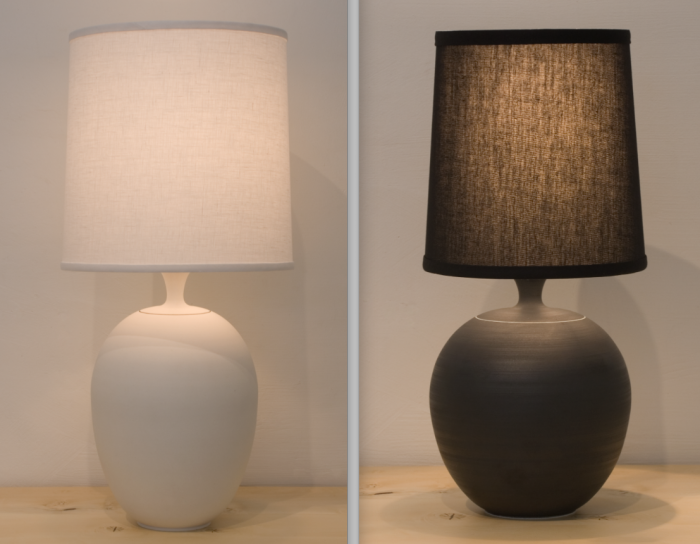

Some lamps shout. Some lamps pose. Some lamps look as if they were designed mainly to impress a coffee-table book photographer who owns only black turtlenecks. Then there are perfect lamps from a master potter: quiet, balanced, handmade ceramic lamps that do not beg for attention because they already know they are the most interesting object in the room.
The phrase “master potter” sounds almost mythic, as if someone in an apron has spent forty years negotiating with clay, fire, gravity, and one very moody kiln. In the case of handmade porcelain lighting, that image is not far off. A ceramic lamp is not simply a lamp base with a bulb stuck on top. At its best, it is sculpture, utility, proportion, atmosphere, and craft discipline all living together under one shade.
This is why the work of potters such as Jeff Nimeh feels so compelling. His porcelain lamps are often discussed for their purity of form, wheel-thrown construction, monochromatic restraint, and ability to make light feel almost architectural. They are not decorative afterthoughts. They are vessels for illumination, shaped by hand and refined through years of practice.
Why Ceramic Lamps Feel Different
A ceramic lamp has a different emotional temperature from a metal, plastic, or glass lamp. Metal can feel precise and engineered. Glass can feel fragile or glamorous. Plastic often feels like it is trying its best, bless its heart. Ceramic, however, carries the trace of the hand. Even when the silhouette is perfectly symmetrical, the surface has a human softness that mass production rarely captures.
Porcelain is especially suited to elegant lighting because it combines strength, delicacy, and visual calm. Traditionally, porcelain is valued for its fine grain, hardness, pale color, and sometimes translucent quality. When fired at high temperatures, it becomes dense and durable, but it can still appear visually light. That paradoxstrong but quiet, solid but luminousis exactly what gives porcelain table lamps their lasting appeal.
The Master Potter’s Secret: Proportion Before Personality
Many people shop for lamps by color first. That is understandable. Color is fun. Color is the part of decorating that lets a responsible adult say, “Actually, I need the persimmon one,” and feel spiritually renewed. But master potters often begin somewhere less flashy: proportion.
A perfect ceramic lamp usually has a clear relationship between height, width, curve, foot, neck, socket, and shade. If the base is too wide, it squats. If it is too narrow, it wobbles visually even if it is physically stable. If the shoulder of the vessel is too high, the lamp can feel tense. If the neck is too long, it starts looking like it is wearing a tiny hat. Good potters know these dangers because clay reveals awkwardness immediately.
The Wheel-Thrown Advantage
Wheel-thrown porcelain lighting has a built-in rhythm. The potter centers the clay, opens the form, pulls the walls upward, and coaxes the silhouette into being. Every movement matters. Unlike a purely molded object, a wheel-thrown lamp begins with circular energy. That is why so many handmade ceramic table lamps feel calm on a side table: their balance is not only measured, it is embodied.
This process also explains why the best lamps are not overdesigned. A master potter understands that one clean curve can do more work than six decorative tricks. The goal is not to prove that the lamp was difficult to make. The goal is to make difficulty disappear.
Porcelain, Glaze, and the Beauty of Restraint
One of the most attractive qualities of handmade porcelain lamps is their surface. A glaze can be glossy, matte, satin, milky, smoky, crackled, or almost stone-like. It can catch daylight in the morning and turn moody by evening. A white porcelain lamp may look crisp at breakfast, creamy at dusk, and quietly dramatic after dark. That is a lot of range for an object that never once asks for Wi-Fi.
Some master potters work with simple black-and-white palettes, allowing form and light to dominate. Others use deep blues, celadons, smoky grays, earthy browns, or mineral greens. The best glazes do not merely sit on the surface; they seem to belong to the body of the lamp. They pool slightly at edges, soften curves, and create depth that printed finishes cannot imitate.
Why Simple Shapes Often Look More Expensive
Minimal ceramic lamps can look deceptively simple. A smooth gourd form, a tapered column, or a rounded vessel may seem easy until you imagine making it by hand, drying it evenly, firing it without cracking, glazing it consistently, wiring it safely, and then pairing it with the right shade. Suddenly that “simple lamp” looks less like a lamp and more like a small domestic miracle.
Luxury in handmade pottery lighting is not always about ornament. Often, it is about editing. A master potter removes the unnecessary until only proportion, texture, and presence remain. That is why a perfect porcelain lamp can sit beside an antique chair, a modern sofa, or a rustic wooden console without starting a design argument.
How to Choose a Perfect Lamp for Your Room
The perfect lamp is not simply the prettiest one. It is the one that fits the room, the table, the function, and the mood. A lamp beside a reading chair needs different qualities from a lamp on an entry console. A bedside lamp should be gentle and useful. A living room lamp can be more sculptural. A dining room buffet lamp can be dramatic, because buffets already know they are theater.
Scale Comes First
For table lamps, height matters. A lamp that is too short can look timid; one that is too tall may glare at everyone like an overconfident substitute teacher. As a practical rule, the bottom of the shade should usually sit near eye level when you are seated, especially beside a sofa or reading chair. For bedside lamps, the lamp should allow comfortable reading without exposing the bulb directly to your eyes.
Match the Shade Like It Matters
A good ceramic lamp can be ruined by a bad lampshade. The shade should generally be wider than the widest part of the base and visually proportional to the lamp’s total height. Drum shades feel modern and clean. Empire shades feel classic. Linen shades soften light beautifully, while paper shades can feel airy and Japanese-inspired. A black shade can make a white porcelain base look graphic and tailored; a white shade can make a dark base feel crisp and gallery-like.
Think About Light Quality
Today, LED bulbs make it easier to enjoy beautiful lamps without turning your living room into a tiny power plant. Look for warm light around 2700K to 3000K for living rooms and bedrooms. Choose enough lumens for the task: lower output for atmosphere, higher output for reading. A dimmer is the design equivalent of good manners. It lets the lamp adapt instead of blasting the room with interrogation-room enthusiasm.
Where Handmade Ceramic Lamps Work Best
One reason perfect lamps from a master potter are so versatile is that they behave like functional art. They can anchor a room without overwhelming it. They bring texture to clean modern interiors and calm to more layered traditional spaces.
In the Living Room
A pair of porcelain table lamps can give a sofa or console a sense of order. Matching lamps create symmetry, while two related but non-identical ceramic lamps can make a room feel collected rather than staged. On a side table, a sculptural ceramic lamp adds height and glow, especially when paired with books, a small bowl, or a vase of branches.
In the Bedroom
Handmade ceramic bedside lamps are ideal when you want the room to feel calm but not boring. A white porcelain lamp with a linen shade can make a bedroom feel serene, while a darker glazed lamp adds weight and intimacy. The key is to avoid harsh bulbs and oversized shades. Nobody wants to wake up beside a lamp that looks like it is applying for a lighthouse license.
In an Entryway
An entry table is one of the best places for a master potter’s lamp. It creates a welcoming pool of light and gives guests an immediate sense of the home’s personality. A ceramic lamp here can be sculptural because it does not need to support intense reading. It only has to say, “Welcome, please admire my excellent proportions before removing your shoes.”
The Difference Between Handmade and Mass-Produced Lamps
Mass-produced lamps can be attractive, affordable, and useful. There is no shame in owning one. Not every corner of the house requires a museum-quality object. But handmade ceramic lamps offer something different: variation, depth, and a visible relationship between maker and material.
In a handmade porcelain lamp, small differences are not flaws. They are part of the object’s identity. A slight glaze variation, a subtle curve, or a soft irregularity in the silhouette can make the piece feel alive. This is the charm of studio pottery: it resists the dead-flat perfection of factory sameness.
Why These Lamps Age So Well
Trends change. One year everyone wants brass. The next year everything is mushroom beige. Then someone declares chrome is back, and suddenly we are all pretending we did not donate chrome in 2011. Handmade ceramic lamps survive these cycles because they are rooted in older values: form, craft, material, and light.
A well-made porcelain lamp can move from apartment to house, from bedroom to library, from modern interior to farmhouse table. It may even improve with age because the eye learns to appreciate its quietness. The lamp does not need to be trendy because it has something better: composure.
What to Look for Before Buying
When shopping for a handmade ceramic lamp, look beyond the first impression. Study the silhouette. Does it feel balanced? Is the glaze rich and intentional? Is the hardware well chosen? Does the shade complement the base? Does the lamp feel stable? If buying online, check dimensions carefully. A lamp photographed alone can look grand, then arrive the size of a polite soup can.
Also consider whether the lamp is signed, studio-made, limited, or custom. These details can affect value, but they should not be the only reason to buy. The most important question is simple: does the lamp make the room better when it is turned off as well as on?
Experiences Related to Perfect Lamps from a Master Potter
The first time you live with a truly good ceramic lamp, you notice something odd: it changes the pace of the room. Not dramatically. It does not burst through the door wearing a cape. But it quietly improves the atmosphere. In daylight, the lamp behaves like a sculptural object. At night, it becomes a small climate system for mood. The corner feels warmer. The books look more inviting. Even the chair seems to sit up straighter.
One of the most memorable experiences with handmade ceramic lighting is discovering how much texture matters. A glossy factory lamp reflects light in a predictable way. A hand-glazed porcelain lamp has depth. The glaze may gather slightly near the base or thin at an edge. Under evening light, those tiny variations become visible. You start to understand why collectors talk about pottery with the seriousness other people reserve for real estate or sourdough starters.
Another pleasure is choosing the right place for the lamp. A master potter’s lamp often looks best where it has a little breathing room. Place it on a crowded table and it becomes just another object competing for attention. Give it a clean surface, a stack of books, perhaps a wooden bowl or a small framed photo, and suddenly it becomes the anchor of the arrangement. It does not need much styling. In fact, over-styling it can feel like putting a bow tie on a monk.
There is also a tactile experience, even if you rarely touch the lamp. Handmade porcelain has presence. You sense the coolness of the ceramic, the weight of the base, the curve of the form. That physical reality matters in a home filled with screens, synthetic surfaces, and devices that become obsolete the moment you learn how to use them. A ceramic lamp feels refreshingly permanent. It is not asking for an update. It is not collecting your data. It is simply being beautiful and useful, which is more than can be said for several apps on my phone.
Using such a lamp every evening can become a small ritual. You turn it on before reading, before dinner guests arrive, or after the overhead lights have done enough damage for one day. The room softens. Shadows settle into corners. The handmade base catches a gentle glow. That is the real value of perfect lamps from a master potter: they do not merely light a space; they teach the space how to relax.
Conclusion: The Quiet Power of a Perfect Ceramic Lamp
Perfect lamps from a master potter prove that lighting can be both practical and poetic. They combine the ancient discipline of ceramics with the everyday need for illumination. They are shaped by wheel, hand, glaze, fire, proportion, and patience. In a world full of disposable decor, a handmade porcelain lamp feels like a deep breath.
Whether you are drawn to Jeff Nimeh’s refined porcelain forms, classic studio pottery, or modern ceramic lighting from emerging makers, the lesson is the same: choose lamps with substance. Look for balance, honest materials, excellent shade proportions, warm light, and a form that still pleases you when the bulb is off. The right lamp will not just decorate a room. It will make the room feel considered, calm, and quietly alive.


