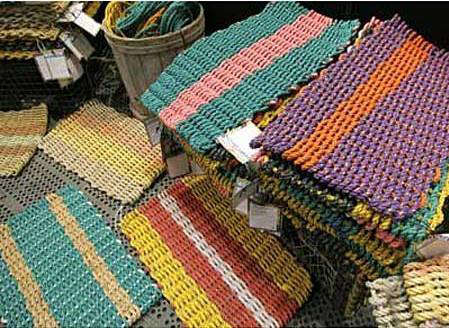

Some home products try very hard to look rugged. They wear earth tones, pose near a lantern, and whisper things like “artisan-inspired” while clearly having never met an actual rainstorm. Maine float-rope doormats are not that kind of product. These mats come from a working-waterfront tradition, look great on a porch, and behave like they have no interest in drama. Mud? Fine. Rain? Fine. Snow? Also fine. They are the rare outdoor accessory that can handle bad weather and compliments from nosy neighbors.
If you have spent any time around coastal décor, New England gift shops, or the front porches of people who somehow always have the right hydrangeas, you have probably seen one. Brightly colored, woven from marine rope, and often handmade in Maine, these mats have built a loyal following because they solve a very unglamorous problem in a surprisingly handsome way: they help keep the outdoors outdoors. Better still, they do it with personality.
What makes Maine float-rope doormats especially interesting is that they sit at the intersection of function, craft, and regional identity. They are practical enough for a muddy side door, pretty enough for a magazine-worthy front entry, and rooted in a real coastal economy rather than a marketing brainstorm cooked up in a beige conference room. That combination is hard to fake, which is one reason these mats keep showing up on porches far beyond Maine.
What Exactly Are Maine Float-Rope Doormats?
The term Maine float-rope doormats is often used loosely. Depending on the maker, you may also see names like lobster-rope doormats, fisherman rope mats, or Maine rope mats. In practice, people are usually talking about handwoven mats made from rope associated with Maine’s marine environment and lobster-fishing culture. Some are made from reclaimed fishing rope. Others are made from new marine-grade rope designed to deliver the same toughness, color, and weather resistance.
That distinction matters, but not in a scary, quiz-at-the-end kind of way. Reclaimed rope mats tend to be more one-of-a-kind. Their colors vary, their texture can feel slightly more storied, and their appeal leans into sustainability. Mats made from new marine rope usually offer more consistency in color, weave, and sizing. They are still very much in the Maine rope-mat tradition; they just arrive with a bit more uniformity and less “I have definitely seen some things” energy.
Either way, the look is unmistakable. These mats are woven rather than tufted, typically reversible, and usually have an open construction that lets water and grit pass through instead of settling in for a long-term stay. In other words, they are built like outdoor gear disguised as décor.
Why They Work So Well Outdoors
They do not panic when the forecast gets rude
Maine float-rope doormats are popular for the simplest reason of all: they are genuinely useful. Marine rope is designed for demanding environments, so it makes sense that it performs well on porches, decks, and mudroom thresholds. A good rope mat resists moisture, dries quickly, and holds up through the messy parade of wet boots, sandy flip-flops, dog paws, and everyday foot traffic.
Compare that with the average decorative mat that curls up after one storm and starts looking philosophical by week three. Rope mats are different. They are not trying to win a fragility contest. Their fibers and woven structure are better suited to outdoor exposure, and many are specifically marketed as mildew-resistant, fade-resistant, and easy to rinse clean.
The open weave is the unsung hero
The best thing about a rope mat may be the thing that looks the least dramatic in a product photo: the gaps. That open weave is doing a lot of work. It allows water to drain, helps sand and grit fall through instead of collecting on the surface, and keeps the mat from becoming a swampy sponge after a storm. For rainy climates, snowy entries, and beach houses where sand behaves like glitter with a personal grudge, that is a very big deal.
This also gives rope mats a cleaner look over time. Instead of matting down into a sad felted pancake, they tend to keep their shape and texture. They age more like useful tools and less like defeated props.
They are heavier and tougher than they look
A well-made Maine rope doormat usually has enough heft to stay put better than lighter synthetic mats. That matters if your porch gets wind, if packages are frequently dropped with the grace of a falling cinder block, or if your family enters the house like they are storming a castle. The woven body also gives the mat resilience: it bends, flexes, and rebounds without feeling flimsy.
The Maine Backstory: From Working Waterfront to Front Door
Part of the charm of Maine float-rope doormats is that they are not random “nautical-themed” products invented by someone who once saw a sailboat on vacation. Their roots connect to Maine’s working waterfront, especially the lobster industry and the practical materials that have long been part of coastal life. That history gives the mats a sense of authenticity that many trendy outdoor accessories would very much like to borrow.
There is also an environmental and regulatory layer to the story. Over the years, changes in fishing gear requirements tied to whale-protection efforts helped create opportunities for some makers to reclaim rope or rethink how marine materials could be repurposed. That is one reason recycled lobster-rope mats became such a recognizable Maine-made product. Instead of treating used rope as waste, artisans turned it into something durable, functional, and unexpectedly beautiful.
That does not mean every mat on the market is made from old fishing line rescued from the bottom of the sea like a very practical pirate treasure. But the larger category has been shaped by exactly that kind of Maine ingenuity: use what works, waste less, and make it handsome enough that people want one for the front porch.
Why the Design Appeal Is Bigger Than “Coastal”
Yes, these mats look good at a beach house. That much is obvious. But their real design strength is that they do not have to scream “nautical” to feel at home. They can be bright and playful, or neutral and understated. Some are woven in stripes that echo signal flags and harbor colors. Others lean into foggy blues, weathered grays, sand tones, or bold combinations that make a front door look more intentional with almost no effort.
That versatility is a big reason Maine float-rope doormats have moved well beyond dockside cottages. They work with modern farmhouses, lake cabins, traditional colonials, rental properties, mudrooms, and even city stoops that just need something sturdy and cheerful. They read as textural, colorful, and handcrafted, which is a far more interesting design vocabulary than “generic rectangular welcome object.”
And because many are made by hand, they also carry the slight irregularity that makes a space feel lived-in rather than over-styled. They are tidy, but not sterile. Practical, but not boring. Coastal, but not kitschy. That is a sweet spot many outdoor accessories never find.
How to Choose the Right Maine Float-Rope Doormat
Decide between reclaimed and new rope
If sustainability and one-of-a-kind character are high priorities, reclaimed rope is deeply appealing. You may get slight variation in color and texture, and that is part of the point. If you want a more controlled palette, cleaner pattern, or a matched set for several doors, mats made from new marine rope may be the better fit.
Think about where the mat will live
For a fully exposed front entry, choose a mat known for drainage, heft, and weather resistance. For a covered porch, you can focus more on color and pattern since the mat will not be taking a full beating from the elements. For mudrooms or side doors, darker multi-color weaves can hide daily mess more gracefully than pale, high-contrast designs.
Go bigger than your instincts tell you
A tiny mat in front of a substantial door always looks a little apologetic. Measure your space and choose a size that feels proportionate. A wider entry benefits from a larger mat or runner, while a compact stoop can work beautifully with a classic 18-by-30-inch shape. The right scale makes the whole entry look more intentional.
Use color strategically
If your house already has a lot of visual action, choose a mat in coastal neutrals, classic navy, soft gray, or understated stripes. If your exterior is simple, a brighter Maine rope mat can do the heavy lifting. It is one of the easiest ways to add curb appeal without committing to a new paint color or a porch overhaul that ends with you questioning your life choices in the hardware aisle.
Care and Maintenance: Delightfully Uncomplicated
One of the best selling points of Maine float-rope doormats is that they do not ask for much. Shake them out. Hose them down. Let them dry. Repeat as necessary. Many owners love them precisely because the maintenance routine is refreshingly free of nonsense.
This matters more than it sounds. Outdoor products often arrive with instructions that suggest you should protect them from sun, moisture, cold, dust, wind, and human existence. Rope mats are much more realistic. They are made for everyday use, and most look better when treated like the working objects they are.
That said, good sense still applies. If you want any mat to last longer, avoid leaving it on a surface that stays constantly waterlogged. If your porch gets packed with ice in winter, occasional rinsing will help remove grit and salt. But overall, this is a low-fuss category. These mats are built for people who have better things to do than baby a doormat.
Who Should Buy One?
Maine float-rope doormats are an especially smart choice for households that actually use their doors in a real-world way. Families with kids, dog owners, people living near the water, homeowners in wet or snowy climates, and anyone with a mudroom that sees honest labor will appreciate the performance. They are also a great pick for people who want the front entry to look polished without becoming precious.
They are equally appealing for style-minded buyers who want décor with a story. A rope mat says something subtle but clear: this house values things that are useful, well made, and maybe just a little salty in the best possible sense.
Who Might Prefer Another Kind of Mat?
If you need aggressive scraping action for ultra-fine dust, or you want a super-soft indoor mat under bare feet, a rope mat may not be your perfect match. These are outdoor-first products. They are supportive and textured, not plush. They are about drainage and durability, not spa energy. That is not a flaw; it is just a job description.
Likewise, if your aesthetic leans heavily formal or minimal to the point of monk-like austerity, the color and texture of a Maine rope mat may feel more lively than you want. Though, to be fair, a restrained gray-and-navy weave can still behave quite elegantly.
Real-World Places Where They Shine
At a beach cottage, they handle sand without complaint. At a lake house, they look right at home next to damp towels and weathered wood. In a snowy climate, they provide a practical landing zone for slushy boots. On a suburban front porch, they add enough texture and color to make the whole entry look finished. In a rental cabin or vacation property, they offer the rare combination of durability and charm, which is basically hospitality gold.
That broad usefulness explains why Maine float-rope doormats keep turning up in gift guides, home shops, and design stories. They are not just pretty. They earn their keep.
Final Thoughts
Maine float-rope doormats are one of those rare outdoor products that manage to be practical, regional, stylish, and sturdy all at once. They come from a real tradition, solve real problems, and look good doing it. Whether you choose a reclaimed lobster-rope version with loads of personality or a newer marine-rope weave in a more curated palette, the appeal is the same: this is outdoor gear with design credibility.
And that may be the secret to their staying power. A Maine rope mat is not trying to be disposable, trendy, or overly polished. It is built to welcome you home, brush off the mess of the day, and keep going through weather that would make weaker products immediately file a complaint. For an item that lives on the ground, that is a pretty admirable résumé.
The Experience of Living With a Maine Float-Rope Doormat
Living with a Maine float-rope doormat is different from owning an ordinary mat in the same way that driving a sturdy old wagon is different from renting a tiny scooter for vacation. One feels decorative. The other feels useful in your bones. From the first week, you notice that the mat is not precious. You do not tiptoe around it. You do not gasp when a wet dog charges across it like a furry meteor. You do not rush outside because a thunderstorm started. The mat just sits there, looking competent.
That changes the mood of an entryway more than people expect. A good rope mat makes the front door feel ready. Ready for groceries. Ready for kids in rain boots. Ready for sandy feet after the beach or muddy clogs after the garden. It quietly signals that your house can handle life as it is actually lived, not just as it appears in a real-estate listing with suspiciously absent backpacks and zero shoe clutter.
There is also a sensory side to it. Rope mats have texture in a satisfying, tactile way. They feel substantial underfoot without being harsh, and they have that woven, handmade character that instantly warms up a threshold. Even before anyone steps inside, the entry feels more grounded and more personal. It is subtle, but it works. A plain doorstep says, “We own a door.” A great rope mat says, “We thought about this space, and yes, we do know what weather is.”
Over time, the mat becomes part of the rhythm of the house. In summer, it catches sand, grass clippings, and evidence of every outdoor plan that sounded simple on paper. In fall, it handles damp leaves and the parade of boots that somehow manage to bring half the yard indoors. In winter, it stands watch against slush and salt like a stoic little sentry. In spring, when the world turns into a mud festival with birdsong, it still shows up for work. A quick rinse with the hose, a shake, and it is ready again.
Another pleasure is visual. Maine float-rope doormats have color in a way that feels cheerful without becoming cartoonish. On gray days, that matters. A blue-and-white weave, a multicolor striped pattern, or a soft neutral mix can make the doorway feel brighter before you have even put out a plant or opened the storm door. The mat becomes part of your curb appeal, but in an honest way. It is not trying too hard. It just looks good because the materials and craftsmanship already do most of the work.
Guests notice them, too. Not always with a speech, but often with that little pause people do when they spot something unexpectedly smart. They look down, they register the color and texture, and then they ask where you got it. That is one of the funniest parts of owning a Maine rope mat: nobody expects the doormat to become a conversation piece, yet here we are, discussing marine rope at the front step like it is a major design movement. Which, in some houses, it absolutely becomes.
Perhaps the nicest thing is how well these mats age into daily life. They do not demand perfection. They look good when the porch is freshly swept, and they still look right when there is a delivery box leaning on one side and a pair of muddy sneakers abandoned nearby. They belong to real homes. They wear use well. And in a world full of things designed to look pristine for about six minutes, that kind of long-haul usefulness feels oddly luxurious.


