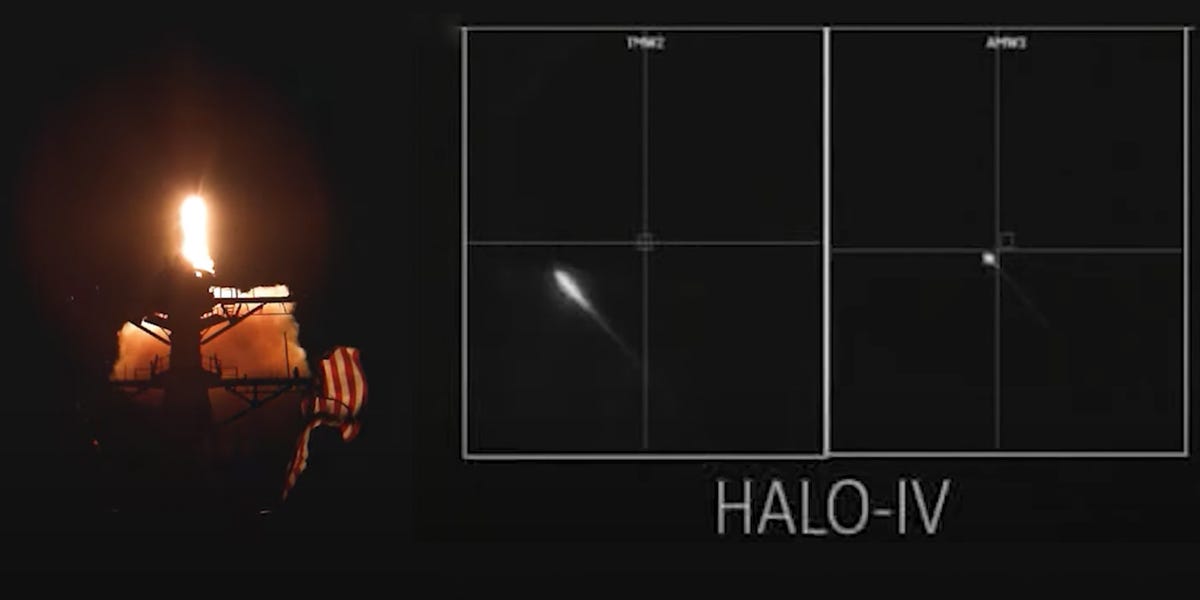

Every so often, a military test comes along that sounds like it was pulled from a summer blockbuster: a U.S. Navy destroyer, a missile target representing an intercontinental ballistic missile, a vast stretch of Pacific Ocean, and a defensive interceptor built to collide with danger at extreme speed. That was the headline-making scene behind Flight Test Aegis Weapon System-44, better known as FTM-44, when the destroyer USS John Finn used the Aegis Ballistic Missile Defense system and a Standard Missile-3 Block IIA interceptor to destroy an ICBM-class target.
The phrase “Navy destroyer shoots down ICBM” is dramatic, yes. It also describes a real milestone in American missile defense. The test, conducted on November 16, 2020, demonstrated that a ship equipped with Aegis Ballistic Missile Defense could contribute to a layered defense concept against long-range missile threats. In plain English: the Navy showed that a floating, sensor-connected, missile-defense platform could do more than protect a carrier strike group or a regional ally. It could potentially support homeland defense architecture.
That does not mean destroyers suddenly became magic shields. Missile defense is complicated, expensive, and never as simple as a movie trailer makes it look. But FTM-44 mattered because it tested a capability many analysts had watched closely: whether the SM-3 Block IIA, originally designed for intermediate-range ballistic missile threats, could engage an ICBM-class target under a planned test scenario.
What Happened During the Historic Test?
The test took place over the Pacific, in a broad ocean area northeast of Hawaii. A target representing an intercontinental ballistic missile was launched from the Ronald Reagan Ballistic Missile Defense Test Site at Kwajalein Atoll in the Republic of the Marshall Islands. USS John Finn, an Arleigh Burke-class guided-missile destroyer, received tracking information through a larger command-and-control network and launched an SM-3 Block IIA interceptor. The interceptor then destroyed the target in space during the midcourse portion of the target’s flight.
The event was not a routine training drill. It was a developmental test designed to evaluate a specific question: could the Aegis BMD system, paired with the SM-3 Block IIA, defeat an ICBM-class target? According to official statements released after the event, preliminary data showed the test met its primary objective.
The test was also tied to a congressional requirement. Lawmakers had directed the Missile Defense Agency to evaluate whether the SM-3 Block IIA could be used against an ICBM-class threat before the end of 2020. FTM-44 answered that requirement with a successful intercept, and it immediately became one of the most discussed missile defense demonstrations of the decade.
Why This Test Was Different
The United States has tested many missile defense systems over the years, but this one stood out for three big reasons. First, the target represented an intercontinental ballistic missile, which is a more demanding class of threat than shorter-range missiles. Second, the interceptor came from a Navy destroyer rather than a fixed ground-based interceptor site. Third, the test used engage-on-remote concepts, meaning the ship relied on tracking data from outside its own onboard sensors.
That last point may sound like military jargon wearing a fancy hat, but it matters. A ship at sea cannot see everything by itself. The ability to receive and act on remote tracking data allows missile defense systems to work as part of a larger network. Think of it like a basketball team: the player who makes the shot may get the highlight, but the assist matters too. In FTM-44, the Aegis ship was the shooter, but the wider missile defense network helped set up the play.
The Role of USS John Finn
USS John Finn is an Aegis-equipped destroyer, the kind of warship designed to track and respond to multiple air and missile threats. In this test, the ship was not acting alone. It operated as part of a defense-of-Hawaii scenario, using networked data to support the intercept. That scenario was important because Hawaii’s location in the Pacific has long made it central to discussions about missile defense, regional security, and the protection of U.S. territory.
The ship’s success showed that a destroyer can be more than a mobile escort vessel. In the right configuration, with the right sensors, software, command network, and interceptor, it can become a mobile layer in a larger missile defense system. That mobility is attractive because ships can be repositioned as threats change. Of course, mobility also creates planning challenges: destroyers have many missions, limited missile inventory, maintenance schedules, and crews that do not run on coffee alone, no matter what the galley may suggest.
What Is the SM-3 Block IIA?
The Standard Missile-3 family is designed for ballistic missile defense, especially during the midcourse phase of a missile’s flight. The SM-3 Block IIA is a more capable version developed with significant U.S.-Japan cooperation. It was built to reach farther and handle more challenging targets than earlier versions. Unlike explosive air-defense missiles that rely on blast effects, the SM-3 concept is often described as “hit-to-kill,” meaning the interceptor destroys the target through direct collision.
That description is easy to say and extremely hard to do. Imagine trying to hit a bullet with another bullet, except both are moving at extreme speed, the target is far away, and the timing has to be close to perfect. Now imagine doing that from a moving ship in the Pacific. Suddenly, parallel parking does not seem so stressful.
Still, it is important not to overstate what one test proves. A successful flight test demonstrates capability under specific conditions. It does not guarantee perfect performance in every real-world scenario. Missile defense tests are carefully planned, instrumented, and evaluated. Real attacks may involve uncertainty, multiple objects, countermeasures, decoys, or timing complications. That is why officials and analysts often describe FTM-44 as a milestone, not a final answer.
Aegis Ballistic Missile Defense: The System Behind the Shot
Aegis Ballistic Missile Defense is the naval component of the broader U.S. missile defense system. It connects powerful radars, shipboard combat systems, command networks, and interceptors into a defensive architecture. Aegis BMD can be deployed on ships and, in a land-based version, at Aegis Ashore sites.
The key advantage of Aegis is flexibility. Ships can patrol different regions, support allies, defend deployed forces, and add defensive layers where needed. That flexibility has made Aegis BMD a central part of U.S. and allied missile defense planning, especially in the Indo-Pacific and Europe.
FTM-44 placed that flexibility under a brighter spotlight. The test suggested that a Navy destroyer might help augment homeland missile defense in certain scenarios. The word “augment” is doing serious work here. The United States already relies on Ground-based Midcourse Defense as the primary system designed for limited homeland defense against long-range ballistic missile threats. FTM-44 did not replace that architecture. Instead, it explored whether sea-based assets could add another layer.
Why the Test Was Called Historic
The test was historic because it was the first successful intercept of an ICBM-class target by an SM-3 Block IIA launched from a Navy destroyer. That combination mattered: ship-based launch, Aegis BMD, SM-3 Block IIA, networked tracking, and an ICBM-representative target. Put together, those pieces made FTM-44 a landmark event.
For defense planners, the achievement offered evidence that existing and evolving systems might be used in layered ways. For policymakers, it provided data for debates about funding, deployment, and the future shape of U.S. missile defense. For the public, it produced dramatic footage of a missile-defense test that looked almost unreal, even though it was very real.
The video angle matters because missile defense is usually invisible to most people. Budgets, radar upgrades, command networks, and flight-test acronyms are not exactly viral entertainment. But a launch from a destroyer and a successful intercept in space? That gets attention. The public footage gave viewers a rare glimpse into a program that is often discussed in dense reports and congressional hearings.
The Strategic Message Behind the Intercept
FTM-44 sent several strategic signals. To allies, it showed continued U.S. investment in advanced missile defense technologies. To potential adversaries, it demonstrated that the United States is pursuing more flexible defensive layers. To Congress, it provided a concrete answer to a mandated test requirement. And to defense analysts, it offered new data for a long-running debate: how much should the United States rely on sea-based systems for homeland missile defense?
The answer is not simple. Ship-based missile defense has real strengths, especially mobility and integration with allied operations. But there are trade-offs. Destroyers are expensive to operate, crews are finite, and interceptors are limited in number. A ship assigned to homeland defense support may not be available for other missions. That is the kind of defense math that makes budget planners reach for coffee, spreadsheets, and occasionally stronger coffee.
What the Test Did Not Prove
A strong article about FTM-44 should avoid turning one success into a superhero cape. The test did not prove that any destroyer can stop any ICBM at any time. It did not make missile defense easy. It did not eliminate the need for diplomacy, deterrence, arms control, intelligence, early warning, or other defense systems.
Instead, it proved something narrower but still important: under the conditions of that test, an Aegis BMD-equipped destroyer using an SM-3 Block IIA interceptor successfully destroyed an ICBM-class target. That is a major result, but missile defense remains a layered and probabilistic field. Engineers, sailors, commanders, and analysts all know the same truth: one successful test is a milestone on a long road, not the end of the road.
How This Fits Into Layered Missile Defense
Layered missile defense means using multiple systems to address threats at different phases of flight. A missile may be tracked after launch, during midcourse flight, and near the terminal phase. Different interceptors and sensors are optimized for different jobs. The goal is to avoid relying on one single point of failure.
In that context, Aegis BMD can be one layer among several. Ground-based interceptors, sea-based interceptors, land-based systems, space-based sensors, radars, and command networks all play roles. The challenge is making these pieces work together reliably, affordably, and quickly enough to matter.
FTM-44 was especially notable because it tested networked engagement. The destroyer used remote tracking data as part of the scenario. That matters because the future of missile defense is not only about faster interceptors. It is also about better information, shared awareness, and decision systems that can connect sensors and shooters across domains.
Public Reaction: Awe, Debate, and a Few Raised Eyebrows
The public reaction mixed fascination with serious debate. Many people saw the footage and focused on the sheer technological achievement. Others asked harder questions about cost, reliability, escalation, and whether missile defense can create unrealistic expectations. Both reactions are fair.
Missile defense sits at the intersection of engineering, strategy, politics, and public imagination. It is easy to admire the technology. It is also necessary to ask what the technology means, how often it can work, how much it costs, and how it affects strategic stability. In other words, the test was not just a “wow” moment. It was also a “now what?” moment.
Why Readers Still Search for the Video
People continue searching for the FTM-44 video because it condenses a complex defense story into a few memorable visuals. A ship launches. A defensive missile rises. A target is intercepted far away. The whole sequence makes a complicated concept feel immediate.
But the real story is bigger than the launch footage. The test involved years of development, international cooperation, congressional direction, previous testing, sensor networks, range safety, and post-test data analysis. The video is the highlight reel. The engineering and policy work behind it is the season-long documentary.
Experience Section: What This Historic Test Teaches Us About Technology, Patience, and Public Understanding
Watching a historic missile defense test from the outside can feel like watching a magic trick. The camera shows a dramatic launch, the narrator explains the target, and then the intercept happens. But the real lesson of FTM-44 is that advanced defense technology is not magic. It is the result of long development cycles, failures, adjustments, retesting, and teamwork across agencies, contractors, military crews, engineers, and analysts.
One experience that stands out when studying this topic is how easy it is for the public to compress years of effort into one headline. “Navy destroyer shoots down ICBM” is accurate enough to grab attention, but it hides the long road behind the event. Before a successful test becomes a public milestone, there are design reviews, software updates, sensor evaluations, funding debates, range preparations, safety checks, and previous test lessons. The final intercept is the visible tip of a very large iceberg.
Another important experience is learning to separate excitement from certainty. The test is impressive, and there is nothing wrong with being impressed. It takes serious skill to coordinate a ship-based interceptor, remote tracking data, and a long-range target in a planned test environment. At the same time, responsible analysis requires humility. A successful test shows that something can work under specific conditions. It does not mean every future scenario is solved. In national security, confidence and caution have to travel together, ideally in the same vehicle and without arguing over the radio.
For writers, journalists, and readers, FTM-44 is also a lesson in careful language. Words like “ICBM,” “defense,” “intercept,” and “historic” carry weight. Overhyping the story can mislead readers. Underplaying it can miss why the test mattered. The best approach is balance: explain the achievement clearly, acknowledge the limits, and connect the event to the larger missile defense conversation.
There is also a human side. Behind every clean official phrase are sailors doing their jobs, engineers checking data, commanders making decisions, and analysts reviewing telemetry afterward. The public sees the launch. The teams involved live the preparation. That difference matters because national security technology is not only hardware. It is also training, discipline, maintenance, and trust across organizations.
Finally, the test reminds us that modern defense is increasingly networked. The ship mattered, the interceptor mattered, and the command-and-control network mattered. Future defense debates will not be only about bigger missiles or faster interceptors. They will be about how sensors, ships, satellites, radars, and decision systems share information. The FTM-44 test gave the public a rare look at that future, wrapped in one dramatic Pacific Ocean moment.
Conclusion
The FTM-44 test remains one of the most important demonstrations in the history of sea-based missile defense. USS John Finn’s successful intercept of an ICBM-class target with an SM-3 Block IIA interceptor showed that Aegis BMD ships may have a role in a layered defense architecture that goes beyond regional missile defense. The test was historic, technically demanding, and strategically significant.
Still, the smartest takeaway is not “problem solved.” It is “capability demonstrated.” Missile defense remains complex, costly, and dependent on real-world conditions that can be far messier than a planned test. But as a public milestone, FTM-44 gave Americans and allies a clear glimpse of what networked, sea-based missile defense can achieve when many moving parts work together.
In a world where missile threats continue to evolve, that lesson matters. The destroyer, the interceptor, the network, and the crews behind the test all point toward a future where defense is layered, mobile, data-driven, and constantly tested. Not bad for a story that begins with a ship in the Pacific and ends with a target destroyed high above the ocean.


