
Research note: This article synthesizes current marine-hardware and home-design information from boating safety guidance, marine retailers, and manufacturer references including BoatUS, West Marine, Boat Outfitters, Jamestown Distributors, Sea-Dog, Perko, Whitecap, Harken, Defender, and Remodelista.
Boat cleats may be small, but they have the confidence of a dockmaster in a thunderstorm. Originally designed to secure ropes, lines, and mooring gear, these compact pieces of nautical hardware have quietly sailed from marinas into kitchens, bathrooms, mudrooms, patios, closets, and beach-house entryways. And honestly? They look right at home there.
The appeal is simple: cleats are practical, tough, sculptural, and just nautical enough to say “coastal charm” without forcing your living room to wear a captain’s hat. A well-chosen cleat can work as a coat hook, cabinet pull, towel holder, curtain tieback, garden organizer, dog-leash station, rope railing detail, or even a paper roll holder. It is hardware with a job, a story, and a tiny bit of salt air in its personality.
But not all cleats are equal. Marine cleats come in stainless steel, bronze, brass, galvanized steel, aluminum, nylon, and composite materials. Some are fixed and traditional; others fold down, pull up, or grip rope with spring-loaded cams. Choosing the right one for home use depends on where it will live, what it will hold, how much abuse it will take, and whether your design style leans “polished yacht club” or “weathered dock at sunset.”
Below is a detailed guide to seven cleats that can be adapted beautifully for home use, with practical examples, installation notes, material tips, and a few lessons learned the non-glamorous way. Spoiler: wall anchors are not magic, and drywall alone has never won a wrestling match against a wet beach towel.
Why Use Nautical Cleats at Home?
A cleat is basically a hook with better manners. Instead of a single peg, it gives you two horns or gripping points, making it easier to wrap rope, loop bags, hang towels, or hold fabric neatly. Marine-grade cleats are designed for exposure to water, sun, salt, and shifting loads, so they often outperform decorative hooks in damp or high-traffic areas.
In interiors, nautical cleats offer three big advantages. First, they are strong when mounted correctly. Second, they look intentional rather than trendy. Third, they work in more styles than people expect. Stainless steel cleats feel crisp and modern. Bronze cleats look warm and traditional. Galvanized cleats bring farmhouse-meets-dock energy. Black nylon cleats disappear into utility spaces. Polished brass cleats can make even a powder room feel like it owns a vintage sailboat.
They are also wonderfully flexible. Use one oversized cleat as a statement hook near the entry. Mount several small cleats on a board for a family coat rack. Install a pair beside a window for rope curtain tiebacks. Attach one to a bathroom wall for hand towels. Add small cleats to cabinet doors for a subtle nautical hardware upgrade. Once you start seeing them as home hardware, the ideas multiply faster than flip-flops by the back door.
How to Choose the Right Cleat for Home Use
Material Matters
For bathrooms, laundry rooms, outdoor showers, patios, pool houses, and coastal homes, stainless steel is usually the safest all-around choice. Marine-grade 316 stainless steel is especially valued for corrosion resistance, while 304 stainless steel can work well in protected interior areas. Bronze and brass bring warmth and age beautifully, but they may patina over time. Galvanized steel offers rugged utility and a dockside look, while nylon cleats are lightweight, affordable, and corrosion-proof.
Size Matters Too
Marine sizing often relates to rope diameter, but for home use, scale is more about function and proportion. A 3- to 4-inch cleat can work for cabinet pulls, curtain tiebacks, keys, or lightweight towels. A 5- to 6-inch cleat is excellent for coats, backpacks, dog leashes, bathroom towels, and entry storage. An 8-inch or larger cleat makes a bold statement and can handle heavier visual and practical duty, provided it is mounted into studs, blocking, masonry, or a properly anchored board.
Mounting Is the Unsung Hero
The cleat may be strong, but the wall behind it gets a vote. For heavy use, mount into wall studs or attach cleats to a solid wood backboard that is then secured to studs. In bathrooms or outdoor areas, use corrosion-resistant screws and consider sealing the screw holes if moisture is involved. If the cleat will hold anything heavy or frequently pulled, avoid relying on basic drywall anchors. They are fine for a decorative scarf; they are not fine for a backpack full of textbooks, a soaked towel, and someone yanking it with the urgency of a person late for school.
1. Stainless Steel Open-Base Cleat
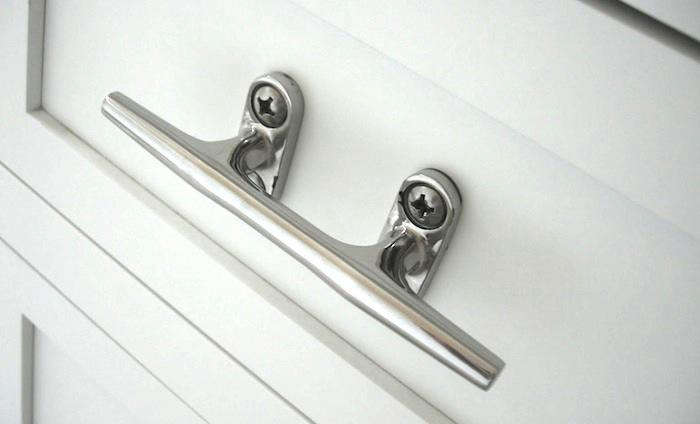
The stainless steel open-base cleat is the overachiever of nautical hardware. It is sleek, strong, and versatile, with a classic shape that looks equally at home on a boat deck, bathroom wall, kitchen island, or mudroom board. The open base allows rope or fabric to tuck underneath, which makes it especially good for curtain tiebacks, looped bags, or decorative rope accents.
For home use, this is the cleat to choose when you want durability without visual clutter. A polished stainless cleat can brighten a white bathroom, add crisp detail to a navy mudroom, or complement chrome faucets and cabinet hardware. A satin or brushed finish feels more subtle and modern, especially in minimalist coastal interiors.
Best Uses
Use stainless steel open-base cleats for towel hooks, coat racks, robe hooks, outdoor shower storage, patio rope details, curtain tiebacks, or cabinet pulls on chunky built-ins. A pair of 4-inch cleats can also make charming handles on a storage trunk or bench.
Design Tip
Pair stainless cleats with natural rope for a clean coastal look, or mount them on reclaimed wood to soften the shine. If the cleat is going near water, choose stainless fasteners as well. Mixing metals casually may look artsy at first, but corrosion has a way of editing your design choices later.
2. Bronze Yacht Cleat
Bronze cleats bring instant heritage. They look like they belong on an old sailboat, a captain’s desk, or a shingle-style cottage with hydrangeas outside and at least one family member who says “the launch” instead of “the small boat.” That is a compliment.
Bronze is heavier and warmer than stainless steel, and it develops character over time. Some homeowners love the natural patina; others prefer to polish it to maintain a golden-brown glow. Either way, bronze cleats are perfect when you want nautical hardware that feels collected rather than newly installed.
Best Uses
Try bronze cleats as cabinet pulls in a butler’s pantry, towel hooks in a vintage-inspired bathroom, robe hooks in a guest room, or wall hooks in a lake house entry. They also look beautiful mounted on dark wood, painted beadboard, or deep green cabinetry.
Design Tip
Let bronze be the star. It pairs well with warm woods, cream paint, woven baskets, natural linen, and antique mirrors. Avoid surrounding it with too many competing shiny finishes; bronze prefers a room that understands the value of aging gracefully.
3. Galvanized Dock Cleat
If stainless steel is the polished yacht guest and bronze is the seasoned sailor, galvanized steel is the person who actually knows how to fix the dock. Galvanized cleats are rugged, affordable, weather-resistant, and visually substantial. Their matte, slightly industrial finish works well in mudrooms, garages, sheds, garden rooms, workshops, and casual beach houses.
For home use, galvanized dock cleats shine in spaces where toughness matters. They are excellent for organizing outdoor gear, hanging hoses, holding dog leashes, storing tote bags, or creating a family command center that can survive real life.
Best Uses
Mount galvanized cleats on a long wood board for a mudroom rack. Use them in the garage for extension cords or rope. Install them near a garden bench for twine and tools. Add one by the back door for beach bags, hats, and the mysterious collection of reusable shopping bags that somehow breeds overnight.
Design Tip
Galvanized cleats look best when they are allowed to be honest. Pair them with painted shiplap, unfinished pine, old dock boards, concrete, or black hardware. They are not trying to be fancy; they are trying to be useful and oddly handsome.
4. Folding Cleat
A folding cleat is the secret weapon for small spaces. It flips up when needed and folds down when not in use, reducing snags and keeping walkways cleaner. On a boat, that helps prevent tripping. At home, it helps prevent your hallway from collecting bruised elbows and dramatic complaints.
Folding cleats are especially useful in narrow entries, small bathrooms, laundry rooms, closets, camper interiors, tiny homes, and kids’ rooms. They offer function without constantly sticking out from the wall.
Best Uses
Use folding cleats as occasional hooks for laundry bags, guest towels, pet leashes, backpacks, or folding drying lines. They are also great in multipurpose rooms where the wall needs to look tidy when the hook is not in use.
Design Tip
Choose a folding cleat with a smooth action and rounded edges. Stainless versions look modern and are easy to clean. For a hallway or children’s space, mount them at a sensible height and make sure little fingers are not tempted to treat them like tiny metal gym equipment.
5. Pull-Up or Pop-Up Cleat
Pull-up cleats are designed to sit low or flush when not in use and rise when needed. In home design, they are a clever option for surfaces where permanent protruding hardware would be annoying. Think built-in benches, window seats, storage platforms, rooftop decks, boat-house furniture, or custom outdoor cabinetry.
They are more complex than standard cleats and usually cost more, but the clean look can be worth it. A pull-up cleat delivers nautical function with architectural polish. It whispers “custom detail” instead of shouting “I bought hooks near the checkout aisle.”
Best Uses
Use pull-up cleats for outdoor furniture tie-downs, removable shade sails, boat-house storage, patio rope railings, or hidden utility points on custom benches. Indoors, they can be used on specialty furniture where a flush surface is important.
Design Tip
Measure carefully before installing. Pull-up cleats require enough depth below the surface, so they are not always practical for standard walls. They are best for custom projects where you can plan the structure around the hardware.
6. Nylon Cleat
Nylon cleats are the budget-friendly workhorses. They are lightweight, corrosion-resistant, and available in simple black or white finishes. While they may not bring the same visual drama as bronze or stainless steel, they are practical in utility spaces and casual home projects.
For home use, nylon cleats are great when you want function without spending much. They work well in garages, laundry rooms, closets, kids’ rooms, sheds, pool areas, craft rooms, and anywhere the hardware may get bumped, splashed, or ignored until needed.
Best Uses
Use nylon cleats for wrapping extension cords, hanging pool towels, organizing ropes, managing window blind cords safely out of the way, or creating simple storage for lightweight items. In a craft room, they can hold ribbon, twine, or cord. In a garage, they can tame the cable chaos before it becomes a full-time hobby.
Design Tip
Black nylon cleats look sharp on white painted boards, while white cleats blend into light walls and trim. Because nylon is more casual, use it where practicality matters more than luxury finish.
7. Cam Cleat
A cam cleat is different from the classic horn cleat. Instead of wrapping a line in a figure-eight pattern, you press a rope into spring-loaded jaws that grip it. Sailors use cam cleats for lines that need quick adjustment. At home, that same quick-grip behavior can be surprisingly useful.
Cam cleats are ideal for adjustable rope systems: hanging planters, shade cloth, garage storage lifts, craft-room cord control, clotheslines, curtain systems, and lightweight pulley projects. They are not usually the prettiest cleat on the list, but they are clever, compact, and satisfyingly mechanical.
Best Uses
Use cam cleats where you want a rope to be adjustable and easy to release. They can help manage an indoor plant hanger, a porch shade, a lightweight storage hoist, or a temporary clothesline. Always check the cleat’s rating and use it only within appropriate limits. A cam cleat is smart hardware, not a permission slip to suspend a piano from the ceiling.
Design Tip
Keep cam cleats in utility or casual zones unless your interior style already embraces exposed mechanics. They pair well with sailing rope, workshop walls, patio structures, and modern outdoor gear storage.
Creative Ways to Use Cleats Around the Home
Mudroom Coat Rack
Mount five or six cleats on a long painted board and secure the board into wall studs. This creates a strong, family-friendly rack for coats, totes, hats, and dog leashes. Use 5- or 6-inch cleats for better scale and function.
Bathroom Towel Hooks
A stainless, brass, or bronze cleat makes a memorable towel hook. Install one beside the sink for a hand towel or use several in a row for bath towels. In damp spaces, choose corrosion-resistant hardware and fasteners.
Curtain Tiebacks
Small cleats make charming curtain tiebacks, especially when paired with rope. They work beautifully in bedrooms, sunrooms, nurseries, beach houses, and lake cabins. The result is playful without looking like a theme restaurant.
Cabinet Pulls and Drawer Handles
Small cleats can be used as cabinet pulls on storage benches, laundry cabinets, mudroom lockers, or nautical-themed furniture. Before drilling, test the grip. Some cleats feel better as hooks than handles.
Outdoor Organization
Use galvanized or stainless cleats for garden hoses, dock lines, extension cords, pool towels, and outdoor tools. They are especially useful in pool houses, sheds, garages, boat houses, and covered patios.
Installation Tips for a Clean, Strong Result
First, decide whether the cleat is decorative, functional, or heavy-duty. Decorative cleats can be mounted more simply, but functional cleats need serious support. For anything that will hold coats, bags, towels, or gear, mount into studs or use a solid board secured to studs.
Second, choose the right fasteners. Stainless steel screws are a good match for stainless cleats, especially in damp or coastal environments. For galvanized cleats, exterior-rated screws are usually appropriate. For bronze or brass cleats, consider matching or compatible fasteners to avoid awkward finish clashes.
Third, think about edges and comfort. Some marine hardware is built for lines, not hands. If a cleat has sharp casting marks or rough edges, smooth them before using it in a home setting. This matters especially for kids’ rooms, bathrooms, and entryways where people brush past the wall.
Fourth, do a layout test. Tape paper templates to the wall before drilling. Check spacing, height, and how the cleats look from across the room. A row of cleats mounted too close together can look crowded; mounted too far apart, it can feel like the wall is waiting for more guests.
Which Cleat Should You Choose?
For the most versatile home cleat, choose a stainless steel open-base cleat. It works almost anywhere and looks clean. For warmth and character, choose bronze. For rugged utility, choose galvanized steel. For small spaces, choose folding cleats. For custom flush surfaces, choose pull-up cleats. For budget utility, choose nylon. For adjustable rope projects, choose cam cleats.
The best choice depends on your home’s style and the job the cleat needs to do. A bathroom towel hook and a garage cord wrap do not need the same finish. A curtain tieback and a backpack rack do not need the same size. Treat cleats like real hardware, not just decoration, and they will reward you with years of practical charm.
Personal Experience: What Living With Nautical Cleats Actually Teaches You
The first thing you learn after installing cleats at home is that people will touch them. They cannot help it. A normal wall hook gets ignored, but a boat cleat invites curiosity. Guests loop their fingers around it. Kids ask what it is. Someone inevitably says, “Oh, that’s clever,” which is the home-improvement equivalent of winning a small trophy.
In practical use, the mudroom is where cleats really prove themselves. A standard hook holds one coat and maybe a bag if everyone behaves. A cleat gives you more options. You can hang a coat over one horn, loop a tote over the other, and wrap a leash around the center. It turns a messy drop zone into something that looks designed, even when the family has clearly entered the house like a small weather event.
Bathrooms are another excellent testing ground. A 4- or 5-inch stainless cleat beside the sink works beautifully for a hand towel, especially if the room already has chrome or nickel fixtures. For bath towels, a 6-inch cleat feels better because the towel has more room to hang and dry. The key lesson is spacing. If you install several cleats too close together, wet towels bunch up and sulk. Give them breathing room, and they behave.
Curtain tiebacks are where cleats become decorative in the best possible way. A small cleat with a natural rope loop can make plain curtains look custom. The trick is to keep the rope simple. Too much knotwork and suddenly the window looks like it is preparing for a pirate-themed birthday party. A clean loop, a soft drape, and a modest cleat are enough.
Cabinet pulls are more complicated. Small cleats can look fantastic on a storage bench or laundry-room cabinet, but they are not always comfortable for daily kitchen drawers. Before committing, hold the cleat like a handle. Pull it a few times. If it feels awkward, use it somewhere else. Good design should not require finger gymnastics before coffee.
Outdoor spaces may be the most natural home for nautical cleats. Near a pool, a covered patio, or an outdoor shower, stainless or galvanized cleats handle towels, hats, hoses, and bags with zero drama. They also look appropriate outdoors, as if they have been waiting patiently for someone to give them a wall and a purpose.
The biggest mistake is underestimating the mount. Cleats are strong enough to make weak installation look silly. If you screw a heavy cleat into drywall and then hang a loaded backpack on it, the wall may eventually file a complaint. Use studs, blocking, masonry anchors, or a properly secured backboard. A cleat should feel solid when tugged. If it wiggles, fix it before the wiggle becomes a story.
The second mistake is choosing the wrong finish for the room. Highly polished stainless can look too shiny in a rustic cottage. Galvanized steel can look too rough in a refined bath. Bronze can look stunning, but only if you are comfortable with patina or willing to polish it. Match the cleat’s personality to the space, and the whole project feels intentional.
After using cleats around the house, the best advice is this: start with one small project. Try a towel hook, a leash station, or a curtain tieback. Once you see how useful and good-looking they are, you can scale up. Nautical hardware has a funny way of making ordinary storage feel like a design choice. And in a busy home, anything that makes clutter look slightly more charming deserves a round of applause.
Conclusion
Nautical cleats are more than boat hardware with a coastal accent. They are strong, practical, good-looking pieces that can solve real storage and design problems throughout the home. From stainless steel towel hooks to bronze cabinet pulls, galvanized mudroom racks, folding hallway hooks, pull-up patio details, nylon utility organizers, and cam cleat rope systems, there is a cleat for nearly every room and level of ambition.
The secret is choosing the right material, size, and mounting method for the job. A cleat should look good, feel good, and stay firmly where you put it. Do that, and your home gets a detail that is useful, durable, and quietly full of maritime character. No boat required. Though if one appears, please name it something respectable.


