
Note: HTML body only; cleaned for direct web publishing, with source-reference artifacts removed.
Every few years, a company strolls into the maker world wearing polished shoes, carrying a glossy demo, and quietly suggesting that the messy little platforms people already love are about to be replaced. That was the vibe around Microsoft’s .NET Gadgeteer, a modular hardware platform that looked like it wanted to do for physical computing what drag-and-drop site builders wanted to do for web design: make everything faster, easier, cleaner, and just a little more corporate.
On paper, that sounds terrific. Who would not want to snap together modules, write C# in Visual Studio, and build a working gadget before your coffee gets cold? Microsoft’s pitch had real substance behind it. Gadgeteer was not some random toy tossed over the wall by a bored marketing team. It grew out of Microsoft Research, and its creators were trying to solve a legitimate problem: prototyping hardware takes forever when you are building from scratch.
But here is the catch. The maker community does not fall in love with platforms just because they are efficient. People fall in love with platforms because they feel open, hackable, affordable, teachable, and alive. Arduino had already nailed that formula. So when Gadgeteer appeared with ribbon cables, Visual Studio, object-oriented hardware abstractions, and a slightly showroom-ready personality, a lot of people looked at it and thought the same thing: this is clever, sure, but is it really a movementor just a very well-dressed demo?
What Microsoft Was Actually Trying to Build
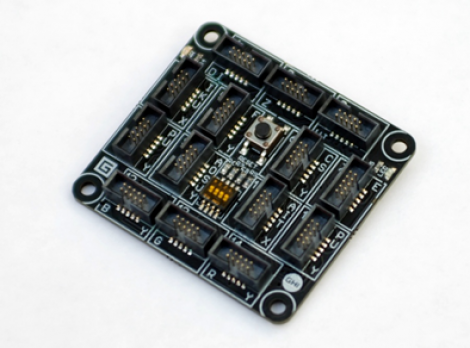
To be fair, Gadgeteer had a serious mission. Microsoft Research developed it as a rapid-prototyping platform for small electronic devices, the kind of things researchers, educators, and ambitious tinkerers might want to build without spending six months chasing wiring mistakes and solder fumes. The promise was simple: combine a mainboard with plug-in modules for cameras, displays, storage, buttons, networking, and sensors; then program the whole thing in C# using the .NET Micro Framework.
That was the first big differentiator. Arduino asked users to get comfortable with microcontroller-style programming and a deliberately lightweight environment. Gadgeteer went in the opposite direction. It leaned into Visual Studio, IntelliSense, event handlers, higher-level libraries, and a software development experience that felt familiar to Windows developers. If Arduino was the jeans-and-soldering-iron option, Gadgeteer showed up in a collared shirt and brought an IDE with autocomplete.
It also tried to solve a real hardware pain point. Instead of stacking shields and hoping nothing fought for the same pins, Gadgeteer used pluggable modules connected by cables. That made it easier to rearrange components physically and prototype devices with odd shapes instead of the usual “everything is trapped on top of one board” look. Microsoft Research even pushed the idea further by tying the electronics side to 3D case design, so a project was not just code plus components, but code plus components plus enclosure. That is not a gimmick in itself. That is actually smart.
In other words, Gadgeteer was less “let’s blink an LED” and more “let’s make a prototype camera, package it nicely, and get on with our lives.” For labs, classrooms, and engineers who cared more about functional iteration than learning raw electronics from the metal up, that was a genuinely appealing pitch.
Why It Looked Dangerous to Arduino for About Five Minutes
If you were judging purely from the spec sheet and launch messaging, you could see why some people briefly entertained the phrase Arduino killer. Gadgeteer offered a more polished software workflow, richer abstractions, a modular hardware ecosystem, and a friendlier path for developers who already lived in the Microsoft world. For someone who wrote desktop or enterprise software by day, the ability to jump into embedded tinkering with C# instead of bare-metal-flavored C or C++ sounded like a gift from the productivity gods.
It also looked faster. Microsoft’s own examples leaned hard into the time-saving angle: devices that once took months or even years to prototype could now be assembled in hours. The platform’s academic paper highlighted a digital camera example built from a mainboard, camera, display, SD card, button, and USB module, with surprisingly little code needed to make the whole thing work. That kind of demo is catnip. It makes people imagine a magical future where prototyping is mostly snapping things together and occasionally typing something elegant.
And honestly, there was a market for that. Not every developer wants to spend an evening deciphering pin mappings and arguing with a breadboard that has decided today is chaos day. Gadgeteer said, in effect, “What if physical computing respected your time?” That is a seductive line. Arduino’s great strength was accessibility, but it also asked users to embrace a certain amount of beautiful disorder. Gadgeteer offered order.
For a moment, that looked formidable. Cleaner software, quick module-based assembly, fancy demos, academic credibility, and the weight of Microsoft behind it? Sure, that sounds like the beginning of a challenge. But then the maker instinct kicked in, squinted at the whole thing, and asked a more important question: “Okay, but does this feel like something I want to build my hobby around?”
Why It Felt Like a Gimmick
This is where the mood shifted. Gadgeteer’s problem was not that it lacked ideas. It had plenty. Its problem was that the ideas sometimes seemed optimized for impressing observers rather than converting believers.
It Abstracted Away the Part Many Makers Actually Enjoy
For beginners, abstraction is wonderfuluntil it hides the fun. Arduino succeeded partly because it sits in a sweet spot. It is approachable, but it still lets you feel the electronics. You learn what pins do. You fumble with libraries. You connect things badly, then correctly, then proudly. Arduino often teaches through a combination of simplicity and slight pain, which sounds terrible until you realize that pain is how many hobbies become satisfying.
Gadgeteer smoothed too much of that away for the traditional tinkerer crowd. The object-oriented module model was convenient, but it also made hardware feel a little pre-chewed. Instead of digging into the guts of a sensor or display, you were often encouraged to treat it like a neatly wrapped software object. Efficient? Absolutely. Romantic? Not even slightly.
It Arrived with “Open” Energy That Did Not Always Feel Fully Open
Launch perception matters, and Gadgeteer stumbled there. Early hacker coverage complained that the platform’s openness felt awkwardly presented. The criticism was not just “we do not like Microsoft,” though that sentiment definitely packed a lunch and showed up. It was that a supposedly open hardware effort felt strangely buttoned-up at the edges. For a culture that values schematics, documentation, and platform freedom, any hint of friction gets noticed fast.
That made Gadgeteer feel less like a grassroots hardware revolution and more like a company trying to join the party by reading the dress code but misunderstanding the music.
It Was Hard to Beat Arduino by Feeling Less Like Arduino
Calling something an Arduino killer already puts it in a weird position, because Arduino was never just a board. It was a culture. Cheap boards, mountains of tutorials, weird side projects, classroom friendliness, clones everywhere, forum help at 2 a.m., and a general sense that the platform belonged to everyone. That is hard to compete with using polish alone.
Gadgeteer was modular and clever, but it did not generate the same “I can make this mine” energy. It felt more curated. More managed. More like a system you used correctly than a platform you joyfully abused.
Price and Platform Gravity Did Not Help
Early Gadgeteer hardware was not exactly impulse-buy territory. That mattered. A platform that wants to capture hobbyists cannot feel like a conversation with procurement. Arduino’s magic was that entry could be cheap, messy, and immediate. Gadgeteer often looked more premium, and premium is not always a compliment in maker culture. Sometimes “premium” just means “I am now too nervous to experiment recklessly.”
Then there was the Microsoft stack. If you were already a .NET developer on Windows, this was a selling point. If you were not, it looked like another ecosystem asking you to commit your soul, your tooling, and possibly your weekend. Hacker communities tend to prefer options. Gadgeteer felt opinionated about the right way to work, and that limited its charm.
To Be Fair, Gadgeteer Was Not Nonsense
Here is the part that deserves emphasis: calling Gadgeteer gimmicky does not mean it was useless. In several contexts, it was genuinely excellent. Education is the clearest example. The platform gave students a quick path from code to real-world behavior. That is powerful. Microsoft Research and classroom writeups showed that students could move from almost no programming experience to building interactive devices surprisingly fast. For teachers trying to make computing feel tangible rather than abstract, Gadgeteer had real value.
It also made sense for rapid prototyping inside research and development environments. If your goal was to test a concept, not become an embedded purist, Gadgeteer could save enormous time. The ability to pair modules quickly, write higher-level code, and package prototypes into clean enclosures was a serious advantage. In that setting, it did not need to beat Arduino in cultural cachet. It just needed to help people ship ideas faster.
And, frankly, some of its design choices were better than people gave it credit for. Cable-based modules could be more flexible than stacked shields. Visual Studio debugging was powerful. The link between code, hardware, and form factor was forward-looking. Gadgeteer was not dumb. It was just aimed at a narrower slice of the world than the “Arduino killer” label suggested.
Why Arduino Won the Story Anyway
Arduino kept winning because it understood something fundamental: a maker platform has to be more than efficient. It has to invite participation. It has to say, “Come in, make a mess, and tell other people what you learned.” Gadgeteer often said, “Come in, build this elegantly, and please use the proper environment.” One of those messages scales into a movement more easily than the other.
Arduino also benefited from being gloriously everywhere. Tutorials, libraries, clones, shields, classroom kits, hobby blogs, and weird passion projects gave it social proof that no late-arriving challenger could fake. Even when Arduino was limited, underpowered, or inelegant, it felt alive. Makers forgive a lot when a platform gives them community, freedom, and low-stakes experimentation.
That is why Gadgeteer never really killed Arduino. It was fighting the wrong battle. Microsoft built a respectable prototyping platform and launched it into a culture that was not primarily shopping for respectability. The maker world was already emotionally invested in a tool that was cheaper, scrappier, more open-feeling, and surrounded by a giant human instruction manual called “the internet.”
The Bigger Lesson for Hardware Platforms
Gadgeteer’s story still matters because the core tension never went away. Hardware platforms are always balancing accessibility against flexibility, abstraction against control, polish against openness. Make things too raw, and beginners run away. Make things too polished, and enthusiasts decide the soul has been vacuum-sealed out of it.
Microsoft leaned toward polish, structure, and speed. Arduino leaned toward openness, community, and creative chaos. Neither approach is automatically superior in all situations. But only one of them became the default emotional home for generations of makers.
So yes, Microsoft’s attempt at an Arduino killer can feel like a gimmick in hindsightbut mostly because the branding oversold the mission. Gadgeteer was not a fake idea. It was a real platform with real strengths. It just was not the hardware rebellion its launch framing invited people to imagine. It was a smart tool wearing the wrong costume.
What the Experience Often Feels Like for Makers
If you want to understand why Gadgeteer landed the way it did, imagine two different Saturday afternoons.
On the first one, you buy an Arduino because you want to make something ridiculous and slightly unnecessary, which is the highest form of hobby engineering. Maybe it is a plant monitor. Maybe it is a motion-activated Halloween skeleton. Maybe it is a coffee alarm that screams when the pot is empty, which is honestly public service infrastructure. You open the box, look at the board, search for a tutorial, wire something wrong, fix it, post a blurry photo online, and feel like a genius because an LED blinked on purpose. It is not elegant, but it is yours. You touched the process. You learned the shape of the problem.
Now picture Gadgeteer. You open the kit and the experience is smoother immediately. The modules are neat. The connections are tidier. The software side feels more polished. You can get from “idea” to “working demo” faster, especially if you already think like a software developer. There is a real thrill in that. It feels modern. It feels efficient. It feels like someone removed the traditional beginner tax from physical computing.
But then a different emotional reaction can creep in. Instead of feeling like you are discovering electronics, you may feel like you are assembling a productized version of discovery. The rough edges are smaller, but so is the feeling of improvisation. You are not spelunking; you are touring. That is wonderful for some people and weirdly unsatisfying for others.
There is also the social side. With Arduino, even your mistakes feel communal. There is almost always somebody, somewhere, who has made the same error, burned the same component, and written a forum post with exactly the fix you need. With a more specialized platform like Gadgeteer, the experience can feel lonelier. Not because the tool is bad, but because the surrounding universe is quieter. Hobbyists do not just buy boards; they buy into ecosystems of examples, jokes, workarounds, and late-night problem-solving rituals.
That is why Gadgeteer could impress people and still fail to become their default recommendation. The experience was often competent before it was beloved. It was easier to admire than to evangelize. A lot of makers do not want the cleanest route from point A to point B. They want a platform that makes detours fun. They want to learn a little electronics by accident. They want to feel clever for getting around limitations. They want a tool that seems to wink back when they abuse it creatively.
Gadgeteer, by contrast, sometimes felt like it was asking users to behave. And the history of hobby electronics strongly suggests that “please behave” is not the slogan that conquers garages, classrooms, basements, hackerspaces, and kitchen tables. The platform could absolutely help people build interesting things. But the experience it offered was often more “rapid prototyping system” than “beloved tinkering companion.” That difference may sound small, but in maker culture it is huge. One becomes a useful chapter. The other becomes folklore.


