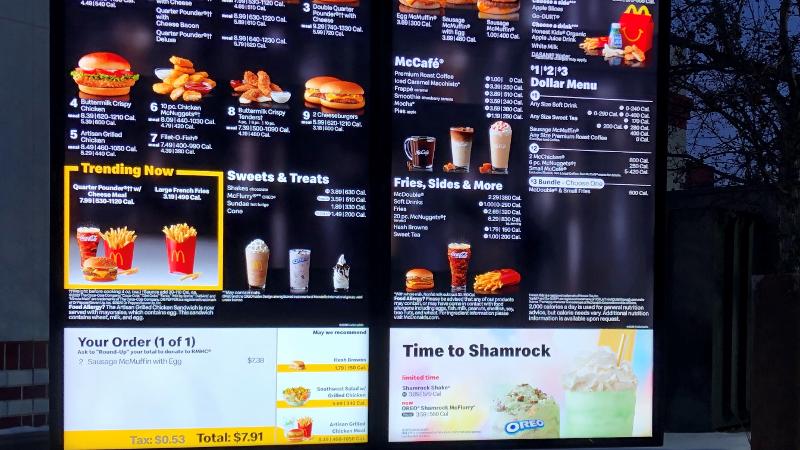

McDonald’s has officially ended its AI drive-through ordering assistant test with IBM, proving that even the Golden Arches can have a “please pull forward” moment with artificial intelligence.
The Big Mac-Sized AI Experiment Comes to a Stop
For several years, McDonald’s tested an artificial intelligence system designed to take customer orders at select U.S. drive-thru lanes. The idea sounded simple enough: a customer pulls up, speaks into the ordering speaker, and an AI voice assistant handles the conversation before sending the order to the kitchen. In theory, fries get fried faster, lines move smoothly, employees face less pressure, and nobody has to shout “no onions” three times into a metal box.
In practice, the drive-thru turned out to be one of the hardest classrooms an AI assistant could enter. McDonald’s ended its partnership with IBM for the Automated Order Taking system, commonly called AOT, after testing it in more than 100 restaurants. The technology was scheduled to be removed from test locations by late July 2024. The decision did not mean McDonald’s was abandoning AI forever. It meant this specific version of drive-thru voice automation had reached the end of the road.
That distinction matters. McDonald’s did not say, “AI is over.” It said, more or less, “This AI is not ready to run the lunch rush.” And honestly, anyone who has ever ordered a customized coffee, two Happy Meals, one sandwich without pickles, and a last-second apple pie knows the drive-thru is not exactly a quiet software demo room.
What Was McDonald’s AI Drive-Thru Assistant?
The McDonald’s AI drive-thru assistant was built to automate one of the most repetitive but surprisingly complicated jobs in quick-service restaurants: taking orders by voice. Customers were supposed to speak naturally, the system would recognize the words, match them to menu items, confirm the order, and send it along.
The project grew out of McDonald’s broader technology push. In 2019, McDonald’s acquired Apprente, a voice-based conversational technology company focused on restaurant ordering. That move led to the creation of McD Tech Labs. In 2021, IBM acquired McD Tech Labs as part of a larger agreement to help develop and scale Automated Order Taking technology for McDonald’s restaurants.
On paper, this looked like a strong match. McDonald’s had the scale, drive-thru traffic, menu data, and operational experience. IBM had enterprise AI expertise and Watson-related capabilities. Together, they aimed to create a system that could understand customers, reduce order-taking labor, and improve speed of service.
The problem was not that the concept lacked business logic. It had plenty. The drive-thru is one of McDonald’s most important channels, and faster ordering can mean shorter lines, happier customers, and better sales during peak hours. But the real world has a special talent for ruining neat PowerPoint slides.
Why McDonald’s Pulled the Plug
McDonald’s did not publish a dramatic breakup letter with IBM. There was no sad violin playing over a tray of cold fries. The company described the decision as the result of a thoughtful review. Still, several practical issues help explain why the test ended.
1. Drive-Thru Ordering Is Messier Than It Looks
A restaurant drive-thru is not a clean recording studio. Engines idle. Kids debate toys in the back seat. Dogs bark. Rain hits the windshield. One passenger changes their mind halfway through the order. Another passenger suddenly remembers they want barbecue sauce. Meanwhile, the customer in the next lane may also be speaking.
For human workers, this chaos is annoying but familiar. For AI, it can be a puzzle with ketchup on it. Voice recognition systems must understand accents, background noise, interruptions, slang, menu nicknames, and last-second corrections. That is a lot to ask from a system that cannot simply lean closer and say, “Sorry, did you say McChicken or McNuggets?” with human intuition.
2. Viral Mistakes Hurt Trust
Several customer videos circulated online showing strange order errors. Some reports described examples involving extra sweet teas, unwanted items, confused corrections, and even the now-famous joke-worthy image of bacon being added to ice cream. Whether every viral clip captured a typical experience or an unusual failure, the damage was clear: the public started treating the AI assistant less like a futuristic helper and more like a comedy side character.
In fast food, trust is not a luxury feature. Customers want speed, price, and accuracy. When an order is wrong, the restaurant loses time fixing it. The customer gets irritated. The crew has to step in anyway. At that point, the AI is not saving labor; it is creating a second job called “robot babysitter.”
3. Franchise Operations Need Consistency
McDonald’s is a franchise-heavy system. That means any technology rolled out broadly must work reliably across thousands of restaurants with different layouts, traffic patterns, staffing levels, regional accents, and customer habits. A test that performs acceptably in one location may struggle somewhere else.
For franchisees, the question is not whether AI sounds impressive. The question is whether it makes the restaurant easier to run. If the assistant slows the line, frustrates guests, or requires employees to constantly intervene, it becomes another operational headache. And quick-service restaurants already have enough headaches, from labor scheduling to broken ice cream machines, a topic the internet has chosen as its forever hobby.
McDonald’s Is Not Done With AI
The end of the IBM drive-thru assistant does not mean McDonald’s has sworn off artificial intelligence like a customer swearing off fries after finishing a large order alone. In fact, McDonald’s continues to invest in digital ordering, loyalty programs, cloud technology, restaurant automation, and data-driven operations.
The company has also announced a strategic partnership with Google Cloud to connect restaurants with cloud and edge computing technology. That matters because future AI systems may need to process information closer to the restaurant itself, improving speed, reliability, and integration with kitchen systems, kiosks, mobile orders, and digital menu boards.
In other words, the IBM AOT shutdown was not a funeral for restaurant AI. It was a reset. McDonald’s learned that voice ordering has potential, but the technology must be accurate, flexible, and deeply connected to restaurant operations before it can scale across a brand of this size.
What This Means for Fast Food Automation
McDonald’s decision sent a loud message across the quick-service restaurant industry: AI can help, but it cannot be sprinkled on operations like sesame seeds and expected to solve everything.
Other chains continue testing AI ordering and restaurant automation. Wendy’s has explored FreshAI, White Castle has tested voice ordering, and several restaurant brands are experimenting with digital assistants, kitchen robotics, predictive inventory, loyalty personalization, and computer vision. The pressure is understandable. Restaurants face rising labor costs, high customer expectations, and intense competition. A technology that improves speed and accuracy could be valuable.
But the McDonald’s case shows that restaurant AI must pass a very practical test: does it make the guest experience better? Not cooler. Not buzzier. Better.
A drive-thru customer does not care whether the order taker uses machine learning, natural language processing, edge computing, or a tiny wizard living inside the menu board. They care whether the order is correct, the line moves, and the food arrives hot. If the AI fails those basics, the novelty fades faster than a forgotten order of fries.
The Real Lesson: AI Needs Human Backup
The best future for restaurant AI may not be full replacement. It may be collaboration. AI can handle routine tasks, suggest upsells, recognize frequent orders, help with kitchen timing, flag possible mistakes, and support employees during busy periods. Humans can handle exceptions, emotional nuance, complex complaints, and the magical restaurant skill of understanding what a customer means even when they do not say it clearly.
For example, an AI assistant might take a standard order for a Big Mac meal with a Coke without any trouble. But a customer who says, “Can I get the thing my daughter had last time, but not spicy, and also do you still have that sauce?” may need a human. The future system should know when to transfer smoothly, not stubbornly continue like a GPS demanding a U-turn in a lake.
That handoff is critical. When automation fails gracefully, customers barely notice. When it fails loudly, everyone posts it online with captions, emojis, and dramatic music.
Why the Drive-Thru Is a Brutal Test for AI
The drive-thru may look simple from the outside, but it combines many hard technology problems at once. Speech recognition must work in noisy environments. Natural language processing must understand casual ordering patterns. Menu systems must handle substitutions, promotions, regional items, limited-time offers, pricing rules, and availability. Payment and kitchen systems must receive accurate data instantly. The customer must feel heard, not trapped in a conversation with a toaster that has opinions.
Even small errors can be expensive. If an AI adds the wrong item, the kitchen may prepare food that gets wasted. If it misses an item, the customer may return to complain. If it takes too long to confirm an order, the drive-thru line backs up. Multiply those small failures across a national chain, and the cost becomes very real.
This is why McDonald’s decision is important beyond hamburgers. It shows that AI adoption is not only about technical capability. It is about environment, workflow, customer psychology, employee training, hardware integration, and brand reputation. A demo can impress investors. A lunch rush will expose everything.
Customer Experience Still Wins
McDonald’s has spent years improving digital convenience through mobile ordering, delivery, kiosks, loyalty rewards, and drive-thru upgrades. The company understands that customers want easy, fast, predictable service. AI can support that mission, but only when it disappears into the experience.
The ideal AI system is not the one customers talk about because it sounds futuristic. It is the one customers do not think about because it simply works. The order is correct. The total makes sense. The line moves. The employee at the window smiles instead of apologizing for a machine that tried to add 27 hash browns.
That is the standard McDonald’s must meet before voice AI can return at scale. Fast food is not a lab experiment. It is dinner for a tired parent, lunch for a construction crew, a snack for college students, and breakfast for someone who is already late. Technology must respect that urgency.
Business Analysis: A Strategic Pause, Not a Defeat
Calling McDonald’s AI drive-thru shutdown a total failure misses the bigger picture. Large companies test technology because tests produce information. McDonald’s learned how customers react, where the AI struggled, what franchisees need, and which operational details must be solved before a broader rollout.
That knowledge has value. It may shape future systems from other vendors, future Google Cloud integrations, and future AI features inside restaurants. The company also avoided forcing a flawed system across thousands of locations simply because AI was fashionable. That restraint matters. In the current technology climate, many brands rush to announce AI features before asking whether customers actually want them.
McDonald’s did something more practical: it tested, reviewed, and stopped what was not ready. That may look less glamorous than a splashy rollout, but it is often how durable innovation happens. Sometimes the smartest AI strategy is knowing when the robot needs to clock out.
Experience Notes: What This Story Feels Like in Real Life
Anyone who has used a busy drive-thru knows why McDonald’s AI assistant had a mountain to climb. Ordering fast food from a car is a strangely human ritual. You rehearse the order in your head, forget everything when the speaker crackles, panic when the person says “go ahead,” and suddenly your passenger whispers, “Ask if they have ranch.” It is not elegant. It is not structured. It is barely language sometimes. It is vibes, hunger, and mild pressure.
That is why the McDonald’s AI story feels so relatable. Most customers have already had awkward experiences with automated phone systems, chatbots, and voice assistants. We have all said “representative” into a phone like we were casting a spell. We have all watched a chatbot cheerfully misunderstand a simple request. So when people heard that an AI drive-thru assistant was adding odd items or struggling with corrections, the reaction was not shock. It was more like, “Of course it did. I once asked my smart speaker for jazz and got a weather report.”
From a customer perspective, the lesson is simple: convenience must feel convenient. If AI makes ordering faster, people will accept it quickly. If it makes ordering feel like negotiating with a confused vending machine, people will reject it even faster. Customers are not anti-technology. They are anti-hassle. Mobile ordering works because it gives control. Kiosks work for many people because they can see and edit the order. Voice AI has a harder job because the customer must trust that the system heard everything correctly.
From an employee perspective, the experience is also complicated. A good AI assistant could reduce stress during peak hours by handling routine orders while crew members prepare food and manage windows. But a bad AI assistant can increase stress. Employees may have to monitor the system, fix errors, calm customers, and keep the line moving. That is not automation; that is adding a digital coworker who keeps dropping trays.
For restaurant operators, the experience highlights an important truth about technology investments: the best tools fit the workflow. They do not demand that the restaurant reshape itself around the tool. A drive-thru lane is a high-pressure environment where seconds matter. Any AI system must integrate with menus, headsets, kitchen displays, payments, staff routines, and customer expectations. If one part breaks, the whole experience feels broken.
For the broader public, McDonald’s decision is a useful reality check. AI is powerful, but it is not magic dust. It can summarize documents, analyze data, recommend products, and help with planning. But when placed in a noisy lane with impatient drivers and customized burger orders, it must perform with the reliability of a seasoned crew member. That bar is high, and it should be. A customer may forgive one mistake, but not a system that turns a simple order into a sitcom.
The funny thing is that McDonald’s may still end up being right about AI in the drive-thru. The first version stumbled, but future systems will likely improve. Better microphones, stronger language models, smarter menu integration, and smoother human handoffs could make voice ordering genuinely useful. The end of this AI assistant may eventually look less like a failure and more like the awkward first pancake: weirdly shaped, slightly burnt, but necessary before breakfast gets good.
Conclusion: The Robot Took the Order, but Reality Took the Wheel
McDonald’s terminating its drive-through ordering AI assistant is one of the clearest examples of the gap between AI ambition and real-world execution. The company had a reasonable goal: make ordering faster, reduce strain on employees, and modernize the drive-thru. But the drive-thru is a noisy, unpredictable, deeply human environment. The IBM-powered assistant was not consistent enough to become a permanent fixture.
The bigger story is not that AI failed forever. It is that AI must earn its place in customer-facing service. For McDonald’s, the future likely still includes automation, cloud technology, data-driven personalization, and possibly a better voice-ordering system. But the next version must be more accurate, more flexible, and better supported by human employees.
Until then, the classic drive-thru exchange remains safe: a human voice, a glowing menu board, and the eternal question, “Would you like fries with that?” Honestly, after watching AI try to handle bacon ice cream, yes. Yes, we would.
SEO Metadata


