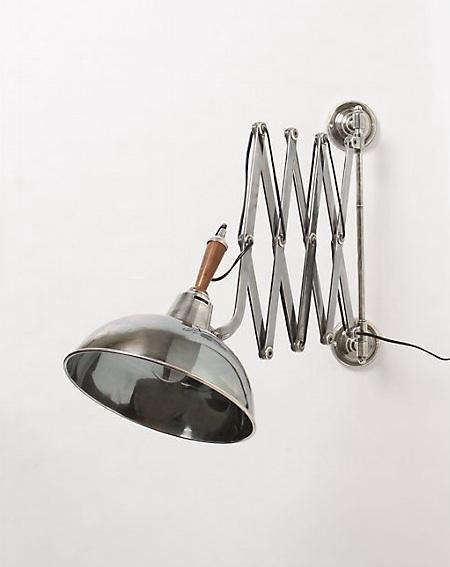

Some light fixtures politely illuminate a room. Others arrive with the confidence of a vintage movie camera, a drafting-table lamp, and a well-traveled antique dealer all rolled into one. The Far and Wide Sconce at Anthropologie belongs firmly in the second group. It is not the kind of wall light that whispers, “I’m just here to help you find your socks.” It says, “Pull up a chair, open a book, and let’s make this corner look intentional.”
Originally noted as a dramatic wall-mounted lamp from Anthropologie, the Far and Wide Sconce gained attention for its silver-toned brass shade, sheesham wood handle, and long articulated arm that could extend up to about 61 inches. At roughly 24.5 inches high, with a 4.75-inch mounting bracket, it was designed to reach far beyond the average decorative sconce. In plain English: this was not just a wall light. It was a lighting event.
This article explores what made the Anthropologie Far and Wide Sconce so memorable, how it fits into modern interior design, where a wide-reaching wall sconce works best, and what homeowners should consider before installing a similar piece today.
What Is the Far and Wide Sconce?
The Far and Wide Sconce was a grand, adjustable wall-mounted lamp sold by Anthropologie for around $498 at the time of publication. Its defining feature was an articulated arm that allowed the lamp to stretch away from the wall and direct light where needed. That detail placed it somewhere between a traditional wall sconce, an industrial task lamp, and a sculptural design statement.
Unlike a small decorative sconce that simply glows beside a mirror or hallway, this fixture was built for reach. The broad metal shade helped focus light downward, while the sheesham wood handle added warmth and made the lamp easier to position. The mix of brass and wood gave it a collected, slightly global lookvery much in line with Anthropologie’s talent for making new pieces feel as if they were discovered in a charming old workshop somewhere with excellent coffee.
Why the Design Still Feels Fresh
Good lighting design rarely goes out of style because it solves real problems. The Far and Wide Sconce did three things well: it saved surface space, provided directional task lighting, and added strong visual character. That combination is why similar articulating wall sconces continue to show up in bedrooms, reading nooks, home offices, kitchens, and layered living rooms.
It Works as Task Lighting
In residential lighting, designers often talk about three layers: ambient lighting, task lighting, and accent lighting. Ambient lighting fills the room, task lighting helps you perform specific activities, and accent lighting adds drama or focus. The Far and Wide Sconce is mainly a task light, but it has enough personality to act as accent lighting too. That is a rare double actlike a lamp that can both cook dinner and tell a good story.
Because the arm extends outward, the fixture can direct light over a chair, desk, side table, or bedside area without requiring a floor lamp. That makes it especially useful in small rooms where every square foot has already been claimed by furniture, laundry, pets, or a suspiciously large collection of throw pillows.
It Adds Industrial Warmth
The phrase “industrial lighting” can sound cold, but the best industrial-inspired pieces feel warm, practical, and handmade. The Far and Wide Sconce balanced its metal construction with a wood handle, which softened the look. Silver-toned brass offered a reflective, vintage-style finish, while the sheesham wood detail kept the fixture from looking too mechanical.
That material contrast is one reason it fits so many interiors. In a modern farmhouse room, it can add a utilitarian edge. In a bohemian home, it feels collected and worldly. In a minimalist space, it becomes the statement piece. In an eclectic apartment, it simply nods politely at the rest of the beautiful chaos.
Best Places to Use a Far-Reaching Wall Sconce
The key to using a dramatic sconce is understanding scale. A fixture with a long arm needs breathing room. It should look intentional, not like it is trying to escape the wall.
1. Beside a Reading Chair
This is probably the most natural home for the Far and Wide Sconce. Mounted beside or slightly behind a lounge chair, the adjustable arm can swing over the reading area and provide focused light. Pair it with a leather chair, a linen slipcovered armchair, or a rattan seat, and suddenly the corner looks like it belongs in a boutique hotel lobby.
For reading, warm white LED bulbs in the 2700K to 3000K range usually create a cozy atmosphere, while brighter neutral bulbs can help if the space doubles as a work zone. The trick is choosing enough brightness to read comfortably without turning the corner into an interrogation room.
2. Above a Desk or Work Table
An articulating sconce is excellent over a desk because it clears the tabletop. No lamp base, no tangled cord, no accidental coffee collision. In a small home office, that matters. A wall-mounted fixture also gives the workspace a tailored, built-in feel even if the “office” is actually one end of the dining table.
For desk lighting, pay attention to glare. The shade should direct light toward the work surface, not into your eyes or onto a shiny laptop screen. If you are right-handed, placing the light on the left can reduce shadows while writing; left-handed users may prefer the reverse.
3. As Bedside Lighting
A pair of adjustable wall sconces can make a bedroom feel custom-designed. They free up nightstand space and add symmetry around the bed. The Far and Wide Sconce, however, is larger than the average bedside light, so it works best in rooms with generous wall space, tall ceilings, or a bed without a bulky headboard.
For bedside use, placement should be based on how you sit in bed. The light should land near shoulder or eye level when seated, with the shade positioned to avoid direct glare. A dimmable bulb or compatible dimmer switch is a smart upgrade because nobody wants full theatrical lighting during a midnight water break.
4. In a Kitchen or Breakfast Nook
A wide-arm sconce can look fantastic above open shelving, a small breakfast table, or a kitchen prep area. The industrial shape pairs well with butcher block, marble, tile, plaster, and painted cabinetry. It also brings charm to spaces where recessed ceiling lights feel a little too practical.
In kitchens, installation details matter. Make sure the fixture does not interfere with cabinet doors, shelving, range hoods, or traffic paths. If the area is near moisture, steam, or splashing water, check whether the fixture is rated for damp locations. A beautiful light is less charming when it is installed where it should not be.
Installation Considerations Before Buying a Similar Sconce
The original Far and Wide Sconce required professional hardwiring, which means it was not a casual “hang it during a lunch break” kind of project. Hardwired fixtures connect directly to the home’s electrical system and should generally be installed by a licensed electrician.
Check the Wall Structure
A long articulating arm creates leverage. That means the mounting point needs to be secure. Before installing a large adjustable sconce, confirm that the wall can support the fixture. Mounting into a stud or using proper anchors may be necessary depending on the weight and design.
Measure the Extension
The Far and Wide Sconce could extend dramatically, which is part of its magic. But large extension also means you need to check clearance. Will the arm swing into a doorway? Will it bump artwork? Will it surprise an unsuspecting tall person? These are not philosophical questions. They are real-life lighting survival questions.
Choose the Right Bulb
The original product description listed a 60-watt maximum. For modern use, many homeowners would choose an LED bulb that produces comfortable brightness while using less energy. Focus on lumens rather than old-fashioned wattage comparisons. A bulb around 450 to 800 lumens can work well for many reading and accent applications, depending on shade shape and room brightness.
Color temperature also matters. Warm white light feels cozy and flattering in bedrooms and living rooms. Neutral white can be better for workspaces. Cool daylight bulbs may be useful for detailed tasks, but in a decorative sconce they can feel a bit like a dentist’s office wearing a lampshade.
How to Style the Far and Wide Sconce Look
Even if the original Anthropologie Far and Wide Sconce is difficult to find today, the look is easy to understand: large-scale, adjustable, metallic, practical, and slightly vintage. To recreate the mood, look for accordion wall sconces, swing-arm wall lights, industrial brass sconces, or articulating reading lights with warm material details.
Pair It With Natural Textures
Wood, cane, rattan, linen, jute, and leather all work beautifully with a metal wall sconce. The wood handle on the Far and Wide Sconce is a clue: this fixture was never meant to feel sterile. Add a woven basket, a textured rug, or a wooden side table to make the lighting feel grounded.
Use It as the Room’s “Functional Sculpture”
A large sconce does not need much competition. Let it be the star. Keep nearby artwork simple, avoid crowding the wall, and give the arm space to move. The goal is for the fixture to look useful and elegant, not trapped in a decorative traffic jam.
Balance It With Softer Lighting
Because a directional sconce creates focused light, it should be part of a broader lighting plan. Add ambient light from ceiling fixtures, table lamps, or floor lamps. Then use the sconce where precision is needed. Layered lighting makes a room feel finished, flexible, and flatteringbasically the interior design equivalent of good editing.
Who Should Consider This Style?
The Far and Wide Sconce style is ideal for people who like lighting with presence. It is not for someone who wants every fixture to disappear quietly into the background. This is a choice for readers, makers, cooks, collectors, designers, and anyone who has ever looked at a blank wall and thought, “This could use a little drama, but tasteful drama.”
It is also a strong option for homes with limited floor space. If a room cannot handle a floor lamp, a wall-mounted adjustable sconce can deliver similar function without cluttering the floor. That makes it useful in apartments, compact bedrooms, studio spaces, and narrow sitting areas.
Potential Drawbacks to Keep in Mind
No fixture is perfect. A large articulated sconce requires thoughtful planning. It may need professional installation, wall reinforcement, and careful placement. It may not suit tight hallways, low ceilings, or very narrow rooms. If installed too low, it can feel intrusive. If installed too high, it may lose its usefulness as a task light.
Another consideration is availability. The original Far and Wide Sconce appears to be an older Anthropologie design rather than a common everyday stock item. Shoppers may need to search resale platforms, vintage marketplaces, or similar current designs to capture the same look.
of Real-Life Experience: Living With a Statement Sconce
A statement sconce changes how a room behaves. That sounds dramatic, but lighting really does influence daily habits. Imagine a quiet corner of a living room that nobody uses. There is a chair there, technically. There is a small table, theoretically. But the space has no purpose, so it becomes a landing zone for mail, chargers, and one mysterious sock. Add a wide-reaching wall sconce above that chair, and suddenly the corner becomes a reading nook. The chair did not change. The light gave it a job.
That is the best experience related to a fixture like the Far and Wide Sconce: it creates destinations inside a home. A long-arm wall light can pull illumination exactly where it is needed. In the evening, you can swing it over a book. During the day, you can push it back toward the wall so the room feels open. When guests visit, the fixture becomes a conversation piece. People notice adjustable sconces because they look mechanical, sculptural, and useful all at once.
In a bedroom, this kind of sconce can make nightstands feel calm again. No bulky lamp base. No shade taking up half the tabletop. No cord performing interpretive dance behind the furniture. A hardwired swing-arm sconce feels polished and permanent, especially when installed in pairs. It gives the room a boutique-hotel feeling without requiring a boutique-hotel budget, unless you also start charging yourself $18 for minibar almonds.
In a home office, the experience is even more practical. Good task lighting reduces eye strain and makes a work area feel deliberate. A desk under a strong adjustable wall sconce looks like a place where things get done. Even if the “things” include answering two emails and then reorganizing your pen cup, the lighting still makes it feel official.
The one lesson learned quickly is that placement is everything. A large sconce should be tested before installation. Use painter’s tape to mark the backplate, arm reach, and shade position on the wall. Sit in the chair. Open the cabinet. Walk through the room. Pretend you are carrying laundry. Pretend you are half-asleep. These tests reveal whether the fixture is elegant or secretly annoying.
Another practical experience: dimming matters. A powerful directional sconce is wonderful when reading, but too bright when relaxing. A dimmable bulb or dimmer switch lets the light shift from “focused productivity” to “soft evening glow.” That flexibility is what makes a fixture like the Far and Wide Sconce so appealing. It is decorative, yes, but it is not just decoration. It earns its spot on the wall every day.
Final Thoughts on the Far and Wide Sconce at Anthropologie
The Lighting: Far and Wide Sconce at Anthropologie story is really about the power of functional design. This fixture combined reach, material contrast, vintage-inspired character, and everyday usefulness. Its silver-toned brass body, sheesham wood handle, and dramatic articulated arm made it more than a simple wall light. It became a reminder that lighting can shape how a room looks, feels, and functions.
Whether you find the original Far and Wide Sconce or choose a similar swing-arm wall light, the design lesson remains the same: great lighting should do more than brighten a space. It should guide the eye, support daily routines, save room where possible, and add personality without shouting. Although, in this case, a little stylish shouting is part of the fun.
Note: Product details reflect publicly available archived product information and lighting design best practices. Availability, pricing, and specifications may change, so shoppers should verify current details before purchasing or installing any fixture.


