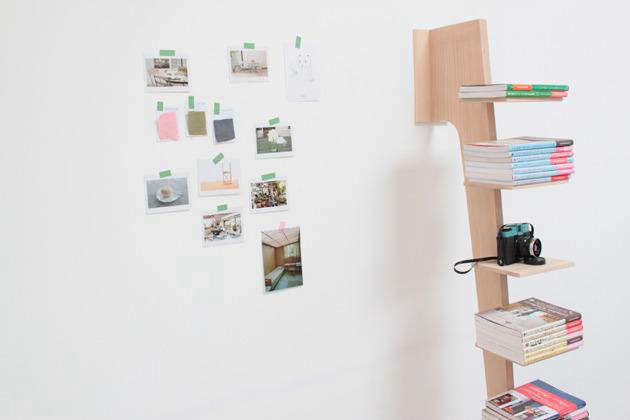

Some furniture walks into a room and announces itself like it owns the lease. Caroline Gomez’s lean-to shelving does the opposite. It arrives quietly, rests against the wall, and somehow makes the entire space feel calmer, brighter, and better behaved. If a standard bookcase is a filing cabinet in a cardigan, Gomez’s lean-to storage is a poem that learned how to hold books.
The idea is beautifully simple: instead of forcing a shelf to stand like a miniature building, why not let the wall help? Gomez’s Contre Collection explored that question through streamlined wood furniture designed to lean against a wall for support. The collection included pieces such as a shelf, bedside table, and console, all working with the architecture of the room rather than fighting it. The result is not just storage. It is storage with posture, manners, and excellent cheekbones.
In a world where small apartments, multipurpose rooms, and “temporary home offices” have become a permanent personality trait, lean-to shelving feels especially relevant. It is slim, vertical, flexible, and visually light. It gives you a place for books, ceramics, baskets, framed photos, children’s treasures, plants, and those mysterious objects we keep because they “might be useful someday.” Spoiler: they will not. But they will look better on a good shelf.
What Makes Caroline Gomez’s Lean-To Shelving Special?
Caroline Gomez is known for a restrained, natural design language rooted in everyday usefulness. Her work has often favored wood, simple forms, handmade sensibility, and objects that feel warm without becoming decorative noise. Her lean-to shelving belongs perfectly in that world. It is not a loud design trick. It is a small structural idea used with elegance.
The Contre pieces play with the notion of support. Traditional furniture usually tries to be independent: four legs, square stance, solid footprint. Gomez’s work asks a more poetic question: if a piece is already going to live against a wall, why pretend the wall is not part of the design? By leaning, the shelf becomes thinner, lighter, and more architectural. It uses the room itself as a partner.
A Shelf That Feels Like a Drawing
One reason the design is so appealing is its silhouette. Lean-to shelving has a line quality that flat, heavy storage often lacks. From the side, it resembles a sketch: a vertical stroke, a diagonal gesture, a few horizontal pauses. That makes it ideal for homes where furniture needs to do practical work without visually shrinking the room.
Where a bulky bookcase can make a small bedroom feel like a storage unit with pillows, a lean-to shelf keeps air moving around the object. The open sides, natural wood, and angled stance create negative space, which is designer-speak for “your room can breathe again.”
The Beauty of Lean-To Storage in Small Spaces
Small-space living is not just about owning fewer things. It is about making the things you own behave. A lean-to shelf is useful because it takes advantage of vertical wall space while keeping the floor footprint modest. In a narrow hallway, beside a desk, near a child’s bed, or in an awkward corner, it can create storage without the commitment of built-ins.
This is where Gomez’s approach feels especially smart. The shelf does not scream “storage solution,” which is a phrase that often sounds like something sold in a plastic bin aisle under fluorescent lighting. Instead, it looks intentional. It makes books, toys, folded linens, and art supplies look curated. Even if the truth is that you panic-cleaned five minutes before guests arrived, the shelf will keep your secret.
Perfect Places to Use Lean-To Shelving
In a child’s room: Gomez’s lean-to storage works beautifully for children because it can display books, small toys, drawings, trophies, and collections without making the room feel crowded. Children are natural collectors. Leaves, rocks, tiny animals, stickers, medals, cardboard inventionseverything is important. A lean-to shelf gives those treasures a place to land.
In a hallway: A slim leaning console or shelf can turn a forgotten passage into a drop zone for keys, mail, bags, and a small lamp. The trick is to keep the styling spare. A tray, a basket, and one handsome object are enough. Hallways are not museums. They are traffic lanes with better lighting.
In a bedroom: A lean-to bedside table or narrow shelf can replace a conventional nightstand, especially where space is tight. Use it for a book, phone charger, glass of water, small dish, and perhaps one calming object. Do not use it for seventeen half-read novels unless you enjoy being judged by furniture.
In a living room: A taller leaning shelf can display art books, ceramics, framed photos, trailing plants, and small sculptural pieces. Because the design is open, it feels less visually heavy than a cabinet. It can soften modern interiors and bring warmth to white walls.
Why Natural Wood Matters
Wood is central to the charm of Caroline Gomez’s lean-to shelving. Natural wood has a way of making minimalist furniture feel human. Without it, a pared-back piece can become cold or overly severe. With wood, the same shape feels calm, tactile, and approachable.
The grain gives each shelf quiet variation. The color changes slightly with light. Edges catch shadows. A simple wooden shelf can look different in the morning, afternoon, and evening, which is more than can be said for most plastic storage cubes. Wood also pairs easily with other materials: linen, ceramic, glass, metal, paper, rattan, and wool. That makes it unusually adaptable across interior styles.
Minimalism Without the Museum Feeling
There is a kind of minimalism that feels like you are not allowed to sit down. Gomez’s work avoids that trap. Her designs are minimal but not sterile, poetic but not precious. A lean-to shelf from her design world looks best when used in real life: holding a stack of books, a child’s drawing, a favorite bowl, or a slightly crooked family photo.
The goal is not emptiness. The goal is breathing room. That distinction matters. A well-styled leaning shelf should not look abandoned. It should look edited. Think fewer objects, better spacing, and a mix of heights. If everything on the shelf is the same size, the result can feel stiff. If every surface is packed, the shelf starts looking like it lost a wrestling match with a flea market.
How to Style Lean-To Shelving Like a Designer
Styling open shelving is part art, part restraint, and part remembering that not every mug deserves a public platform. The Caroline Gomez approach suggests quiet utility: beautiful things, useful things, and enough space between them for the eye to rest.
1. Start With Function
Before placing anything, decide what the shelf must do. Is it for books? Kids’ supplies? Towels? Entryway essentials? Art objects? Plants? A shelf without a job becomes a clutter runway. Once you assign a purpose, styling becomes much easier.
2. Place Heavy Items Low
For both safety and visual balance, heavier items belong on lower shelves. Put large books, storage baskets, boxes, and substantial objects near the bottom. Lighter items such as framed prints, small ceramics, and decorative pieces can go higher.
3. Use Baskets to Hide the Chaos
Open shelves are honest. Sometimes too honest. Baskets add texture while hiding the less photogenic parts of life: chargers, craft supplies, socks without partners, pet toys, and that one remote control nobody understands. Natural baskets work especially well with wood because they keep the mood warm and relaxed.
4. Mix Vertical and Horizontal Shapes
Stack a few books horizontally, stand others upright, lean a framed print, add a small vase, and leave some empty space. The variation creates rhythm. Your eye moves comfortably from shelf to shelf instead of crashing into a wall of stuff.
5. Give the Shelf a Little Air
The biggest mistake with beautiful shelving is treating every inch as a challenge. Empty space is not wasted space. It is what makes the objects visible. A Caroline Gomez-inspired shelf should feel collected, not crammed. If you cannot see the shelf anymore, congratulations: you have built a very attractive storage problem.
Safety: The Stylish Part Nobody Should Skip
Lean-to shelving looks casual, but safety should never be casual. Any tall shelf, bookcase, or leaning storage piece should be evaluated for stability, especially in homes with children, pets, or enthusiastic adults who believe shelves are ladders. They are not. That is why ladders exist.
Even when a leaning shelf is designed to rest securely against a wall, it is wise to follow basic furniture safety principles. Anchor tall furniture when possible. Keep heavy objects low. Avoid placing tempting items, such as toys or electronics, on high shelves where a child might climb. Use appropriate wall hardware for your wall type, and check the piece occasionally to make sure it has not shifted.
For renters, this can be tricky because wall anchoring may feel like a forbidden ritual involving drills and security deposits. Still, many anchor kits create minimal wall damage, and the safety benefit can be significant. When in doubt, ask your landlord, use the proper hardware, and remember: a tiny patched hole is better than a toppling bookcase.
Lean-To Shelving vs. Traditional Bookcases
A traditional bookcase is ideal when you need maximum storage, enclosed sides, and a stable freestanding structure. It works well for heavy book collections, office files, media equipment, and spaces where furniture needs to stand away from the wall.
A lean-to shelf, by contrast, excels when you want lighter storage, visual elegance, and a smaller footprint. It is best for display, everyday objects, curated collections, folded textiles, plants, and moderate book storage. It is not the right choice for overloading with encyclopedias, aquariums, dumbbells, or anything your future self will describe to emergency services as “probably a bad idea.”
Choose Lean-To Shelving If You Want:
- A lighter alternative to a bulky bookcase
- Vertical storage for a narrow room
- A display shelf for books, art, plants, or children’s treasures
- Furniture that feels warm, minimal, and flexible
- A piece that can visually blend with walls and natural materials
Choose a Traditional Bookcase If You Need:
- Heavy-duty storage for large book collections
- Closed sides or adjustable shelves
- Freestanding placement away from walls
- Storage for equipment or high-weight items
- A built-in or library-style look
How Caroline Gomez’s Design Philosophy Fits Today’s Homes
What makes Gomez’s lean-to shelving feel fresh years after its first design-blog moment is not trendiness. It is restraint. Today’s homes are asked to do too much. The living room is also an office. The bedroom is also a reading room. The kitchen is also a charging station, homework hub, and emotional support snack zone. Furniture that does one job beautifully, without taking over, is valuable.
Gomez’s design sensibility fits the modern desire for slower, more thoughtful interiors. Her broader creative path has emphasized minimalism, craft, natural materials, small-series production, and attention to everyday rituals. That perspective is visible in the lean-to pieces: they are practical, but they also ask us to look more carefully at the relationship between object, room, and daily life.
This is not disposable storage. It is not the kind of furniture you buy because your closet gave up. It is the kind of piece that encourages you to own fewer, better, more meaningful thingsor at least to arrange your questionable things with better spacing.
Buying or Recreating the Look
Original Caroline Gomez pieces may not always be easy to find, especially because older independent design collections often move in and out of availability. However, the look can inspire smart choices when shopping for modern leaning shelves, ladder bookcases, wall-leaning consoles, and narrow vertical storage.
When searching, use terms such as lean-to shelving, leaning ladder shelf, wood ladder bookcase, minimalist wall shelf, narrow leaning bookshelf, and small space vertical storage. Look for solid construction, a stable angle, quality joinery, smooth edges, and clear weight limits. If the shelf includes anchoring hardware, use it. If it does not, consider adding suitable anti-tip hardware yourself.
What to Look For in a Good Leaning Shelf
- Material: Solid wood or high-quality engineered wood with a durable finish.
- Depth: Lower shelves should be deep enough for stability and useful storage.
- Angle: The lean should feel intentional, not wobbly or improvised.
- Surface grip: Feet should sit securely on the floor without sliding.
- Wall contact: The upper contact points should be smooth and protective.
- Weight guidance: Clear limits help prevent overloading.
- Anchoring options: A discreet safety strap or bracket is a major plus.
Caring for Wood Lean-To Shelving
Wood furniture does not need drama. It needs consistency. Keep it away from prolonged direct sunlight when possible, avoid placing it beside heat vents or radiators, and do not soak it during cleaning. Dust with a soft cloth and wipe spills quickly. If the finish allows, use gentle cleaning products rather than harsh chemicals.
Because lean-to shelves often display objects, rotate items occasionally to prevent uneven fading or pressure marks. Use felt pads under ceramics, trays under plants, and coasters under anything that sweats. Plants are lovely on shelves, but water rings are not a design feature, no matter how confidently they appear.
Real-Life Experience: Living With Lean-To Shelving
The first thing you notice after bringing a lean-to shelf into a room is how little ceremony it requires. There is no grand rearrangement, no full weekend sacrificed to furniture assembly, no moment where you sit on the floor surrounded by screws and question your character. You place it against the wall, check the angle, secure it properly, and suddenly a dead corner has a job.
In a small apartment, I have found that lean-to shelving works best when it is given a clear personality. In an entryway, it becomes the “leaving the house without losing your mind” station. A lower basket holds dog leashes, umbrellas, or reusable shopping bags. A small tray catches keys. A narrow shelf holds mail until you are emotionally prepared to open it. Add a small lamp and the whole area looks intentional instead of like your front door sneezed belongings onto the floor.
In a bedroom, the same type of shelf can become a gentle alternative to a nightstand. The trick is discipline. One book is charming. Six books become a guilt monument. A glass of water, a reading lamp, a small bowl, and one framed photo are enough. The angled shape makes the room feel less boxed-in, which is especially helpful beside a bed where bulky furniture can make everything feel tight.
For children’s rooms, lean-to storage is wonderfully useful, but it requires smart setup. Keep the shelf anchored, store heavier items low, and use baskets for toys that multiply when nobody is looking. The best part is that the open design lets children see what they have. Books face outward, art supplies become accessible, and collections can be displayed without covering every flat surface in the house. A child’s room will never be perfectly tidy for more than eleven seconds, but a good shelf gives the chaos a fighting chance.
In a living room, lean-to shelving can act as a rotating gallery. I like using one shelf for books, one for ceramics, one for a plant, and one for personal objects. The key is to leave breathing room. When every shelf has a small empty area, the whole piece looks calmer. Guests may assume you are naturally organized. Let them. There is no need to confess that the closet nearby is holding three tote bags full of “miscellaneous.”
The biggest lesson is that lean-to shelving rewards editing. It will not hide clutter the way a cabinet can. Instead, it gently encourages better habits. You begin asking whether an object deserves to be seen. You group things by purpose. You remove duplicates. You give the shelf a weekly reset because it is visible and easy to manage. In that sense, Caroline Gomez’s lean-to idea is more than a storage format. It is a small domestic philosophy: use the wall, use good materials, keep what matters, and let the room breathe.
Conclusion
Lean-To Shelving and Storage from Caroline Gomez remains compelling because it solves a practical problem with grace. It offers storage without heaviness, simplicity without boredom, and design without shouting. Whether used in a child’s room, hallway, bedroom, living room, or small studio apartment, the lean-to concept shows how furniture can cooperate with architecture instead of competing with it.
Caroline Gomez’s approach reminds us that useful objects can also be poetic. A shelf can hold books, yes. But it can also hold habits, memories, collections, and the small evidence of daily life. The best storage does not simply hide what we own. It helps us choose what deserves to stay visible.
SEO Metadata


