
Editorial note: This article discusses “Impersonate The President With Consumer-Grade SDR” as a cybersecurity and public-safety topic, not as a tutorial. It intentionally avoids operational instructions, frequencies, software configurations, or steps that could enable illegal radio transmissions or fake emergency alerts.
Introduction: When a Scary Headline Meets a Very Real Warning System
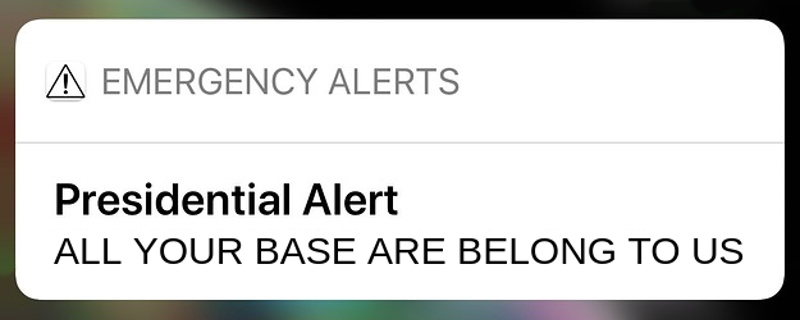
“Impersonate The President With Consumer-Grade SDR” sounds like the title of a cyberpunk thriller written by someone who owns too many USB cables. Unfortunately, the phrase points to a real security concern: the possibility that emergency alerts on mobile phones could be spoofed in a limited area using software-defined radio technology and weaknesses in how certain wireless alert messages are handled.
To be clear, this is not about the President personally texting your phone, nor is it a guide to pretending to be a government official. In the United States, national emergency alerts are part of a carefully managed public warning ecosystem involving FEMA, the FCC, wireless providers, broadcasters, and authorized alerting agencies. These systems exist for excellent reasons: tornadoes, wildfires, floods, missing children, chemical incidents, terrorist threats, and other situations where seconds matter.
The problem is that public warning systems are built on trust. When a phone screams, vibrates like a caffeinated raccoon, and displays an emergency alert, people tend to believe it. That trust saves lives during real emergencies. But if attackers can imitate the look and urgency of a legitimate alert, even in a small area, the damage could be serious: panic, evacuation chaos, phishing, public confusion, and long-term “alert fatigue.” Once people stop trusting alerts, the whole system loses some of its life-saving power.
This article explains the issue in plain English: what software-defined radio is, why Wireless Emergency Alerts matter, what researchers demonstrated, what the legal and ethical boundaries are, and how agencies, carriers, device makers, and ordinary phone users can think about verification without tossing every alert into the “probably fake” bin. Spoiler: you should still take emergency alerts seriously. The goal is smarter trust, not paranoia wearing a tinfoil hat.
What Is Consumer-Grade SDR?
Software-defined radio, or SDR, is a radio system where many functions traditionally handled by fixed hardware are moved into software. Instead of needing a separate physical radio for every signal type, an SDR uses flexible hardware and software processing to receive, analyze, and sometimes transmit radio signals. In friendly hands, it is a brilliant educational tool. Hobbyists use SDR to learn about weather satellites, aviation signals, amateur radio, spectrum monitoring, and digital communications. Engineers use it to prototype wireless systems. Researchers use it to study security weaknesses before criminals exploit them.
Consumer-grade SDR generally refers to affordable, commercially available devices rather than expensive laboratory instruments. Some are receive-only. Others are capable of transmitting under lawful conditions, such as within licensed amateur radio privileges, shielded lab environments, or authorized research programs. The danger begins when flexible radio tools are treated like toys instead of regulated equipment. Radio spectrum is shared infrastructure. Misusing it is not like yelling into the void; it is more like shouting directions into traffic control while wearing a fake badge.
That flexibility is the reason SDR is both exciting and sensitive. A laptop and a small radio board can help students visualize waveforms, decode public signals, and understand how modern wireless systems work. The same flexibility can also be abused to imitate signals, jam communications, replay messages, or interfere with critical systems. In other words, SDR is not “bad.” It is a microscope, a telescope, and a megaphone depending on configuration, intent, and legal authority. The megaphone part is where the FCC starts clearing its throat.
How Wireless Emergency Alerts Work in Everyday Terms
Wireless Emergency Alerts, often shortened to WEA, are short messages sent to compatible mobile phones in a targeted geographic area. They are used for imminent threats, AMBER Alerts, public safety messages, national alerts, and tests. Unlike ordinary text messages, WEA messages are broadcast to devices in an affected area rather than addressed to one phone number at a time. That design is useful because it scales quickly. During a tornado warning, nobody wants the network equivalent of a deli counter ticket machine.
The broader U.S. alerting ecosystem includes FEMA’s Integrated Public Alert and Warning System, known as IPAWS. IPAWS helps authorized federal, state, local, tribal, and territorial alerting authorities distribute authenticated public warnings through multiple pathways, including Wireless Emergency Alerts, the Emergency Alert System, and NOAA Weather Radio. The point is redundancy. If one pathway fails, another may still reach people who need instructions fast.
Mobile alerts are especially important because many Americans are no longer glued to live television or radio. A phone may be the one device within arm’s reach at 2:00 a.m. when a flash flood warning arrives. That is why the WEA system is designed to be attention-grabbing. The loud tone and vibration are not there to be polite. They are there to cut through sleep, music, meetings, and the universal human habit of ignoring notifications until lunch.
The 2019 Research That Sparked the Conversation
The phrase “Impersonate The President With Consumer-Grade SDR” became widely associated with 2019 research from University of Colorado Boulder scholars who studied spoofing risks in 4G LTE emergency alerts. Their work explored whether an attacker could imitate certain alert messages inside a limited area, such as a stadium or dense city block, using commercially available radio equipment and modified software in a controlled research setting.
The key lesson was not “everyone panic.” It was more precise: the path from authorized alert originator to carrier infrastructure can be relatively well protected, while the final wireless broadcast from cell infrastructure to phones may have security assumptions that deserve serious attention. In simple terms, phones are designed to receive these broadcast alerts quickly and broadly. That same openness can create an opportunity for a malicious transmitter to make a phone display a forged alert if the device accepts the message as coming from nearby cellular infrastructure.
The researchers responsibly disclosed their findings and emphasized collaboration with government agencies, carriers, standards bodies, and manufacturers. That responsible-disclosure detail matters. Security research is not the same thing as reckless public exploitation. Good researchers point out cracks in the bridge so engineers can repair it before rush hour, not so pranksters can set up lawn chairs and sell popcorn.
Why “Presidential Alert” Became Such a Sensitive Phrase
The first nationwide test of the U.S. Presidential Alert category occurred in 2018. The label attracted enormous public attention because it sounded personal and political, even though the system is meant for emergencies and official tests, not campaign slogans, jokes, or “don’t forget to like and subscribe” messages from government officials.
In modern terminology, the category is often discussed as a national alert. The practical idea remains the same: there must be a way to reach the public quickly during a severe national emergency. The sensitivity comes from two facts. First, people cannot treat such messages as casual notifications. Second, because the message appears on personal phones with a distinctive tone, it carries psychological weight. A forged alert claiming a missile attack, evacuation order, or infrastructure failure could trigger real-world consequences even if the underlying event never happened.
The 2018 false missile alert in Hawaii showed how powerful emergency messages can be. That incident was not an SDR spoofing attack; it was a human and process failure. Still, it demonstrated the same core truth: when official-looking alerts arrive, people react. They call loved ones. They rush to shelter. They flood emergency lines. They make decisions under stress. The alerting system is not just technology; it is a public behavior engine.
Why Fake Emergency Alerts Are Dangerous
They Can Create Immediate Public Panic
A fake alert in a crowded venue could cause people to run, push, drive recklessly, or ignore real instructions from officials. Public safety failures often compound quickly. A false message does not need to fool everyone; it only needs to fool enough people at the same time.
They Can Be Used for Phishing
Modern emergency alerts can include instructions and, in some contexts, references to more information. A criminal could exploit public urgency by directing people to a fake website, a malicious app, or a fraudulent donation page. Nothing improves click-through rates quite like fear, which is why criminals adore emergencies almost as much as they adore bad grammar.
They Can Erode Trust in Real Alerts
The biggest long-term risk is alert fatigue. If people see too many false, irrelevant, duplicated, or confusing alerts, they may hesitate when the next real one arrives. That hesitation can cost lives. A warning system must be loud enough to interrupt people, accurate enough to be trusted, and secure enough to resist impersonation.
They Can Distract Emergency Responders
False alerts generate calls, social media rumors, traffic, and confusion. Police, fire departments, emergency managers, hospitals, and dispatch centers may have to spend precious time correcting misinformation instead of responding to actual incidents. During a real disaster, that distraction is not merely annoying. It is dangerous.
The Legal Reality: Do Not Transmit Fake Signals
Unauthorized radio transmission is illegal in the United States. Operating transmitting equipment generally requires proper authorization, and transmitting in a way that interferes with licensed communications, public safety systems, aviation, cellular networks, or emergency alerting can bring serious civil and criminal consequences. The fact that a device is affordable does not make its misuse legal. A cheap lockpick is still a lockpick; a cheap transmitter is still a transmitter.
Emergency alert tones and warning signals also receive special regulatory protection because misuse can confuse the public or desensitize people to real warnings. Broadcasters and media companies have faced penalties for using actual or simulated alert tones outside authorized contexts. That rule exists because the sound itself carries public meaning. It is not a dramatic sound effect to sprinkle over a comedy sketch like paprika.
Anyone experimenting with SDR should stay within lawful receive-only activities, licensed amateur radio rules, shielded laboratory environments, or formally authorized research. If a project involves transmitting, cellular protocols, emergency alert formats, public safety frequencies, aviation bands, or anything that could affect real devices outside a lab, stop and consult qualified legal, technical, and regulatory experts. “I saw it online” is not a compliance strategy.
What Makes Emergency Alert Security So Hard?
Emergency alert systems have to balance speed, reach, reliability, device compatibility, accessibility, and security. That is not a neat little checklist. It is more like trying to make a parachute that opens instantly, never opens by accident, fits every airplane, speaks every language, costs very little, and works during a hurricane.
Authentication is essential, but emergency systems also need resilience. Alerts must reach phones that are idle, moving, roaming, or temporarily disconnected from normal data services. Messages must work across different carriers and devices. They must be short enough to display quickly but clear enough to prompt action. They must be geographically accurate without excluding people who are at risk. Each improvement can introduce trade-offs.
For example, stronger cryptographic verification sounds obviousand in many ways it is the right direction. But deploying cryptographic protections across carriers, cell equipment, standards, operating systems, and older phones is complex. The system has to work not only for the latest flagship smartphone but also for older devices still in people’s pockets. Security that only protects wealthy early adopters is not good public safety policy.
How the Alerting Ecosystem Is Improving
Regulators and public-safety agencies have continued to modernize emergency alerting. Recent FCC discussions have focused on improving the reliability, integrity, cybersecurity, geographic accuracy, and usefulness of alerting systems. Proposals and updates have included stronger cybersecurity expectations, better duplicate-alert handling, improved geotargeting, multilingual alert capabilities, and discussion of authentication mechanisms for alert transmission.
These efforts matter because the alerting environment has changed. People receive information through phones, smart watches, streaming platforms, connected cars, social media, and apps. Meanwhile, attackers have better tools than they did a decade ago. The system cannot rely on “this would be too hard” as a defense. In cybersecurity, “too hard” often means “wait until next year’s conference.”
Future defenses may include stronger end-to-end authenticity checks, cross-cell verification, network-side anomaly detection, device-level warning indicators, better public education, and faster correction channels when false alerts occur. No single fix is magical. A secure alerting system needs layered defenses, like a good winter outfit: coat, gloves, boots, hat, and the emotional resilience to accept that your scarf makes you look like a retired magician.
What Phone Users Should Do When an Alert Appears
For ordinary users, the answer is not to ignore emergency alerts. Most alerts are legitimate, and immediate action may be necessary. Instead, use a quick verification mindset when time allows. Read the alert carefully. Look for the nature of the threat, affected location, time frame, and recommended action. If the alert tells you to shelter, evacuate, avoid an area, or seek higher ground, take the protective action seriously.
When safe, confirm through official sources: local emergency management websites, National Weather Service channels, official government social media accounts, local news, NOAA Weather Radio, or public safety agencies. Do not rely on random viral screenshots. During emergencies, social media becomes a blender full of facts, rumors, jokes, and people confidently misreading maps.
Be especially cautious of alerts or follow-up messages that push you toward suspicious links, payment pages, credential forms, or app downloads. Real emergency instructions usually focus on safety actions: move indoors, evacuate, avoid roads, boil water, shelter in place, or check official channels. If a message combines disaster language with “enter your password here,” treat it like a raccoon offering investment advice.
What Organizations Should Learn From SDR Alert Research
Organizations responsible for public safety, venues, campuses, hospitals, utilities, transportation hubs, and large events should treat emergency communication as a multi-channel discipline. A mobile alert may be only one piece of the response. Public address systems, digital signs, trained staff, official websites, local media relationships, and social media protocols all matter.
Large venues should have a plan for verifying and responding to suspicious alerts affecting their location. Staff should know who contacts local emergency management, who updates public messaging, and how to prevent crowd panic. The plan should be practiced before it is needed. A dusty binder labeled “Emergency Procedures” is not a plan; it is office décor with anxiety.
Cybersecurity teams should also pay attention to radio-frequency threats as part of broader risk management. Not every organization needs an RF lab, but critical infrastructure operators should understand that wireless systems can fail, be jammed, be spoofed, or be misinterpreted. The boundary between cybersecurity and radio engineering is increasingly blurry. Attackers do not care which department owns the risk.
Responsible SDR Learning: The Good Side of the Hobby
It would be a mistake to paint SDR hobbyists as villains. Most are curious learners, engineers, students, amateur radio operators, and security researchers who respect the law. SDR has opened a door to radio education that used to require expensive equipment. People can visualize spectrum, decode weather satellite images, learn digital signal processing, monitor amateur bands, study propagation, and better understand the invisible infrastructure around them.
The healthiest SDR community culture emphasizes receive-only learning, licensing, documentation, safety, and responsible disclosure. It encourages people to ask, “Am I allowed to transmit here?” before they ask, “Can I make the hardware do it?” That tiny shiftfrom capability to responsibilityis the difference between education and trouble.
Educators can use SDR to teach critical thinking about wireless systems without enabling abuse. Safe lessons can cover signal theory, spectrum allocation, antenna basics, noise, modulation concepts, legal frameworks, and defensive monitoring. Students do not need to spoof an emergency alert to understand why unauthenticated broadcast systems can be risky. You can explain fire safety without handing out matches in a fireworks warehouse.
Experience-Based Takeaways: What This Topic Teaches in the Real World
Anyone who spends time around SDR communities notices the same pattern: the first thrill is discovery. You plug in a small device, open a spectrum view, and suddenly the invisible world has shape. There are peaks, bursts, patterns, silence, noise, and mystery. It feels like finding a secret city layered on top of your own. That sense of wonder is healthy. It gets people into engineering, cybersecurity, telecommunications, and public safety work.
The second lesson arrives more slowly: radio is shared space. Your experiment is not isolated just because it happens at your desk. Signals travel through walls, across streets, into receivers, and sometimes into systems people depend on. A sloppy or unauthorized transmission is not a private mistake. It can become someone else’s interference problem. That is why experienced radio people talk so much about dummy loads, shielding, licensing, band plans, and power limits. They are not trying to ruin the fun. They are trying to keep the fun from turning into an FCC letter with your name spelled correctly.
The third lesson is humility. Modern cellular networks, alerting systems, public safety radios, and broadcast infrastructure are unbelievably complex. It is easy to read a dramatic headline and assume one vulnerability means the whole system is doomed. It is equally easy to assume official systems are invincible because they are official. Both instincts are wrong. Real infrastructure is usually a mix of strong controls, legacy constraints, clever engineering, budget limitations, standards politics, and humans who occasionally click the wrong thing before coffee.
For security professionals, the “Impersonate The President With Consumer-Grade SDR” story is a reminder that trust boundaries matter. A system can authenticate one segment well and still be weak at another segment. The handoff from central authority to carrier infrastructure may be carefully controlled, while the last-mile broadcast to devices may need different protections. Security architecture is only as strong as the assumptions everyone forgot to write down.
For emergency managers, the lesson is communication redundancy. Even when the official alert is real, people will seek confirmation. They will check local news, social media, neighbors, police scanners, weather apps, and group chats where someone’s uncle always “knows a guy.” Agencies should expect that behavior and prepare consistent follow-up messaging across official channels. A clear second message can calm confusion faster than a dozen press conferences later.
For everyday users, the experience takeaway is simple: respect alerts, but verify when possible. Do not freeze because an alert might theoretically be fake. Do not blindly click links because a message feels urgent. Take immediate protective action when the threat is plausible, then look for confirmation from official sources. Calm skepticism is the sweet spot. Panic is bad. Cynicism is also bad. Thoughtful response is the adult in the room, even if it has bedhead at 3:00 a.m.
For SDR learners, the best path is curiosity with guardrails. Start with receive-only projects. Learn the law. Join reputable amateur radio or security communities. Document what you observe. Share defensive insights. Never transmit into systems you do not own or have explicit authority to test. The radio spectrum is one of humanity’s most useful invisible commons. Treating it with respect is not boring; it is what lets everyone keep using it.
Conclusion: The Real Story Is Trust, Not Tricks
The headline “Impersonate The President With Consumer-Grade SDR” grabs attention because it sounds outrageous. The deeper story is more important: emergency alert systems must remain trustworthy in a world where radio tools are cheaper, software is more powerful, and attackers are more creative. SDR did not create the need for alert security, but it made certain weaknesses easier to study, demonstrate, and eventually fix.
The right response is not fear of SDR or blind faith in every alert. It is layered security, responsible research, better authentication, public education, stronger operational procedures, and legal respect for radio systems. Emergency alerts save lives. Protecting their credibility is a shared job for regulators, carriers, manufacturers, researchers, emergency managers, media organizations, and the public.
So yes, consumer-grade SDR can teach us unsettling things about modern wireless infrastructure. But that knowledge can be useful when handled responsibly. The goal is not to impersonate authority. The goal is to make sure real authority can be recognized when it matters most.


