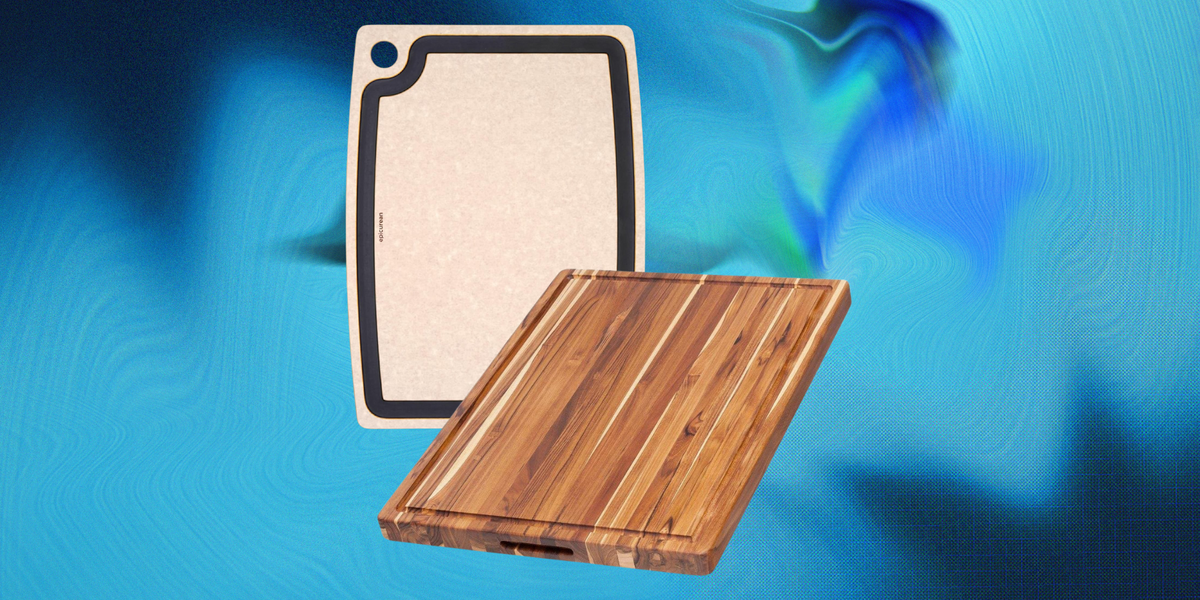

Holiday cooking has a way of turning even organized people into apron-wearing chaos goblins. One minute you are confidently dry-brining a turkey, and the next you are balancing a roasting pan, a carving knife, a tray of rolls, and the vague hope that gravy stains count as “rustic decor.” That is exactly why I care so much about carving boards. A good one does more than hold a roast. It keeps juices contained, gives your knife room to move, makes cleanup easier, and saves your countertop from looking like a crime scene for buttered poultry.
After testing kitchen gear and paying far too much attention to board surfaces, grooves, feet, and finish quality, I have landed on four carving boards I actually trust for holiday prep. They do not all serve the same purpose, because no single board is perfect for every task. Some are better for carving a turkey at the table. Some are better for messy prep in the kitchen. One is my “yes, it is expensive, but I regret nothing” board. And one is the practical workhorse I reach for when raw poultry is involved and sentimentality has officially left the building.
If you are shopping for the best carving board for holiday prep, here is the short version: size matters, a juice groove is not optional, stability beats looks, and having more than one board is not overkill. It is strategy. Below are the four carving boards I use, why they earn space in my kitchen, and how they make holiday cooking feel less like an endurance sport.
What Makes a Great Carving Board for Holiday Prep?
Before I get into my picks, let’s talk about what separates a true carving board from a basic cutting board. Around the holidays, you are usually working with larger proteins, more volume, and more liquid. Turkey, ham, roast beef, prime rib, pork loin, even a gloriously overachieving cauliflower roast all create drippings that love to wander. A regular flat board can handle slicing an apple. A carving board needs to manage momentum, moisture, and the emotional pressure of ten hungry relatives asking whether dinner is almost ready.
The best carving boards usually share a few traits. First, they are large enough to hold a roast without the food hanging off the edge like a cliffhanger. Second, they have a groove or trench that catches juices instead of sending them across the counter. Third, they stay put. Sliding boards make carving harder and more dangerous, especially when you are tired, distracted, or trying to answer three questions at once. Finally, the material matters. Wood looks beautiful, feels great under a knife, and often doubles as a serving surface. Plastic or other nonporous options are useful when you want easier cleanup or a dedicated board for raw meat prep.
In other words, the ideal holiday setup is not one miracle board. It is the right board for the right moment.
The 4 Carving Boards I Actually Use
1. Teakhaus Professional Carving Board: My Best Overall Pick
If I had to recommend one carving board to the average home cook who wants something sturdy, handsome, and genuinely useful, I would start with the Teakhaus Professional Carving Board. This is the board I pull out when I want a reliable, wood-based workhorse that can handle a roast but does not feel absurdly fussy. It has the kind of size that makes holiday prep easier right away. You are not trimming vegetables on one corner while a chicken breast tries to escape from the other side.
What I like most is the balance. Teak boards tend to offer a nice combination of durability and visual warmth, and this one feels substantial without becoming a full upper-body workout every time you move it. The carving groove is deep enough to be useful, which matters more than people think. A shallow groove looks nice in product photos and then does approximately nothing once real juices show up. This board actually earns its groove.
I also like that it does not scream “special occasion only.” Yes, it is excellent for turkey, brisket, and ham, but it is just as helpful for everyday big-batch prep. If I am breaking down squash, slicing loaves, or prepping multiple ingredients for a holiday stuffing and salad situation, it gives me room to work. It is the board that makes me feel like I have my life together, even when I absolutely do not.
2. The Boardsmith Maple End-Grain Board: My Premium Splurge Pick
The Boardsmith Maple End-Grain Board is the board I use when I want the best knife feel, the most polished presentation, and a carving surface that feels like it was made by someone who deeply respects both wood and cooking. This is not a cheap board, and I am not going to pretend it is. It is a premium choice. But it is also the kind of kitchen purchase that makes sense if you cook often, care about your knives, and want one board that feels heirloom-level rather than temporary.
End-grain construction is a big part of why this board stands out. The surface is more forgiving under the blade, which is great for knife edges and for people who do a lot of chopping, slicing, and carving. It also tends to look better for longer because the board does not show wear in the same dramatic way thinner, harder, or cheaper boards do. Holiday cooking is rough on equipment. The Boardsmith handles that pressure beautifully.
What makes it especially appealing for carving is the option to add helpful features like a juice groove and feet. I love that kind of customization because it turns a beautiful board into a practical one. The finished product feels stable, luxurious, and completely at ease when a giant roast lands on it. If you host often and want a board that can go from kitchen prep to serving table without losing its dignity, this is the one I would brag about owning. Modestly, of course. Very modestly.
3. OXO Good Grips Carving and Cutting Board: My Easy-Clean Utility Hero
Every holiday kitchen needs one board that is less “display piece” and more “let’s get this done.” For me, that board is the OXO Good Grips Carving and Cutting Board. It is not the prettiest option in the room, but it is one of the most practical. When I am trimming raw turkey parts, portioning chicken, or handling slippery ingredients that I would rather not introduce to my wooden boards, this is the one I reach for.
The best thing about this board is how unglamorous and competent it is. It usually has grippy edges that help keep it in place, a useful perimeter trench for catching liquid, and a surface that is easy to clean after messy prep. That makes it especially handy during holiday cooking, when food safety matters just as much as presentation. I do not want to prep raw poultry on the same pretty serving board I plan to set in front of guests later. I want a board that is built for cleanup, containment, and sanity.
This is also the board I recommend for cooks who are tired of babying every piece of kitchen gear they own. Sometimes you just need something durable, lighter in weight, and simple to wash. The OXO is that board. It is not here for admiration. It is here to keep juices off your counter and your stress level below festive meltdown.
4. J.K. Adams Large Reversible Maple Carving Board: My Turkey-to-Table Favorite
The J.K. Adams Large Reversible Maple Carving Board is the one I like when I want a board that feels classic, useful, and genuinely ready for the main event. It has that traditional holiday-board energy in the best way. It looks right with a roast on it. It feels right under a carving knife. And it makes the trip from kitchen counter to dining table without seeming out of place.
The reversible design is part of the appeal. One side can handle carving duty, while the other gives you flexible prep space when you want a flatter surface. That kind of two-in-one usefulness matters around the holidays because counter space disappears fast. One minute you have room. The next minute there are casserole dishes everywhere and somebody has set a pie where your onions were supposed to go.
Maple is also a smart choice for a board like this. It feels classic, stable, and knife-friendly without becoming too precious to use. I especially like this pick for turkey because it gives you enough surface area to carve comfortably, while still looking polished enough for serving. If your holiday style leans more timeless than trendy, this board fits the mood perfectly.
How I Use These Boards During Holiday Prep
I do not use all four boards at once because I enjoy having a functioning kitchen and access to my own countertops. But I do rotate them by task. The OXO comes out early, when I am dealing with raw poultry, wet ingredients, or anything likely to make a mess. The Teakhaus handles general large-format prep, from slicing bread for stuffing to carving a roast chicken for an early dinner. The J.K. Adams board is my transition piece when food needs to move from prep to presentation. And The Boardsmith is my “I care about knife feel, finish, and looking like a capable adult” board.
This task-based setup is especially helpful at Thanksgiving and Christmas. Holidays create a traffic jam of ingredients that do not all belong on the same surface. Herbs, citrus, and bread cubes are one category. Raw meat is another. The finished roast you want to bring to the table with a little flourish is absolutely its own category. Dividing those jobs across a few smart boards keeps prep safer, cleaner, and a lot more efficient.
What to Look for When Buying a Carving Board
Size
A carving board should be big enough for the food you actually cook. If your roast hangs off the edges, your board is too small. For holiday prep, bigger is usually better, as long as you can still lift and clean the board without filing a complaint with your shoulders.
Juice Groove
This is the feature I refuse to compromise on for carving. A groove keeps turkey drippings, roast juices, and other runaway liquids under control. Without one, your countertop becomes an accidental slip-and-slide.
Material
Wood is excellent for knife feel, longevity, and presentation. Plastic or other nonporous materials are helpful for messy prep and easier cleanup. The smartest move is to own both. Holiday prep is not the moment to make one board do every job badly.
Stability
Heavy boards, grippy edges, or feet all help reduce movement. A board that shifts while you carve is not charming. It is annoying and potentially unsafe.
Reversible Design
I love a reversible board because it gives you more options. One side can be grooved for carving, while the other stays flat for general prep or serving.
Common Holiday Carving Board Mistakes
The first mistake is using a board that is too small. The second is thinking a pretty flat board is “close enough” for carving. It is not. The third is failing to separate raw-meat prep from ready-to-eat food prep. That is where problems begin. And the fourth is forgetting maintenance. Wooden boards need proper drying and occasional oiling if you want them to stay in good shape instead of turning into warped kitchen drama.
Another mistake is choosing a board based only on appearance. I love a beautiful board as much as the next person with a holiday playlist and a weakness for table styling. But if a board is slippery, flimsy, awkwardly small, or impossible to clean, it will not matter how good it looks next to the cranberry sauce.
My Experience Using Carving Boards for Holiday Prep
Here is the honest part: I did not become picky about carving boards because I wanted to be fancy. I became picky because I got tired of dealing with bad ones. I have carved a roast chicken on a board so small that the drumsticks practically needed their own zip code. I have watched turkey juice run right over the edge of a decorative board with a groove so shallow it might as well have been a suggestion. I have tried to stabilize a flimsy board with a folded kitchen towel while mentally composing a speech about why nobody should ask, “Need help?” while standing three feet away doing nothing.
That is why I now treat carving boards like real tools instead of background accessories. During holiday prep, the difference is immediate. A large board changes your posture and your pace. You stop hovering over the food. You stop making tiny, nervous cuts because you are afraid of running out of room. You can actually settle in, carve cleanly, and move slices where they need to go. It sounds like a small thing, but it changes the entire feel of the task.
I especially notice it with turkey. Turkey is not difficult in theory, but in practice it is big, hot, juicy, and emotionally loaded. People are waiting. Side dishes are cooling. Someone is asking whether the dark meat is almost ready. On a cramped or slippery board, carving feels chaotic. On a proper board with a groove and good stability, it becomes manageable. You get cleaner slices, fewer drips, and a lot less panic. That matters.
I also use carving boards heavily before the actual carving starts. Holiday prep is full of oversized tasks: halving squash, trimming green beans, slicing bread, segmenting citrus, portioning cheese, and chopping enough herbs to briefly wonder whether you have opened a small parsley dealership. A larger board gives ingredients room to stay separate, which helps with workflow and cleanup. It is one of those quiet upgrades that makes the whole kitchen function better.
The other thing experience taught me is that the best carving board depends on what stage of cooking you are in. When I am handling raw poultry, I want practicality above all else. When I am plating and serving, I want warmth and presentation. When I am doing long prep sessions, I want surface area and comfort under the knife. Once I stopped expecting one board to be all things to all recipes, my kitchen got a lot easier to manage.
So yes, I use four carving boards for holiday prep. Not because I am trying to start a board museum, but because each one solves a different problem. The Teakhaus is my everyday large-format favorite. The Boardsmith is my premium, knife-loving masterpiece. The OXO is my cleanup-friendly utility player. And the J.K. Adams board is the one that makes the trip from kitchen to table look effortless. Together, they cover everything I need from first chop to final slice. And around the holidays, that kind of backup is worth its weight in gravy.
Final Thoughts
If you are serious about holiday cooking, upgrading your carving board is one of the smartest low-drama improvements you can make. A good board supports safer prep, easier carving, better cleanup, and a calmer kitchen. It also saves you from that annual moment when you realize your roast is much larger than the board you confidently chose ten minutes earlier.
My advice is simple: buy for the way you actually cook. If you host often, invest in a quality wooden board with a real groove. If you handle a lot of raw meat, keep an easy-clean board in rotation. If you want one polished piece that can carve and serve, choose a reversible maple option. The best carving boards are not just attractive kitchen accessories. They are quiet holiday heroes.


