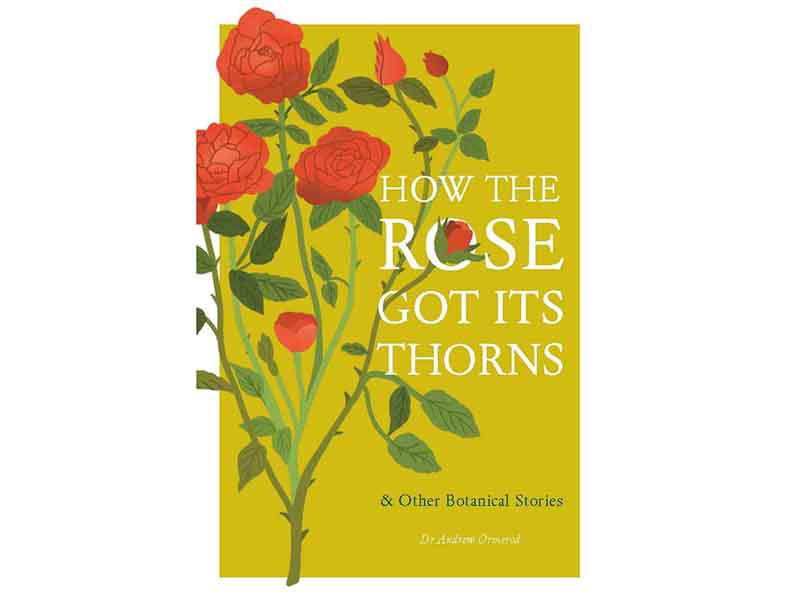

Few things in nature have better public relations than a rose. It arrives dressed for a wedding, smells like a love letter, and has inspired more poetry than most people manage in a lifetime. Then, just as you lean in for a closer look, it introduces your finger to its pointy security team. Romance, apparently, comes with a warning label.
The story of how the rose got its “thorns” is part science, part folklore, and part reminder that plants are far more dramatic than they look from a kitchen window. A rose may not chase anyone down the driveway, but it can defend itself, recruit pollinators, launch seeds into the wind, and turn a quiet garden into a library full of living stories.
From prickly rose stems and sun-following flowers to shy plants that fold their leaves and carnivorous plants that snap shut on insects, the botanical world is full of plot twists. Some stories come from myth and tradition. Others come from evolutionary biology, plant anatomy, and the patient work of scientists who were curious enough to ask why a shrub would choose violence.
The First Twist: Roses Do Not Technically Have Thorns
Before we get too sentimental, botany would like a word. The sharp structures on most rose stems are not true thorns. They are called prickles.
A true thorn is a modified stem or branch. Think of the sturdy, woody spikes found on plants such as honey locust or citrus. A spine is usually a modified leaf or leaf part, as seen on many cacti. Rose prickles are different: they are shallow outgrowths of the plant’s outer tissues. In other words, a rose prickle is more like a tough, pointy bit of plant skin than a tiny weaponized branch.
This is excellent news for gardeners who enjoy technical accuracy and terrible news for anyone hoping to impress friends at a dinner party with the phrase, “Every rose has its thorns.” The correct version would be, “Many roses have prickles,” which is scientifically better but somehow less likely to end up on a greeting card.
Why Roses Developed Prickles
Plants cannot run from hungry animals. They cannot lock the front door, file a restraining order, or hire a bouncer named Tank. Their survival strategies have to be built into their bodies. For roses, prickles are one line of defense against animals that may want to browse stems, leaves, and tender new shoots.
Sharp structures can also help a climbing or scrambling rose catch against nearby plants. Curved prickles allow some rose species to hook themselves into shrubs, fences, and low tree branches as they grow. The rose is not exactly climbing a ladder, but it is very good at grabbing onto the scenery and making the most of the situation.
Scientists have found that prickles, spines, and thorns evolved independently in different plant groups. That matters because it shows how often nature arrives at a similar solution when faced with a similar problem: if something keeps eating you, becoming unpleasant to chew is a reasonable career move.
Not Every Rose Is Equally Armed
Rose species and cultivated varieties differ widely in the number, shape, and size of their prickles. Some have stems that are densely covered and eager to collect a little of your blood as a gardening tax. Others have fewer prickles or nearly smooth canes, making them friendlier choices for walkways, patios, children’s gardens, and anyone who prefers not to prune while dressed like a medieval knight.
The point is not that a rose is cruel. It is that beauty and defense can coexist. In fact, the rose has become one of the world’s most enduring symbols partly because it combines those opposites so well: fragrance and sharpness, softness and strength, admiration and caution.
How Folklore Explains the Rose’s Sharp Side
Long before plant anatomy classes and genetic studies, people explained the natural world through stories. A flower that smelled sweet but wounded the hand seemed too dramatic to be accidental. Naturally, the rose acquired legends.
The Rose Before the Fall
In one Christian tradition, roses in the Garden of Eden were imagined as smooth-stemmed flowers without prickles. After humanity’s fall from paradise, the rose supposedly gained its sharp defenses as a sign that even the loveliest things in the world now carried hardship, pain, or consequence.
It is not botanical history, of course. Roses did not wake up one morning, review humanity’s behavior, and decide to upgrade their security system. But the story survives because it captures something people recognize immediately: love, beauty, and joy are rarely free of risk.
Roses in the Language of Love
Across many cultures, roses became symbols of love, desire, admiration, secrecy, grief, beauty, and remembrance. Their meaning shifted with color, place, religion, season, and social custom. A red rose might suggest romantic love in one setting, while a white rose could represent purity, sympathy, or a new beginning in another.
The important lesson is that there is no single universal “rose meaning.” Flowers are not emoji with one fixed translation. Their symbolism changes because people change. A rose in a medieval poem, a family garden, a wedding bouquet, and a memorial arrangement may all carry different emotional weight.
That is what makes botanical stories so interesting. Plants are biological organisms, but they also become containers for memory. A rose can be a pollinator resource, a hedge, a gift, a grandmother’s favorite shrub, or the exact plant that taught a child why gloves exist.
Other Botanical Stories Hiding in Plain Sight
The Sunflower That Chases the Sun
Sunflowers have long been linked with stories of devotion to the sun. In older European literature, the word heliotrope was sometimes used for plants believed to turn toward sunlight, and the image eventually became tangled with the sunflower in art, poetry, and mythology.
The science is more nuanced than the myth. Young sunflower buds can track the sun across the sky through a process called heliotropism. As the flower matures, it usually settles into an east-facing position. That orientation can help warm the flower earlier in the day and may make it more attractive to pollinators.
So the sunflower is not staring at the sun because it is hopelessly romantic. It is following light while young, then committing to a practical morning schedule as an adult. Honestly, that is a fairly sensible life plan.
The Dandelion That Refuses to Be Defeated
Dandelions are often treated like lawn villains, but they are really tiny survival experts with excellent marketing problems. Their yellow flower heads appear early, their leaves form a low rosette close to the ground, and their deep roots help them persist in compacted soil, cracks in pavement, and lawns that have been mowed with the emotional intensity of a revenge plot.
When a dandelion becomes a white puffball, it is not “dying.” It is preparing for its next act. Each seed is attached to a feathery structure that catches the wind. A child’s wish, a gust of air, or an annoyed neighbor can send those seeds drifting away to begin the story again somewhere else.
The dandelion is a botanical lesson in resilience. It does not ask whether the conditions are ideal. It looks at a neglected sidewalk crack and says, “This will do nicely.”
The Sensitive Plant That Plays Shy
Mimosa pudica, often called the sensitive plant or touch-me-not, has leaves that fold when touched. To someone seeing it for the first time, the movement can seem almost magical. A finger brushes the leaflets, and suddenly the plant looks as though it has remembered an appointment elsewhere.
The movement is not fear in the human sense. It is a physical response involving changes in water pressure inside specialized plant cells. Electrical signals help trigger the process, and the leaflets lose firmness at their base, causing them to fold.
Why do this? The exact advantages may vary, but folding can make the plant look less appealing to herbivores, reduce damage, or shake off small insects. Either way, the sensitive plant proves that plants do not need muscles to make a dramatic exit.
The Venus Flytrap That Counts Before It Eats
The Venus flytrap is one of the botanical world’s great overachievers. It grows in nutrient-poor wetlands, where nitrogen and other nutrients can be limited. Instead of waiting politely for the soil to improve, it supplements its diet by capturing small insects.
Its trap is a modified leaf with trigger hairs inside. When an insect touches the hairs more than once within a short period, the trap can snap shut. This double-checking system helps the plant avoid wasting energy on raindrops, windblown debris, or the botanical equivalent of a false alarm.
The Venus flytrap is not a monster, despite what movies and Halloween decorations may suggest. It is a highly specialized plant solving a nutritional problem with one of the most memorable designs in nature. No teeth. No roar. Just excellent timing and a strong commitment to efficiency.
The Dove Tree That Uses White Flags to Attract Visitors
The dove tree, Davidia involucrata, is famous for its large white bracts that hang around its flowers like fluttering handkerchiefs or small white birds. The showy white structures are not petals in the usual sense. They are modified leaflike parts that help make the flowering display more visible.
Research suggests these white bracts can stand out to pollinators, particularly bees, because of the way they absorb ultraviolet light. To human eyes, the tree looks theatrical. To pollinators, it may look like a very clear sign that says, “Food this way.”
Plants do not advertise with billboards, but they are masters of visual communication. Bright petals, fragrant flowers, nectar guides, and dramatic bracts all tell pollinators that a useful stop is nearby.
Botanical Stories Are Also Cultural Stories
It is tempting to talk about plants as if they are only scenery. They are not. Plants have shaped food traditions, medicines, building materials, dyes, ceremonies, songs, and seasonal rituals for thousands of years.
Historical ethnobotanical records from the United States document the ways Indigenous communities connected plants with food, practical knowledge, language, ceremony, and storytelling. Wild roses, beans, squash, maple trees, and many other plants were not merely “resources.” They were part of lived relationships with land, place, and community.
That distinction matters. A botanical story should not flatten many cultures into one vague “ancient wisdom” category. Specific traditions belong to specific peoples. The respectful way to learn from plant stories is to keep the context attached: who told the story, where it came from, how it was recorded, and whether it is being shared by the community itself.
Science and story do not have to compete. Science can explain how a prickle develops or how a flower attracts a bee. Story can explain why the same plant matters to a family, a region, a ceremony, or a childhood memory. One gives us mechanism. The other gives us meaning.
What Gardeners Can Learn From Plant Defenses
The rose’s prickles are more than a trivia answer. They are a reminder that every plant is responding to its environment in some way. Some plants defend themselves with sharp structures. Others use bitter chemicals, sticky sap, tough leaves, unpleasant smells, camouflage, or rapid growth.
For gardeners, this makes plant selection more interesting. A thorny hedge may discourage unwanted foot traffic. A smooth-stemmed rose may work better near a bench. A native flowering plant may provide food for local pollinators. A dandelion-free lawn may look tidy, but a lawn with a few early flowers may offer a snack to insects when little else is blooming.
The best garden is not necessarily the one that looks the most controlled. It is the one that tells a coherent story: plants suited to the climate, flowers timed for pollinators, paths designed for people, and enough room for a rose bush to be gorgeous without ambushing every person who walks past.
Experiences With Roses, Prickles, and Everyday Botanical Drama
There is a particular kind of experience that happens when someone meets a rose bush too casually. It usually begins with confidence. The gardener sees a bloom leaning slightly over a path and thinks, “I will just move that branch.” The phrase just move that branch has ended many peaceful afternoons.
At first, nothing happens. The rose appears cooperative. The petals are open, the scent is pleasant, and the stem looks harmless enough. Then a prickle catches a sleeve, a glove, or the exact patch of skin that somehow escaped coverage. Suddenly, the rose is no longer an ornamental shrub. It is a tiny professor conducting a practical lesson on plant anatomy.
That moment can be irritating, but it also changes the way people see a garden. A rose stops being a decorative object and becomes an organism with a strategy. The curved prickles are not there to offend the gardener personally, although the timing can feel suspicious. They are part of a plant that evolved to protect its stems and, in some cases, help itself scramble upward through nearby vegetation.
Children often understand this kind of botanical drama especially well. Give a child a magnifying glass and a garden path, and the landscape becomes a detective story. A fuzzy leaf might be a caterpillar’s lunch. A curled tendril might be a vine’s hand. A maple seed becomes a helicopter. A dandelion puff becomes a weather report, a wish machine, or a tiny escape fleet.
Adults can rediscover the same wonder by slowing down. Instead of seeing “weeds,” notice which plants arrive first after winter. Instead of seeing “a bush,” look at how stems bend, where buds form, and which insects visit. Instead of seeing “a flower,” ask what the flower is trying to accomplish. Is it attracting bees with color? Offering nectar? Keeping rain away from pollen? Setting a trap for insects? Launching seeds through the air?
A walk through a garden can become surprisingly personal. The scent of a rose may bring back a family home, a graduation, a wedding, or a loved one who always kept flowers near the front door. Dandelions may bring back childhood lawns and grass-stained knees. Sunflowers may recall late-summer road trips, farm stands, or the first time a flower seemed tall enough to have its own zip code.
Even the less glamorous plants can create memorable experiences. A burr caught in a sock can lead to a conversation about seed dispersal. A Venus flytrap on a windowsill can turn a quiet child into an amateur naturalist. A sensitive plant folding its leaves can stop a whole room of adults from scrolling for at least ten seconds, which is a minor miracle in its own right.
Botanical stories work because plants are always doing something, even when they look still. They are growing toward light, storing energy, responding to touch, defending their tissues, making flowers, feeding insects, and preparing the next generation. The drama is not loud, but it is constant.
The next time a rose catches your sleeve, consider giving it a little credit. It has survived heat, rain, insects, pruning shears, curious hands, and perhaps a few overly ambitious gardeners. Its prickles may be inconvenient, but they are also part of the reason the rose remains one of the world’s most unforgettable plants: beautiful enough to invite us closer and clever enough to remind us to pay attention.
Conclusion: The Garden Is Full of Plot Twists
How did the rose get its thorns? In the language of folklore, the answer may involve paradise, love, loss, or the price of beauty. In the language of botany, roses usually have prickles: sharp outgrowths that can discourage herbivores and help some plants cling to surrounding vegetation.
Both versions reveal something useful. The scientific story shows how plants adapt. The cultural story shows how humans make meaning from what they see. Together, they turn an ordinary garden into something richer: a place where every leaf, flower, seed, and sharp little surprise has a story to tell.
Note: Folklore and symbolic interpretations in this article are presented as cultural stories, not as scientific explanations. Botanical details are based on established horticultural, university, museum, and plant-science references.


