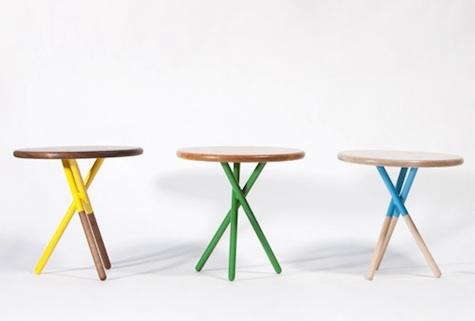

Some furniture politely sits in a room. Other furniture walks in wearing good shoes, says something witty, and somehow makes your sofa look more intelligent. The Soft Side Table by Curtis Popp belongs to the second category. It is small, useful, handmade, and charmingly unconventionalthe kind of modern side table that proves a supporting actor can steal the scene without knocking over the lamp.
Designed by Northern California-based designer Curtis Popp, the Soft Side Table was introduced as the first entry in his furniture collection through CPOPP Workshop. Popp had already been designing custom pieces for clients, so moving into a broader furniture line felt like a natural next step. The table’s name comes from its friendly geometry: no harsh angles, no visual barking, no “I am a serious cube” energy. Instead, it has rounded edges, a relaxed silhouette, and a colorful base that peeks through the top like a design secret that could not keep quiet.
At first glance, the Soft Side Table looks playful. Look longer, and it becomes clear that the playfulness is built on discipline: carefully chosen wood, thoughtful proportions, local craftsmanship, and a form inspired by something as simple as a bundle of sticks. That humble origin gives the piece its personality. It is not trying to be a glassy showroom diva. It wants to be useful, sculptural, and just odd enough to make guests ask, “Where did you get that?”
Who Is Curtis Popp?
Curtis Popp is a Sacramento-based designer whose work crosses interiors, buildings, furniture, and visual design. His studio, CPOPP Workshop, is dedicated to creating well-designed spaces and structures that respond to clients, sites, and existing conditions. That philosophy matters when discussing the Soft Side Table because the piece does not feel like furniture designed in isolation. It feels like something created by a person who understands rooms.
Popp’s background in interior architecture helps explain the table’s balance between object and environment. A side table may be small, but in a real home it has many jobs. It sits beside a sofa, anchors a reading chair, holds a drink, supports a lamp, catches keys, displays flowers, and occasionally becomes the unofficial headquarters of remote controls. The Soft Side Table recognizes this everyday chaos and answers with a compact, flexible design.
What makes Popp’s approach interesting is that he does not treat furniture as decoration alone. His broader body of work shows a consistent interest in proportion, material honesty, and site-specific design. The Soft Side Table may be a small piece, but it reflects a larger belief: good design should solve problems gracefully and, when possible, with a little wink.
The Design Story Behind the Soft Side Table
The Soft Side Table was inspired by the simplicity of a bundle of sticks. That reference gives the table its relaxed, gathered quality. Instead of presenting legs as stiff vertical supports, the design turns them into a visual rhythm. The base feels clustered, almost casual, but the final object is highly controlled. It is the furniture equivalent of “I just threw this outfit together,” when everyone knows the shoes were chosen with military precision.
The top is smooth and rounded, softening the overall profile. The base adds character, especially when finished with a colorful accent that peeks through. This contrast between calm surface and lively structure gives the table its spark. It is modern, but not cold. Minimal, but not boring. Friendly, but not childish.
The table was made to order, with options including American walnut and rift-sawn white oak. The legs were described as available in wood with powder-coated steel or in all-metal versions. Those details matter because they position the piece within a tradition of American-made modern furniture: practical, material-driven, and designed to be lived with rather than merely photographed.
Why the “Soft” Shape Works
In interior design, softness is not only about fabric. A room can feel soft through curved corners, warm wood, rounded silhouettes, and visual breathing space. The Soft Side Table uses shape to reduce tension. Its lack of sharp angles makes it especially appealing near upholstered furniture, where square tables can sometimes look like they wandered in from a corporate lobby.
Rounded furniture also improves movement around a room. In tight spaces, corners are often the enemy of knees, shins, and dramatic late-night snack missions. A softer side table is easier to navigate around, especially in family rooms, apartments, reading corners, and compact living areas where every inch has to behave.
The design also works because it avoids the predictable. Many side tables are rectangles, cylinders, or little storage boxes wearing legs. Popp’s table has more personality. It gives the room an organic note without going full woodland fairy tale. You get warmth, movement, and sculptural interest while still having a practical place to set down a cup of coffee.
Materials: Walnut, White Oak, Steel, and Personality
The Soft Side Table’s material palette is one of its strongest features. American walnut brings depth, richness, and a slightly luxurious mood. It works well in midcentury-inspired rooms, moody libraries, neutral living rooms, and spaces where the furniture needs to feel grounded. Walnut is the friend who shows up in a black turtleneck and somehow makes everyone else look underdressed.
Rift-sawn white oak, on the other hand, creates a lighter and more architectural effect. Its straighter grain can feel cleaner and more contemporary, making it a strong choice for Scandinavian-inspired rooms, modern farmhouses, California casual interiors, and spaces that lean airy rather than dramatic.
The steel component adds contrast. Powder-coated steel introduces color and durability, while an all-metal leg option shifts the table toward a more industrial or graphic look. That mix of wood and metal is useful because it allows the Soft Side Table to bridge design styles. It can sit comfortably near a linen sofa, a leather lounge chair, a wool rug, or even a more playful children’s reading nook.
Function: More Than a Pretty Little Table
Curtis Popp once described a side table as an impromptu piece that can serve as an ottoman, stool, or drinks table. That flexibility is exactly why the Soft Side Table is worth discussing. The best side tables are not one-task furniture. They adapt.
Place it beside a sofa, and it becomes a landing pad for a lamp, book, and cup. Move it next to a lounge chair, and it creates a reading station. Use it between two chairs, and it becomes a shared surface for conversation. In a bedroom, it can serve as a compact nightstand with more character than the standard drawer box. In an entryway, it can hold a small bowl, a vase, or the keys you swore you would stop losing.
The table’s sculptural base also means it can stand alone. Some side tables disappear unless they are styled aggressively with a lamp, three books, and a ceramic object that looks expensive but does nothing. The Soft Side Table has enough form to remain interesting even when empty. That is a rare and valuable trait.
How to Style the Soft Side Table in a Living Room
1. Pair It With a Low, Clean-Lined Sofa
A rounded side table works beautifully beside a modern sofa with straight arms. The contrast softens the room. If your sofa is blocky, tailored, or low-profile, the Soft Side Table can keep the space from feeling too rigid.
2. Use It as a Sculptural Accent
Because of its distinctive base, this table does not need heavy styling. A small lamp, a slim book, or a simple ceramic bowl is enough. Overdecorating it would be like putting sunglasses on a sculpturepossible, but suspicious.
3. Let the Color Peek Through
If the table includes a colored base or powder-coated metal detail, repeat that color once elsewhere in the room. A pillow, artwork, throw blanket, or small accessory can create a subtle connection without making the space look overly coordinated.
4. Use It in Pairs Carefully
Two Soft Side Tables can work well in a larger room, especially flanking a sofa or sitting between lounge chairs. However, because the design has personality, one table may be enough in a smaller room. Let it be the exclamation point, not the entire paragraph.
Where the Soft Side Table Fits Best
The Soft Side Table is especially suited to interiors that appreciate small design surprises. It works in modern homes, creative studios, boutique-style apartments, and family rooms that need warmth without clutter. It also fits well in midcentury modern spaces because its wood options, compact scale, and sculptural base echo the era’s love of practical artistry.
In a small living room, a piece like this can do more than provide surface space. It can act as a focal point. Instead of filling the room with several tiny accessories, one memorable table can carry the visual weight. That is a smart strategy for compact spaces: choose fewer pieces, but make them count.
In a larger space, the Soft Side Table can break up visual repetition. If your living room already has a rectangular coffee table, square sofa arms, and boxy shelving, a rounded side table adds relief. Interior design is often about rhythm, and too many right angles can make a room feel like it is waiting for a spreadsheet meeting.
Design Lessons From the Soft Side Table
Good Furniture Solves More Than One Problem
The Soft Side Table is not just attractive. It is flexible. It can work as a side table, occasional stool, ottoman-like perch, or small accent surface. That multifunctional quality is one reason it feels modern even years after its introduction.
Small Pieces Can Carry Big Character
People often spend months choosing a sofa and then buy side tables in a panic, usually after balancing coffee on the armrest one too many times. But small furniture can define the attitude of a room. The Soft Side Table shows how a modest object can create personality without overwhelming the design.
Craft Still Matters
The table was handmade locally in Sacramento, which gives it a different energy than mass-produced furniture. Handmade does not automatically mean better, of course, but in this case it supports the table’s design language. The piece feels considered, not stamped out by a machine having a dull Tuesday.
Buying Considerations for a Side Table Like This
Before choosing a side table with a sculptural form, measure your seating. A practical side table should generally sit near the height of the sofa or chair arm, or slightly below it. If it is too tall, reaching for a drink becomes awkward. If it is too low, the table starts to feel decorative rather than useful.
Also consider surface size. A table does not need to be huge, but it should hold the basics: a glass, a book, and perhaps a small lamp. If you plan to use it beside a reading chair, make sure the top can support task lighting. If it is destined for a family room, think about durability and finish. Beautiful furniture should be allowed to live a little.
Finally, consider visual balance. The Soft Side Table has an expressive base, so it pairs best with cleaner surrounding pieces. Let the table provide movement while the sofa, rug, and larger furniture create calm. That balance keeps the room from feeling busy.
Why the Soft Side Table Still Feels Fresh
Although the Soft Side Table first appeared in design coverage years ago, it still feels relevant because it taps into ideas that have only become more important: local making, flexible furniture, warm modernism, and playful minimalism. Today’s interiors often aim for comfort without clutter, personality without chaos, and craftsmanship without museum stiffness. This table checks those boxes neatly.
It also reflects a design direction that many homeowners now prefer: furniture that feels personal. People want rooms that look collected, not copied from a showroom in one stressful Saturday. A piece like the Soft Side Table helps create that sense of discovery. It says the owner noticed details. It says the room has a point of view. It says, very politely, “Yes, I know this table is cool.”
Experience Notes: Living With a Table Like the Soft Side Table
Living with a side table like the Soft Side Table changes how a room behaves in small but meaningful ways. The first experience is visual. Because the form is rounded and the base has movement, the table naturally draws the eye. It does not scream for attention; it simply refuses to be invisible. In a living room with a neutral sofa and plain rug, that can be exactly what the space needs.
The second experience is practical. A lightweight-looking, compact side table is easy to reposition. During a quiet morning, it can sit beside a reading chair with coffee and a paperback. During movie night, it can slide closer to the sofa and become snack support. When guests arrive, it can move between chairs so everyone has a place for a glass. This flexibility is the unsung luxury of small furniture. Nobody brags about it at dinner parties, but everyone appreciates it when the chips and dip need somewhere to land.
The third experience is tactile. Wood surfaces make a room feel warmer than glass or high-gloss plastic. Walnut feels rich and calm; white oak feels fresh and architectural. Either option gives the table a natural presence. When paired with a powder-coated metal base, the piece gains a little edge, like a well-behaved guest with excellent sneakers.
In a bedroom, a table like this can make the space feel less predictable. Traditional nightstands often look heavy because of drawers, square bodies, and matching sets. A rounded side table beside the bed feels lighter and more relaxed. It may not store every charger, notebook, and mystery receipt, but it can make the room feel more open. For people who prefer minimal bedside styling, that trade-off can be worth it.
In a family room, the soft edges are especially appealing. Sharp-cornered tables have a way of waiting for shins like tiny wooden villains. A rounded table is friendlier in active spaces, particularly where kids, pets, or enthusiastic adults move around. The design feels playful without looking childish, which is not an easy balance to achieve.
The biggest lesson from using a table like this is that functional furniture does not have to be dull. A side table can be a quiet workhorse and still have personality. It can hold your coffee, support your lamp, improve your room’s proportions, and make the space feel more designed. That is the magic of the Soft Side Table by Curtis Popp: it turns a small everyday object into a small everyday pleasure.
Conclusion
The Soft Side Table by Curtis Popp is a reminder that great furniture does not always need to be large, loud, or complicated. Sometimes it only needs the right curve, the right material, and the right idea. Inspired by a bundle of sticks and shaped by a designer who understands how people live in rooms, the table blends craftsmanship, function, and humor in a compact modern form.
Its rounded top, expressive base, handmade production, and material choices make it more than an accessory. It is a design lesson in miniature: soften the angles, respect the materials, make the object useful, and leave room for charm. For homeowners, decorators, and design lovers searching for a modern side table with personality, the Soft Side Table remains a small piece with a surprisingly big voice.


