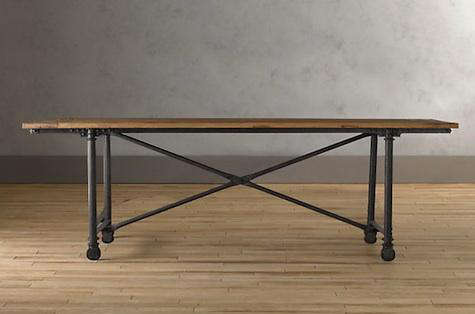

Some kitchen tables enter a room politely. The Flatiron Kitchen Table at Restoration Hardware does not. It rolls invisually, at leastwith reclaimed elm, a riveted steel frame, industrial bravado, and the quiet confidence of furniture that looks as if it once had a job in a turn-of-the-century workshop. This is not the table for people who want every surface to look factory-fresh, laser-perfect, and afraid of crumbs. It is the table for people who like their furniture with history, texture, and a few scars that say, “Yes, I have lived.”
Known today through RH’s Flatiron dining collection, the Flatiron Kitchen Table became popular because it sits at a sweet spot between rustic farmhouse warmth and urban industrial design. It is practical enough for weeknight pasta, handsome enough for a dinner party, and characterful enough to make even a bowl of cereal feel curated. Made with reclaimed elm and a distressed metal base, the table offers the kind of lived-in beauty that many mass-produced dining tables try very hard to imitateand usually miss by about three hinge marks and a soul.
What Is the Flatiron Kitchen Table?
The Flatiron Kitchen Table is a reclaimed wood and metal table originally highlighted as a compact kitchen or small dining table from Restoration Hardware, now RH. The design is part of the broader Flatiron dining table family, which includes rectangular tables in several sizes, as well as round and bar-height versions. The classic kitchen-friendly size is the 72-inch rectangular table, which offers enough room for everyday meals without swallowing a smaller dining area whole.
The design combines a reclaimed elm tabletop with a welded, riveted steel frame. The tabletop is hand-selected, planed, and sanded, but intentionally left with visible imperfections. The base gives it that unmistakable Flatiron look: sturdy, mechanical, slightly old-world, and just dramatic enough to make your chairs behave better. The table sits on caster-style wheels and uses structural cross bracing, so the whole piece feels inspired by factory carts, workshop benches, and architectural salvage.
Why Reclaimed Elm Makes the Table Special
Reclaimed elm is the heart of the Flatiron table’s appeal. Unlike a uniform veneer or a glossy engineered surface, reclaimed elm carries marks from its previous life. The wood may show nail marks, small cracks, knots, color variations, hinge holes, or traces of former hardware. In other words, it arrives with a backstory, and it does not feel the need to explain itself at brunch.
This matters because the Flatiron Kitchen Table is not just selling a shape; it is selling material character. Reclaimed wood brings visual movement to a room. The grain, patina, and weathered edges help soften the harder industrial frame, making the piece work in more interiors than a purely metal table would. In a modern kitchen, it prevents the room from feeling too sterile. In a farmhouse-style space, it adds urban bite. In a loft, it looks right at home beside exposed brick, black-framed windows, and that one pendant light everyone pretends was “found vintage.”
The Industrial Design Appeal
The Flatiron table’s design language is simple: wood plus metal, warmth plus structure, rustic plus industrial. This pairing is why the table has remained interesting long after the initial industrial furniture craze. Its reclaimed elm top gives it a soft, organic surface, while the steel frame adds architecture and edge. The result is a kitchen table that feels substantial without being fussy.
The riveted metal frame is especially important. Rivets give the table a sense of construction rather than decoration. They suggest machinery, bridges, old factory equipment, and work tables that were built to endure. The caster-style wheels add to that impression, even if the table is meant to stay put during dinner. Nobody wants the mashed potatoes rolling toward the hallway.
Best Spaces for the Flatiron Kitchen Table
Small Dining Rooms
The 72-inch Flatiron table is often the most practical choice for smaller dining rooms or eat-in kitchens. At roughly six feet long, it can typically seat six people, depending on chair width and room layout. It gives a family enough surface area for meals, homework, laptops, groceries, and the occasional “I’ll organize this later” pile of mail.
Open-Concept Kitchens
In an open-plan home, the Flatiron table can act as a bridge between kitchen and living space. Its wood top connects nicely with cabinets, flooring, and natural textures, while the metal base echoes appliances, black fixtures, or steel-framed lighting. It feels grounded, which is exactly what open rooms often need.
Urban Lofts and Industrial Apartments
This is the table’s natural habitat. Pair it with leather chairs, black metal stools, linen slipcovered seating, or vintage café chairs, and it will look as if it has been waiting for that exposed ductwork its entire life. The Flatiron table’s industrial dining table profile feels especially convincing in spaces with high ceilings, concrete floors, brick walls, or large windows.
Farmhouse and Rustic Modern Homes
The reclaimed elm top also makes the table a natural fit for rustic interiors. To make it feel less warehouse and more farmhouse, style it with woven chairs, simple ceramics, linen runners, and warm lighting. The trick is not to over-theme the room. Add too many vintage milk bottles and suddenly the table looks like it is auditioning for a country store.
Size, Seating, and Practical Use
RH’s Flatiron dining table family has been offered in multiple rectangular sizes, including compact and large-format options. The 60-inch version works for smaller dining areas and can seat around four. The 72-inch version is the kitchen-table sweet spot and typically seats up to six. Larger sizes, such as 84, 92, 112, and 120 inches, are better suited for formal dining rooms or large open spaces, with seating capacities ranging from eight to twelve depending on the configuration.
For most homes, the most important measurement is not just the table length; it is clearance. Leave enough room to pull out chairs comfortably, ideally around three feet from the table edge to a wall, cabinet, or island. If your room is tight, choose slimmer chairs or benches. Benches can tuck underneath and visually reduce clutter, although they do require guests to do the polite shuffle when someone in the middle wants more salad.
How to Style the Flatiron Kitchen Table
Keep the Chairs Simple
Because the Flatiron Kitchen Table already has strong materials and visible texture, the chairs should not fight for attention. Good pairings include black Windsor chairs, woven rattan dining chairs, simple linen-upholstered seats, or leather sling chairs. For a more industrial look, metal café chairs work well, but add cushions if you expect guests to stay past dessert.
Use Soft Textiles
Reclaimed elm and distressed metal can feel visually heavy, so textiles help. A washed linen runner, cotton napkins, or a neutral rug can soften the room. Avoid overly glossy table linens that clash with the table’s rougher personality. This table wants texture, not tuxedo energy.
Add Warm Lighting
A pendant light over the Flatiron table can turn it from “nice piece of furniture” into “main character.” Choose a fixture with warmth: aged brass, matte black, milk glass, woven shade, or simple ceramic. Harsh white lighting can flatten the reclaimed wood and make dinner feel like a dental appointment, which is rarely the ambience anyone ordered.
Do Not Overdecorate the Surface
The tabletop already has plenty of interest. A ceramic bowl, low vase, candle grouping, or stack of cookbooks is enough. Leave breathing room so the wood can show off. The Flatiron table is charming because it looks useful, not because it is buried under twelve decorative objects and a tiny sculpture nobody understands.
Care and Maintenance: Beautiful, But Not Bulletproof
The Flatiron Kitchen Table’s rustic charm comes with a practical warning: reclaimed, unfinished, or unsealed wood needs care. This is not a wipe-anything-with-anything surface. Coasters, placemats, and trivets are your friends. Hot pans should never go directly on the tabletop. Spills should be wiped quickly, especially wine, coffee, oil, citrus, tomato sauce, or anything with the staining power of a toddler’s marker.
For everyday cleaning, a soft dry cloth is usually safest. If the surface needs more attention, use caution and test any product in an inconspicuous area. Clear furniture wax is often recommended for minor protection, but it should be applied thoughtfully. Mineral oil is generally not ideal for this type of finish because it may discolor the wood. In short: treat the table like a charming old houseguest. Admire it, feed people around it, but do not leave a sweaty glass on it overnight and expect no consequences.
Pros and Cons of the Flatiron Kitchen Table
Pros
The biggest advantage is character. Every Flatiron table has natural variation, which makes the piece feel more personal than a perfectly uniform dining table. The reclaimed elm surface brings warmth, while the metal base adds strength and visual structure. The design works across several styles, including industrial, rustic modern, farmhouse, loft, and transitional interiors. It is also a conversation starter, which is helpful when dinner guests have already discussed the weather and someone’s sourdough starter.
Cons
The same imperfections that make the table beautiful may frustrate perfectionists. Unevenness, cracks, patina, and visible wear are part of the look. The table can also require more careful maintenance than a sealed modern dining table. Families with very young children may want to use placemats daily or consider a protective finish. And while the caster-style base is handsome, the table is visually bold; in a very delicate room, it may feel too rugged.
Is the Flatiron Kitchen Table Worth It?
The Flatiron Kitchen Table is worth considering if you want a dining table with presence, texture, and long-term design flexibility. It is not the cheapest way to get a rectangular table, and it is not the lowest-maintenance surface in the furniture universe. But it offers something many newer tables lack: a convincing sense of age and material honesty.
It is especially appealing for homeowners who want their kitchen or dining area to feel collected rather than decorated in one afternoon. The reclaimed elm top looks as though it could have been found in an architectural salvage yard, while the steel base keeps the piece from becoming too rustic. That balance is the table’s best quality. It feels old and modern at once.
Buying Tips Before You Commit
Before buying a Flatiron table, measure carefully. Consider the table length, width, chair clearance, and walking paths. Check whether the finish is natural elm, espresso elm, rust, zinc, or distressed white, because those combinations can change the mood dramatically. Natural elm with a rust or zinc base feels lighter and more relaxed, while espresso elm with a rust base feels moodier and more dramatic.
If buying secondhand, inspect the tabletop closely. Some wear is expected, but deep stains, warping, unstable legs, or severe cracking should be considered carefully. Ask for photos from multiple angles, including the top, base, corners, cross bracing, and wheels. Confirm dimensions, because the Flatiron collection includes several sizes and similar names. A 72-inch kitchen table and a 112-inch dining table are very different roommates.
500-Word Experience Section: Living With a Flatiron-Style Kitchen Table
The experience of living with a Flatiron Kitchen Table is different from living with a glossy showroom table. A glossy table makes you nervous. A reclaimed elm table makes you participate. You notice the grain when you set down your coffee. You see old marks in the wood while chopping herbs nearby. You become the kind of person who says, “Use a coaster,” but in a warm, charming wayat least on good days.
In daily life, the table’s greatest strength is that it does not need everything around it to be perfect. A slightly wrinkled linen napkin looks right. A handmade mug looks right. A vase with one dramatic branch looks right. Even a laptop, grocery list, and half-finished sandwich look strangely acceptable, because the table already has that working-table spirit. It does not demand a formal tablescape. It welcomes use.
The 72-inch size is particularly friendly for real homes. It can host breakfast for two with newspapers spread out, lunch for four without elbow warfare, and dinner for six if the chairs are not too bulky. It also doubles beautifully as a project table. Wrapping gifts, sorting mail, sketching renovation ideas, helping children with homework, folding laundry you swear you will put away immediatelythe Flatiron table can handle all of it visually. Physically, of course, you still need placemats, trivets, and basic common sense.
One thing you learn quickly is that the table changes the behavior of a room. People gather around it. They touch the surface. They ask whether the wood is old. They notice the metal base. The table has enough personality to carry a simple kitchen, but not so much that it becomes a prop. That is a difficult balance. Many industrial furniture pieces try too hard and end up looking like they were designed by someone who owns one Edison bulb and has made it their entire identity. The Flatiron table is more restrained than that.
Maintenance becomes part of the rhythm. You keep coasters nearby. You wipe spills fast. You learn that hot pizza boxes are sneaky villains. You may experiment with wax or protective finishes, but you do so carefully because the raw, matte, timeworn look is part of the table’s charm. The goal is not to make the table indestructible; the goal is to protect it enough that daily life can happen without panic.
Over time, the Flatiron Kitchen Table tends to feel less like an item you bought and more like part of the household architecture. It anchors the kitchen. It makes casual meals feel intentional. It pairs well with both mismatched chairs and carefully chosen sets. Most importantly, it gives the room texture, and texture is what keeps a home from feeling like a furniture catalog where nobody has ever spilled soup.
The best way to enjoy this table is to accept what it is: a rustic industrial kitchen table made from reclaimed wood, not a flawless museum platform. Let it be useful. Let it be handsome. Let it collect stories, preferably without collecting red wine stains. When treated with reasonable care, the Flatiron table can become the kind of furniture people remembernot because it shouted, but because everyone naturally gathered around it.
Conclusion
The Flatiron Kitchen Table at Restoration Hardware remains compelling because it understands the power of contrast. Reclaimed elm brings warmth, age, and individuality. Distressed metal brings structure, strength, and industrial polish. Together, they create a table that works in kitchens, dining rooms, lofts, rustic homes, and modern spaces that need a little soul.
It is not the right table for someone who wants a perfectly sealed, maintenance-free surface. But for anyone who appreciates reclaimed wood furniture, industrial dining tables, and pieces with visible history, the Flatiron table is a strong choice. It is practical, photogenic, and just imperfect enough to feel human. In a world full of disposable furniture, that is no small thing.
Note: This article is an original, fully rewritten synthesis based on real product details, design references, care guidance, and marketplace observations about the RH Flatiron table collection. Pricing, finishes, and availability may vary over time.


