
Every few years, ham radio finds a new way to argue with itself. That is not a bug; it is practically a feature. Spark gaps were too crude, single sideband was too weird, repeaters were too easy, the internet was going to ruin everything, and now FT8 has wandered into the clubhouse wearing noise-canceling headphones and saying, “Relax, I can hear Japan at minus 18 dB.”
FT8, the wildly popular digital mode built into WSJT-X, has become one of the biggest conversations in amateur radio. Some operators see it as a miracle: a weak-signal mode that helps apartment dwellers, modest stations, compromise antennas, and low-power operators make real contacts around the world. Others see it as ham radio with the personality removed, a rapid-fire exchange of grid squares and signal reports that feels less like communication and more like two laptops politely nodding at each other.
So, is FT8 saving ham radio or killing it? The honest answer is inconvenient, which means it is probably correct: FT8 is doing both, depending on how operators use it. It is saving access, curiosity, experimentation, and activity on the bands. It may be killing some older habits, especially long-form casual conversation on certain parts of HF. But ham radio has never been one single hobby. It is a hundred hobbies wearing one callsign badge.
What Is FT8, Really?
FT8 stands for Franke-Taylor design, 8-FSK modulation. It was developed by Joe Taylor, K1JT, and Steve Franke, K9AN, and became part of the WSJT-X software family. Its purpose is not to replace every form of amateur radio communication. FT8 was designed for reliable, confirmable contacts under weak-signal conditions, especially when signals are fading, openings are short, or the operator is working with limited power and a less-than-heroic antenna.
Unlike voice modes, FT8 is not built for ragchewing. You are not going to discuss your barbecue technique, your dog’s suspicious attitude toward the mail carrier, or whether your 40-meter dipole is secretly shaped like modern art. FT8 exchanges are structured and brief: callsigns, grid locators, signal reports, acknowledgments, and confirmations. It is efficient by design.
That efficiency is the reason FT8 exploded in popularity. A modest station can decode signals below the noise floor, make contacts in poor conditions, and see propagation in action. For operators who live in apartments, deal with HOA restrictions, use indoor antennas, or run low power, FT8 can feel like someone finally unlocked the side door to HF.
Why FT8 Feels Like a Rescue Mission
1. It Makes Weak Stations Feel Stronger
One of the biggest strengths of FT8 is that it rewards precision more than brute force. You do not need a giant tower, legal-limit amplifier, or a backyard that looks like a government listening post. A small radio, a clean audio setup, good time synchronization, and a reasonable antenna can produce surprising results.
This matters because many modern operators do not have the station setups that were common in older ham-radio storytelling. Suburban lots are smaller. Noise floors are higher. Apartment living is common. Antenna restrictions are real. FT8 gives these operators a mode where they can participate meaningfully instead of spending the evening listening to static and questioning their life choices.
2. It Brings Data, Mapping, and Instant Feedback
FT8 pairs beautifully with modern tools such as PSK Reporter, digital logging software, and award-tracking platforms. When an operator transmits, reception reports can appear from around the world. That feedback loop is powerful. It teaches propagation in a way that is visual, immediate, and addictive.
For new hams, this can be a better first lesson than a dry chart of maximum usable frequency. Click a band, call CQ, check where your signal was heard, and suddenly the ionosphere becomes less of a mysterious sky wizard and more of a moody but observable system. That is education. That is experimentation. That is very much in the spirit of amateur radio.
3. It Keeps the Bands Busy
There are times when voice portions of the HF bands feel quiet, yet FT8 watering holes are alive with signals. To some operators, that is the problem. To others, it is proof that amateur radio is not dead; it just moved some of the party to a different room.
Activity matters. A quiet band can discourage newcomers. A busy waterfall can invite them in. FT8 has become a reliable place where an operator can turn on the radio and see life almost immediately. For a hobby that constantly worries about attracting and retaining people, that is not a small thing.
Why Some Operators Think FT8 Is Killing Ham Radio
1. It Reduces Conversation to Confirmation
The biggest criticism of FT8 is simple: it is not much of a conversation. Traditional ham radio often celebrates the human side of operating: voice contacts, Morse code skill, storytelling, net check-ins, emergency communication practice, and the random joy of meeting someone three states away who is also trying to fix a lawn mower.
FT8 does not do that. It confirms contact. It proves that two stations exchanged enough information to count. For operators who value radio primarily as person-to-person communication, FT8 can feel cold. It is not the campfire; it is the attendance sheet.
2. Automation Makes People Uneasy
FT8 software automates parts of the contact sequence, and that makes some operators uncomfortable. Even when the operator remains responsible for station control and legal operation, the experience can feel like the computer is doing the “radio” part while the human supervises from a rolling chair with snacks.
That criticism is not entirely unfair. If someone’s entire operating life becomes clicking “Enable TX” and watching the log fill, the hobby can shrink. Ham radio is at its best when operators build, troubleshoot, listen, learn, compare, and improve. FT8 can support that. It can also become a contact vending machine if used with no curiosity.
3. It Can Crowd Out Other Digital Modes
Before FT8 became dominant, modes such as PSK31, RTTY, JT65, Olivia, and others had stronger visibility among digital operators. FT8 did not erase them, but it certainly changed the attention economy. When everyone gathers around the same mode, less popular modes can feel abandoned.
That is not unique to ham radio. Popular tools concentrate users. The practical concern is that operators may become less aware of the broader digital-mode toolbox. FT8 is excellent for weak-signal contacts, but it is not ideal for free-form messaging, keyboard-to-keyboard chats, emergency message handling, or every contesting style. A healthy digital operator should know that FT8 is a hammer, not the whole hardware store.
The Case for FT8 as Real Ham Radio
Some critics act as if FT8 is somehow less legitimate because it uses a computer. That argument gets wobbly fast. Amateur radio has always absorbed technology: vacuum tubes, transistors, digital signal processing, software-defined radios, satellite communication, packet radio, APRS, remote stations, digital voice, and computer logging. The line between “real radio” and “not real radio” has moved so many times it should have its own maidenhead grid square.
FT8 still requires radio knowledge. Operators must understand audio levels, RF output, antenna performance, timing, band conditions, interference, split operation, logging, and propagation. A poor setup can create splatter. A bad clock can ruin decoding. An inefficient antenna still behaves like an inefficient antenna, even if the software has a friendly interface.
In other words, FT8 does not eliminate technical skill. It shifts where some of that skill appears. Instead of copying weak CW by ear, an operator may be optimizing station timing, reducing noise, measuring propagation paths, comparing antennas, or learning how a low-power signal travels across continents. That is not fake radio. That is radio wearing modern shoes.
The Case Against FT8 as a Full-Time Diet
FT8 becomes a problem when it becomes the only meal on the plate. Imagine joining a gym and using only the water fountain. Useful? Yes. The whole experience? Not quite.
Ham radio offers voice, CW, satellites, VHF weak signal work, microwave experimentation, antenna building, public-service communications, contesting, portable operating, Summits on the Air, Parks on the Air, homebrew electronics, direction finding, and more. FT8 is one powerful doorway into that world. But if operators never walk beyond the doorway, they miss the mansion.
There is also a cultural concern. Ham radio depends on mentoring, listening skills, operating courtesy, and shared knowledge. FT8 contacts are too brief to carry much of that social fabric. A new operator can make 1,000 FT8 contacts and still feel nervous about picking up a microphone or sending CW. That is not FT8’s fault, but it is something clubs and mentors should notice.
Specific Examples: Where FT8 Shines
Apartment and HOA Operators
A ham using an indoor loop, a magnetic loop on a balcony, or a carefully disguised wire can struggle on voice but succeed on FT8. That success matters. It keeps people engaged instead of convincing them that HF is only for operators with acreage and forgiving neighbors.
Low-Power and QRP Stations
FT8 is friendly to low-power operation. Five or ten watts can go impressively far when the band is open and the station is clean. This encourages experimentation with portable radios, battery power, and efficient antennas.
Propagation Testing
FT8 is one of the easiest ways to observe real-time propagation. Operators can compare bands, antennas, power levels, and time-of-day effects. It turns the ionosphere into a classroom where the homework occasionally logs itself.
DX Hunting
For operators chasing countries, states, grids, or award confirmations, FT8 is extremely effective. It helps stations complete contacts during brief openings and difficult conditions. That can be thrilling, even if nobody says, “Nice weather here, name is Bob.”
Specific Examples: Where FT8 Falls Short
Emergency Communication Practice
FT8 is not a substitute for message handling, voice nets, Winlink-style email systems, or other modes used for more flexible information exchange. It confirms contacts well, but it is not designed for passing detailed traffic.
Human Conversation
If the goal is friendship, storytelling, mentoring, or casual discussion, FT8 is not the best mode. It is a handshake, not a coffee table.
Skill Diversity
An operator who uses only FT8 may miss out on valuable skills: speaking clearly on a net, copying CW, adjusting a station for SSB, building antennas, operating portable, handling pileups, or troubleshooting interference by ear.
So, Is FT8 Saving Ham Radio?
Yes, in several important ways. FT8 lowers barriers. It gives operators with limited space and modest equipment a meaningful path into HF. It makes weak-signal work approachable. It brings data-driven learning to propagation. It keeps bands active and gives newcomers early wins.
Those early wins are not trivial. Many hobbies lose beginners because the first experience is frustrating. FT8 often delivers a first contact quickly, and that contact can spark deeper interest. A person who starts with FT8 may later explore antennas, portable operating, digital contesting, CW, satellites, or homebrew equipment. FT8 can be the gateway drug of radio, minus the trench coat and bad decisions.
Is FT8 Killing Ham Radio?
Not by itself. But it can contribute to a narrower version of the hobby if operators treat it as the final destination. Ham radio is not dying because people use FT8. Ham radio weakens when curiosity fades, when operators stop learning, when clubs stop mentoring, and when the hobby becomes a scoreboard instead of a playground.
The danger is not FT8. The danger is passive operating. If the radio becomes a background app, the operator loses the magic. But when FT8 is used as a tool for experimentation, station improvement, propagation study, and DX discovery, it fits beautifully within the amateur-radio tradition.
How Operators Can Use FT8 Without Letting It Eat the Hobby
Use FT8 as a Lab Instrument
Try different antennas. Change power levels. Compare bands. Watch where your signal is heard. Keep notes. FT8 becomes far more interesting when it is part of an experiment instead of just a contact counter.
Balance It With Human Modes
Make FT8 contacts, then call CQ on SSB. Join a local net. Try CW practice. Experiment with JS8Call or other digital modes that allow more flexible messaging. FT8 does not need to be your entire radio identity.
Practice Good Operating Etiquette
Keep audio clean. Avoid overdriving. Respect band plans. Do not blast high power into a weak-signal segment just because the amplifier looks lonely. FT8 works best when operators remember that narrow digital signals still deserve thoughtful operating.
Teach New Operators the Bigger Picture
If someone’s first HF contact is on FT8, celebrate it. Then show them what else is possible. Explain propagation, antennas, logging, awards, voice procedure, digital alternatives, and portable operating. FT8 can open the door, but mentors should give the house tour.
Experience Notes: What FT8 Feels Like in Real Operating Life
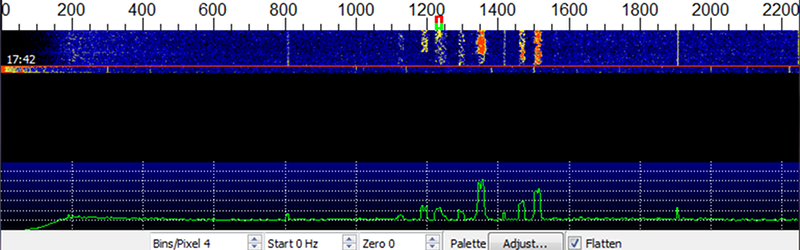
The first time many operators use FT8, the experience feels almost suspicious. You tune to a common FT8 frequency, open WSJT-X, check the waterfall, and suddenly the screen begins filling with callsigns from places that were invisible to your speaker. The radio may sound like a chorus of tiny robots arguing inside a coffee can, but the software calmly decodes stations across the country and across the ocean. It feels like cheating until you realize the cheating still requires a license, a radio, a working antenna, proper setup, and enough patience to discover why your computer clock is three seconds off.
One common experience is the “humble antenna surprise.” An operator with a basic wire, a portable vertical, or a compromise attic antenna may assume DX is out of reach. Then FT8 produces a contact thousands of miles away at modest power. That moment can be energizing. It tells the operator, “Your station is not perfect, but it is alive.” For many hams, especially those boxed in by apartment walls or neighborhood rules, that encouragement keeps the hobby from becoming a shelf full of unused gear.
Another familiar experience is the “waterfall rabbit hole.” You start by trying to make one contact. Then you notice your signal is being heard in South America. Then you change bands. Then you reduce power. Then you rotate or adjust an antenna. Then suddenly it is midnight, your coffee is cold, and you are explaining to yourself that this is science, not obsession. FT8 makes experimentation easy because the results arrive quickly. That feedback teaches practical radio lessons better than many lectures.
There is also the quieter disappointment some operators feel after the novelty fades. The contacts are real, but they are brief. The log grows, but the stories do not always grow with it. A screen full of completed QSOs can feel oddly empty if the operator wants personality, humor, accents, local details, or the satisfying rhythm of a live conversation. That is where FT8 shows its limit. It is excellent at proving that a path exists. It is not excellent at making a new friend by itself.
The healthiest FT8 operators seem to treat it like a sharp tool. They use it to check propagation, chase DX, test antennas, enjoy quiet late-night operating, or stay active when voice conditions are poor. But they do not ask it to be the entire hobby. They still listen around the bands. They still answer a voice CQ. They still help new operators. They still build, repair, compare, and wonder. In that kind of station, FT8 does not kill ham radio. It adds another instrument to the bench.
In real experience, FT8 is neither villain nor savior. It is more like a power drill. Used well, it helps build something. Used lazily, it makes noise and leaves holes in places you did not intend.
Final Verdict: FT8 Is Changing Ham Radio, Not Ending It
FT8 is not killing ham radio. It is exposing what different operators want from ham radio. Some want conversation. Some want awards. Some want propagation data. Some want technical experimentation. Some want the thrill of making a tiny signal travel absurd distances. All of those are valid, as long as they remain connected to learning, respect, and responsible operating.
The best answer to “FT8: saving ham radio or killing it?” is this: FT8 is saving parts of ham radio that needed help, especially accessibility and weak-signal activity. It may be killing the illusion that ham radio must look and sound the same way forever. That is uncomfortable for some operators, but it is also how the hobby survives.
Ham radio has always evolved. FT8 is one more evolution. Use it. Question it. Enjoy it. Step away from it when it gets boring. Then come back when the band is noisy, the antenna is small, the night is quiet, and some distant callsign appears on your screen like a tiny digital postcard from the ionosphere.
Note: This article is original, web-ready content synthesized from real amateur-radio knowledge, including established information about FT8, WSJT-X, digital modes, weak-signal operation, contesting trends, and the purpose of the Amateur Radio Service.
SEO Tags


