
Leaving the comfort zone of US tech giants sounds simple until your calendar refuses to sync, your phone wants Google services like a toddler wants candy, and your cloud storage suddenly looks less like “the cloud” and more like “a server you now have to understand.” Yet that is exactly why the experiment is so fascinating. When a European YouTuber tries to escape the gravitational pull of American Big Tech, the journey does not merely lead to a different app store. It leads straight into the practical, slightly chaotic, surprisingly empowering world of open source.
The story gained attention after TechAltar, the analytical technology channel hosted by Marton Barcza, explored what life looks like after one month without relying on US tech giants. The idea was not just “delete a few apps and feel smug.” It was a full-stack lifestyle test: hardware, operating systems, cloud storage, productivity tools, video hosting, email, messaging, and daily workflows. In other words, the experiment asked a very modern question: can a person who works online still function without Google, Apple, Microsoft, Amazon, Meta, and the rest of the Silicon Valley buffet?
The answer is yes, but with an asterisk the size of a server rack. Escaping US tech giants is possible, but it is rarely frictionless. The good news is that open-source software has matured far beyond the “for Linux hobbyists only” stereotype. The bad news is that the conveniences we take for granted were often built by companies whose business models depend on locking us into their ecosystems. Leaving the walled garden means discovering the door, the key, the map, and occasionally the compost pile.
Why Europeans Are Looking Beyond Big Tech
The European conversation around technology is no longer just about price, features, or which smartphone has the shiniest camera bump. It is increasingly about digital sovereignty: who controls the infrastructure, who stores the data, who writes the rules, and who can change the terms overnight. For governments, creators, small businesses, and privacy-conscious users, this matters because digital life now depends on platforms that sit outside local control.
US tech giants dominate search, video, mobile operating systems, cloud infrastructure, productivity software, advertising, social media, and app distribution. That dominance creates convenience, but it also creates dependency. A creator can build an audience on YouTube, monetize through Google ads, communicate through Gmail, store documents in Google Drive, promote on Instagram, and manage work through Microsoft or Apple devices. It is efficient, until it is not. One policy change, account suspension, pricing shift, API shutdown, algorithm tweak, or privacy scandal can rearrange a person’s digital life before breakfast.
Europe has responded with regulatory tools such as the Digital Markets Act, privacy frameworks like GDPR, and a growing push toward open standards and local alternatives. But regulation is only part of the story. The cultural shift is bigger: many Europeans are asking whether digital independence should be treated like energy independence or food security. Not glamorous, perhaps, but extremely important when something breaks.
The Open-Source Door Opens Quickly
Once someone decides to avoid US tech giants, open source appears almost immediately. Need an alternative to Google Drive or Microsoft 365? Nextcloud enters the room, carrying files, calendars, contacts, notes, and collaboration tools like a polite German office manager. Need an office suite? LibreOffice has been waiting patiently with Writer, Calc, and Impress. Need a browser that is not built around the Chrome empire? Firefox says hello. Need social media without a single central owner? Mastodon and the Fediverse raise their hands. Need video hosting beyond YouTube? PeerTube appears, decentralized and proudly weird in the best possible way.
This is the core insight behind the TechAltar experiment: escaping US tech giants often means adopting open-source alternatives whether you planned to or not. Open source is not always the destination people initially search for. They may begin with “European alternative to Google” or “privacy-friendly cloud storage.” But under the hood, the strongest answers frequently rely on free and open-source software, open protocols, or community-driven development.
What “Open Source” Actually Means
Open source does not simply mean “free download.” It means the software’s source code can be inspected, modified, shared, and improved under licenses that protect those freedoms. That matters because software is not magic; it is instructions. When the instructions are hidden, users must trust the vendor. When the instructions are visible, researchers, developers, governments, and curious nerds with too much coffee can inspect what the software is doing.
Transparency is not a cure-all. Open-source software can still have bugs, confusing interfaces, security problems, underfunded maintainers, or documentation that reads like it was written by a toaster with a PhD. But it changes the power relationship. Users are no longer merely renters inside a proprietary apartment block. They can inspect the building, repair parts of it, fork the project, hire someone to support it, or move their data elsewhere.
Real Alternatives Used in the Big Tech Escape Route
Nextcloud Instead of Google Drive or Microsoft 365
Nextcloud is one of the most important tools in the open-source independence stack. It can handle file syncing, document collaboration, calendars, contacts, photos, tasks, and more. For individuals, it can replace a surprising amount of Google Workspace. For organizations, it offers a way to keep data under chosen hosting conditions instead of handing everything to a hyperscale cloud provider.
Of course, Nextcloud also demonstrates the trade-off perfectly. If you self-host it, you gain control, but you also gain responsibility. Updates, backups, security hardening, storage, uptime, and troubleshooting become your problem. That is liberating for some users and deeply annoying for others. The honest slogan might be: “Nextcloud: because freedom occasionally asks you to read the manual.”
Linux Instead of Windows or macOS
Linux remains the symbolic heart of open-source computing. Modern distributions are far more polished than they were years ago, and European hardware makers such as TUXEDO Computers show how Linux can be delivered as a ready-to-use desktop experience rather than a weekend puzzle box. For browsing, writing, coding, editing, messaging, and many business tasks, Linux works beautifully.
The challenge comes from specialized software and hardware compatibility. Creative tools, certain games, professional design suites, corporate VPN clients, and niche peripherals may still pull users back toward Windows or macOS. The good news is that the gap keeps shrinking. The bad news is that the final 10 percent of compatibility is where patience goes to do cardio.
Fairphone and /e/OS Instead of a Google-Centered Phone
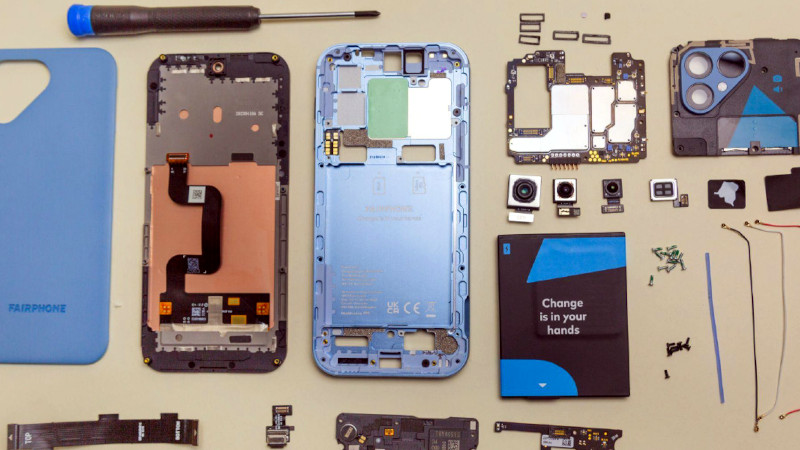
Smartphones are harder to escape than desktops because mobile operating systems are deeply tied to app stores, push notifications, maps, payment systems, and identity services. A Fairphone running /e/OS represents one European attempt to offer a more repairable, privacy-conscious, less Google-dependent mobile experience. It is not merely a phone choice; it is a statement about sustainability, repairability, and software freedom.
Still, de-Googled Android is not always painless. Some banking apps complain. Some ride-hailing apps act suspicious. Some services assume Google Play Services will always be there, like oxygen. Users who rely on mainstream mobile convenience may find the transition bumpy. But for people who value control over seamlessness, the trade-off can be worth it.
PeerTube Instead of YouTube
PeerTube is one of the most interesting alternatives because it challenges the centralization of online video. Instead of one enormous platform controlling hosting, discovery, moderation, monetization, and recommendations, PeerTube uses a federated model. Different servers can host videos and communicate with one another. It is open source, decentralized, and designed to reduce dependence on a single platform.
For creators, however, YouTube remains difficult to replace. YouTube is not just video hosting; it is search, recommendations, analytics, comments, monetization, subscriptions, cultural habit, and audience discovery. A creator can upload to PeerTube, but viewers are still trained to search YouTube first. That is the network-effect problem in one sentence: better values do not automatically create bigger audiences.
Proton, Tuta, and Signal for Private Communication
Email and messaging are natural places to rethink Big Tech dependence. Proton Mail, based in Switzerland, emphasizes end-to-end encryption and zero-access encryption. Tuta, based in Germany, also focuses on encrypted email and privacy-first communication. Signal, while not European, is widely respected for open-source encrypted messaging and a nonprofit model. These tools show that privacy can be a product feature, not a checkbox buried beneath fourteen menus.
The catch is interoperability. Email is interoperable by design, so switching providers is easier than switching social networks. Messaging is trickier because your friends, colleagues, and family may not want to move. You can install Signal in ten seconds; convincing the family group chat to leave WhatsApp may require diplomacy, snacks, and possibly a treaty.
Why Open Source Fits Europe’s Digital Sovereignty Moment
Open source fits the European digital sovereignty conversation because it supports local control, auditability, competition, and long-term resilience. A public agency that uses open standards and open-source software is less likely to be trapped by a single vendor. A school system can teach students software skills without turning every classroom into a sales funnel. A small business can choose hosting providers, migrate data, and avoid surprise licensing costs.
This is why European governments and cities have shown growing interest in open-source migration. Schleswig-Holstein in Germany has pursued a major open-source strategy to reduce dependence on proprietary vendors. Lyon in France has moved toward replacing Microsoft tools with alternatives such as Linux, OnlyOffice, and PostgreSQL. These are not symbolic hobby projects. They are serious institutional decisions based on cost, control, data protection, and sovereignty.
For ordinary users, the same logic applies on a smaller scale. You may not be running a state administration, but your digital life still has infrastructure. Your photos, passwords, contacts, notes, tax files, videos, email history, and creative work all live somewhere. If that somewhere is controlled entirely by companies whose incentives are not aligned with yours, it is reasonable to ask what Plan B looks like.
The Hard Truth: Big Tech Is Convenient for a Reason
It would be dishonest to pretend that open-source alternatives always win on polish, support, onboarding, and integration. US tech giants became giants partly because they solved real problems at enormous scale. Google Search is fast. YouTube is unmatched for discovery. Apple’s ecosystem is smooth. Microsoft Office is the default business language. Amazon Web Services powers half the internet’s invisible plumbing. These tools are popular because they are useful.
Open-source life asks users to make different calculations. Instead of asking only “Does this work instantly?” it adds questions like “Who controls my data?” “Can I export my files?” “Can the software be audited?” “Can I host it elsewhere?” “Will the tool still exist if investors lose interest?” That shift can feel like going from fast food to cooking at home. It takes more effort, but you know what went into the meal. Also, no algorithm is trying to upsell you fries.
A Practical Escape Plan for Beginners
The smartest way to escape US tech giants is not to rage-delete every account at midnight. That is how people lose contacts, photos, and three years of calendar events. A better approach is gradual migration. Start with the least painful services, build confidence, and keep backups.
First, switch your browser to Firefox or another privacy-conscious option. This is low risk and immediately reduces dependence on Chrome. Next, move passwords into an independent password manager. Then test encrypted email with Proton or Tuta while keeping your old inbox during the transition. After that, try LibreOffice for personal documents and spreadsheets. If it works for your needs, make it the default. Then experiment with Nextcloud through a hosted provider before self-hosting. Finally, explore Mastodon, PeerTube, or other federated platforms as secondary channels rather than instant replacements.
The goal is not purity. The goal is leverage. Even if you still use YouTube, Gmail, or an iPhone, every alternative you adopt reduces dependency. Digital freedom is rarely a dramatic breakup. It is usually a series of small, boring, powerful choices.
What Creators Can Learn from the TechAltar Experiment
Creators live under platform risk more than most people. A YouTuber depends on recommendations, copyright systems, ad policies, comment moderation, viewer notifications, and monetization rules. If any of those systems change, the creator’s income and audience can change with them. That is why open-source thinking matters even for creators who remain on YouTube.
A resilient creator stack might include a personal website, an email newsletter, RSS feeds, open video mirrors, downloadable archives, a presence on federated platforms, and community spaces that are not locked to one corporation. YouTube can remain the main stage, but it should not be the only address. Renting attention from a platform is useful. Owning a relationship with your audience is better.
TechAltar’s experiment is valuable because it is not a fantasy of perfect independence. It shows the messy middle: open-source tools are powerful, but the network effects of Big Tech are real. That honesty makes the lesson stronger. The future is not necessarily “everyone quits Big Tech tomorrow.” The future may be a hybrid model where users demand portability, open standards, privacy, and meaningful alternatives.
Experiences From Trying to Escape US Tech Giants
The first experience most people have when leaving Big Tech is surprise. Not panic, not triumph, but surprise. You discover how many invisible strings connect your daily life to a handful of companies. Your browser remembers passwords. Your phone syncs contacts. Your calendar talks to your email. Your notes appear on your laptop. Your photos back up overnight. Your video platform knows your audience. It all feels natural until you try to replace one piece and the whole digital sweater starts unraveling.
A typical first step is switching browsers. This feels easy, almost suspiciously easy. Firefox imports bookmarks, blocks many trackers by default, and lets you browse normally. At this stage, you may think, “This open-source escape thing is simple.” Enjoy that confidence. It is adorable.
Then comes email. Moving from Gmail or Outlook to Proton Mail or Tuta feels more serious because email is identity. It is the address tied to bank accounts, newsletters, logins, receipts, doctors, schools, and that one website you joined in 2014 and immediately forgot. Forwarding helps, but changing your primary email is like moving apartments while still receiving mail at the old place. For a few months, you live in both worlds.
Cloud storage is where the philosophy becomes practical. Using Nextcloud through a managed provider feels comfortable; self-hosting it feels like adopting a digital houseplant that occasionally demands database maintenance. The reward is real control. The cost is responsibility. You learn what backups mean. You learn why two-factor authentication matters. You learn that “server update” is a phrase capable of raising your blood pressure.
The phone is usually the hardest battlefield. A de-Googled Android phone or privacy-focused operating system can feel wonderfully clean, but some apps behave as if Google is the law of physics. Banking apps may refuse to run. Maps may require adjustment. Push notifications can be unpredictable. The experience teaches a powerful lesson: Big Tech dependency is not only about user choice. It is baked into developer assumptions, business requirements, and app ecosystems.
Social platforms are emotionally difficult in a different way. Mastodon, PeerTube, and other federated tools offer control and healthier incentives, but they do not always offer the same audience density. You may enjoy the calmer environment while also missing the reach of mainstream platforms. That tension is normal. The practical solution is not to abandon everything instantly, but to cross-post, mirror, and slowly train your audience to find you in more than one place.
The biggest personal lesson is that escaping US tech giants is not about becoming a digital monk. It is about becoming less helpless. You may still use YouTube, Google Maps, or an Apple device. That does not make the effort pointless. Every open-source tool you adopt gives you another option, another exit, another way to say no. And in a world where platforms change rules constantly, having exits is not paranoia. It is basic digital hygiene.
Conclusion: Open Source Is Not a Niche Escape Hatch Anymore
The journey of a European YouTuber trying to escape US tech giants reveals something bigger than one creator’s experiment. It shows that open source has become the practical backbone of digital independence. Not perfect independence, not effortless independence, but real independence with working tools, serious communities, and growing political relevance.
For Europe, open source offers a path toward digital sovereignty without simply replacing American giants with European giants. For creators, it offers resilience against platform risk. For everyday users, it offers privacy, portability, and control. The trade-off is effort, but effort is not a flaw when the reward is ownership.
Escaping Big Tech does not require vanishing into a cabin with a solar-powered Linux laptop and a suspiciously strong opinion about package managers. It can begin with one browser, one email account, one document editor, one backup, one open standard, and one decision to stop treating convenience as the only measure of good technology. Open source is not the whole answer, but it is one of the best exits we have. And unlike a walled garden, the gate is not locked.


