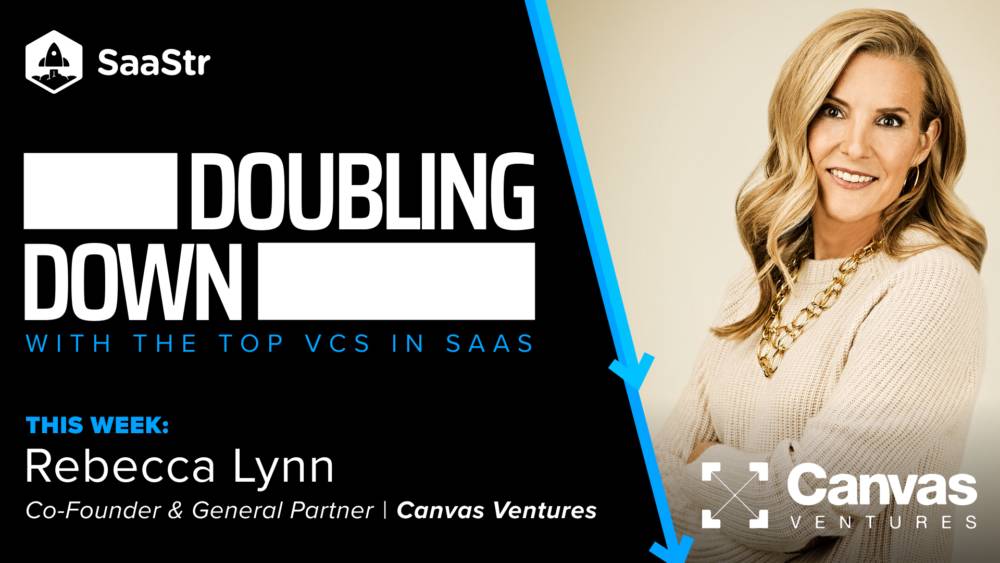

Note: This article is written for web publication and synthesizes publicly available information about Rebecca Lynn, Canvas Ventures, Canvas Prime, and her investment record in fintech, digital health, AI, and go-to-market-focused venture capital.
In venture capital, “doubling down” is not just a catchy phrase founders toss around after a strong board meeting and two espressos. It is a discipline. It means knowing where your edge is, concentrating capital where you have earned conviction, and resisting the shiny-object circus that makes Silicon Valley feel like a theme park designed by spreadsheets.
Few investors embody that idea as clearly as Rebecca Lynn, the co-founder and general partner associated with Canvas Ventures, now connected with the focused evolution of Canvas Prime. Lynn has built a reputation around early-stage investing in fintech, digital health, AI, and companies that need more than a check. They need someone who understands product-market fit, customer acquisition, regulatory friction, sales motion, and the awkward middle stage where a promising startup must stop being “promising” and start becoming inevitable.
Her track record includes early involvement with category-defining companies such as LendingClub, Doximity, Casetext, Gabi, FutureAdvisor, Check, Luminar, Figure Eight, and others. That list is not just a trophy shelf. It is a pattern. Lynn tends to gravitate toward companies where technology attacks expensive, painful, slow-moving problemscredit access, physician workflow, legal research, insurance shopping, healthcare delivery, and enterprise productivity. In other words, she likes markets where customers are not merely curious; they are suffering enough to pay.
Who Is Rebecca Lynn?
Rebecca Lynn’s story does not begin with the usual “grew up next to Sand Hill Road and learned cap tables before long division” mythology. She grew up in Missouri, studied chemical engineering, worked in technical environments, and later earned a JD/MBA from the University of California, Berkeley. That mix of engineering, law, business, and operating experience helps explain why her investment lens often feels practical rather than performative.
Before venture capital, Lynn worked at Procter & Gamble, where she learned the old-school fundamentals of product positioning, consumer behavior, and scaling. That background matters. Many startup people talk about “go-to-market” as if it is a magic spell. At P&G, go-to-market is not magic; it is a muscle. You learn who the customer is, what they actually value, why they choose one product over another, and how to turn an insight into repeatable growth.
She later joined NextCard, one of the earliest online credit card companies, where she saw fintech before fintech became the word everyone put on pitch decks. NextCard scaled rapidly, giving Lynn hands-on exposure to credit operations, customer acquisition, underwriting, and the messy realities of bringing financial products online. That experience would later become a serious advantage when evaluating companies in digital lending, consumer finance, banking infrastructure, and insurance technology.
Her venture career began at Morgenthaler Ventures in 2007. In 2013, she co-founded Canvas Ventures, a firm that grew out of Morgenthaler and positioned itself as a hands-on early-stage investor. Canvas focused heavily on Series A and Series B companiesstartups that had typically found early product-market fit but still needed to build a scalable machine around sales, marketing, hiring, operations, and fundraising.
The Canvas Ventures Strategy: Focus Beats Fundraising Theater
Canvas Ventures became known for a concentrated, thesis-driven approach. At the time of the “Doubling Down” profile, the firm managed roughly $835 million in assets and was investing from a $350 million third fund. Its sweet spot was late Series A and early Series B, with typical checks in the $5 million to $15 million range.
That stage is important. Seed investing is often about imagination. Growth investing is often about scale. Series A and Series B sit in the uncomfortable middle, where the founder has evidence but not certainty. The company may have customers, revenue, usage, and a persuasive story, but it still has to prove that the business can scale without accidentally setting the sales team, customer success team, and finance department on fire.
Lynn’s argument is simple: this is where go-to-market expertise matters most. A startup can have brilliant technology and still fail because it sells to the wrong buyer, prices incorrectly, ignores procurement reality, hires too quickly, or confuses loud customer interest with durable demand. Canvas’ pitch to founders has long been that capital should come with practical help: introductions, sales strategy, market positioning, follow-on fundraising guidance, and board-level pattern recognition.
That approach is especially relevant in markets like fintech and digital health. In consumer social, a product can sometimes explode because people love it and share it. In healthcare, financial services, insurance, and legal technology, the road is usually less glamorous. There are compliance requirements, entrenched incumbents, skeptical buyers, long sales cycles, security reviews, and procurement teams that seem genetically engineered to slow down optimism. Lynn’s experience gives her credibility in precisely those friction-heavy categories.
Why “Doubling Down” Fits Rebecca Lynn’s Investing Philosophy
The phrase “doubling down” fits Lynn because her career shows a repeated willingness to lean into earned conviction. She has not chased every new startup trend equally. Instead, she has repeatedly returned to themes where she has operating knowledge and evidence of founder-market fit: credit, healthcare access, professional workflow, AI-enabled services, and businesses where go-to-market execution can unlock major value.
One of her clearest examples is LendingClub. Lynn led an early-stage investment in the company, which became the largest U.S. technology IPO of 2014. LendingClub helped define the online lending wave by connecting borrowers and investors through a digital platform at a time when traditional credit models were ripe for disruption. For Lynn, the investment matched several themes: a large financial services market, technology-driven distribution, data-enabled underwriting, and a consumer pain point big enough to support a venture-scale company.
Doximity is another strong example. The company built a professional network for physicians and became a public company under the ticker DOCS. Healthcare professionals are a notoriously difficult audience to reach, and physicians are not exactly famous for having spare time to browse fluffy software. Doximity succeeded by solving real workflow and communication problems for clinicians, which aligns with Lynn’s preference for products that become useful rather than merely fashionable.
Then there is Casetext, the AI legal technology company acquired by Thomson Reuters for $650 million in cash. Canvas backed Casetext before generative AI became the dinner-table topic that made relatives ask whether ChatGPT could replace their accountant. Casetext focused on legal research and later became known for CoCounsel, an AI assistant for legal professionals. Its success highlights a major Lynn theme: AI is most powerful when it is applied to high-value professional workflows where trust, accuracy, and domain expertise matter.
Fintech: Where Pain, Data, and Distribution Meet
Rebecca Lynn’s fintech investing is not accidental. Her background at NextCard, her consulting experience with financial brands, and her early LendingClub success gave her a deep understanding of credit, consumer acquisition, risk, and regulated financial products.
Fintech is attractive because the market is enormous, but it is also dangerous because “huge market” is not the same as “easy market.” Financial services customers want convenience, but regulators want compliance. Consumers want approval, but lenders must manage risk. Startups want growth, but credit cycles have a nasty habit of turning yesterday’s genius underwriting model into today’s cautionary tale.
Lynn’s edge is that she looks beyond the surface-level pitch. A fintech company cannot simply say, “We are making banking better,” and expect applause forever. It must prove that it can acquire customers efficiently, comply with regulations, manage fraud, price risk, survive macroeconomic shifts, and build trust. In that world, go-to-market strategy is not a department. It is oxygen.
Companies associated with Lynn’s investing history, such as FutureAdvisor, Check, Gabi, Possible Finance, and LendingClub, reflect different angles of the fintech opportunity. Some help consumers access better financial products. Some improve infrastructure. Some use software to simplify painful decisions. The connecting thread is practical value. These are not apps invented because someone was bored at brunch; they address real financial complexity.
Digital Health: Big Problems, Slow Systems, Real Opportunity
Digital health has become one of Lynn’s major focus areas, and for good reason. The U.S. healthcare system is full of expensive inefficiencies, fragmented data, administrative burden, uneven access, and patient experiences that can feel like using 1998 software inside a 2026 world.
But digital health investing requires patience. Healthcare buyers are cautious. Clinical workflows are sensitive. Data privacy is critical. Reimbursement can be confusing. A startup may have a beautiful product and still struggle because the buyer, user, payer, and beneficiary are four different people sitting in four different meetings.
Lynn’s digital health focus reflects her interest in companies that can navigate those complexities and still deliver measurable value. XP Health, for example, represents the kind of company that fits this thesis. It targets vision care, a large and often frustrating benefits category, by using a digital-first model to improve access, enrollment, utilization, and user experience for employers, insurance carriers, and members.
Doximity also belongs in this conversation. By building around physicians rather than treating them as an afterthought, the company created a trusted network in a market where trust is the whole ballgame. In healthcare, the winner is rarely the loudest startup. It is the one that can earn adoption inside real clinical behavior.
AI: Not Hype, But Applied Intelligence
Lynn’s AI thesis appears grounded in application rather than spectacle. That distinction matters. AI hype cycles can produce more fog than insight. Every company suddenly becomes “AI-powered,” including some that appear to use artificial intelligence mainly to rename their website navigation.
The stronger AI opportunity is not generic automation. It is AI embedded into specific workflows where the output is valuable, measurable, and trusted. Casetext is a useful case study. Legal research, document review, contract analysis, and litigation preparation are high-cost professional tasks. If AI can make those workflows faster while maintaining quality and trust, customers have a reason to care beyond novelty.
That is why Lynn’s AI interest connects naturally with fintech and digital health. These sectors have large data flows, expensive decisions, compliance needs, and professional users who need better tools. AI can improve underwriting, care navigation, administrative automation, claims processing, legal review, and customer support. But it must be deployed with discipline. In regulated markets, “move fast and break things” is less charming when the broken thing is someone’s medical record, loan approval, or legal filing.
What Founders Can Learn from Rebecca Lynn
1. Solve a Problem People Will Pay to Fix
One of Lynn’s strongest pieces of advice to founders is to focus on expensive, painful problems. Cool technology is not enough. A startup needs a customer with urgency, budget, and a reason to change behavior. If the customer only says, “That’s interesting,” the founder may have a conference demo, not a company.
2. Respect Go-to-Market as a Core Product
Founders often treat go-to-market as something that happens after the product is built. Lynn’s career suggests the opposite. Distribution, buyer understanding, messaging, channel experiments, and pricing are part of the company’s design. The best product does not always win; the best product with the clearest path to the right customer has a much better shot.
3. Scarcity Can Build Better Companies
Lynn has argued that great companies can be built in downturns. Scarcity forces discipline. When capital is cheap, startups can confuse spending with progress. When money gets tighter, teams must prioritize. They learn which customers matter, which features drive revenue, which hires are essential, and which “strategic initiatives” were really just expensive hobbies wearing Patagonia vests.
4. Choose Investors Who Bring Pattern Recognition
For founders, the right investor is not always the one with the biggest brand name or the most dramatic Twitter presence. It is the investor who understands the market, asks sharper questions, makes relevant introductions, and helps the company avoid mistakes they have seen before. Lynn’s appeal to founders comes from that kind of practical pattern recognition.
Rebecca Lynn’s Broader Impact on Venture Capital
Rebecca Lynn’s prominence also matters because venture capital has historically had too few women in senior investing roles. Her recognition on the Forbes Midas List, along with honors from major business publications, places her among a relatively small group of women investors whose results have reshaped the conversation about who gets to be seen as a top venture capitalist.
That visibility is meaningful, but the more important story is performance. Lynn is not notable because she is a woman in venture. She is notable because she has backed companies that returned capital, went public, or were acquired by major strategic buyers. The best argument for broader representation in venture is not charity. It is that different networks, backgrounds, and operating experiences can uncover different opportunities.
Her path from Missouri to engineering, from P&G to NextCard, from Morgenthaler to Canvas, and from Canvas Ventures to a more specialized Canvas Prime strategy also challenges the narrow idea of what a venture capitalist is supposed to look like on paper. The industry loves pattern matching, but Lynn’s career is a reminder that some of the best investors are pattern breakers first.
The Power of Specialization
As venture capital has matured, specialization has become more important. The generalist investor who can credibly evaluate every market from quantum computing to pet toothpaste is becoming harder to believe. Founders increasingly want investors who understand their customers, business model, sales motion, and regulatory environment.
Lynn’s focus on fintech, digital health, and AI reflects that shift. These categories are broad enough to support enormous companies but specific enough to reward expertise. They also overlap in interesting ways. AI can transform healthcare administration. Fintech infrastructure can improve payments and benefits. Digital health can borrow lessons from consumer product design. Legal AI can reshape professional services. The best opportunities often appear at the edges where industries collide.
Canvas’ strategy of supporting a select group of companies also fits this specialization trend. Venture firms sometimes celebrate massive portfolios, but founders at the Series A and B stage often need concentrated attention. If a firm claims to be hands-on with hundreds of companies, one may reasonably ask whether “hands-on” includes more than forwarding a newsletter and appearing on one quarterly call.
Experience Notes: Practical Lessons from the Rebecca Lynn Playbook
For anyone building, investing, or advising in the startup world, the Rebecca Lynn story offers a set of grounded experiences that apply far beyond venture capital. The first lesson is that domain knowledge compounds. Lynn’s early work in consumer products, credit, marketing, and online financial services gave her a foundation that later helped her spot fintech opportunities. Many professionals underestimate the value of their early career because the first job rarely looks glamorous. But experience often becomes useful later in ways that are impossible to predict. The operating detail you learn today may become tomorrow’s investment edge, founder insight, or strategic advantage.
The second lesson is that markets reward clarity. In the startup world, people often confuse complexity with intelligence. A founder can build a pitch deck with 14 revenue streams, 9 customer segments, and a slide that says “AI flywheel” in bold letters, but that does not mean the company is focused. Lynn’s approach suggests that clarity wins: know the customer, know the pain point, know who pays, know why now, and know what must happen next. This sounds simple because the best strategy often does. The hard part is saying no to everything else.
The third lesson is that go-to-market deserves founder-level attention. Many technical teams assume that if they build something extraordinary, the market will politely form a line outside the office. Unfortunately, the market is usually busy, skeptical, distracted, and already using something mediocre that “works fine.” Great companies must create urgency. They must identify the buyer, craft the message, test channels, shorten sales cycles, prove return on investment, and turn early wins into repeatable motion. That is not decoration around the product; it is how the product reaches the world.
The fourth lesson is that downturns are not just threats. They are filters. Easy-money periods allow weak ideas to survive longer than they should. Tough markets force honesty. Customers become more selective, investors ask sharper questions, and founders must demonstrate real value. Lynn’s experience investing through cycles shows that strong companies can emerge from difficult periods because they learn discipline early. A startup that can sell during a downturn may become very dangerous when conditions improve.
The final lesson is that focus is a multiplier. Lynn’s move toward deeper specialization in fintech, digital health, and AI reflects the same advice many investors give founders: do more of what you do best. That may sound obvious, but it takes courage. Focus means giving up optionality. It means admitting that not every attractive opportunity is your opportunity. For founders, marketers, executives, and investors alike, the Rebecca Lynn playbook is refreshingly practical: build where the pain is real, bring expertise to the table, stay disciplined when the market gets noisy, and double down only after you have earned the right to do so.
Conclusion: Why Rebecca Lynn’s Story Still Matters
Rebecca Lynn’s career is a useful lens for understanding modern venture capital. Her success is not built on hype-chasing or vague enthusiasm for “disruption.” It is built on repeated exposure to real markets, practical operating experience, and a disciplined focus on startups that solve painful problems in large categories.
From LendingClub to Doximity, from Casetext to Gabi, from fintech to digital health and AI, Lynn’s investing record shows the value of combining conviction with execution. She understands that a startup’s biggest challenge is rarely just invention. It is adoption. It is trust. It is scale. It is turning a smart product into a company customers rely on.
That is the real meaning of “doubling down” in the Rebecca Lynn story. It is not about betting wildly. It is about concentrating on the markets, founders, and business models where insight has been earned. In a venture world that often rewards noise, Lynn’s career makes a strong case for focus, patience, and useful expertise. Not every investor can help a company move from product-market fit to market leadership. The best ones know that the canvas is only valuable when the founder can fully render the vision.


