
Every shipwreck has a dramatic entrance. Some are found by high-tech sonar. Some are spotted by fishermen who were just trying to catch dinner. And some appear out of the dark like a ghost with excellent timing. That is what happened in Lake Ontario, where a team of Canadian technical divers went looking for one lost vessel and instead discovered something far older, stranger, and more beautifully preserved than expected.
The divers had been searching for the wreck of the Rapid City, a schooner built in 1884 and lost near Toronto in 1917. That would have been exciting enough. A century-old Great Lakes wreck is not exactly pocket change in the world of maritime history. But when the team descended roughly 300 feet into the cold, dim water, they found a two-masted wooden vessel that did not look like a 20th-century wreck at all. It appeared to be from the first half of the 19th century, possibly around 200 years old.
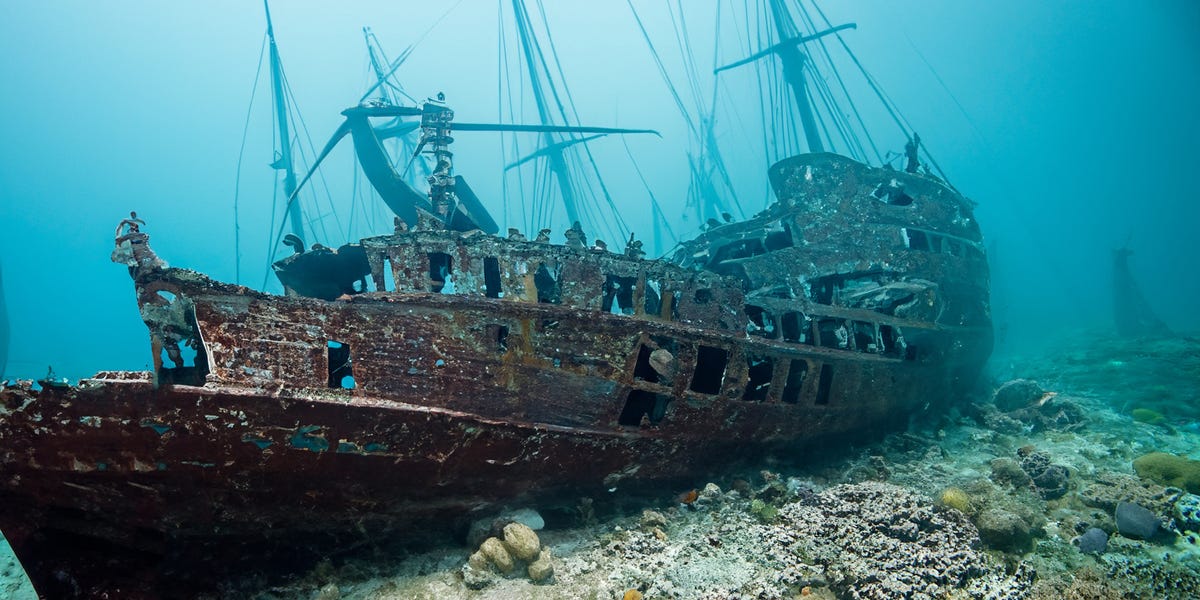
And here is the part that made seasoned divers mentally drop their dive slates: the ship was still upright, still shaped like a ship, and still had both masts standing. In shipwreck terms, that is like finding a 200-year-old wedding cake with the candles still upright. You do not just swim past that and say, “Neat.” You stop, you breathe carefully, and you try not to fog up your mask with disbelief.
A Search for One Wreck Became a Bigger Discovery
The team was following up on an underwater anomaly previously detected during a fiber-optic cable survey. The object on the lakebed was thought to be the Rapid City, a known vessel lost in 1917. But shipwreck identification is a little like detective work conducted in the dark, underwater, while wearing a life-support system. You gather clues: hull shape, rigging, deck layout, cargo, construction style, and the things that are missing.
Once divers reached the site, the clues did not match the expected story. The wreck’s construction suggested an older era of Great Lakes shipbuilding. Experts noted rope rigging rather than later metal rigging, an early windlass design, no obvious wheel on the aft deck, and no centerboard winch. Those features point toward a vessel built before many mid-19th-century shipbuilding changes became common on the lakes.
That is why the discovery matters. It may represent a poorly documented chapter in Great Lakes maritime trade, a period when wooden sailing vessels moved goods, people, timber, grain, and ambition across a freshwater system so vast it behaves like an inland sea with a bad temper.
Why the Age Was So Surprising
A ship from the early 1800s is not just “old” in the way your phone charger from 2014 is old. It belongs to a time when the Great Lakes were becoming major transportation corridors. Before railroads dominated the map and before modern steel freighters became the region’s floating workhorses, schooners and other wooden vessels stitched together towns, ports, mills, farms, and markets.
Early Great Lakes vessels are often underrepresented in written records. Some were built locally, used hard, repaired often, renamed, sold, and sometimes lost with little paperwork. Storms, fog, shoals, fire, and navigational errors took their toll. When such ships sank, they frequently vanished from public memory unless survivors, newspapers, or shipping registries preserved the details.
That is why an intact wreck can be more useful than a dusty ledger. A shipwreck is not simply debris. It is a frozen workplace. It can show how builders shaped the hull, how sailors handled the rigging, how cargo was arranged, and how technology changed over time. In this case, the age estimate is especially exciting because the vessel may help fill a gap between early frontier-style lake transport and the later boom in more standardized Great Lakes ship design.
How Cold Freshwater Became History’s Freezer
The Great Lakes are famous among maritime archaeologists because cold freshwater preserves wooden shipwrecks better than warm saltwater. Saltwater encourages marine organisms that chew, bore, and dissolve wood. Cold freshwater slows decay. Low light and deep water help protect fragile structures from waves, anchors, and casual disturbance.
That does not mean wrecks remain perfect forever. Invasive quagga mussels have become a major threat in the lower Great Lakes. They attach to wrecks in thick layers, hide important details, add weight, and can damage both wood and metal. For archaeologists, this creates a race against time: discover, document, map, photograph, and study these sites before they are covered beyond recognition.
The newly found Lake Ontario wreck appears to have benefited from depth. At around 100 meters down, it was beyond the range of casual recreational diving. That depth likely protected it from anchors, souvenir hunters, careless fin kicks, and the occasional person who thinks “do not touch” is merely a suggestion. Deep water is not friendly, but it can be an excellent security guard.
The Masts Changed Everything
Many shipwrecks are found broken, collapsed, scattered, or buried. Masts are especially vulnerable. They can fall during the sinking, break under pressure, decay over time, or be damaged by fishing gear, anchors, storms, and human activity. Finding a wooden schooner with both masts still standing is rare enough. Finding one that may date to the early 19th century is the sort of thing that makes underwater archaeologists suddenly very awake.
The standing masts also help researchers understand the wreck as a complete vessel rather than a puzzle dumped across the lakebed. With masts, rigging remains, deck structures, and hull shape still visible, experts can reconstruct how the ship may have operated. Was it designed mainly for cargo? Did it carry regional goods? Was it built for lake conditions rather than ocean travel? The wreck may not answer every question, but it gives historians a physical starting point.
Shipwrecks Are Not Treasure ChestsThey Are Time Capsules
Popular culture has trained us to expect treasure whenever a shipwreck appears. Gold coins! Jeweled goblets! A cursed necklace! Possibly a skeleton pointing dramatically at a map! Real maritime archaeology is usually less Hollywood and more careful measurement, photography, conservation, and paperwork. Glamorous? Sometimes. Important? Absolutely.
NOAA describes shipwrecks as sites where a vessel, its cargo, equipment, and personal belongings can be preserved together, creating evidence that written history may not provide. This is especially true for working ships. They may not have carried royal treasure, but they carried the ordinary materials that built communities: lumber, grain, coal, iron ore, limestone, tools, dishes, ropes, barrels, and the fingerprints of everyday labor.
The Lake Ontario wreck is valuable because it may show how people worked and traveled before the Great Lakes became an industrial superhighway. It is a reminder that history is not only made in palaces and battlefields. Sometimes it is made in a wooden hull, in freezing water, under a layer of mussels, waiting for divers with enough training and curiosity to find it.
How This Discovery Fits Into a Bigger Underwater Story
The world has seen extraordinary shipwreck discoveries in recent years. In the Mediterranean, researchers identified a 3,300-year-old deep-sea wreck carrying Canaanite amphorae, changing assumptions about how far Bronze Age sailors traveled from land. In Lake Huron, NOAA and partners identified the Ironton, a 191-foot sailing ship resting upright with three masts still standing. In Lake Superior and Lake Michigan, new discoveries continue to show how cold freshwater can preserve wrecks for decades or centuries.
Each discovery adds another paragraph to the global story of navigation. The oldest wrecks reveal trade networks, cargo systems, and ancient seamanship. Great Lakes wrecks reveal migration, industry, weather risk, regional commerce, and the rise of North American inland shipping. Together, they show that water was never a barrier. It was a highway, a workplace, and sometimes a very unforgiving boss.
What Happens After Divers Find a Wreck?
Finding the wreck is only the opening scene. The responsible next step is documentation. Divers and archaeologists typically photograph the site, record measurements, create maps, study construction details, and avoid unnecessary disturbance. In some cases, researchers use photogrammetry, a method that stitches many overlapping images into a detailed 3D model. That allows experts and the public to study a wreck without repeatedly touching it.
For the Lake Ontario shipwreck, future work may include more precise measurement, additional imaging, and wood sampling to help confirm the vessel’s age. Wood samples can sometimes be compared with tree-ring data, helping narrow when the timber was cut. The goal is not to drag the ship out of the lake like a giant antique coffee table. Removing a wreck can damage it, and conservation is expensive. Often, the best museum is the lake itself, as long as the site is protected and properly recorded.
Why Shipwreck Discoveries Still Capture Our Imagination
A lost shipwreck hits a rare emotional combination: mystery, danger, time, and proof. It is not just a story someone told around a campfire. It is there. You can see the rails, the cabin, the mast, the anchor, the curve of the hull. The ship is both absent and present, gone from the world above but still existing below.
That is why the age of this wreck matters so much. A 1917 wreck would have been fascinating. A possible early 1800s wreck is a different kind of portal. It pushes the story backward into a less documented period, when the Great Lakes were still being transformed into commercial arteries. It gives researchers a chance to compare physical evidence with fragmentary records and to understand how early lake vessels were designed before later technologies reshaped the industry.
It also reminds us that major discoveries do not always happen in faraway oceans. Sometimes they are hiding in lakes bordered by cities, ferries, marinas, and busy shorelines. The past is not always remote. Occasionally, it is 300 feet down, quietly minding its own business.
Lessons From the Deep: Experiences Connected to a Discovery Like This
Ask experienced wreck divers what a discovery like this feels like, and many will describe a strange mix of excitement and restraint. The excitement is obvious. You are floating in darkness, your lights cut through the water, and suddenly a shape appears that should not be there: a bow, a rail, a mast rising like a black tree. The restraint is just as important. At that depth, nobody gets to celebrate by doing underwater cartwheels. Technical diving demands discipline. Gas supply, decompression obligations, visibility, temperature, equipment checks, and team communication matter more than adrenaline.
In a deep wreck environment, the diver’s first experience is often silence. There is no museum guide, no dramatic soundtrack, and no helpful sign saying, “Congratulations, you found a historic schooner.” There is only breathing, bubbles if using open-circuit equipment, the hum of concentration, and the slow realization that the object ahead may not have been seen by human eyes since the day it sank. That thought can give even veteran divers goosebumps under a drysuit, which is inconvenient but understandable.
The second experience is humility. A shipwreck is not a playground. It may be fragile, culturally important, and possibly connected to loss of life. Responsible divers keep their distance, avoid stirring sediment, do not remove artifacts, and document rather than disturb. The best wreck divers are part explorer, part historian, part photographer, and part very polite guest. They know that one careless hand on a rail can damage a detail that survived storms, darkness, and two centuries of pressure.
The third experience is curiosity. Every feature becomes a question. Why is the mast still standing? Why is the wheel absent? What does the rigging suggest? Did the ship sink quickly? Was it caught in weather? Was it abandoned, overloaded, damaged, or simply unlucky? A wreck rarely gives up its story all at once. It drops hints, like a mystery novel written in timber and iron.
Finally, there is the experience that follows the dive: responsibility. Once a site is known, it must be protected. Photos, measurements, and reports help archaeologists study the wreck while reducing the need for repeated visits. Public interest can be wonderful, but too much attention can attract looters or careless visitors. The real victory is not just finding the ship. It is making sure the ship remains available for science, history, and future generations who deserve more than blurry photos and a sad story about someone stealing the anchor.
Conclusion
The Lake Ontario discovery is more than a “wow, that’s old” moment. It is a reminder that the Great Lakes still hold thousands of stories under their surface. A vessel believed to be around 200 years old, sitting upright with its masts still standing, offers a rare look at early North American maritime trade and shipbuilding. It also shows why underwater archaeology matters: shipwrecks preserve details that documents often miss.
For readers, the story is thrilling because it feels almost impossible. A team set out to find one lost ship and found another that may be a century older. For researchers, it is a precious opportunity to study a vessel from an underdocumented era. For divers, it is the kind of discovery that explains why people willingly descend into cold, dark water with enough equipment to look like a hardware store learned to swim.
In the end, the wreck’s greatest treasure is not gold. It is evidence. It is the shape of a vanished working world, preserved in freshwater darkness, waiting patiently until someone came close enough to shine a light.


