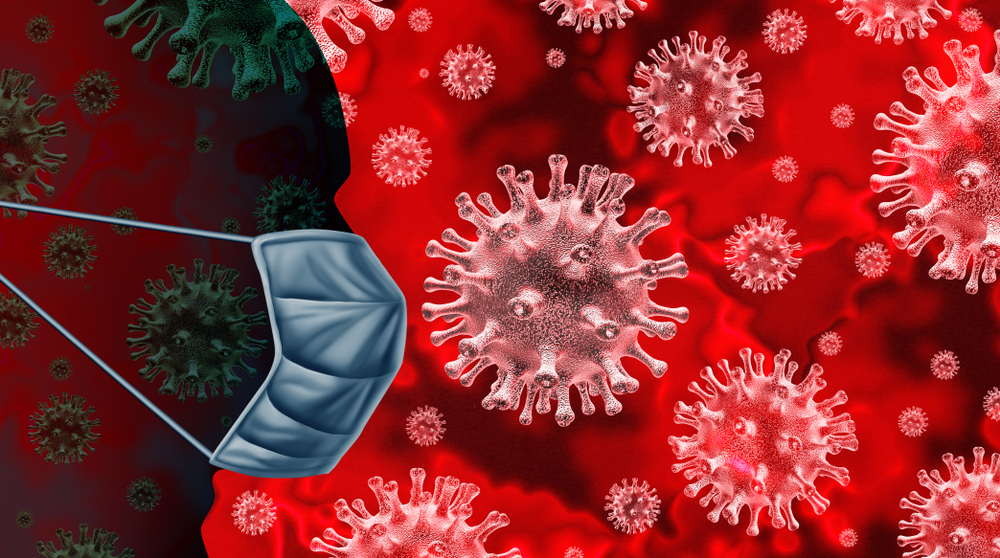

COVID-19 has never been just one battle. From the beginning, it asked people to fight on two fronts at the same time: the visible medical front and the quieter psychological, social, and economic front. One enemy attacked lungs, blood vessels, immune systems, hospital capacity, and vulnerable bodies. The other attacked routines, relationships, trust, attention spans, bank accounts, school years, and mental health. If that sounds dramatic, remember that for a while grocery shopping felt like a tactical mission and sourdough starters had better public relations than most governments.
Today, COVID-19 is no longer the emergency it was in 2020, but it is also not a closed chapter. The virus continues to evolve, vaccines and treatments continue to matter, and long COVID remains a serious concern for many people. At the same time, the emotional aftershocks of the pandemic are still visible in classrooms, workplaces, families, and communities. Understanding COVID-19 as a war on two fronts helps explain why the experience felt so exhaustingand why recovery requires more than counting case numbers.
The First Front: Fighting the Virus Itself
The most obvious front in the COVID-19 war is biological. SARS-CoV-2, the virus that causes COVID-19, spreads mainly through respiratory particles, especially in crowded indoor spaces with poor ventilation. The disease can be mild for some people, but it can also lead to severe illness, hospitalization, complications, and death, especially among older adults and people with underlying health conditions.
Early in the pandemic, the medical front was defined by overwhelmed hospitals, shortages of protective equipment, emergency vaccine development, and a daily vocabulary lesson nobody asked for: aerosol, antigen, monoclonal, quarantine, spike protein. The world learned that public health is not a background service; it is the plumbing of civilization. You only notice it when something backs up.
Vaccines, Treatments, and the Shift From Panic to Management
One major reason COVID-19 is less devastating now than in the early pandemic is that the toolbox is better. Vaccines have reduced the risk of severe illness for many people, especially those at higher risk. Updated COVID-19 vaccines have been adjusted over time to better match circulating variants, and U.S. recommendations now emphasize individual decision-making, especially for people at increased risk of severe disease.
Treatments also changed the battlefield. Antiviral medications can reduce the risk of hospitalization and death for eligible high-risk patients when started early. That timing is crucial: COVID-19 treatment is not the kind of thing to leave until “after I finish this one episode.” The first several days after symptoms begin can be the window when medical help matters most.
The lesson is simple but important: COVID-19 prevention is layered. Vaccination, testing when appropriate, staying home when sick, improving indoor air, wearing a high-quality mask in risky situations, and seeking treatment quickly if high-risk are not rival strategies. They are teammates. Think of them as the Avengers, but with more nasal swabs and fewer capes.
Long COVID: The Battle That Does Not End When the Test Turns Negative
For many people, COVID-19 does not end neatly after a few days of fever, cough, or fatigue. Long COVID, also called post-COVID conditions, can involve symptoms that continue or appear weeks after infection. These may include extreme fatigue, brain fog, shortness of breath, dizziness, sleep problems, pain, heart palpitations, changes in taste or smell, anxiety, and mood changes.
Long COVID is one of the clearest reasons the “just a cold” framing fails. A cold generally does not hijack someone’s ability to work, climb stairs, remember words, or tolerate basic daily activity for months. Research continues to investigate possible mechanisms, including immune system dysfunction, inflammation, viral persistence, blood vessel changes, and nervous system involvement. Scientists have not solved every part of the puzzle, but the puzzle is real.
This matters for SEO readers and real-world readers alike because prevention is not only about avoiding the worst-case scenario of hospitalization. It is also about reducing the chances of ongoing health problems that can affect employment, family life, exercise, sleep, and emotional well-being. A person recovering from long COVID may look fine at the grocery store and still need to rest after unloading two bags. Invisible illness is still illness.
The Second Front: Mental Health, Isolation, and Social Damage
The second front of COVID-19 was quieter, but it reached almost everyone. Lockdowns, school closures, remote work, grief, loneliness, financial stress, medical fear, and constant uncertainty reshaped daily life. Even people who never became seriously ill often carried the psychological load of the pandemic. The body may fight the virus, but the mind had to fight the suspense.
Public-health experts and mental-health organizations have documented the pandemic’s impact on anxiety, depression, burnout, substance use, loneliness, and stress. Children lost classroom routines. Parents became part-time IT departments, lunch staff, tutors, and emotional support animalssometimes before 9 a.m. Health-care workers faced trauma and exhaustion. Older adults faced isolation. Young adults lost milestones, jobs, social connection, and a sense of forward motion.
Loneliness Became a Public Health Problem
COVID-19 did not invent loneliness, but it put it under stadium lighting. Social distancing helped reduce viral spread, especially before vaccines and treatments were widely available, but the human cost was real. Birthdays became video calls. Funerals became livestreams. Grandparents waved through windows. The phrase “You’re on mute” became the national anthem of awkwardness.
Loneliness and social isolation are not merely unpleasant; they are connected to physical and mental health. The pandemic exposed how deeply humans depend on ordinary contact: hallway conversations, school lunches, office jokes, religious gatherings, gym classes, neighborhood routines, and visits with family. When those disappeared, many people discovered that “alone time” and “enforced isolation during a global crisis” are not the same hobby.
Children, Schools, and the Long Shadow of Disruption
For students, COVID-19 created a second-front battle in education and development. Remote learning worked better for some children than others, but many families struggled with unequal access to devices, internet, quiet space, and adult support. Younger children missed social learning. Teenagers missed rites of passage. College students watched carefully planned futures turn into buffering screens.
The effects were not limited to academics. Schools often provide meals, counseling, safety, structure, friendship, and adult mentorship. When school buildings closed, those supports became harder to access. Some children gained precious family time, but others experienced stress, isolation, learning loss, or worsening mental health. The pandemic reminded America that schools are not only places where math happens. They are also community infrastructure with backpacks.
Why the Two Fronts Fed Each Other
The two fronts of COVID-19 were never separate. Physical illness increased mental stress. Mental stress made prevention harder. Economic insecurity forced some people to keep working in unsafe conditions. Misinformation made public-health guidance harder to trust. Isolation worsened anxiety and depression. Anxiety and depression made it harder to sleep, exercise, eat well, or seek care. Every front reinforced the other.
Consider a high-risk worker in a public-facing job. The medical front involved exposure to infection, concern about bringing the virus home, and fear of severe disease. The second front involved financial pressure, childcare gaps, stress, and possibly anger from customers who treated mask policies like a personal insult written in fabric. That person was not simply “worried about COVID.” They were managing a full-body, full-life risk equation every day.
Or consider a patient recovering from COVID-19 who develops long COVID symptoms. Fatigue limits work. Reduced income increases stress. Stress worsens sleep. Poor sleep worsens fatigue. Doctors may not have easy answers. Family members may not understand. The war becomes medical, emotional, and social all at once.
Misinformation: The Fog of War
No article about COVID-19 as a war on two fronts would be complete without discussing misinformation. During the pandemic, people were not only trying to understand a new virus; they were trying to do it while being blasted by rumors, bad data, political spin, miracle cures, conspiracy theories, and that one uncle who suddenly became a Facebook epidemiologist.
Science changes as evidence changes. That is a feature, not a scandal. Early guidance evolved because researchers learned more about airborne spread, masks, vaccines, variants, immunity, treatments, and risk. But changing guidance was often interpreted as incompetence or deception. In reality, public communication during an evolving crisis is extremely difficult. Say too little, and people are unprepared. Say too much too soon, and early uncertainty becomes tomorrow’s screenshot.
The result was a trust crisis layered on top of a health crisis. People who trusted public-health institutions were more likely to follow guidance. People who distrusted them often saw recommendations as control, not protection. Rebuilding trust requires humility, transparency, better communication, and an honest admission that people need clear explanationsnot lectures delivered from a cloud of acronyms.
What We Learned About Preparedness
COVID-19 showed that preparedness is not only about having masks in a warehouse. It is about hospital staffing, paid sick leave, vaccine distribution, public communication, school planning, mental-health access, indoor air quality, data systems, and community trust. A country can have world-class laboratories and still struggle if people cannot afford to stay home when sick.
The pandemic also showed that health is connected. A virus can become an education problem, a labor problem, a housing problem, a supply-chain problem, and a mental-health problem. Public health is not separate from the economy; it is one of the foundations that allows the economy to function. Sick workers, overwhelmed hospitals, grieving families, and disrupted schools are not side effects. They are central outcomes.
Ventilation Deserves More Attention
One practical lesson is the importance of clean indoor air. COVID-19 spreads more easily in poorly ventilated indoor spaces, and better ventilation can help reduce respiratory virus transmission. Cleaner air is not flashy. It does not trend like a celebrity apology. But it may be one of the most useful long-term upgrades for schools, offices, clinics, restaurants, and public buildings.
Improving ventilation, using filtration, and staying aware of indoor crowding can help reduce risk without requiring people to live in permanent emergency mode. The goal is not to make life smaller. The goal is to make normal life safer.
Personal Responsibility and Collective Responsibility
COVID-19 taught a hard truth: personal choices affect other people. Staying home when sick, testing before visiting a vulnerable relative, wearing a mask in a crowded clinic, or getting vaccinated when appropriate are individual actions with community consequences. At the same time, individuals cannot carry the whole burden alone. People need paid leave, accessible health care, trustworthy information, affordable tests and treatments, and workplaces that do not reward showing up sick like it is a badge of honor.
The best response combines personal responsibility with collective support. It is not “everyone panic forever.” It is also not “pretend nothing happened.” It is a middle path: use the tools, protect the vulnerable, respect risk differences, and stop acting as if coughing through a meeting is a productivity strategy.
Experience-Based Reflections: Living Through a War on Two Fronts
Living through COVID-19 felt, for many people, like being drafted into a conflict without a uniform, a map, or a reliable weather report. The first front was practical and immediate. People learned to wipe down counters, compare mask types, schedule vaccine appointments, read test instructions, and calculate whether a sniffle was allergies, COVID-19, or simply the emotional dust of existence. The second front was internal. It involved patience, fear, boredom, grief, frustration, and the strange sadness of missing ordinary annoyances.
One of the most common experiences was the collapse of routine. Before the pandemic, routines were so ordinary that many people barely noticed them: commuting, greeting coworkers, dropping children at school, going to the gym, visiting grandparents, eating in restaurants, attending weddings, waiting in crowded airports, or standing too close to strangers in checkout lines. Then those routines disappeared, and people realized that normal life is built from thousands of tiny rituals. Losing them felt like losing the background music of the day.
Families experienced the war on two fronts in especially intense ways. Parents tried to protect physical health while managing emotional storms at home. Children needed structure, reassurance, education, movement, and social connection. Adults needed income, sleep, privacy, and five minutes in which nobody yelled “the Wi-Fi is broken.” In many households, the kitchen table became a classroom, office, cafeteria, therapy zone, and battlefield over pencil sharpeners. People adapted because they had to, but adaptation is not the same as ease.
Health-care workers experienced another version of the fight. For them, COVID-19 was not an abstract headline. It was a daily confrontation with illness, death, family separation, moral distress, and exhaustion. Many carried the burden of being praised as heroes while still needing better staffing, safer conditions, and emotional support. Applause is kind, but it does not replace rest, protective equipment, or trauma care.
People with long COVID often describe a different kind of battle: the struggle to be believed. When symptoms are invisible, inconsistent, or difficult to measure, patients may feel trapped between their own bodies and other people’s expectations. They may look healthy but feel depleted. They may want to return to normal but find that normal now has a much steeper staircase. Their experience is a reminder that recovery is not always a straight line and that compassion should not require a dramatic hospital photo.
There were also small lessons. Many people learned the value of neighbors, nurses, delivery workers, teachers, pharmacists, grocery clerks, and public-health staff. They learned that loneliness can be heavy, that misinformation travels faster than a sneeze in a crowded elevator, and that humans are both fragile and stubbornly creative. They hosted birthdays online, built home offices out of ironing boards, waved from driveways, rediscovered walking, and developed strong opinions about hand sanitizer fragrance.
The experience of COVID-19 also forced people to rethink strength. Strength was not only surviving infection. It was asking for help, resting when sick, checking on friends, admitting anxiety, changing plans, and protecting others. It was learning that independence is useful, but interdependence is reality. Nobody gets through a pandemic alone; some people simply have more visible support than others.
As the world moves forward, the experience should not be reduced to slogans. COVID-19 was not only a medical event or a political argument. It was a human event. It revealed weaknesses in systems and strengths in communities. It showed that science matters, communication matters, trust matters, and mental health matters. Most of all, it showed that a war on two fronts requires two kinds of care: care for the body and care for the life built around it.
Conclusion: Winning Means Remembering Both Fronts
COVID-19 is a war on two fronts because it attacks both health and the conditions that make health possible. The first front demands medical tools: vaccines, treatments, testing, ventilation, clinical care, and continued research into long COVID. The second front demands social tools: mental-health support, community connection, trustworthy communication, paid sick leave, educational recovery, and compassion for people whose lives were changed in ways statistics do not fully capture.
The future does not require living in fear. It requires living with memory. COVID-19 taught the world that viruses exploit gapsin immunity, infrastructure, communication, and care. Closing those gaps is not panic. It is wisdom. The next public-health challenge may not look exactly like COVID-19, but it will test many of the same systems. If we remember both fronts, we will be better prepared, more humane, and possibly less likely to argue with a thermostat-level confidence about airborne transmission.


