
Some homes are famous because they are enormous. Others become legends because they prove a much harder point: you do not need endless square footage to create a place with soul. That is a big reason Chip and Joanna Gaines’s tiny house makeover still lives rent-free in the brains of remodel fans everywhere. It was narrow, quirky, and full of design constraints that would make plenty of homeowners mutter, “Well, maybe we should just move.” Instead, the project became a master class in how to make a small home feel layered, warm, useful, and wildly memorable.
The appeal of this renovation goes beyond celebrity TV nostalgia. The tiny house, often referred to as the Shotgun House, captured everything people love about the Gaines design philosophy: respect the bones, create function first, add character second, and never let a home feel like a furniture showroom with trust issues. It also tapped into something bigger in American design culture. Small-space living, intentional storage, modern farmhouse warmth, and “use what you have but make it better” thinking all collided in one skinny little package.
This is why Chip and Joanna’s tiny house remains such a strong reference point for remodelers today. It is not just cute. It is useful. It is proof that a tiny house renovation can feel grown-up, practical, and stylish without looking like a Pinterest board exploded into a hallway.
Why This Tiny House Still Hits So Hard
What made the project so memorable was not just the before-and-after drama. Sure, everyone loves a good “this place was one raccoon away from becoming folklore” transformation. But the real magic was how the remodel balanced preservation and reinvention. The house had the long, narrow shape of a classic shotgun home, which meant every inch mattered. There was no room for lazy design decisions, oversized furniture, or random decorative nonsense pretending to be purposeful.
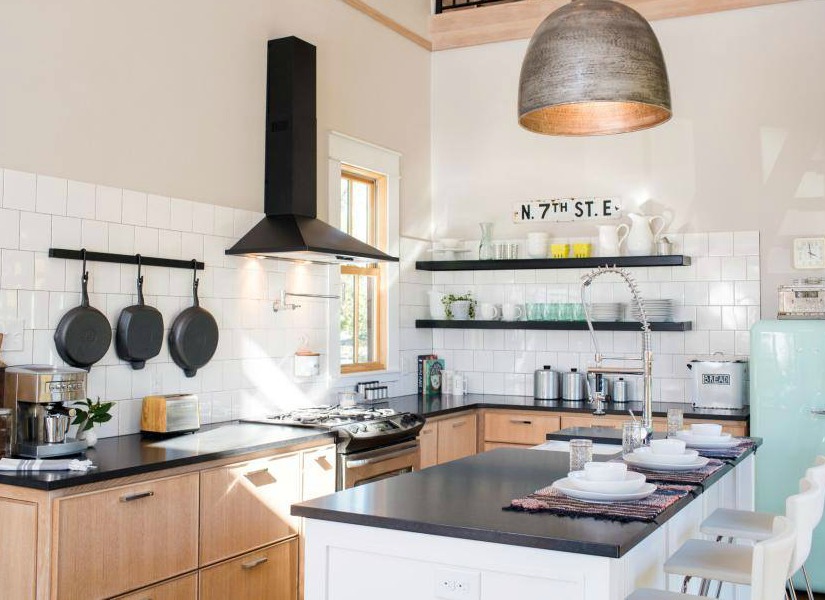
That pressure is exactly what made the final result so satisfying. The remodel used classic Joanna Gaines moves, but with extra discipline. Instead of stuffing the home with farmhouse clichés, the design leaned on clean lines, pine floors, wood window frames, open shelving, black countertops, and a few vintage pieces that added personality without crowding the footprint. The result felt airy, edited, and welcoming. In other words, it looked like a real person could live there without needing a personal assistant for throw pillows.
There is also a deeper reason fans connected with it. A tiny home does not let you hide bad design under excess. In a larger house, a weak layout can limp along and pretend everything is fine. In a small one, every flaw shows up early, loud, and barefoot. So when a compact home works, it feels especially impressive.
The Big Lessons Hidden Inside a Small Footprint
1. Function Comes Before Style
One of Joanna Gaines’s most consistent design ideas is that a room has to serve the life being lived inside it. That sounds obvious, but homeowners skip this step all the time. They chase a look before deciding what the space actually needs to do. The Gaines approach flips that process around. How will the room be used? Who needs to move through it? What must be stored, hidden, displayed, or reached quickly? In a Fixer Upper tiny house, those questions are not optional. They are survival skills.
That philosophy is visible all over this project. The loft, the kitchen layout, the seating choices, and the storage solutions all feel purposeful. Nothing is there just because it looked cute in a catalog. The home feels designed around living, not posing.
2. Storage Is Not Boring; It Is the Whole Plot
Small homes succeed when storage does not feel like an afterthought. That is one reason this house still resonates with serious remodel fans. Joanna has long argued that storage is one of the most undervalued parts of a home, and this renovation proves it. Open shelving keeps essentials accessible without making the kitchen feel boxed in. Built-ins and tucked-away solutions help maintain calm. Even the loft and stair concept turn a difficult footprint into something clever.
Modern small-space advice from design editors still echoes that same point: use vertical room, choose multipurpose furniture, hang what you can, and make overlooked areas work harder. That is not glamorous in theory, but it is glorious in practice. Nothing feels more luxurious than not having your clutter scream at you from every surface.
3. A Tight Palette Creates Breathing Room
The tiny house also shows why Joanna Gaines design ideas often age well. Her best spaces typically rely on a controlled palette. In small rooms, too many colors and competing finishes can make the eye feel trapped. This remodel uses the familiar black, white, and wood mix in a way that feels intentional rather than trendy. The contrast gives the home structure, while the natural materials keep it from feeling cold.
That formula still works because it respects visual rhythm. Light walls help the footprint feel open. Wood tones add warmth. Black accents ground the room. Then a few special details, like a vintage-style refrigerator or meaningful decor, add personality without turning the whole place into a theme park for distressed signs.
4. Small Spaces Need Character, Not Just Minimalism
A common mistake in tiny homes is overcorrecting into sterility. People hear “small space” and assume everything must be plain, white, and emotionally unavailable. The Gaineses did the opposite. This home had clean lines, yes, but it also had soul. Vintage finds, wood texture, layered finishes, and a sense of history kept it from feeling generic.
That is a huge reason the project keeps showing up in conversations about modern farmhouse small space design. It did not treat farmhouse style like a costume. It used a few enduring ingredients: texture, practical materials, warmth, and pieces that look collected over time. When done right, that style feels timeless because it is connected to use, not just trend.
What the Shotgun House Got Exactly Right
The smartest part of the remodel was that it respected the home’s identity. A shotgun house is narrow by nature, so the design did not try to disguise that fact with awkward room divisions or fussy visual clutter. Instead, the layout embraced openness where possible and used focal points to guide the eye. The result was a home that felt longer, brighter, and calmer.
The kitchen is one of the clearest examples. Open shelving helped preserve airiness, while the darker countertops added contrast and sophistication. The shelves also made practical sense. In a compact kitchen, heavy upper cabinets can make the room feel top-heavy and moody in the wrong way. Open storage, when edited properly, keeps essentials visible and useful while supporting that relaxed modern farmhouse feel.
The loft was another brilliant move. It added flexibility without demanding a full extra room. That is the kind of decision that separates smart remodeling from expensive panic. A tiny house does not need ten rooms pretending to have separate personalities. It needs flexible zones that adapt as life changes.
Even the bathroom and bedroom choices helped reinforce that balance. Instead of shrinking everything down into dollhouse proportions, the design used a few confident elements to keep the house feeling adult and comfortable. That is an underrated lesson. Small homes should still feel generous, not apologetic.
More Remodelaholic-Worthy Ideas You Can Borrow
The “+ More” in this topic matters, because what people really love is not just one famous tiny house. They love the larger set of ideas it represents. You do not need to buy a historic home in Waco to apply them. You just need to steal the right principles with zero shame and good taste.
Use Open Shelving Carefully
Open shelving works best when it mixes function and beauty. Think daily dishes, glassware, a couple of bowls, maybe a framed print, and one plant that looks alive enough to inspire confidence. The goal is curated ease, not “garage sale met a dust storm.” Repeating metals and finishes, such as warm brass with wood and white tile, helps shelves look cohesive instead of chaotic.
Choose Mirrors and Light on Purpose
Mirrors remain one of the simplest ways to brighten small rooms because they bounce light and visually extend the space. Likewise, lighting matters more in compact homes because dark corners feel larger than life. Sconces, table lamps, and layered lighting often outperform a single harsh overhead fixture that makes the room feel like an interrogation scene.
Work the Vertical Space
Tall shelves, hooks, higher-hung curtains, wall-mounted pieces, and built-ins all help the eye travel upward. That trick makes compact rooms feel less compressed. It also frees up the floor, which is valuable because once a room loses visible floor area, it starts feeling cramped almost instantly.
Make Furniture Earn Its Keep
Storage benches, ottomans, built-in banquettes, slim tables, and proportional seating are all small-space heroes. A pretty chair that cannot fit comfortably is not a hero. It is a diva. In compact homes, the best furniture pieces are the ones that look good, fit properly, and perform double duty without acting smug about it.
Let Meaningful Details Do the Decorating
Joanna Gaines often talks about using pieces that mean something. That advice matters even more in a smaller home. When square footage is limited, every object gets a louder voice. Family photos, antiques, handmade pieces, and personal mementos create warmth without needing a lot of quantity. In a tiny home, meaning beats volume every time.
How to Get the Look Without Copying It Word for Word
Here is where smart homeowners win. The point is not to duplicate every black countertop, brass detail, or farmhouse flourish until your house feels like a tribute band. The better move is to borrow the logic of the design.
Start by editing your layout. Remove anything blocking movement or light. Measure your furniture honestly, not optimistically. Then choose a restrained palette with one or two grounding materials. Add storage where clutter naturally gathers. Use shelves or built-ins where they improve function. Finally, layer in a few personal details that tell your story.
That is the real legacy of Chip and Joanna’s tiny house. It taught viewers that charm is not random. It is built through a sequence of thoughtful decisions. Even the prettiest room has to work hard behind the scenes, especially when the house is small enough to remember every mistake you make.
500 More Words on the Experience of Falling for a Tiny-House Remodel
There is a particular experience that comes with walking into a well-renovated tiny home, and it is surprisingly emotional. At first, you brace yourself for compromise. You expect to admire the design politely while privately wondering where a normal person would put their shoes, coffee maker, winter blankets, and chaotic assortment of charging cables. Then you step inside, and the whole place starts making sense in a way that feels almost magical.
That is what people respond to in a project like this one. A good tiny-house renovation does not just save space; it changes your relationship with space. You stop thinking only in terms of square footage and start noticing flow, light, proportion, and placement. A wall shelf is no longer just a wall shelf. It becomes proof that vertical space has feelings too. A built-in bench is not just seating. It is storage, comfort, and a gentle rebuke to every giant, useless accent chair ever made.
The experience is also strangely clarifying. In a small home, your priorities become obvious. You can tell right away what deserves room and what has been freeloading in your life for years. That extra side table you never liked? Gone. The basket that catches mail, keys, and daily clutter? Suddenly essential. The lamp that makes the room glow at night? More important than another decorative object whose only job is to exist confidently on a shelf.
There is also a comfort factor that big homes do not always deliver. A tiny home, when designed well, can feel deeply settled. It encourages routines. The coffee area becomes a real ritual spot. The nook becomes where you read. The bench becomes where you drop your bag and exhale after work. Even cleaning feels more manageable, which is not exactly glamorous, but it is very attractive at 8:15 on a Tuesday when life is being rude.
And then there is the social experience. People tend to think small homes are limiting for hosting, but thoughtful design can make them feel intimate in the best way. Guests naturally gather where the room wants them to gather. Conversation tightens up. The space feels edited instead of sprawling. Nobody disappears into a mystery sitting room no one has entered since Thanksgiving 2019.
Most of all, a tiny-house remodel changes what homeowners admire. After spending time with a space like this, flashy design starts to lose its grip. You begin to appreciate the quiet wins: the shelf at the right height, the cabinet that hides the mess, the mirror that catches the window light, the stool that tucks in neatly, the palette that makes the room feel calm instead of noisy. You realize that good design is not about showing off. It is about making daily life feel easier, warmer, and a little more beautiful.
That is why the fascination with this project has lasted. It offers a fantasy, yes, but also a practical one. Not the fantasy of living in a mansion with twelve bathrooms and a suspicious amount of marble. The better fantasy. The one where your home fits your life, your stuff fits your storage, and every inch knows exactly what it is doing.
Conclusion
Chip & Joanna’s tiny house still stands out because it solved a real design challenge with equal parts charm and discipline. It respected the original footprint, added flexibility where it mattered, used storage intelligently, and layered in warmth without suffocating the rooms. More importantly, it offered a blueprint for anyone trying to make a small home feel meaningful rather than merely manageable.
That is the lasting power of this remodel. It is not just a pretty TV house. It is a reminder that smart layout choices, thoughtful storage, natural materials, and personal details can make even the narrowest home feel expansive in spirit. For remodel lovers, that is the good stuff. Not just the reveal, but the reason it works.


