
When your gut is acting like it has a personal grudge against you, the promise of a tiny “good bacteria” peacekeeping force sounds awfully appealing. That is exactly why probiotics keep showing up in conversations about inflammatory bowel disease, or IBD. They are marketed as friendly microbes, sold in everything from capsules to yogurt, and often whispered about online like they are one spoonful away from solving modern digestive misery.
But IBD is not a minor tummy tantrum. It is a chronic inflammatory condition that includes Crohn’s disease and ulcerative colitis, and it can be complicated, painful, and exhausting. So the real question is not whether probiotics sound healthy. The real question is whether they can meaningfully calm inflammation, reduce flares, or help maintain remission in people living with IBD. The answer is nuanced, a little frustrating, and much more interesting than a simple yes or no.
Here is the short version before we roll up our sleeves: probiotics are not a standard treatment for IBD overall. However, some evidence suggests they may help certain people with ulcerative colitis, and there is a more established role for specific probiotic approaches in pouchitis. For Crohn’s disease, the evidence remains underwhelming. In other words, probiotics are not exactly the superhero of IBD care, but they may have a supporting role in the right scene.
What Is IBD, and Why Does the Gut Microbiome Matter So Much?
IBD affects millions of Americans and involves chronic inflammation in the digestive tract. The two main forms are ulcerative colitis, which affects the colon and rectum, and Crohn’s disease, which can affect any part of the digestive tract from mouth to, well, the less glamorous exit. Symptoms often include diarrhea, abdominal pain, urgency, fatigue, weight loss, and flares that arrive with all the charm of an uninvited relative.
Researchers have long suspected that the gut microbiome, the enormous community of bacteria, fungi, and other microorganisms living in the intestine, plays a major role in IBD. In a healthy gut, this microbial ecosystem helps maintain the intestinal barrier, supports immune balance, and assists with digestion. When that system becomes disrupted, a state often called dysbiosis, the gut lining may become more vulnerable and the immune system may become more inflammatory. That is where probiotics enter the chat.
The basic probiotic idea
Probiotics are live microorganisms intended to provide health benefits when consumed in adequate amounts. The theory is simple enough to fit on a supplement label: if the gut’s microbial balance is off, why not add more beneficial bacteria and nudge the system back toward harmony? Sounds elegant. Biology, however, loves making elegant ideas complicated.
Why that theory does not automatically become treatment
Even if probiotics influence the microbiome, that does not mean any random capsule from aisle seven can control the immune dysfunction behind IBD. Different strains do different things. Different doses behave differently. Different patients have different gut environments. So while “good bacteria” makes for excellent marketing, it is not a treatment plan by itself.
What the Research Says About Probiotics for IBD
Ulcerative colitis: modest promise, not a miracle
Among IBD conditions, ulcerative colitis is where probiotics have shown the most potential. Some studies suggest certain strains, often involving Lactobacillus and Bifidobacterium, may help reduce symptoms, support remission, or improve quality of life in some patients. That sounds encouraging, and it is. But the keyword here is modest.
Clinical experts generally do not treat probiotics as a front-line replacement for proven ulcerative colitis therapies such as mesalamine, corticosteroids, immunomodulators, or biologics. The evidence is simply too mixed, and the results are usually not strong enough to make probiotics a routine recommendation for everyone with UC. They may be a useful add-on in carefully selected cases, but this is not the part where the probiotic bottle kicks down the door and saves the day.
Crohn’s disease: the evidence is much weaker
If you have Crohn’s disease, the story gets less exciting. Most research has not shown probiotics to be clearly better than placebo for reducing symptoms or maintaining remission. That does not prove probiotics can never help anyone with Crohn’s disease. It does mean the current evidence does not support using them as a dependable treatment strategy.
This difference between UC and Crohn’s disease matters. Too often, “IBD” gets discussed like it is one thing with one solution. It is not. These conditions overlap, but they are biologically distinct, and treatment responses can differ dramatically.
Pouchitis: the strongest case for probiotics
The clearest probiotic success story in the IBD world involves pouchitis, an inflammation that can happen in people who have had surgery to remove the colon and create a J-pouch, usually after ulcerative colitis. In this setting, certain multi-strain probiotic formulations have shown benefit, especially for helping prevent recurrent pouchitis after treatment with antibiotics.
This is important because it shows probiotics are not useless in IBD. They just appear to work best in a narrower clinical situation, with specific products studied in trials, rather than as a one-size-fits-all solution for every person with IBD.
Why the Results Are So Mixed
Not all probiotics are the same
One of the biggest problems with probiotic talk is that people use the word as if it refers to one thing. It does not. “Probiotic” is a category, not a single ingredient. Different strains have different actions, and some combinations have been studied much more than others. A product that helps in one condition may do absolutely nothing in another.
That is why experts care about the exact strain, the dose, and the formulation. A supplement that says “supports digestive health” in cheerful green packaging might sound lovely, but that is not the same as a probiotic tested in rigorous IBD studies.
The gut is personal
Each person’s microbiome is unique, shaped by genetics, diet, medications, sleep, stress, infections, smoking, and previous antibiotic exposure. The same probiotic may produce different effects in different people because it is entering a completely different ecosystem each time. It is a little like planting the same seed in a cactus pot, a rose garden, and a parking lot, then acting shocked when the outcomes vary.
Supplements are not regulated like prescription drugs
This is a big one. In the United States, probiotic supplements are generally sold as dietary supplements, not as FDA-approved drugs for IBD. That means they are not evaluated the same way prescription medications are before they reach the market. Labels may not tell the whole story about potency, strain survival, or whether the product matches what was studied in clinical trials.
Can Fermented Foods Help?
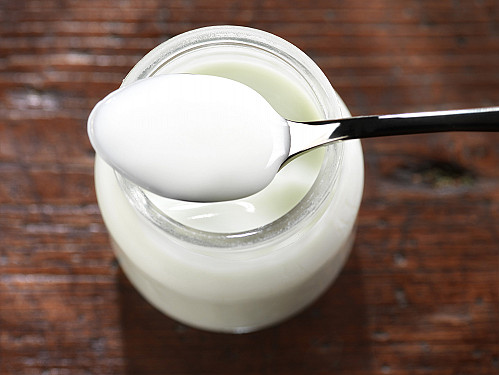
Now for a more cheerful corner of the conversation: food. Fermented foods such as yogurt with live cultures, kefir, sauerkraut, and some other refrigerated fermented products may support gut health and are often easier to incorporate than a supplement routine that makes your kitchen look like a chemistry set.
That said, fermented foods are not interchangeable with clinical probiotic therapy. Some foods contain live microbes, some do not, and the strains and amounts vary widely. Shelf-stable fermented products may be pasteurized, which can reduce or eliminate live cultures. Also, some people with IBD, especially during flares, may not tolerate certain fermented or dairy-based foods very well.
Food first, hype second
For many people, the more practical question is not “Which probiotic capsule is magic?” but “What kind of eating pattern supports my microbiome without making me miserable?” That is where broader dietary strategies often matter more.
What About Prebiotics, Fiber, and the Mediterranean Diet?
Probiotics get most of the attention because they sound trendy and come in bottles with confident fonts. But prebiotics, which are substances that feed beneficial gut microbes, may be just as important. Fiber-rich foods, legumes, whole grains, fruits, and vegetables can help beneficial bacteria produce compounds that support gut barrier function and immune regulation.
Of course, there is a catch, because the digestive tract enjoys irony. During an IBD flare, some people cannot tolerate much fiber. In those situations, texture and food choice matter. Cooked produce, soluble fiber sources, oatmeal, bananas, and soft starches may be easier to handle than raw salads the size of a lawn clipping bag.
The Mediterranean diet often comes up in IBD discussions because it emphasizes fiber-rich plants, olive oil, legumes, and minimally processed foods. It is not a cure, but some evidence suggests it may modestly improve symptoms or inflammatory markers in some people with IBD while supporting overall health. That makes it more useful than many “miracle gut reset” programs currently roaming the internet in suspiciously expensive PDF form.
When Probiotics May Be Worth Discussing With a GI Specialist
Probiotics may be worth a thoughtful conversation with your gastroenterologist in a few situations:
- If you have ulcerative colitis and want to explore a carefully chosen add-on strategy rather than a replacement for standard treatment.
- If you have a history of recurrent pouchitis, where specific multi-strain probiotic products have the strongest evidence.
- If you want help selecting a product with a strain and formulation that actually match published research.
- If you are trying to support your gut health after a course of antibiotics and want advice tailored to your IBD history.
Notice what is missing from that list: “because a wellness influencer smiled near a jar of yogurt.” Charming? Yes. Clinical evidence? Not so much.
When You Should Be Cautious
Even though probiotics are often described as safe, “natural” does not automatically mean “appropriate for everyone.” People with significant underlying illness, compromised immune systems, central lines, or other high-risk medical situations should be especially careful and use probiotics only with medical guidance.
You should also be cautious if you are tempted to use probiotics in place of medications that are actually controlling inflammation. IBD can silently progress even when symptoms seem less dramatic. Swapping proven therapy for a supplement without supervision is a risky gamble, not a brave act of wellness independence.
Red flags to avoid
- Stopping prescribed IBD medication because a supplement sounds “more natural.”
- Assuming all probiotic brands are equivalent.
- Choosing products based only on marketing language like “gut reset” or “detox.”
- Ignoring worsening symptoms while waiting for a supplement to “kick in.”
So, Can Probiotics Calm IBD?
Yes, sometimes a little, but not in the sweeping, reliable way many people hope. The best current answer is this: probiotics may help selected cases of ulcerative colitis, probably do not help much in Crohn’s disease, and have the strongest support in certain pouchitis situations. That is promising, but it is not a green light to treat probiotics like a universal IBD fix.
The future may be more exciting. Researchers are increasingly interested in personalized microbiome therapy, better strain selection, and more targeted ways to use bacteria-based treatments. But right now, probiotics sit in the “interesting and sometimes useful” category, not the “everyone should do this tomorrow” category.
So if you are wondering whether to try one, the smartest move is wonderfully unglamorous: talk to your GI specialist, review the evidence for your specific diagnosis, and make decisions based on strain-specific data rather than wishful thinking. Your gut deserves science, not just optimism in capsule form.
Experiences People Commonly Report With Probiotics and IBD
In real-world IBD care, experiences with probiotics tend to fall into a few familiar patterns. Some people with ulcerative colitis describe a mild improvement in bloating, stool consistency, or overall “gut calm” after starting a carefully chosen probiotic. They may not say, “Wow, my disease vanished in a choir of angels,” but they sometimes report that their digestion feels less chaotic. These are the people who often keep using a probiotic as a supporting player, not the star of the show.
Then there is another group, especially people with Crohn’s disease, who try probiotics faithfully for weeks and notice… absolutely nothing. No dramatic improvement. No disaster. Just a slightly lighter wallet and a growing suspicion that their supplement is more emotionally supportive than medically impressive. That kind of non-response is common and lines up with the weaker evidence in Crohn’s disease.
Some patients say probiotics help one symptom but not the disease itself. For example, they may feel less gassy or more regular, while still needing standard medication to control inflammation. This distinction matters. Feeling better is important, but symptom relief is not the same as proven control of intestinal inflammation. Many experienced clinicians emphasize this point because IBD can simmer beneath the surface even when day-to-day digestion seems more manageable.
People with pouchitis sometimes report the most noticeable benefit, especially when a probiotic is introduced as part of a broader plan after antibiotic treatment. In these cases, patients may describe fewer recurrences or a more stable recovery period. Again, this is not every patient, and it is not every product, but it is one area where the lived experience and the medical literature often line up more closely.
There are also plenty of people who cannot tolerate a product well. Some notice extra gas, cramping, or a sensation that their gut has decided to host a noisy debate club. Others become frustrated trying to figure out which product is legitimate, which strains matter, and why one bottle costs as much as a dinner date while providing less satisfaction. This confusion is incredibly common, partly because probiotic marketing tends to be louder than probiotic science.
Another experience many people share is learning that food choices often matter just as much as supplements. Some discover that yogurt with live cultures, kefir, or a more Mediterranean-style pattern feels more sustainable than chasing the perfect capsule. Others realize they tolerate only certain foods, textures, or fiber levels, especially during flares. This trial-and-adjust phase can be annoying, but it is often more realistic than expecting one product to transform a complex inflammatory disease.
Perhaps the most valuable lesson from patient experience is this: probiotics work best when expectations are realistic. People who treat them as a possible add-on, monitor symptoms carefully, and stay on proven medical therapy tend to have the healthiest perspective. People who expect a miracle often end up disappointed. In IBD, the most successful approach is usually not magic. It is careful experimentation, honest follow-up, and a treatment plan built with a clinician who understands both the microbiome and the fact that your gut does not read marketing copy.
Conclusion
Probiotics are intriguing, sometimes helpful, and definitely overhyped. They may offer modest benefits in ulcerative colitis and a more meaningful role in pouchitis, but they are not a routine cure-all for inflammatory bowel disease. For now, the smartest approach is to view probiotics as one possible tool in a much larger toolbox that includes evidence-based medication, individualized nutrition, lifestyle support, and regular medical care.
If there is one takeaway worth remembering, it is this: the right question is not “Are probiotics good?” The right question is “Which probiotic, for which IBD condition, in which patient, and alongside what standard treatment?” That question is less catchy than a supplement ad, but much more useful.


