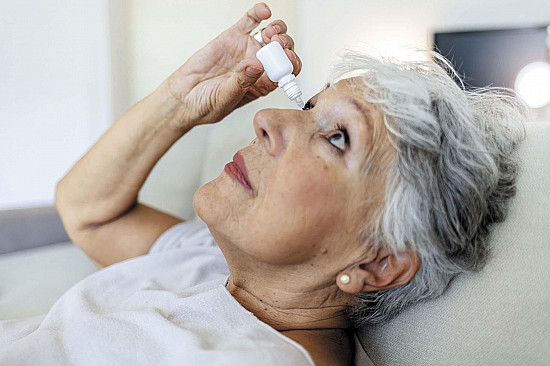

One day, your phone screen looks normal. The next, your arms are apparently too short. You stretch the restaurant menu toward the candlelight, squint at the tiny print, and wonder when “dessert” started looking like ancient hieroglyphics. Welcome to presbyopia, the very common, very annoying age-related change that makes close-up vision blurry for many adults after 40.
The big question is simple: can eye drops restore your close-up vision? The honest answer is: they may temporarily improve near vision for some adults with presbyopia, but they do not permanently reverse aging in the eye. Prescription eye drops can help certain people read menus, texts, labels, and computer details with less dependence on reading glasses for part of the day. But they are not magic, not for everyone, and not a replacement for a professional eye exam.
Harvard Health has highlighted this new wave of prescription eye drops as an option for blurry close-up vision. The idea sounds futuristic, but the science is surprisingly old-school: make the pupil smaller, increase depth of focus, and create a “pinhole effect.” In plain English, the drops help your eye focus more like it does when you squintminus the dramatic facial expression.
What Is Presbyopia?
Presbyopia is the gradual loss of the eye’s ability to focus clearly on nearby objects. It usually becomes noticeable in the early to mid-40s and can continue progressing into the 60s. It is not a disease, and it is not caused by “using your eyes too much.” Reading novels, answering emails, or doom-scrolling at midnight did not single-handedly break your visionthough your eyes may have a few complaints about that last one.
Inside the eye is a natural lens that changes shape to focus light on the retina. When you are younger, that lens is soft and flexible. It can adjust quickly when you shift from looking across a room to reading a text message. With age, the lens becomes stiffer and less able to change shape. The result is blurry near vision, especially in dim light or when reading small print.
Common Signs of Presbyopia
- Holding books, phones, or labels farther away to read them
- Blurred vision at normal reading distance
- Eye strain during close-up work
- Headaches after reading or screen use
- Needing brighter light to see small print
- Switching between distance and near focus more slowly
If this sounds familiar, you are in excellent company. Presbyopia affects nearly everyone eventually. It is one of the few clubs nobody signs up for but almost everyone joins.
How Can Eye Drops Improve Close-Up Vision?
Prescription eye drops for presbyopia work differently from glasses. Reading glasses bend light before it enters the eye. Presbyopia-correcting drops change how the eye handles incoming light by shrinking the pupil. A smaller pupil increases depth of focus, helping near objects appear sharper for a limited time.
This is often called the pinhole effect. If you have ever squinted to read a sign or looked through a tiny opening to make something clearer, you have already tested the basic principle. The drops create a similar optical effect by making the pupil smaller, which can sharpen near vision without necessarily changing distance vision for many users.
The key word is temporary. These medications do not make the aging lens young again. They do not rebuild flexibility in the lens. They help work around the problem for a number of hours.
Prescription Eye Drops Available for Presbyopia
Several prescription options have entered the U.S. market or received FDA approval for adults with presbyopia. The main medications include pilocarpine-based drops and aceclidine-based drops. Each has its own formulation, dosing instructions, expected duration, and safety considerations.
Vuity
Vuity is a pilocarpine hydrochloride ophthalmic solution approved for adults with presbyopia. It was the first FDA-approved eye drop for age-related blurry near vision. The usual dosing involves one drop in each eye once daily, with some labeling allowing a second dose several hours later when appropriate under prescribing guidance.
Vuity typically begins working within about 15 minutes for some people and may last several hours. It is often discussed for adults with mild to moderate presbyopia who want more flexibility during the day, such as reading a menu, checking a phone, or working at a computer without constantly reaching for readers.
Qlosi
Qlosi is another pilocarpine hydrochloride ophthalmic solution used for presbyopia in adults. It is a lower-dose pilocarpine formulation designed for flexible use. The prescribing information describes use as one drop in each eye, with the option to repeat a second time after 2 to 3 hours for an effect that may last up to 8 hours.
For people who do not need near-vision help all day, this type of flexible dosing may be appealing. Someone might use it before a work presentation, a dinner out, or a hobby that requires close focus, such as sewing, model building, cooking from a recipe card, or fixing something tiny enough to make patience leave the building.
VIZZ
VIZZ is an aceclidine ophthalmic solution approved for the treatment of presbyopia in adults. Aceclidine also works by constricting the pupil, but it is a different medication from pilocarpine. Its dosing involves drops in both eyes once daily according to prescribing information.
The approval of aceclidine-based drops matters because it expands the options available for people who want nonsurgical presbyopia treatment. More choices may help eye care professionals match patients with the drop that best fits their visual needs, health history, and tolerance for side effects.
Can Eye Drops Replace Reading Glasses?
For some people, prescription eye drops may reduce dependence on reading glasses during certain activities. That does not mean they eliminate glasses forever. Think of them less like a cure and more like a useful tool in the vision toolbox.
Reading glasses are simple, inexpensive, and reliable. They work immediately and do not usually come with medication side effects. Eye drops, on the other hand, can be helpful when someone wants temporary freedom from glassesperhaps during a meeting, social event, workout, golf game, or photo-worthy dinner where readers keep disappearing into the black hole known as “somewhere in my bag.”
Many people may still need reading glasses for small print, long reading sessions, low-light situations, or detailed close-up work. Drops can improve near vision, but they do not guarantee perfect reading vision in every setting.
Who Might Be a Good Candidate?
The best candidates are typically adults with presbyopia who have otherwise healthy eyes and want temporary improvement in near vision. People with mild or moderate presbyopia may notice better results than those with more advanced near-vision difficulty. The only way to know is through an eye exam and a conversation with an optometrist or ophthalmologist.
You May Be a Candidate If You:
- Are over 40 and have blurry near vision
- Want to reduce reading-glasses use for part of the day
- Have healthy eyes without major retinal disease
- Understand that the effect is temporary
- Can follow prescription instructions carefully
- Are willing to watch for side effects
You May Need Extra Caution If You:
- Have a history of retinal problems
- Have significant eye inflammation
- Drive often at night or work in dim conditions
- Have severe dry eye or eye surface disease
- Use multiple eye medications
- Have had certain eye surgeries or eye injuries
Because these drops constrict the pupil, they may make vision feel dimmer, especially in low light. That is not a small detail. If your evening commute already feels like a video game set to “expert mode,” talk with your eye doctor before using drops that may affect night vision.
Possible Side Effects
Like all prescription medications, presbyopia eye drops can cause side effects. Commonly discussed side effects include headache, eye redness, eye irritation, blurred vision, temporary dim or dark vision, and trouble changing focus. Some people tolerate the drops well. Others may decide that their trusty reading glasses are less dramatic.
Rare but serious concerns have been reported with miotic medications, including potential retinal complications in susceptible individuals. This is why a proper eye exam is not optional. Your eye doctor can check your retina, review your health history, and decide whether these drops make sense for you.
Call an Eye Doctor Promptly If You Notice:
- New flashes of light
- A sudden increase in floaters
- A curtain-like shadow in your vision
- Severe eye pain
- Sudden vision loss
- Persistent blurry or distorted vision
Those symptoms can signal urgent eye problems and should not be brushed off as “probably nothing.” Eyes are not the place to practice heroic denial.
Eye Drops vs. Other Presbyopia Treatments
Presbyopia treatment is not one-size-fits-all. The right choice depends on your lifestyle, prescription, eye health, budget, comfort with medication, and how much you dislike hunting for glasses.
Reading Glasses
Reading glasses are the classic solution. They are affordable, easy to replace, and available in many strengths. The downside is convenience. You need to have them nearby, and many people end up owning pairs in the kitchen, car, office, bedroom, and one mysterious location nobody can explain.
Bifocals and Progressive Lenses
Bifocals and progressives correct multiple distances in one pair of glasses. They are great for people who need both distance and near correction. However, they can take time to adjust to, and some people dislike the visual zones or peripheral distortion.
Multifocal Contact Lenses
Multifocal contacts can help people see at more than one distance without glasses. They require proper fitting and may not provide perfect clarity at every distance. Dry eye, comfort, and night vision can also affect satisfaction.
Surgical Options
Some people consider refractive surgery, lens implants, or other procedures. These may offer longer-term correction, but they also involve higher cost, more risk, and careful patient selection. Surgery is a bigger step than using drops or glasses, so it deserves a detailed conversation with an eye surgeon.
Prescription Eye Drops
Eye drops fit between glasses and surgery. They are noninvasive and temporary. They can be useful for specific daily moments, but they require a prescription, can cause side effects, and may not work equally well for everyone.
What to Ask Your Eye Doctor
If you are curious about prescription eye drops for close-up vision, bring specific questions to your next eye exam. A good conversation can save you from unrealistic expectations and help you choose safely.
- Is my blurry near vision definitely presbyopia?
- Are my eyes healthy enough for miotic eye drops?
- Do I have any retinal risk factors?
- Which drop is most appropriate for my age, prescription, and routine?
- How long should I expect the effect to last?
- Can I use the drops with contact lenses?
- Should I avoid driving at night after using them?
- What side effects should make me stop and call you?
Also mention all medications and eye drops you already use. If you use glaucoma drops, allergy drops, dry-eye treatments, or contact lens solutions, your eye doctor may give you timing instructions so products do not interfere with each other.
Practical Tips for Using Presbyopia Eye Drops
If your eye doctor prescribes drops, use them exactly as directed. More is not better. Doubling up without medical guidance will not turn you into a superhero with microscopic vision; it may just increase side effects.
Helpful Habits
- Wash your hands before using eye drops.
- Avoid touching the dropper tip to your eye or lashes.
- Wait the recommended amount of time before inserting contact lenses.
- Separate different eye medications by at least several minutes if instructed.
- Test your vision response at home before relying on drops for driving or work.
- Use brighter lighting for reading when needed.
- Keep backup readers nearby, especially for small print.
The first few uses are a learning period. Pay attention to when the drops start working, how long they last for you, and whether they affect night vision. Everyone’s eyes are a little different, much like everyone’s tolerance for tiny restaurant fonts.
Can Eye Drops Truly “Restore” Close-Up Vision?
The word “restore” needs a careful definition. If restore means “temporarily make close-up tasks clearer,” then yes, prescription eye drops may help some adults with presbyopia. If restore means “permanently reverse age-related lens stiffening,” then no, current drops do not do that.
A realistic expectation is this: drops may give you a window of sharper near vision. They may help you read your phone, glance at a receipt, apply makeup, check a watch, read a label, or enjoy a meal without constantly pulling readers on and off. They are not guaranteed to replace every pair of glasses, and they are not a cure for cataracts, glaucoma, macular degeneration, diabetic eye disease, or uncorrected refractive errors.
That is why the smartest first step is not buying anything online or borrowing someone else’s prescription. It is scheduling a comprehensive eye exam. Blurry close-up vision may be presbyopia, but an eye care professional should confirm the cause and rule out other problems.
Real-Life Experience: What It May Feel Like to Try Close-Up Vision Drops
Imagine this: you are 48, healthy, busy, and mildly offended by the fact that your phone now needs to be held at the exact distance of a ceremonial offering. You own reading glasses, but they are never where you need them. One pair lives in the car. One pair is on the nightstand. One pair vanished into the same universe that collects missing socks and charging cables.
At your eye exam, your doctor confirms presbyopia and says your eyes are otherwise healthy. You ask about prescription drops. After checking your retina, reviewing your medications, and talking through your daily routine, your doctor gives you a prescription and explains what to expect. The drops may help, but you should test them on a normal day before using them for anything important.
The first morning, you wash your hands, place the drops carefully, and wait. At first, nothing dramatic happens. There is no movie soundtrack. No beam of light descends from the ceiling. After a short while, the text on your phone looks a little easier to read. Not perfect, perhaps, but less like it was printed for ants with law degrees.
You notice that your distance vision still feels fine, but indoor lighting matters. In bright light, reading a label is easier. In a dim restaurant, the improvement is less impressive, and the room feels slightly darker. This makes sense because smaller pupils let in less light. You decide that candlelit menus remain a crime against humanity.
By lunchtime, you are happily checking messages without grabbing readers every five minutes. During a long session at the computer, however, you still prefer your regular glasses because they feel more comfortable for sustained work. This is an important discovery: drops may be useful for quick, flexible near tasks, while glasses may still win for marathon reading, spreadsheets, or editing a document long enough to make coffee nervous.
Later, you drive at dusk and realize your doctor was right to warn you about low-light situations. Your vision is acceptable, but you are more aware of dimness than usual. You make a mental note: avoid first-time use before night driving, unfamiliar roads, or any activity requiring crisp vision in poor lighting.
After a week, you know your pattern. The drops are not a miracle, but they are convenient. They help during errands, meetings, grocery shopping, and casual phone use. They do not replace your reading glasses completely. They become one more optionlike sunglasses, progressives, or keeping a spare pair of readers in the kitchen drawer labeled “Do Not Move,” which of course someone will move.
The best experience comes from realistic expectations. People who expect drops to turn 50-year-old eyes into 20-year-old eyes may be disappointed. People who want temporary support for everyday near tasks may be pleasantly surprised. The difference is mindset, medical guidance, and choosing the right tool for the right moment.
Final Thoughts
Prescription eye drops can improve close-up vision for some adults with presbyopia, but they are not a permanent cure. They work mainly by shrinking the pupil and increasing depth of focus, creating a temporary pinhole-like effect. For the right person, that can mean easier reading, fewer moments of frantic glasses-searching, and more freedom during parts of the day.
Still, these drops are real medications with real precautions. Before using them, get a comprehensive eye exam and talk with an eye care professional about your retina health, night driving, other medications, and daily needs. Reading glasses are not obsolete. Surgery is not the only alternative. Eye drops simply add another optionand for many people, another option is exactly what aging eyes have been waiting for.


